
Nasi Lemak: Malaysia's Must-Try Coconut Rice Breakfast
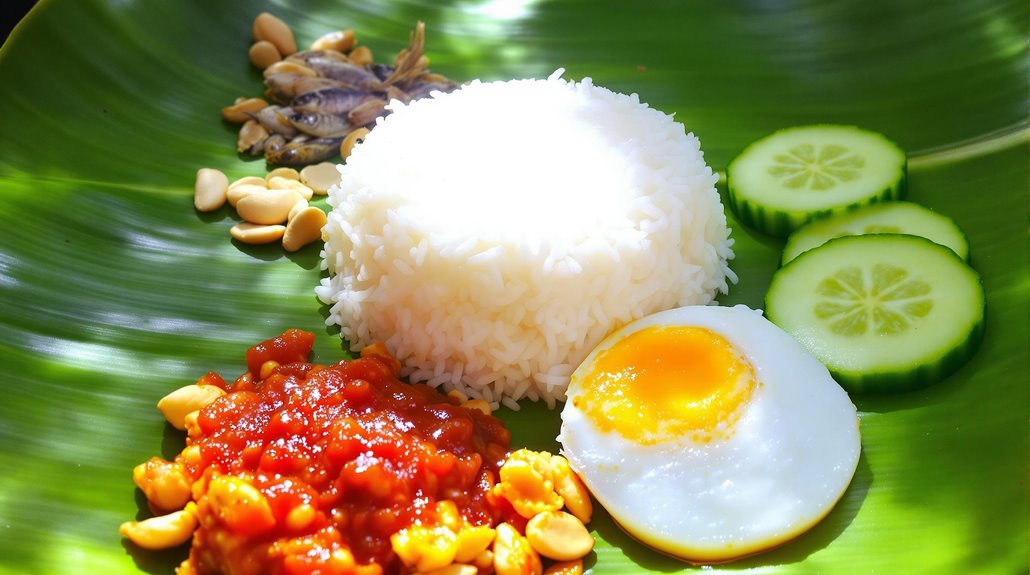
Nasi lemak, Malaysia's beloved national dish, is a fragrant coconut rice breakfast you won't want to miss. The rice is cooked in coconut milk with pandan leaves for subtle sweetness, then served with crispy anchovies, roasted peanuts, cucumber slices, and a spicy sambal sauce that brings everything together. You'll find it wrapped in banana leaves at street stalls or plated at restaurants - each version offering its own delicious spin on this Malaysian treasure.
The Story Behind Malaysia's Beloved Rice Dish
While the exact birthplace of nasi lemak remains a mystery, this iconic Malaysian dish emerged from the west coast of peninsular Malaysia, where abundant coconut palms and rice paddies set the stage for culinary innovation.
You'll find that rice cooked in coconut milk isn't unique to Malaysia - it's a common practice wherever these ingredients coexist. But what makes nasi lemak special is its evolution into Malaysia's national treasure. British colonial records from the 1910s first documented this coconut rice dish, though it likely existed long before.
The addition of chili peppers in the sambal, introduced from the Americas centuries ago, helped create the dish you know today. When you order nasi lemak now, you'll often spark friendly debates among locals about everything from the rice's texture to whether ikan bilis (anchovies) are essential accompaniments.
Much like Malaysia's beloved Apam Balik pancakes, the art of perfecting nasi lemak has been passed down through generations of home cooks and street vendors.
Essential Ingredients for Perfect Nasi Lemak
Creating authentic nasi lemak starts with selecting the right ingredients and commanding their proportions. You'll want to begin with fragrant jasmine rice, which forms the foundation of this coconut rice dish. The key to achieving that signature richness lies in using fresh coconut milk, particularly the first press, mixed with rice in a 1:0.5 ratio.
To enhance your nasi lemak recipe, you'll need pandan leaves, which add a subtle, sweet grassiness that perfectly complements the creamy coconut cream base. Don't forget the aromatic elements that give this dish its complex flavor profile - fresh ginger, onion, fenugreek seeds, cinnamon, cloves, and star anise. These spices, when combined with the coconut milk and rice, create that unmistakable aroma that makes this Malaysian breakfast staple truly irresistible. Much like Austrian Kaiserschmarrn, this dish has deep cultural roots in its country's culinary history.
Mastering the Coconut Rice Base
The most crucial step in preparing nasi lemak lies in perfecting the coconut rice base, which demands precise measurements and careful attention to technique. You'll want to use white rice cooked in coconut milk, following a 1:1 ratio for steaming or 1:1.5 to 1:2 when using rice cookers or stovetop methods.
Start by pre-cooking your rice and coconut milk mixture to enhance flavor absorption. Bring to a boil, then turn the heat down and transfer to a tiered steamer for the fluffiest results. The amount of coconut milk you'll need varies depending on whether you're using fresh, canned, or cream versions, so adjust accordingly.
Once your rice's done cooking, don't rush to serve it - let it rest for 10 minutes. This final step guarantees you'll get rice that's perfectly infused with coconut aroma. Like with waffle batter storage, any leftover coconut rice mixture can be refrigerated for up to 2 days in an airtight container.
Traditional Accompaniments and Toppings
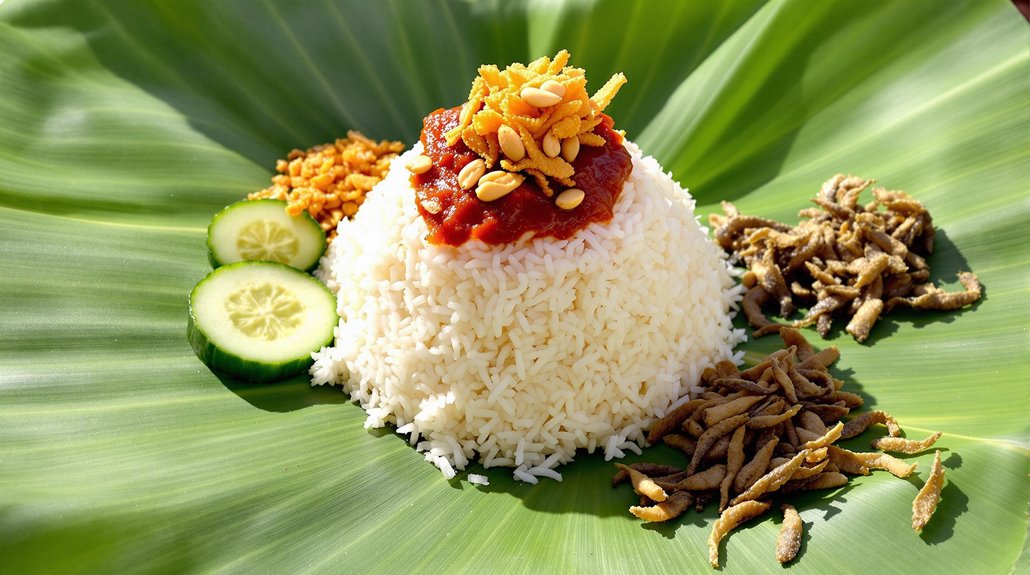
Traditional accompaniments modify nasi lemak from a simple coconut rice dish into a complete Malaysian feast. While rice cooked in coconut milk forms the foundation, it's the toppings that create a perfect balance of flavors and textures. You'll find crispy ikan bilis (anchovies) adding a savory punch, alongside crunchy roasted peanuts that bring nutty depth to each bite.
The sambal nasi, a slow-cooked chili paste, provides essential heat and complexity. It's often served with sambal ikan or sambal tumis variations, and you can opt for protein additions like fried chicken or Beef rendang. Fresh cucumber slices offer a cooling contrast to the spicy elements. Whether wrapped in banana leaf or plated traditionally, lemak can be served with these classic accompaniments that alter it into Malaysia's beloved breakfast dish.
Making the Signature Sambal Sauce
Among all accompaniments mentioned, sambal stands as the heart of nasi lemak's distinct flavor profile. To create this sweet sambal sauce, you'll need to achieve the "pecah minyak" stage, where the oil separates from the paste.
Start by heating cooking oil over medium heat, then follow these essential steps:
- Blend your chilies with a splash of hot water until smooth, ensuring proper consistency
- Sauté the blended paste until you notice the oil separation (pecah minyak)
- Mix everything with shallots, garlic, and dried shrimp paste
- Balance flavors with palm sugar and lemon juice (or use lime if preferred)
The key is patience - don't rush the cooking process. You'll know your sambal's ready when it turns deep red and the oil glistens on top.
Serving Styles and Presentation
Serving nasi lemak presents two distinct approaches: a casual banana leaf wrap for on-the-go dining or an elaborate plated presentation for sit-down meals. For the traditional wrap, known as nasi lemak bungkus, you'll find the coconut rice formed into a neat three-sided dome and enveloped in banana leaves, which infuse the dish with an additional layer of natural fragrance.
Whether wrapped or plated, you'll enjoy the classic accompaniments: spicy sambal tumis, crispy fried anchovies, crunchy peanuts, cooling sliced cucumbers, and a perfectly cooked hard-boiled egg.
If you're opting for the plated version, you can enhance your meal with additional sides like succulent fried chicken or rich beef rendang. The plated presentation gives you the flexibility to investigate these heartier variations while savoring all the traditional elements.
Tips for Authentic Flavor and Texture
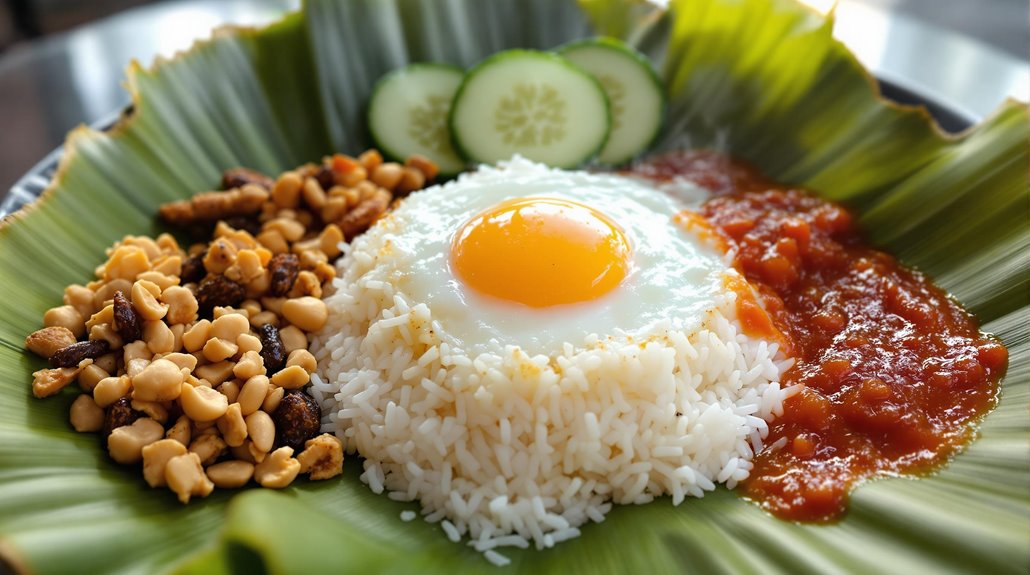
Three key techniques guarantee authentic nasi lemak's signature flavor and texture. You'll want to steam your Basmati rice in a tiered steamer after pre-cooking it with freshly squeezed coconut milk and screwpine leaves. Don't use a rice cooker - traditional steaming creates fluffier, more flavorful results.
Let the rice rest for 10 minutes after cooking to achieve perfect texture.
- Mix 1 cup coconut milk with water and rice, then pre-cook before steaming
- Add pandan (screwpine) leaves and ginger while steaming for authentic aroma
- Fry ikan bilis until golden brown and crispy
- Let rice rest covered after cooking, fluff gently with a fork
These steps confirm your Nasi Lemak will have the ideal balance of coconut richness, aromatic flavors, and the perfect grain separation that marks an authentic preparation.
Regional Variations Across Malaysia
The rich tapestry of Malaysian cuisine shines through its diverse nasi lemak variations across the country's regions.
If you're traveling through the east coast states of Kelantan and Terengganu, you'll find your nasi lemak served with fiery sambal and crispy chicken wings. In Penang, you'll uncover a distinctive version featuring fried eggs paired with ikan bilis (anchovies) in sweet-sour gravy.
The west coast offers a gentler approach with milder sambal, boiled eggs, and crispy fried anchovies.
For a truly unique experience, head to Sarawak, where you'll encounter nasi lemak enhanced with abon (shredded meat) and sambal belacan, a pungent shrimp paste condiment. These regional variations showcase how local ingredients and cooking traditions have shaped Malaysia's beloved national dish to reflect each area's distinct culinary identity.