Medialunas and Café Con Leche: Argentina’s Sweet Breakfast Duo
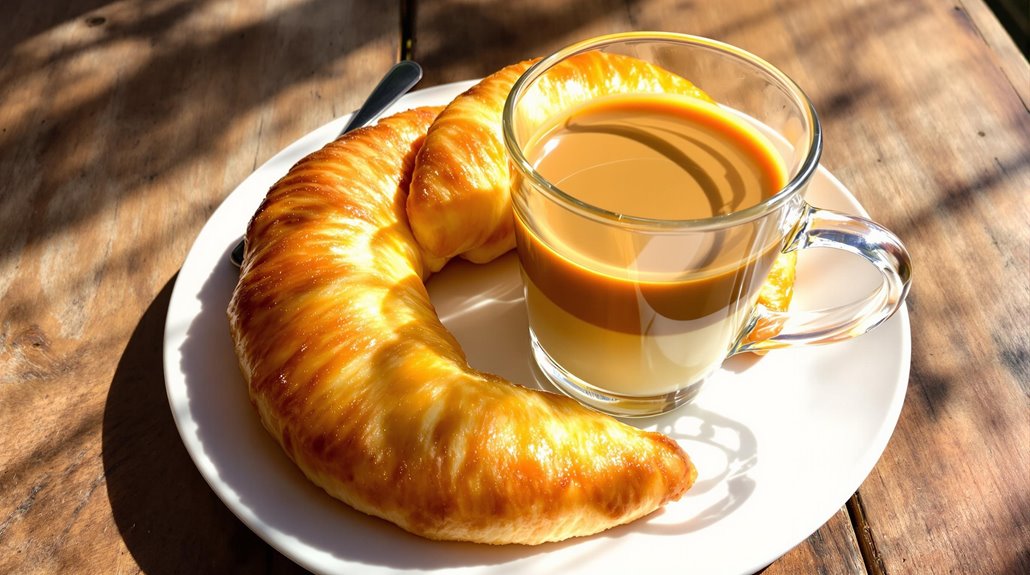
Argentina's beloved breakfast duo, medialunas and café con leche, brings together flaky, sweet pastries with perfectly crafted coffee. You'll find these crescent-shaped treats are smaller and sweeter than French croissants, featuring a glossy honey glaze that's perfect for dunking into your creamy coffee. European immigrants brought this tradition in the 19th century, and it's now deeply woven into Argentina's morning culture. Uncover why locals can't imagine starting their day any other way.
The History Behind Argentina's Morning Ritual
While many nations have their signature breakfast traditions, Argentina's morning ritual of medialunas and café con leche stands as a proof of the country's rich immigrant heritage.
You can trace this beloved pairing back to the 19th century when European immigrants brought their expertly crafted dough recipes to Argentine shores. As these skilled bakers settled in their new homeland, they introduced the art of creating delicate, crescent-shaped pastries that would soon capture the nation's heart. Much like how Thomas Jefferson's waffle iron helped establish a breakfast tradition in America, these European baking techniques fundamentally shaped Argentina's morning customs.
What Makes Medialunas Different From Croissants
Many people mistake medialunas for smaller versions of French croissants, but these Argentine pastries have their own distinct characteristics. While both are crescent-shaped and buttery, medialunas are distinctly sweeter and denser than their French cousins. When the dough is formed, bakers incorporate more sugar and eggs into medialunas, giving them a richer, more indulgent texture.
You'll notice that medialunas have a glossy finish, thanks to a sweet glaze that's applied after baking. They're also typically smaller than croissants, making them the perfect size for dunking into your café con leche. The pastry's interior features fewer layers than a croissant, resulting in a less flaky but more substantial bite. This heartier texture helps medialunas hold up better when dipped in hot beverages. Similar to how French cultural influence spread crêpes across continents, the medialuna's popularity has expanded beyond Argentina's borders.
Essential Ingredients for Perfect Medialunas
To create authentic Argentine medialunas, you'll need a carefully selected blend of traditional ingredients that work together to achieve their signature taste and texture. These sweet pastries, perfect alongside a steaming café con leche, require quality ingredients for the best results.
Your essential ingredients must include:
- Basic pastry components: plain flour, active dry yeast, unsalted butter, lukewarm milk, and eggs at room temperature
- Flavoring elements: orange zest, vanilla extract, and a pinch of salt
- Sweetening agents: caster sugar and honey for the dough, plus extra for the post-bake syrup
Whether you're planning to serve them plain or filled with dulce de leche, using fresh, high-quality ingredients will guarantee your medialunas achieve that perfect balance of sweetness and flakiness that Argentines love. Unlike French crêpes, which are thin and folded with sweet fillings, medialunas are flaky, crescent-shaped pastries that don't require folding or rolling.
Step-by-Step Medialuna Preparation
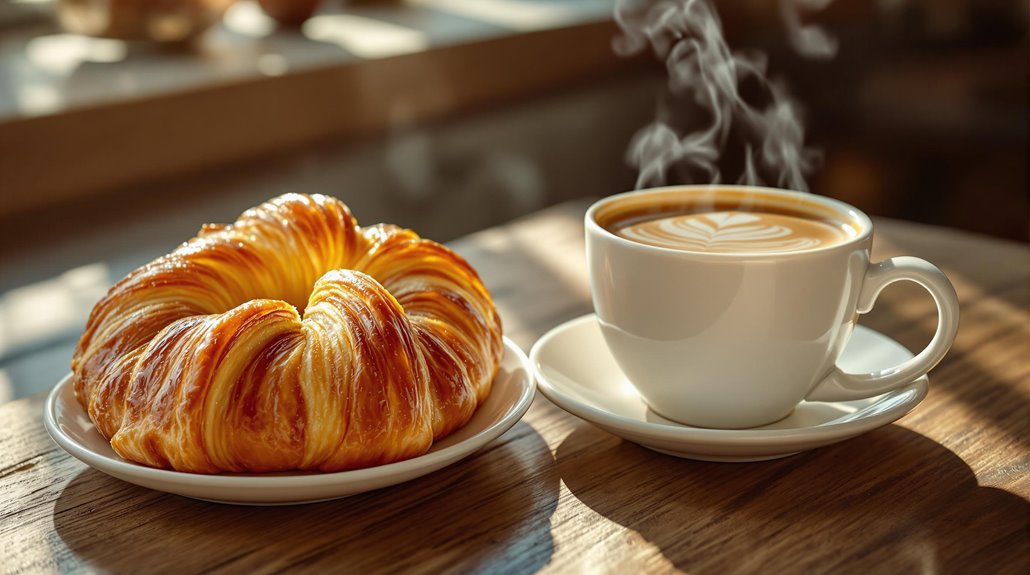
Since creating perfect medialunas requires precision and patience, following a methodical approach will guarantee your success. Begin by kneading all your ingredients until you've formed a smooth dough, then let it rest for 2 hours until it doubles in size.
Next, roll the dough onto a floured surface, creating a thin rectangle. Cut it in half, then shape your triangles for the classic medialuna form. Let them proof until they've doubled again, then make the egg wash and brush it over each piece. Bake at 180°C for 13-15 minutes until golden brown.
For the finishing touch, prepare a sweet syrup by combining sugar, water, honey, and orange slices. Pour this warm mixture over your freshly baked medialunas to achieve that signature Argentine sweetness and shine.
The Art of Brewing Café Con Leche
A perfectly crafted café con leche stands as the cornerstone of Argentina's morning ritual. You'll find this beloved coffee drink paired with golden, flaky medialunas in cafes across the country, where skilled baristas carefully blend espresso and steamed milk in a precise two-to-one ratio.
To achieve the perfect café con leche at home, follow these essential steps:
- Pull a rich espresso shot, ensuring proper extraction for ideal flavor
- Steam your milk to create velvety microfoam, monitoring temperature carefully
- Combine the two elements in a 2:1 milk-to-espresso ratio, creating a smooth, balanced beverage
The result is a creamy, harmonious drink that's become inseparable from Argentina's breakfast culture. When you're ready to experience this morning tradition, remember that the magic lies in the careful attention to both temperature and texture.
Traditional Argentinian Breakfast Etiquette
While enjoying your café con leche in Argentina, you'll notice distinct customs that shape the breakfast experience. Unlike hearty American or English breakfasts, Argentinians prefer a light, sweet start to their day. You'll find locals gathering at cafes in the early morning, often standing at the counter rather than sitting down for extended periods.
Every morning, you'll observe patrons dunking their medialunas into their café con leche - it's perfectly acceptable and even encouraged. When dining at someone's home, don't be surprised if breakfast isn't served until 9 or 10 AM. You're expected to take small bites and sips, engaging in conversation rather than rushing through the meal. Remember to keep your hands visible on the table, not in your lap, as this is considered proper etiquette.
Best Time and Places to Enjoy This Pairing
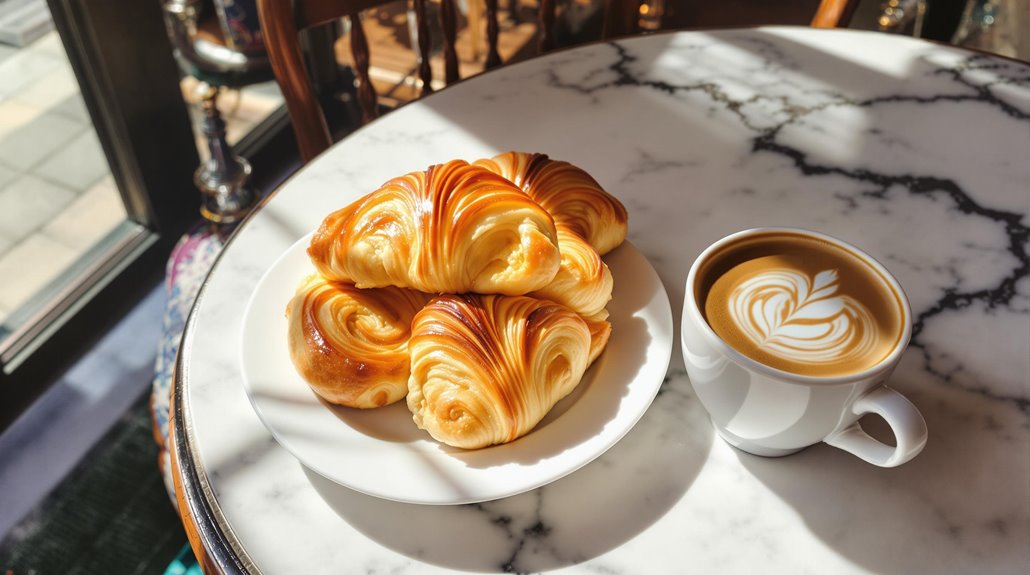
The perfect time to experience Argentina's beloved medialuna and café con leche ritual begins during desayuno, typically between 7 and 11 AM. You'll find locals heading to their favorite confiterías, where the aroma of freshly baked pastries and rich coffee fills the air.
For the most authentic experience, here's where to enjoy this classic pairing:
- Family-owned piechotiuk bakeries, where traditional recipes often include a dulce de leche filling option
- Charming cafes throughout Palermo and Recoleta neighborhoods in Buenos Aires
- Local pastry shops that serve fresh-from-the-oven medialunas throughout the day
While desayuno is the traditional time to enjoy this duo, don't feel restricted. You can savor these treats during afternoon siesta or even as a late-night indulgence while studying or socializing.
Tips for Achieving the Perfect Golden Crust
Commanding the iconic golden crust of Argentine medialunas requires attention to key baking techniques. To make these appetizing pastries, you'll need to become proficient in the art of lamination, carefully folding chilled butter into the dough on a floured surface.
Before baking, let your shaped medialunas rest until they've doubled in size - this vital step guarantees that perfect flaky texture you're after.
When you're ready to bake, brush each piece with egg wash to create that signature glossy finish. Pop them into a hot oven at 180°C for 13-15 minutes until they achieve that beautiful golden-brown color.
For an extra touch of Argentine authenticity, don't forget to brush your freshly baked medialunas with sweet almibar syrup, which adds both shine and a pleasant caramelized crunch to the exterior.
Regional Variations Across Argentina
Traveling across Argentina's diverse regions reveals fascinating local dives on the classic medialuna. While Buenos Aires bakeries stick to the traditional sugar glaze, you'll explore unique interpretations as you discover the country's provinces.
Northern bakers dust their medialunas with powdered sugar, creating a delicate, snowy appearance. In coastal cities like Mar del Plata, you'll detect hints of bright lemon zest in every bite.
The regional variations become even more distinctive when you consider:
- Córdoba's sweet surprise of dulce de membrillo filling
- Northwestern provinces' distinctive texture combination of crispy exterior and pillowy interior
- Patagonia's generous portions featuring dried fruits like apricots and figs
These regional twists showcase how local bakers have adapted this beloved pastry while maintaining its essential character as Argentina's favorite breakfast companion.
Storing and Reheating Your Medialunas

While enjoying fresh medialunas straight from the bakery offers an unmatched experience, knowing how to properly store and reheat these delicate pastries guarantees you'll never waste a single crumb.
Make sure to wrap any leftover medialunas in foil or plastic wrap if you're planning to enjoy them within two days. Place them in a bowl and cover at room temperature to maintain their flaky texture.
For longer storage, you can freeze your medialunas for up to three months. When you're ready to serve, pop them in a 350°F oven for 5-7 minutes until they're warm and crispy. To enhance their appeal, brush the tops with melted butter just before serving.
If you're baking fresh ones, don't forget to apply an egg wash before they go in the oven for that signature golden-brown shine.