A Taste of Morocco: Traditional Mint Tea and Breakfast Breads
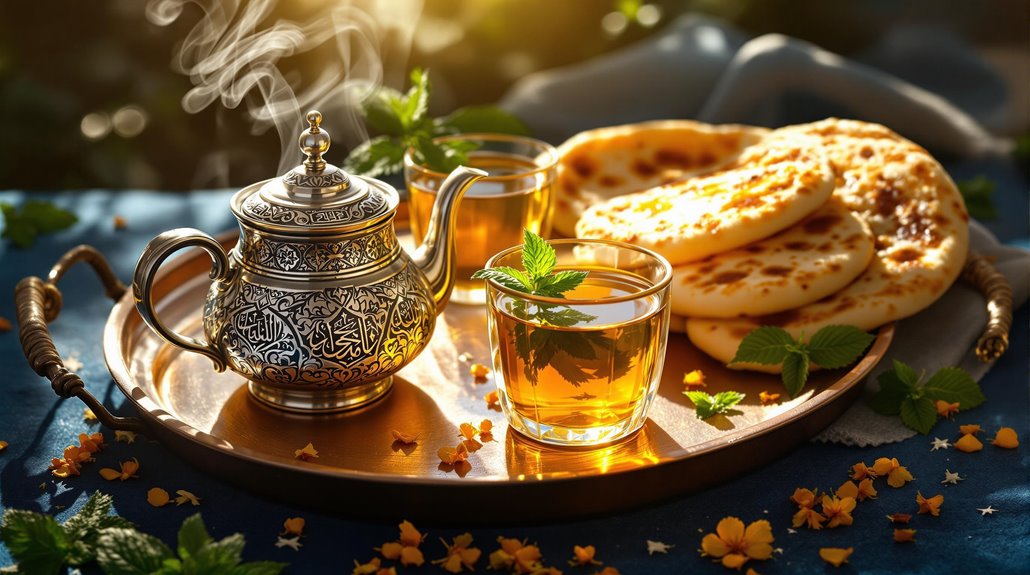
You'll uncover the heart of Moroccan breakfast culture through its iconic mint tea and fresh-baked breads. Each morning begins with a ritual of steeping gunpowder green tea with fresh mint leaves, while an array of breads like batbout, rghaif, and beghrir emerge warm from the oven. These breads serve as both utensils and sustenance, perfect for scooping up honey, olive oil, or soft cheese. The rich traditions behind these morning staples reveal Morocco's deep culinary heritage.
The Sacred Role of Bread in Moroccan Culture
Why do Moroccans consider bread sacred? In Moroccan culture, bread symbolizes God's blessing and represents life itself. You'll find that traditional Moroccan bread accompanies every meal and serves as both sustenance and a utensil for scooping up tagines and dips.
When bread is made in Moroccan homes, it's treated with deep respect. You won't see locals throwing away bread; instead, they'll feed leftover pieces to animals or place them in designated bins for collection. This reverence stems from Islamic teachings and centuries-old customs that view bread as a divine gift.
Moroccan Food culture centers heavily around communal dining, where bread acts as the cornerstone of every gathering. Whether it's breakfast, lunch, or dinner, you'll notice that no table is complete without freshly baked, round loaves of this cherished staple.
Like ancient Roman pancakes, these traditional breads have remained a fundamental part of Mediterranean cuisine for thousands of years.
Essential Components of a Traditional Moroccan Breakfast
While breakfast customs vary across Morocco's diverse regions, several core elements unite the traditional morning immersion. You'll find fresh bread at the heart of every Moroccan breakfast, typically served with olive oil, honey, or homemade jams. Traditional Moroccan recipes call for complementing these staples with soft cheese, eggs prepared with cumin and herbs, or b'stilla, a savory morning pastry.
No Moroccan breakfast is complete without the ritual of mint tea. You'll watch as your host expertly pours the steaming Moroccan tea from a height, creating a frothy top layer and releasing its aromatic blend of green tea, fresh mint leaves, and sugar. Many families also serve fresh fruit, dates, and msemen – flaky, square-shaped flatbreads that perfectly soak up the morning's provisions. For those seeking a Western fusion, some urban cafes now offer buttermilk pancakes alongside traditional fare, though these remain distinctly separate from authentic Moroccan breakfast customs.
Mastering the Art of Moroccan Mint Tea
The graceful art of preparing Moroccan mint tea converts a simple beverage into a cherished ritual that epitomizes Moroccan hospitality. Whether you're visiting a local shop or someone's home, you'll find this iconic drink served throughout the day.
To make authentic Moroccan tea, you'll need gunpowder green tea, fresh mint leaves, sugar, and boiling water. Start by rinsing the tea leaves to remove any bitterness, then steep them with the mint in hot water. You can adjust the sweetness to your liking, though traditionally it's made quite sweet.
For added complexity, try incorporating aromatic herbs like verbena or geranium. The key to perfect tea lies in the careful simmering process, which allows the flavors to blend harmoniously, creating a fragrant and invigorating beverage that's central to Moroccan culture.
Much like the precise evaporation process used in maple syrup production, the careful heating of Moroccan mint tea concentrates its flavors and creates its signature taste.
Popular Varieties of Moroccan Breakfast Breads
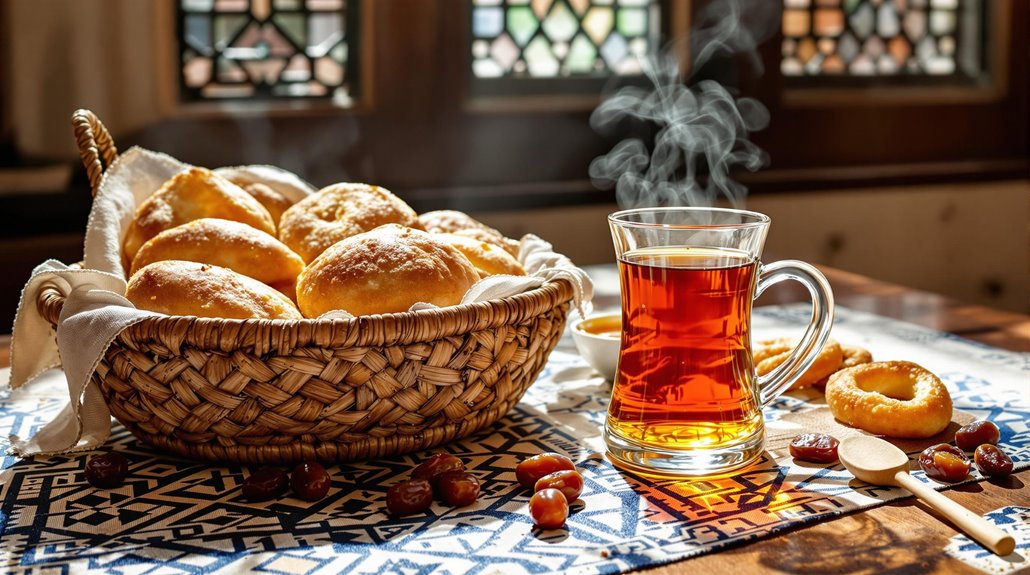
Fresh-baked breads serve as the cornerstone of Moroccan breakfast tables, offering a diverse array of textures and flavors to immerse into the day. You'll find batbout, a stovetop pita bread, perfectly complementing your morning mint tea. If you're craving something heartier, try rghaif, a stuffed bread filled with seasoned ground beef that's become a breakfast favorite in Moroccan cuisine.
For a lighter option, beghrir's distinctive honeycomb texture makes these pancakes ideal for soaking up honey and butter. The laminated msemmen offers you a pleasant contrast of textures, with its crunchy exterior giving way to a soft, fluffy inside. While round khobz loaves might be Morocco's daily bread staple, at Moroccan breakfast time, these specialized varieties take center stage, each bringing its own unique character to the morning meal.
The Ancient Tradition of Community Bread Baking
Community bread baking lies at the heart of Morocco's culinary heritage, with neighborhood ferrans (communal ovens) once serving as social hubs where families gathered daily. You'd find these ovens strategically placed throughout each neighborhood, where locals would bring their homemade dough to make Traditional Moroccan bread in large quantities.
What made this practice particularly special was how each region developed its own unique bread-making techniques, reflecting the diverse cultural traditions across Morocco. In these communal spaces, families would share recipes, stories, and maintain social bonds while waiting for their bread to plunge.
Today, you'll notice modern bakeries have largely supplanted these community ovens, marking a significant shift in how Moroccans source their daily bread and remodeling age-old customs of collective bread making.
Khobz and Msemen: Cornerstone Breads of Morocco
Among Morocco's diverse array of breads, khobz and msemmen stand as pillars of daily sustenance and cultural identity. You'll find khobz, a round semi-leavened loaf, at nearly every Moroccan meal, where it's used to scoop up flavorful tagines or simply enjoyed with olive oil.
When Moroccans eat breakfast, they often reach for msemmen, a buttery flatbread with delicate layers that showcase the artistry of Moroccan cooking.
These cornerstone breads reflect Morocco's rich culinary heritage, with regional variations adding depth to the nation's bread culture. While traditional community ovens once dominated the baking terrain, modern adaptations haven't diminished the central role these breads play in daily life.
Whether you're exploring local markets or dining in homes, you'll uncover how khobz and msemmen remain essential to Moroccan hospitality.
Regional Variations in Moroccan Bread Making
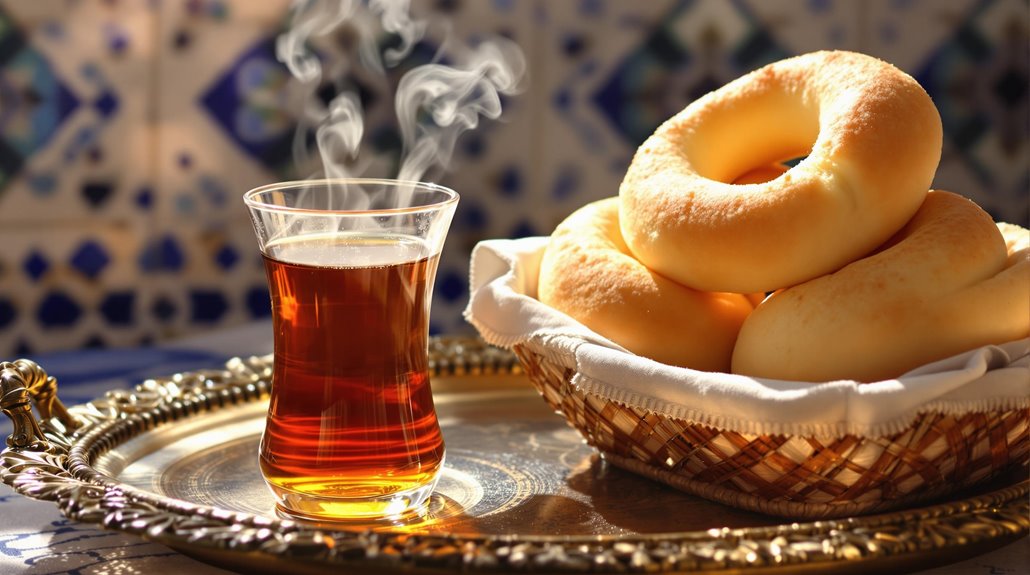
Throughout Morocco's diverse scenery, each region has developed its own distinct bread-making traditions that reflect local tastes, ingredients, and cultural influences. You'll find traditional community ovens, called Ferran, where families once gathered to bake their daily bread before modern bakeries emerged.
As you travel across the country, you'll uncover regional variations in Moroccan bread that showcase unique flavors and techniques. In some areas, you'll encounter the semolina-based Harcha, while other regions boast themselves on their perfectly layered Msemmen. The Berber regions offer Medfouna, a stuffed bread that's similar to pizza, while coastal areas might serve you light, fluffy Batbout. Each region's specialty, from the thousand-holed Beghrir to the sesame-topped Krachel, tells its own story of local culinary heritage.
The Ritual of Tea Service and Bread Breaking
The graceful art of Moroccan tea service metamorphoses an ordinary drink into a cherished social ritual, particularly when paired with freshly baked bread. You'll witness your host carefully steeping gunpowder green tea with fresh spearmint leaves, creating a fragrant, sweet beverage that's served with flair.
Watch as they lift the ornate Moroccan teapot high above the glasses, pouring your tea in a theatrical stream that creates delicate bubbles on the surface. As you sip your mint tea, you'll be offered different types of bread, from traditional khobz to flaky msemmen and pillowy batbout. Each bread serves a unique purpose, whether it's scooping up savory dishes or being dipped in golden olive oil.
This combination of tea and bread sharing represents the heart of Moroccan hospitality, bringing people together in a time-honored tradition.
Preserving Heritage Through Traditional Recipes
Since ancient times, Moroccan bread-making has remained a chronicle to cultural preservation, with recipes and techniques passed down through generations of families. You'll find that each region's distinct methods tell a story, from the way dough is kneaded to how it's baked in community ovens.
At today's Moroccan table, you'll uncover traditional flat bread varieties like khobz and msemmen alongside modern adaptations. The Berber pizza, known as medfouna, showcases how ancient recipes have evolved while maintaining their cultural essence. When you taste specialties like the sugar-dusted krachel or the thousand-holed beghrir, you're experiencing living history. These breads aren't just sustenance; they're a reflection of Morocco's rich culinary heritage, preserved through the dedicated hands of home bakers who still follow time-honored techniques.
Seasonal Influences on Moroccan Breakfast Customs
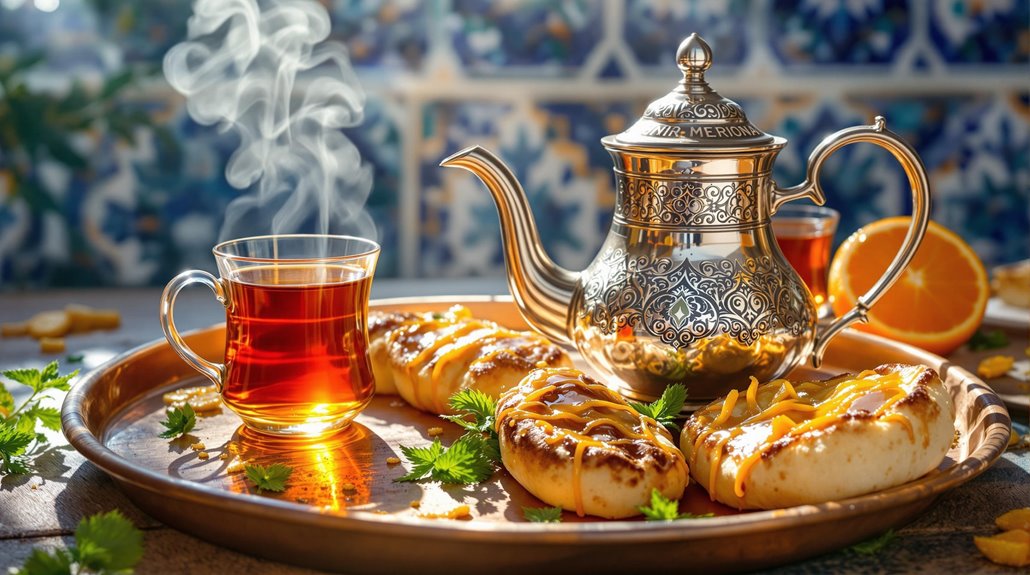
Naturally, Morocco's lively breakfast culture shifts with the changing seasons, adapting to nature's rhythms and local harvests. You'll find winter breakfasts brightened by fresh citrus fruits, while fall brings newly-pressed olive oil that enhances every Middle Eastern morning meal.
During summer months, you can spot families baking small round batbout and traditional khobz breads in outdoor ovens, taking advantage of the intense heat. When Ramadan arrives, msemmen becomes a centerpiece of the breakfast table, offering sustenance after the daily fast.
Each seasonal shift brings its own unique influence to Morocco's breakfast customs, with local produce and traditional ingredients working in harmony. Whether it's winter's juicy oranges or fall's golden olive oil, you'll experience how nature's calendar shapes these time-honored morning rituals.