
Why Is It Called Continental Breakfast in America?

You'll find that "continental breakfast" gets its name from European visitors to American hotels in the late 1800s. Hotels began offering lighter breakfast fare like pastries, bread, and coffee to accommodate these travelers from continental Europe, who preferred simpler morning meals compared to heartier American breakfasts. This European-inspired dining style proved cost-effective for hotels while satisfying guests' needs - and there's much more to this revolutionary shift in American hospitality.
The Origins of Continental Breakfast in American Hotels
When American hotels sought to attract European tourists in the late 19th century, they introduced a lighter breakfast option known as the "continental breakfast." First mentioned in The Sanitarian in 1896, this simplified morning meal offered coffee, bread, pastries, and fruit as an economical alternative to the traditional American breakfast spread.
You'll find that this cost-effective dining concept actually originated in Britain during the mid-1800s, reflecting the lighter breakfast preferences common throughout continental Europe. While the new breakfast style helped hotels appeal to European visitors and reduce operational costs, many American guests weren't initially impressed. They viewed this lighter fare as an inadequate substitute for their customary hearty breakfast.
Despite early criticism, the continental breakfast's convenience eventually won over American travelers, becoming a standard hotel amenity nationwide. The shift away from traditional bacon breakfasts, which had been heavily marketed by advertisers using physician endorsements, marked a significant change in American morning dining habits.
European Influences on American Hotel Dining
The European influence on American hotel dining extended far beyond the simple adoption of continental breakfast. When European travelers began visiting American hotels in greater numbers during the late 19th century, they brought with them different expectations for their morning meals. Rather than serving the hearty American-style breakfast, hotels adapted by offering traditional light items like toast, pastries, and coffee.
The concept, which originated in Britain during the mid-19th century, helped bridge the cultural gap between American and European dining preferences. Hotels unearthed that offering continental breakfast could both appeal to international visitors and streamline their breakfast service operations. This shift in breakfast offerings came during the same era when Thomas Jefferson's waffle iron was revolutionizing American breakfast culture.
Traditional Components of a Continental Breakfast
Since its adoption in American hotels, continental breakfast has centered around lightweight, easily-prepared fare that you'd typically find in European morning meals. You'll find staples like fresh pastries, toast, muffins, and yogurt, accompanied by hot beverages such as coffee and tea.
Hotels aimed to please both European travelers and the emerging middle class by offering this light breakfast option that bridged the gap between hearty American breakfasts and modest European morning meals. This breakfast model proved cost-effective for hotels while satisfying their guests' needs.
The simplicity of continental breakfast items made them ideal for serving large groups efficiently, which is why you'll still find this format in hotels today. It's a practical compromise that combines American hospitality with European dining sensibilities. This lighter approach contrasts sharply with traditional American breakfast preferences for bacon and eggs, which became widely popular in the early 20th century.
The Evolution From Hearty to Light Breakfast Options
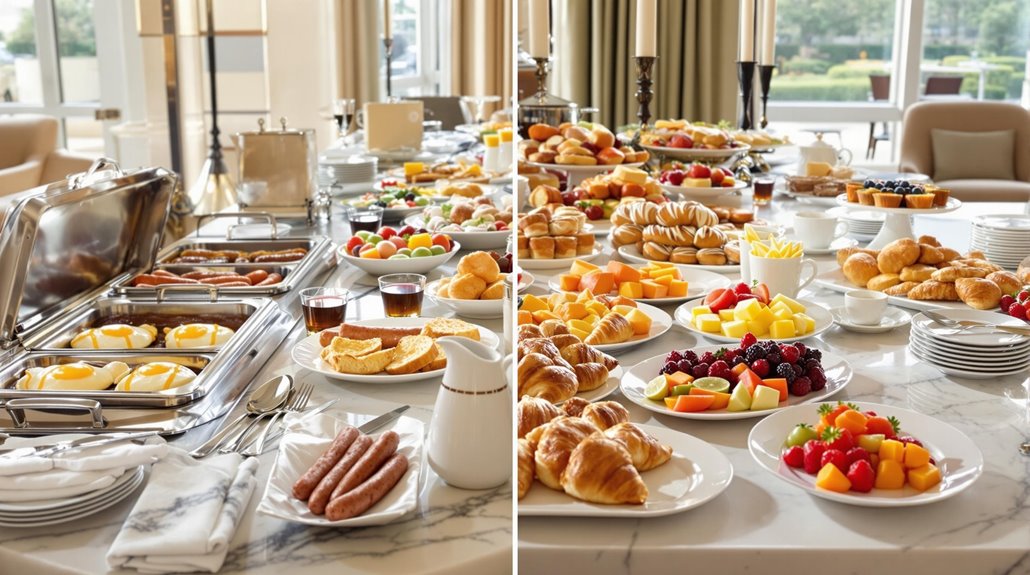
Throughout the 1800s, American breakfast habits underwent a dramatic alteration as the nation shifted from agricultural labor to less physically demanding work. You'll find that the hearty farm breakfasts of meat, eggs, and bread gradually gave way to lighter options.
The continental breakfast originated when American hotels began adapting to European travelers visiting in the late 19th century. The first known use of "continental breakfast" in 1896 describes the lighter, European-style morning meals that contrasted with traditional American fare. Continental-style hotels merged the American payment model with European breakfast preferences, offering complimentary light breakfast while charging separately for other meals. This shift wasn't just about the food - it represented how American hotels evolved to accommodate changing tastes and international hotel guests, modifying the morning dining experience into something more versatile and universally appealing.
How Hotels Benefited From the Continental Model
By adopting continental breakfast service, hotels uncovered multiple operational and financial advantages that altered their business model. When hotels first began to offer a lighter morning meal option, they plunged into the discovery that the term continental breakfast originated from a cost-effective approach.
What's called the continental model required fewer staff and relied on shelf-stable items, making it cheaper and more flexible than traditional breakfast service.
As Hotels Offer their guests called continental breakfast options, they're providing perceived value through free food while maintaining efficient operations. Instead of preparing resource-intensive made-to-order items, hotels made an effort to stock simple, versatile breakfast selections that appealed to diverse guest preferences. This strategy helped entice more travelers while keeping operational costs low, proving to be a win-win solution for both hotels and their guests.
The Shift in American Breakfast Culture
American breakfast habits underwent a dramatic change in the early 1800s. Back then, you'd find farm workers starting their day with substantial American breakfasts packed with meat, eggs, fish, bread, cereal, and fruit to fuel physical farm labor.
But as the nation evolved and jobs became less physically demanding, so did the morning meal preferences. The growing middle class began favoring lighter breakfast options, leading hotels to adapt their room and board selections. They introduced the continental breakfast - a simpler, European-style meal of rolls, pastries, and coffee. This change served two purposes: it satisfied the changing tastes of health-conscious Americans while also catering to European tourists who were accustomed to more modest morning meals. The shift marked a significant departure from traditional hearty American breakfasts.
Modern Interpretations of Continental Breakfast

The modern continental breakfast has evolved far beyond its European roots, plunging into a diverse, all-inclusive hotel dining experience. You'll find that today's free breakfast selections at American hotels barely resemble the simple fare once associated with mainland Europe. What started as a light morning meal has transformed into an extensive spread that often combines traditional continental items with American-style breakfasts.
You'll notice hotels have adapted their continental breakfast offerings to appeal to the changing tastes of their guests. The perceived value of these complimentary meals has increased substantially, with many properties adding made-to-order stations, hot dishes, and ethnic options. The convenience of the food remains a key feature, but this type of breakfast now represents a broader, more substantial dining experience that's become a standard amenity in American hospitality.
The Business Strategy Behind Complimentary Breakfasts
Behind every complimentary breakfast lies a calculated business strategy that hotels have refined since the 19th century. You'll notice that Hotel Breakfasts Are Called "continental" as part of an effort to appeal to European travelers, while offering a cost-effective food service model. Hotels unearthed the value of getting something for "free" was a powerful way to attract guests.
- Lower staffing costs compared to full-service breakfast options
- Easier to maintain consistency across multiple hotel locations
- Flexibility to bundle or separate breakfast costs from room rates
- Minimal kitchen equipment and preparation requirements
When you understand what Exactly Is a Continental breakfast option, you'll see why it's brilliant - hotels can offer an appealing amenity while keeping operational costs low. This simple breakfast strategy continues to make business sense today.
Regional Variations of Continental Breakfast
Regional differences across America's varied terrain shape how hotels adapt their continental breakfast selections to meet local tastes and expectations. You'll find that while the basic European-inspired continental breakfast remains consistent with pastries and coffee, hotels have incorporated distinct American-style breakfasts into their repast.
In the Southeast, you might encounter grits and biscuits alongside traditional continental fare, while Southwest hotels often feature spicier options with Mexican influences. New England establishments frequently include maple syrup products and local fruits, whereas West Coast venues emphasize fresh produce and health-conscious alternatives. While these regional variations stray from the original countries of mainland Europe concept, they reflect America's diverse culinary milieu. The portions tend to be larger than traditional European continental breakfasts, adapting to American preferences for heartier morning meals.
The Impact on American Hotel Industry Standards

Since their introduction in the late 19th century, continental breakfasts have revolutionized American hotel industry standards, altering how lodging establishments approach morning dining services. The term first refers to the type of light breakfast items popular among European travelers, and today you'll find that most meals in the hotels offer a continental option.
This shift has created a perceived value of getting breakfast included with your stay, becoming a middle ground between full-service dining and no meal service.
Hotels found it more cost-effective to provide simple breakfast items. The model helped standardize breakfast expectations across the industry. Guests came to expect complimentary morning dining options. This approach balanced European preferences with American hospitality traditions.