Arepas: The Staple Venezuelan Breakfast You Can't Miss
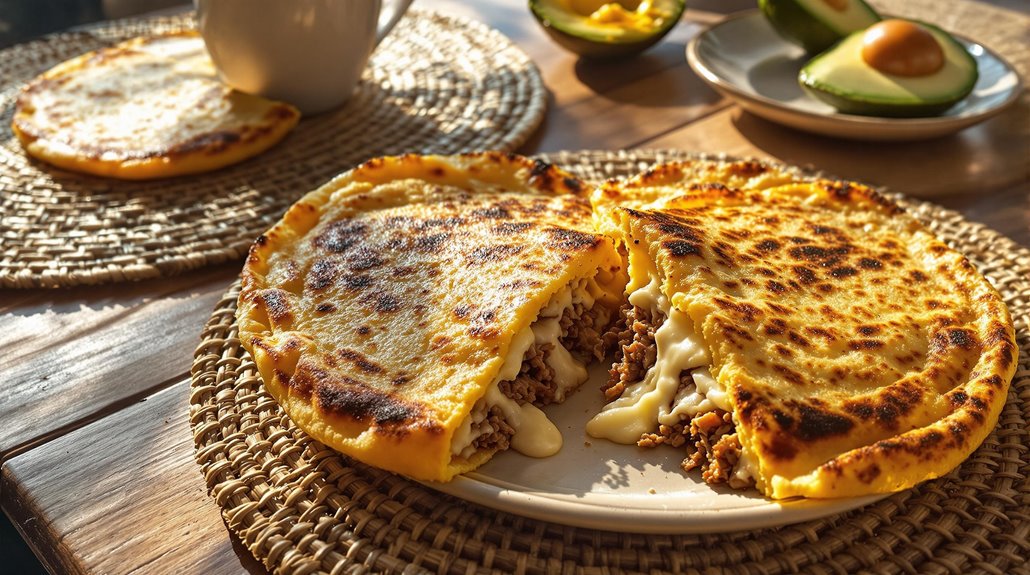
Arepas are Venezuela's beloved corn-based breakfast staple that you'll fall in love with at first bite. These naturally gluten-free patties feature a crispy exterior and tender interior, making them perfect for stuffing with cheese, meats, or avocado. You can easily prepare them at home using masarepa (corn flour), water, and salt - no kneading or rising required. From their 3,000-year indigenous heritage to modern creative combinations, arepas offer a world of culinary possibilities to investigate.
What Makes Arepas Special
The humble arepa stands out as one of South America's most beloved comfort foods, particularly in Venezuela and Colombia. This versatile corn flour patty, made from masarepa, offers you a naturally gluten-free alternative to traditional bread while providing a uniquely satisfying eating experience.
What makes arepas truly special is their distinctive texture - crispy on the outside yet tender and creamy within. As a staple food that's easy to prepare, you won't need to worry about kneading or waiting for dough to rise. You can make them ahead of time and enjoy them throughout your week, whether for breakfast, lunch, or dinner.
Their adaptable nature means you're free to stuff them with whatever ingredients you prefer, making them an ideal choice for both traditional and creative meals. Many enjoy them split and filled with chorizo and beans, similar to how they're traditionally served in South America.
The History Behind Venezuelan Arepas
Spanning over three millennia, arepas have nourished indigenous peoples across Colombia and Venezuela, serving as a cornerstone of their daily sustenance. The word "arepa" itself originates from the Cumanagoto people's term "erepa," meaning corn - the essential ingredient that the Chibcha people considered a divine gift.
The preparation of this staple food was traditionally women's work in indigenous communities. They managed the entire process, from soaking the corn to grinding it into flour, passing down these techniques through generations. Like the Stone Age pancakes discovered by archaeologists, these early corn-based flatbreads represented one of humanity's first prepared foods. Today's arepas remain deeply woven into the cultural heritage of both nations, though their preparation has evolved with modern techniques. When you bite into an arepa today, you're tasting more than just food - you're experiencing a culinary tradition that's been cherished for thousands of years.
Essential Ingredients and Equipment
Making authentic Venezuelan arepas requires just a handful of essential ingredients and basic kitchen tools. You'll need corn flour called masarepa (often branded as Harina P.A.N.), which differs from masa harina as it's specifically made from pre-cooked ground white corn. This gluten-free flour combines with water and salt to create the perfect dough.
To cook your arepas, you'll want a reliable non-stick skillet or griddle. For convenience, an arepa maker works like a panini press to guarantee even cooking and uniform shape. Don't forget to have a sharp knife ready for splitting the arepas once they're done. While optional, butter or oil can enhance the dough's texture, and having parchment paper or plastic wrap on hand helps when forming the patties. Similar to Hong Kong bubble waffles, proper cooking temperature and timing are crucial for achieving the ideal crispy exterior while maintaining a soft interior.
Step-by-Step Arepa Making Guide

Now that you have your ingredients and equipment ready, creating perfect arepas comes down to commanding a few simple steps. Start by mixing your masarepa (a gluten-free corn flour) with water and salt until you've formed a smooth dough. Let it rest for 5 minutes to achieve the ideal consistency.
Shape your dough into patties and cook them on medium heat for 5-7 minutes per side until they're lightly golden brown. These versatile Venezuelan and Colombian staples can be filled with shredded chicken or your favorite ingredients.
If you make extra, you'll be glad to know they store well - keep them at room temperature for 2-3 days, refrigerate for up to 5 days, or freeze for up to 3 months. You can even store unused dough in the fridge for 3 days before following this recipe again.
Popular Arepa Fillings and Combinations
While arepas are delicious on their own, their true magic lies in the countless filling combinations that alter them into a complete meal. As a staple of both Venezuelan and Colombian cuisine, you'll find these versatile corn patties made fresh twice a week in most households.
You'd love to try these popular combinations:
- De queso - The classic melted cheese filling that'll make your mouth water
- Reina Pepiada - A creamy mix of chicken and avocado that's free from complications
- Sifrina - An elevated version of Reina Pepiada with added cheese for extra indulgence
- La Pelúa - Savory shredded beef and cheese that's worth every bite
- La Catira - Simple yet satisfying shredded chicken and cheese that'll keep you coming back
Taste these combinations next time you're making arepas, and uncover your favorite!
Mastering the Perfect Arepa Texture
The perfect arepa texture relies on three essential elements: the right flour, proper kneading technique, and precise cooking temperature. You'll need masarepa, a specialized corn flour with higher starch content, to achieve that authentic texture. Don't substitute it with regular masa harina, as it won't deliver the same results.
Your kneading technique matters greatly - work the dough until it develops gluten-like structures for that coveted soft interior and crisp exterior. Once you've prepared the dough with the correct water-to-flour ratio, cook it on a hot griddle to create that distinctive charred crust while maintaining a fluffy center. Remember to let your arepas rest for a few minutes after cooking. This resting time is imperative - it allows the texture to set properly, preventing your arepa from crumbling when you split and fill it.
Storing and Reheating Your Arepas
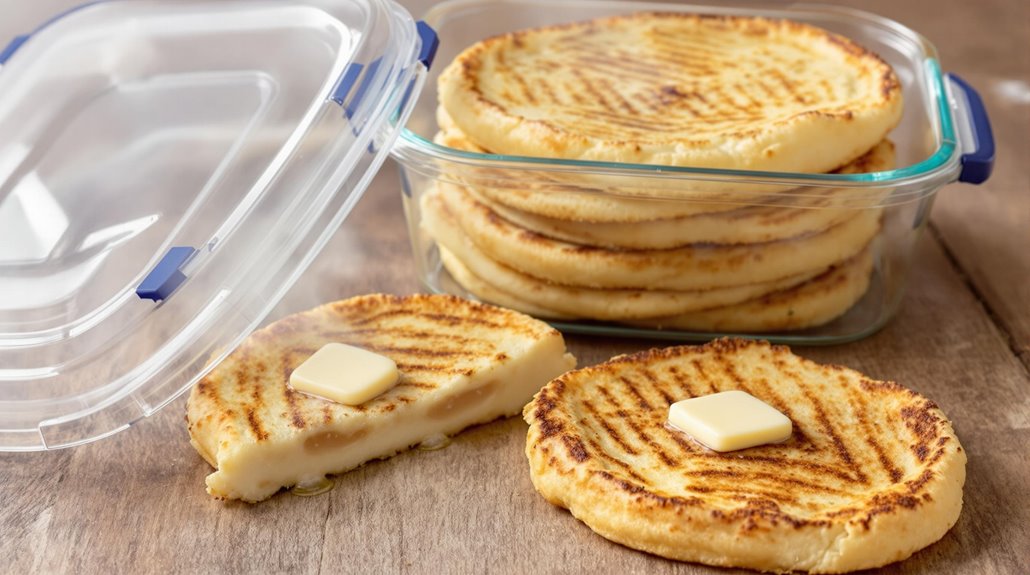
Since freshly made arepas taste best, proper storage and reheating techniques can help maintain their quality for later enjoyment. Store your leftover arepas in an airtight container at room temperature for up to 3 days, or place them in the refrigerator for a 5-day shelf life.
For longer storage, seal them in freezer Ziploc bags for up to 3 months.
When you're ready to enjoy your stored arepas, wrap them in aluminum foil and reheat in the oven at 350°F for 15 minutes to restore their crispy texture. Remember these essential tips:
- Never reheat filled arepas - warm fillings separately
- Store unused dough in the refrigerator for up to 3 days
- Bake for 5-8 minutes after cooking for ideal crispiness
- Keep filled and unfilled arepas separate when storing
- Let frozen arepas thaw completely before reheating
Beyond Breakfast: Creative Ways to Serve Arepas
Now that you've become proficient in storing and reheating your arepas, let's investigate their versatility beyond the breakfast table. While making authentic Venezuelan arepas may have started as a morning ritual, these versatile corn patties shine throughout the day.
You'll find that homemade Venezuelan arepas make perfect vessels for countless fillings. Try making them as appetizers topped with avocado and pico de gallo, or split them for heartier lunch options. Unlike making tortillas, arepas provide a sturdier base for heavy fillings like braised meats and stews.
You can stuff Colombian arepas with black beans, cheese, or seafood for a satisfying dinner. The dough to make these golden discs might seem simple, but their potential is limitless - whether you're craving savory or sweet combinations.