
10 Unusual Facts About Eggs You Didn’t Know
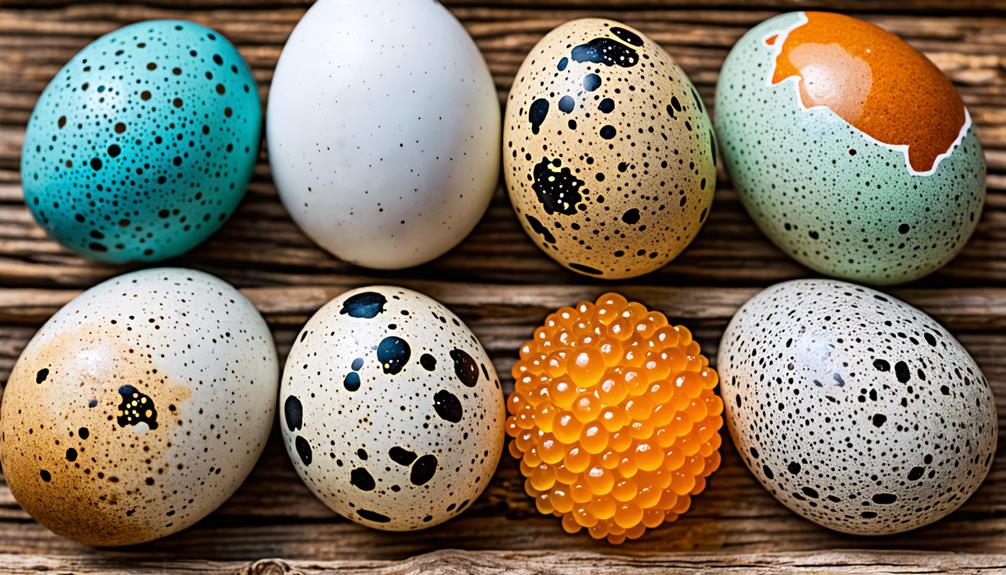
You might think you know all there is about eggs, but there are some surprising facts that could change the way you store and use them. For example, the color of an eggshell is determined by the hen's breed and has no impact on taste or nutritional value. Storing eggs with the pointy end down can help keep them fresh longer. Additionally, understanding how salt affects eggs and decoding egg carton labels can improve your egg usage. Let's crack open some valuable tips and facts.
Storing Eggs Upside-Down
Have you ever wondered why some people store their eggs pointy end down? This simple method can make a big difference. When you store eggs with the pointy end down, the yolk is less likely to touch the air pocket at the top of the egg. This helps keep the egg fresh and slows down the aging process.
Many egg experts recommend this technique because it preserves the quality of the eggs. By reducing the yolk's exposure to air, you can keep the eggs fresher for a longer time. This is especially important given the focus on egg production standards and nutritional value. Fresher eggs mean the yolk retains more nutrients, providing a healthier product.
The best part? You don't need any special equipment to use this storage method. Whether you have a standard refrigerator or a specialized egg container, you can just adjust the way you store eggs to keep them fresh. So next time you put away your groceries, remember to store those eggs pointy end down. This way, you can enjoy fresher, more nutritious eggs.
Origins of Egg Color
Now that you know how to store your eggs for maximum freshness, let's explore the origins of egg color. The color of an egg's shell is influenced by different chicken breeds. All chicken eggs start as white; their final color is determined by pigments deposited during the egg's formation. These pigments come from three main sources and can result in a variety of colors, including brown, blue, and even pink.
Different chicken breeds are responsible for these variations. For example, Araucana and Ameraucana breeds lay blue eggs, while the Marans breed produces dark brown eggs. It's important to know that the nutritional value of an egg isn't affected by its shell color. Despite common myths, white eggs aren't superior to brown eggs, or vice versa, in terms of nutritional content.
Egg Color and Hen Age
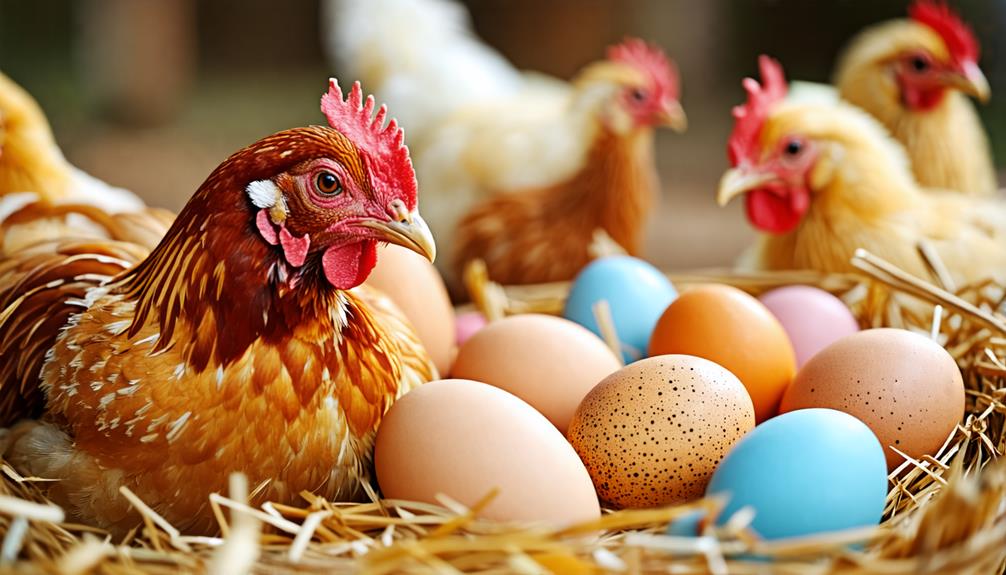
Hen maturity significantly affects the color and size of the eggs they lay. Older hens tend to lay larger eggs, but the color, particularly in brown eggs, becomes lighter. This occurs because the pigmentation that gives brown eggs their color diminishes as hens age. Therefore, younger hens lay smaller, richly colored brown eggs, while older hens produce larger, lighter-colored eggs.
The breed of the hen mainly determines whether eggs are white or brown. However, a hen's maturity can subtly change the egg color over time. Stress can also impact pigmentation, leading to less consistent egg color. For egg grading, both size and color variations are important. Larger, lighter-colored eggs from older hens can influence consumer preferences and market pricing differently than smaller, darker eggs from younger hens.
Additionally, younger hens are more likely to lay double-yolked eggs, which is rare in older hens. These differences in egg characteristics provide insights into the hens' maturity and add an interesting aspect to understanding eggs.
Eggshell Color Myths
The color of an eggshell does not affect its nutritional value. White and brown eggs provide the same dietary benefits. The shell color is determined by the hen's breed, not its diet or environment. The quality of the egg depends on the hen's feed and living conditions, not the shell color.
No Nutritional Difference
Contrary to popular belief, the color of an eggshell—whether white or brown—doesn't change the egg's nutritional value. Many people think there's a significant difference between the two, but that's just a myth. The nutritional quality of eggs is the same regardless of the shell color. This means you can choose either white or brown eggs without worrying about missing out on any health benefits.
Here are some key points to remember:
- Nutritional Equality: Both white and brown eggs offer the same nutritional benefits, including protein, vitamins, and minerals.
- Consumer Preferences: While most U.S. regions prefer white eggs, New England states often favor brown eggs.
- Misleading Myths: Historical biases led to the belief that white eggs were cleaner and superior, but there's no nutritional basis for this.
Understanding that egg color doesn't affect nutritional quality can help you make more informed choices at the grocery store. Focus on the freshness and quality of the eggs rather than their shell color, and you'll get the same health benefits from either. So next time you're shopping, feel free to pick whichever color you prefer without any nutritional concerns.
Pigmentation and Breed
During the formation process, all chicken eggs start as white before pigments are added, influenced by the breed of the hen. The three main pigments that determine eggshell color are protoporphyrin, which produces brown eggs, and biliverdin, which results in blue eggs. Different chicken breeds have varying levels of these pigments.
For instance, Rhode Island Reds lay brown eggs due to higher levels of protoporphyrin, while White Leghorns lay white eggs since they lack significant pigmentation. Older hens tend to produce lighter-colored eggs regardless of their breed. Stress can also affect the pigmentation of brown eggs, though it's less noticeable with white eggs.
Here's a quick guide to help you understand the relationship between breed and eggshell color:
| Chicken Breed | Eggshell Color | Pigment |
|---|---|---|
| Rhode Island Reds | Brown | Protoporphyrin |
| White Leghorns | White | None |
| Ameraucanas | Blue | Biliverdin |
| Marans | Dark Brown | High Protoporphyrin |
It's important to know that eggshell color does not affect nutritional quality. Whether an egg is brown, white, or blue, the nutritional content remains the same. So, when choosing eggs at the store, remember that the color of the eggshell makes no nutritional difference.
Yolk Color and Nutrition
Egg yolks can range from pale yellow to deep orange, mainly reflecting the hen's diet rich in carotenoids from greens and vegetables. The color of the yolk doesn't change the fact that all yolks contain similar essential nutrients like proteins, fats, vitamins, and minerals. However, darker yolks are often produced by pasture-raised chickens, indicating a more varied and nutrient-dense diet.
Diet's Impact on Yolk
The color of an egg yolk is mainly influenced by what the hen eats. A diet rich in green plants and yellow corn results in darker yolks. Hens that forage for insects and plants usually produce eggs with more vibrant yolks, indicating a nutrient-rich diet.
Pasture-raised chickens often lay eggs with darker yolks compared to those fed a standard commercial diet. This difference comes from their varied and richer diet. However, it's important to note that yolk color doesn't necessarily reflect the egg's nutritional value. All yolks, regardless of color, provide similar vital nutrients.
Even though many consumers prefer eggs with darker yolks, thinking they are more nutritious, this is not always the case. The nutritional content is relatively consistent across different yolk colors.
To summarize, a hen's diet affects yolk color in several ways:
- Diet influences yolk color: Rich, varied diets lead to darker yolks.
- Foraging hens: Produce vibrant yolks due to higher nutrient intake.
- Pasture-raised vs. commercial feed: Pasture-raised hens have darker yolks.
Understanding these factors can help make informed choices when selecting eggs.
Carotenoids and Yolk Color
Carotenoids play a crucial role in egg yolk color. These pigments, found in foods like leafy greens and yellow or orange vegetables, significantly influence yolk color. When hens eat a diet rich in carotenoids, their yolks are darker and more colorful. Carotenoids enhance the nutritional profile of the yolk, providing higher levels of vitamins A and E.
If you notice a deeper yellow or orange yolk, it's likely due to the hen's diet. Hens that forage for natural foods like grasses and insects usually produce eggs with more colorful yolks because they consume more carotenoids. In contrast, hens fed mainly on grains like wheat and barley produce lighter yolks, which might be less nutrient-dense.
Many consumers prefer eggs with darker yolks, associating them with higher quality and better nutrition. While darker yolks do indicate a diet richer in carotenoids, the overall health benefits are similar to those of lighter yolks.
Nutritional Quality Indicators
Nutritional Quality Indicators
Many factors influence the nutritional quality of an egg. Yolk color is a significant indicator, ranging from pale yellow to deep orange. This color often reflects the hen's diet. Chickens that eat green plants and yellow corn tend to produce more vivid yolks. In contrast, those fed wheat and barley produce lighter ones. Darker yolks usually signal a richer nutritional profile, packed with beneficial carotenoids.
Pasture-raised chickens, which have access to a diverse range of foraged foods, often lay eggs with higher levels of omega-3 fatty acids and vitamins. This diet improves yolk color and raises nutritional quality. Hens on conventional feed may not produce eggs with the same nutrient density.
Key points to remember:
- Darker yolks: Indicate higher levels of nutrients like vitamin A and lutein.
- Feed influence: Green plants and yellow corn lead to vivid yolks, while wheat and barley result in lighter yolks.
- Shell color myth: The color of the eggshell, whether brown or white, doesn't affect the nutritional quality inside.
Freshness Water Test
To check an egg's freshness, use a simple water test. This method can help you avoid cracking open a bad egg. Place the egg in a bowl of water. A fresh egg will sink and lie flat on the bottom, indicating it is still good to eat.
If the egg stands upright on the bottom, it is not as fresh but still usable. Consume these eggs sooner rather than later. This position occurs because some air has seeped into the egg, increasing the size of the air pocket inside.
If the egg floats to the surface, it is no longer fresh and should be discarded. This floating happens because the porous shell has allowed air to enter, enlarging the air cell considerably.
Long-Term Egg Storage
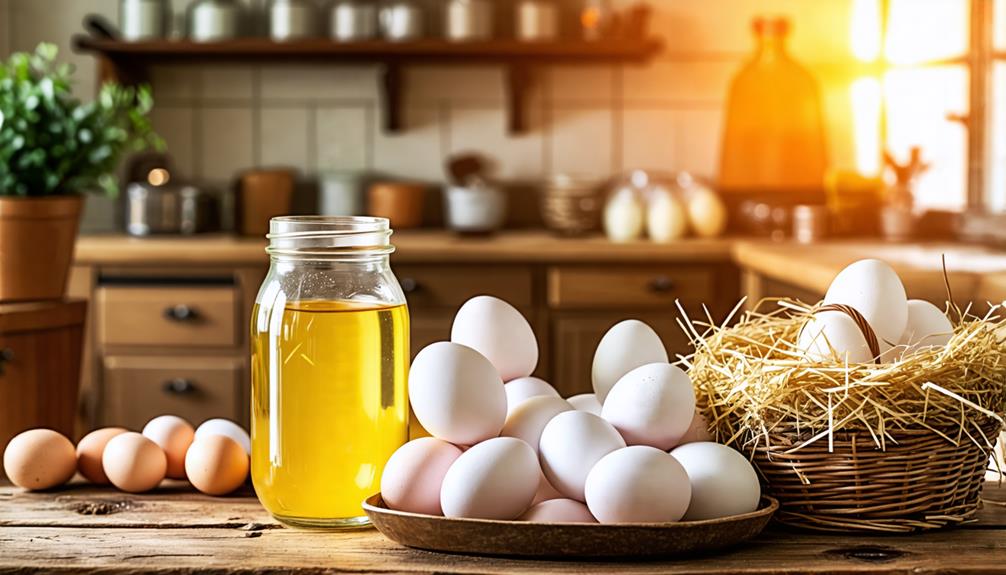
For long-term egg storage, several methods can keep your eggs fresh and safe to eat for extended periods.
One method is freezing. Beat the eggs and store them in an airtight container. This can preserve them for up to a year, though it's best to consume them within four months for peak freshness.
Another technique is water glassing. Submerge fresh, unwashed farm eggs in a solution of water and sodium silicate. This can extend the shelf life up to 18 months. Note that grocery store eggs are usually too old for this method to be effective.
To check if stored eggs are still good, perform a water test. Place the egg in a bowl of water:
- If it sinks and lies flat, it's fresh.
- If it stands upright, it's still good but should be used soon.
- If it floats, discard it.
Refrigeration of Washed Eggs
When you wash fresh eggs, you remove their natural protective coating, known as bloom. As a result, they need to be refrigerated to remain safe and fresh. Unwashed eggs can be kept at room temperature for a short period, but once washed, they must be kept cold at all times. This is why store-bought eggs, which are typically washed, always need refrigeration.
Bloom's Protective Layer
Eggs come with a natural protective layer called bloom. This layer keeps air and bacteria out, ensuring the egg stays fresh and uncontaminated. When eggs are freshly laid, the bloom allows them to be safely stored at room temperature. However, washing eggs removes this bloom, making them more vulnerable to spoilage and contamination.
To keep washed eggs fresh and minimize contamination risk, store them in the refrigerator. This is especially important for eggs from grocery stores, as they are often washed and sanitized before being sold. Without refrigeration, washed eggs can quickly become unsafe to eat.
Key points to remember:
- Bloom's Role: The bloom protects eggs from air and bacteria.
- Refrigeration Necessity: Washed eggs need refrigeration to stay fresh and safe.
- Grocery Store Eggs: These eggs are usually washed and must be kept cold.
Storage Temperature Importance
Proper storage is essential for maintaining the safety and freshness of eggs, especially after washing. Fresh eggs have a natural coating called bloom, which prevents air and bacteria from getting inside the shell. This coating allows unwashed eggs to be stored at room temperature safely. However, washing eggs removes this protective layer, making them more vulnerable to contamination.
Once the bloom is gone, it is crucial to store eggs correctly. Washed eggs should always be refrigerated to keep them safe to eat. This is especially important for store-bought eggs, which are often power-washed to remove dirt and contaminants. Without refrigeration, these eggs can spoil quickly and become a breeding ground for bacteria.
Refrigerating washed eggs extends their shelf life, keeping them fresh for several weeks beyond their sell-by date. To maximize this benefit, it's best to wash eggs just before use rather than before storing them. This helps preserve their natural protective barrier for as long as possible, ensuring optimal safety and longevity.
Safety and Freshness
To ensure both safety and freshness, it's essential to refrigerate washed eggs properly. Washing removes their natural protective coating, or bloom, which helps keep air and bacteria from entering the shell. Without this coating, eggs are more prone to contamination and spoilage, making refrigeration crucial.
Here are some key points to remember:
- Maintain a consistent temperature: Refrigerate your eggs below 40°F (4°C) to extend their shelf life and ensure safety.
- Store properly: Keep eggs in their original carton to protect them and reduce moisture loss.
- Use quickly if unwashed: Freshly laid, unwashed eggs can be stored at room temperature but should be used within a few days to maintain freshness.
Refrigerated eggs can remain safe to eat for several weeks. This extended shelf life is important because washing removes the protective bloom, making eggs more susceptible to bacteria. Grocery store eggs are typically washed and must be kept cold from packing to consumption to ensure both safety and freshness.
Salt's Effect on Eggs

When you add salt to eggs early in the cooking process, it draws moisture out, making scrambled eggs drier. Salt acts as a dehydrating agent, pulling water from the eggs and affecting their texture. To avoid this, season your eggs with salt at the end of cooking. This timing can make a significant difference, giving you creamy and fluffy scrambled eggs rather than a dry, rubbery mess.
Salt not only improves flavor but also affects cooking time and the final consistency of the eggs. By adding salt towards the end, you allow the eggs to cook evenly without losing moisture. This technique is especially useful with fresh eggs, as careful seasoning can enhance their natural flavors.
Experimenting with salt levels can help you find your preferred taste. Some might prefer a pinch, while others might opt for more seasoning. Understanding how and when to add salt can improve your egg dishes. So next time you're making breakfast, remember that a little patience with seasoning can go a long way.
Decoding Egg Carton Labels
Understanding how to season eggs can improve your cooking, but knowing what you're buying is just as important. Egg cartons have various labels that can be confusing. Terms like "free range" and "cage-free" might suggest humane treatment of chickens, but they don't always mean outdoor access or high welfare standards. Here's what you need to know:
- Certified Humane and Pasture-Raised: These labels indicate better farming practices. Hens likely live in more natural conditions with higher welfare standards.
- All-Natural and Farm Fresh: These terms sound appealing but lack regulatory definitions. They are more about marketing than actual quality.
- No Hormones Used: In the U.S., hormones are not used in egg production. This label is more about clearing up misconceptions rather than indicating special quality.
To make informed choices, research the labels on egg cartons. Understanding these facts can help you support better practices in raising chickens and ensure you're getting the quality you expect. Always look beyond marketing to understand what you're buying.