Waffle Trivia and Fun Facts for Enthusiasts

Waffles have a rich history that dates back to ancient Greece, where they were cooked between metal plates. The Dutch word "wafel" means cake, which is the origin of the modern term "waffle." While many consider waffles a breakfast staple, they have an interesting past that includes a connection to an iconic sports brand and Thomas Jefferson's role in introducing them to America.
To make waffles at home, start by gathering basic ingredients like flour, eggs, milk, and baking powder. Mix these ingredients until you have a smooth batter. Preheat your waffle iron, then pour the batter into the iron and cook until the waffles are golden brown. Serve them with toppings like syrup, fruit, or whipped cream.
For a different twist, try using whole wheat flour or adding ingredients like chocolate chips or blueberries to the batter. Waffles can also be savory; consider adding cheese or herbs for a unique flavor.
Understanding the history and variations of waffles can enhance your appreciation and enjoyment of this versatile dish.
History of Waffles
Waffles have a long history, dating back to ancient Greece, where they were called "obelios" and cooked between two metal plates. This early version set the stage for the waffles we enjoy today. The word "waffle" comes from the Dutch word "wafel," meaning cake, highlighting its European origins.
The modern waffle, especially the Belgian waffle, evolved significantly in 18th-century Belgium. Yeast-leavened batter was introduced, creating a lighter and fluffier texture. This innovation was important, making Belgian waffles a culinary delight appreciated worldwide.
Waffles came to America in the 1620s with European settlers. However, it was Thomas Jefferson who brought the first waffle irons from Europe in the late 18th century, allowing Americans to make waffles at home. By the 19th century, waffles were popular at fairs and festivals across the United States. Today, waffles are still celebrated and remain a favorite breakfast choice.
Waffles and Nike
The Nike Waffle Trainer's creation in 1971 was inspired by an everyday breakfast moment. Bill Bowerman, Nike's co-founder, noticed the honeycomb shape of his waffles. This pattern gave him an idea. He used a waffle iron to mold rubber soles, leading to the innovative waffle sole design.
This design was significant. By copying the waffle's grid-like texture, Bowerman made a sole that improved traction while keeping the shoes lightweight. This wasn't just a small improvement; it was a major advancement in athletic footwear. When the Waffle Trainer launched in 1974, it quickly became popular among runners and athletes, securing its place in Nike's product line.
This example shows that inspiration can come from unexpected places. Bowerman's creative approach didn't just produce a new product for Nike; it also helped the company grow rapidly in the athletic footwear market. So next time you see a waffle, remember its surprising role in changing running shoes.
Etymology of Waffle
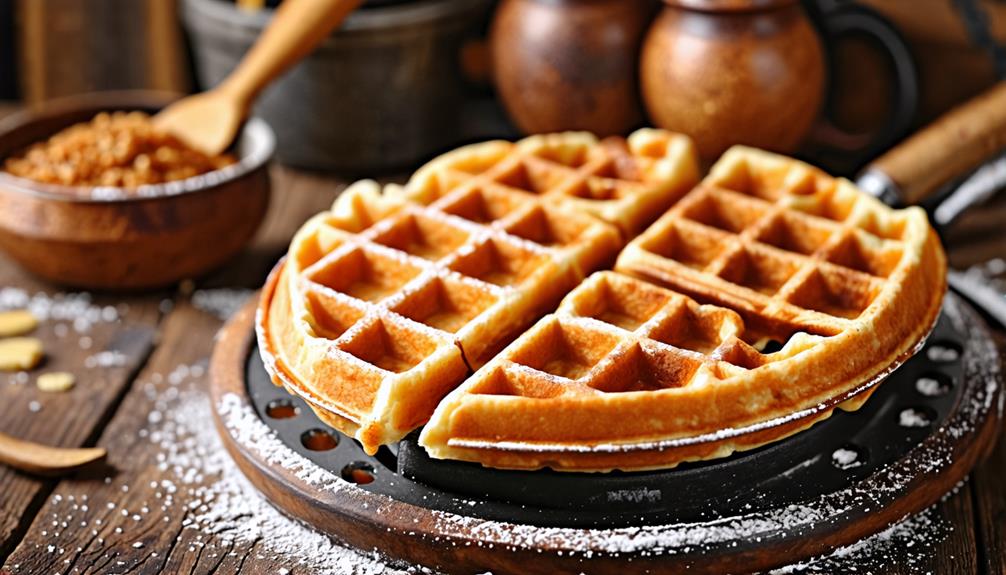
Let's examine the history of the word "waffle." It comes from the Dutch word "wafel," meaning "cake." This is rooted in the Old German term "wefan," which means "to weave." This word captures the treat's unique pattern. Over centuries, "waffle" has entered various cultures and cuisines, showing a wide appreciation for this food.
Origins in Dutch Language
The word "waffle" comes from the Dutch term "wafel," which means "cake," reflecting its deep connection to Dutch cuisine. The term "wafel" itself originates from the Old German word "wefan," meaning "to weave." This weaving idea fits well with the waffle's grid-like pattern.
The first recorded use of "waffle" in English dates back to 1725. This shows how the waffle has become part of different cultures over the years. Although the English term comes from the Dutch word "wafel," waffles have links to other culinary traditions too. They are connected to French cuisine and even ancient Chinese food, giving them a rich and varied history.
Evolution Across Centuries
Imagine an 18th-century Belgian kitchen where waffles began to take the shape we recognize today. Originally called "wafels," the term comes from the Dutch word for "cake." This term has roots in the Old German word "wefan," meaning to weave, which reflects the grid-like pattern of waffles.
Belgian waffles gained popularity during this time and soon spread worldwide. The first recorded English use of the word "waffle" was in 1725, showing its presence in English-speaking cultures for almost three centuries.
As waffles traveled, they adapted to local tastes:
| Region | Style |
|---|---|
| Belgium | Light, airy, and large |
| U.S. | Fluffy, often served with syrup |
| Liege | Dense, with pearl sugar |
| America | Initially served at fairs |
In the 19th century, waffles reached America, where they were first served at fairs and festivals. They evolved into a popular breakfast food, becoming the fluffy, syrup-covered treats we know today.
Cultural and Culinary Significance
Waffles are more than just a tasty breakfast option; they have a rich history across various cultures. The word "waffle" comes from the Dutch term "wafel," meaning "cake." The first recorded use of "waffle" in English dates back to 1725, showing its long-standing presence.
In Belgium, waffles have been a part of cultural and culinary traditions since the 18th century. They were often served at fairs and festivals, making them a popular treat. Belgian waffles, known for their deep pockets that hold syrup and toppings, have gained popularity worldwide.
The history of waffles goes back even further to ancient Greece, where similar cakes called "obelios" were made. Different regions have developed unique waffle styles, such as Belgian, American, and Liege waffles. This shows the dish's versatility and cultural significance. By exploring these different styles, you can see how this simple treat has crossed borders and generations.
Waffle House Statistics
Waffle House sells about 145 waffles every minute, highlighting its popularity. Since it began, Waffle House has sold 877 million waffles, showing its lasting appeal in American breakfast culture. With over 2,000 locations in the United States, it's more than just a restaurant; it's a staple for breakfast lovers.
Each day, Waffle House serves over 500,000 waffles, making it a top choice for fans of this breakfast item. These numbers explain its loyal following. It's not just the waffles; it's also the consistent quality and welcoming atmosphere that keep customers returning.
For over 60 years, Waffle House has been important in the food industry, showing its cultural significance. Whether you're stopping by for a quick breakfast or enjoying a leisurely meal, you're part of a tradition cherished by millions. So, the next time you have a waffle at Waffle House, remember, you're contributing to a long legacy of waffle enjoyment.
Record-Breaking Waffle

Imagine encountering an 8-foot-long waffle weighing 110 pounds. It's not just a breakfast item; it's a world record holder. Created by Stitching Gouda Oogst in the Netherlands in 2013, this massive waffle required a custom waffle iron. This achievement highlights how culinary creativity can push boundaries, making waffles not just tasty but record-breaking too.
Largest Waffle Dimensions
In 2013, Stitching Gouda Oogst from the Netherlands created the world's largest waffle, measuring 8 feet in length. This achievement earned a place in the Guinness World Records.
To make this giant waffle, the team needed a specialized setup and extensive cooking equipment. This required careful planning and execution. The goal was to highlight the cultural importance and creativity of waffles.
Creating this record-breaking waffle was not just about size. It showed innovation and the playful spirit within the culinary community. Stitching Gouda Oogst's work demonstrated that with creativity and dedication, traditional foods like waffles can reach new heights. This accomplishment impressed waffle enthusiasts and culinary experts, proving that bigger can sometimes be better.
Weight and Record Details
The world's largest waffle is not just impressive in length, but also in weight, coming in at 110 pounds. This massive creation set a record in 2013, thanks to Stitching Gouda Oogst from the Netherlands. Both playful and serious, this monumental waffle highlights the creativity and dedication of waffle enthusiasts worldwide.
Here are some key details about this record-breaking accomplishment:
- Weight: The world's largest waffle weighs 110 pounds, making it significant in the culinary world.
- Length: This waffle measures 8 feet long, almost as impressive as its weight.
- Creation: Stitching Gouda Oogst, a group from the Netherlands, crafted this marvel, setting a new benchmark for waffle lovers.
This achievement shows the lengths to which enthusiasts will go to celebrate their love for waffles. The effort to create such a massive waffle reflects the enduring appeal of this dish and the passion it inspires. Whether you're interested in records for the most waffles or the number of waffles eaten, this accomplishment stands as a notable symbol of waffle culture.
Waffle Holidays
Understanding why there are specific days dedicated to celebrating waffles can be both interesting and practical. National Waffle Day in the U.S. is on August 24, linked to the first U.S. patent for a waffle iron granted in 1869. This day isn't just about enjoying waffles; it honors the innovation that made waffle-making simpler. Waffle vendors often have special promotions, encouraging you to try different types and recipes.
International Waffle Day, celebrated on March 25, started in Sweden and has gained global popularity. This day recognizes the cultural importance of waffles worldwide. Whether you prefer traditional buttermilk waffles or like to experiment with new flavors, these holidays give you a reason to enjoy this popular breakfast food.
Here's a quick summary of key waffle holidays:
| Holiday | Date | Significance |
|---|---|---|
| National Waffle Day | August 24 | Marks the first U.S. patent for a waffle iron in 1869 |
| International Waffle Day | March 25 | Celebrates the global cultural importance of waffles |
Both holidays offer great opportunities to explore the versatility of waffles. You can share your love for them through events, new recipes, or taking advantage of special promotions.
Origins of Eggo Waffles

Eggo waffles, a popular breakfast option, were not always known by their current name. When they first appeared in grocery stores in 1953, they were called "Froffles," combining "frozen" and "waffles." The Dorsa brothers, who created Eggo, rebranded it to "Eggo" in 1955 to make the name easier to remember.
Key points about the origins of Eggo waffles:
- Early Beginnings: The Dorsa brothers started by making mayonnaise during the Great Depression. They shifted to waffle production due to the product's success and the increasing demand for convenient breakfast foods.
- Innovative Production: Frank Dorsa improved waffle production by inventing a rotating machine with multiple waffle irons. This allowed their factory to produce thousands of waffles per hour, meeting the high demand after World War II.
- Market Expansion: The switch from fresh and powdered waffle products to frozen waffles occurred after World War II. Kellogg's bought the Eggo brand in the 1970s, expanding its market reach and solidifying Eggo's presence in homes across the country.
These milestones show how Eggo waffles evolved from Froffles to a well-known name in the frozen waffle market.
Thomas Jefferson's Contribution
In 1789, Thomas Jefferson introduced the waffle iron to America after his trip to Europe. He brought not just one, but four waffle irons from Amsterdam. This marked a shift towards more advanced culinary practices in early American society. These waffle irons began to influence the breakfast tables of the American elite.
Jefferson's Belgian cook played an important role in this change, possibly shaping modern waffle recipes. This shows how European culinary traditions blended with American cooking, enhancing the nation's food variety. Jefferson's interest in waffles helped spread their popularity across the country.
The presence of waffles in Jefferson's dining experiences indicates a broader cultural appreciation for this dish in early American history. A simple breakfast item like waffles reflects an evolution in breakfast culture. Jefferson's contribution wasn't just about a new gadget; it was about diversifying the American palate, making waffles a favorite part of the morning routine.
Waffle Eating Records
Waffle eating records highlight the blend of culinary enjoyment and competitive spirit. For those interested in competitive eating, the International Waffle Eating Contest is a major event. Patrick Bertoletti currently holds the record, having eaten 29 waffles in 10 minutes, surpassing Joey Chestnut's previous record of 23 waffles.
Achieving such records requires technique and preparation. Competitors spend many hours practicing their speed and eating strategies to improve their waffle intake. Here are some key points:
- Record Holders: Patrick Bertoletti holds the current record with 29 waffles eaten in 10 minutes.
- Previous Benchmarks: Joey Chestnut previously held the record with 23 waffles.
- Preparation: Contestants practice rigorously to perfect their speed and technique.
These contests show the cultural significance and enjoyment people find in waffles. Whether you're a fan or a participant, these records add an exciting twist to a beloved breakfast food.
Invention of Ice Cream Cones
In 1904, at the St. Louis World Fair, an ice cream vendor faced a shortage of cups. To solve this issue, the vendor collaborated with a nearby waffle vendor. They folded freshly made waffles into cone shapes to hold the ice cream. This innovation not only addressed the cup shortage but also created a new way to enjoy ice cream.
The result was the waffle cone, which combined the crunchiness of a waffle with the creaminess of ice cream. This new method made eating ice cream more enjoyable.
The waffle cone quickly became popular in ice cream shops across the United States. This invention demonstrated culinary creativity and adaptability. It showed that some of the best ideas come from solving unexpected problems. The waffle cone's creation at the St. Louis World Fair had a lasting impact on dessert culture and continues to delight ice cream lovers.