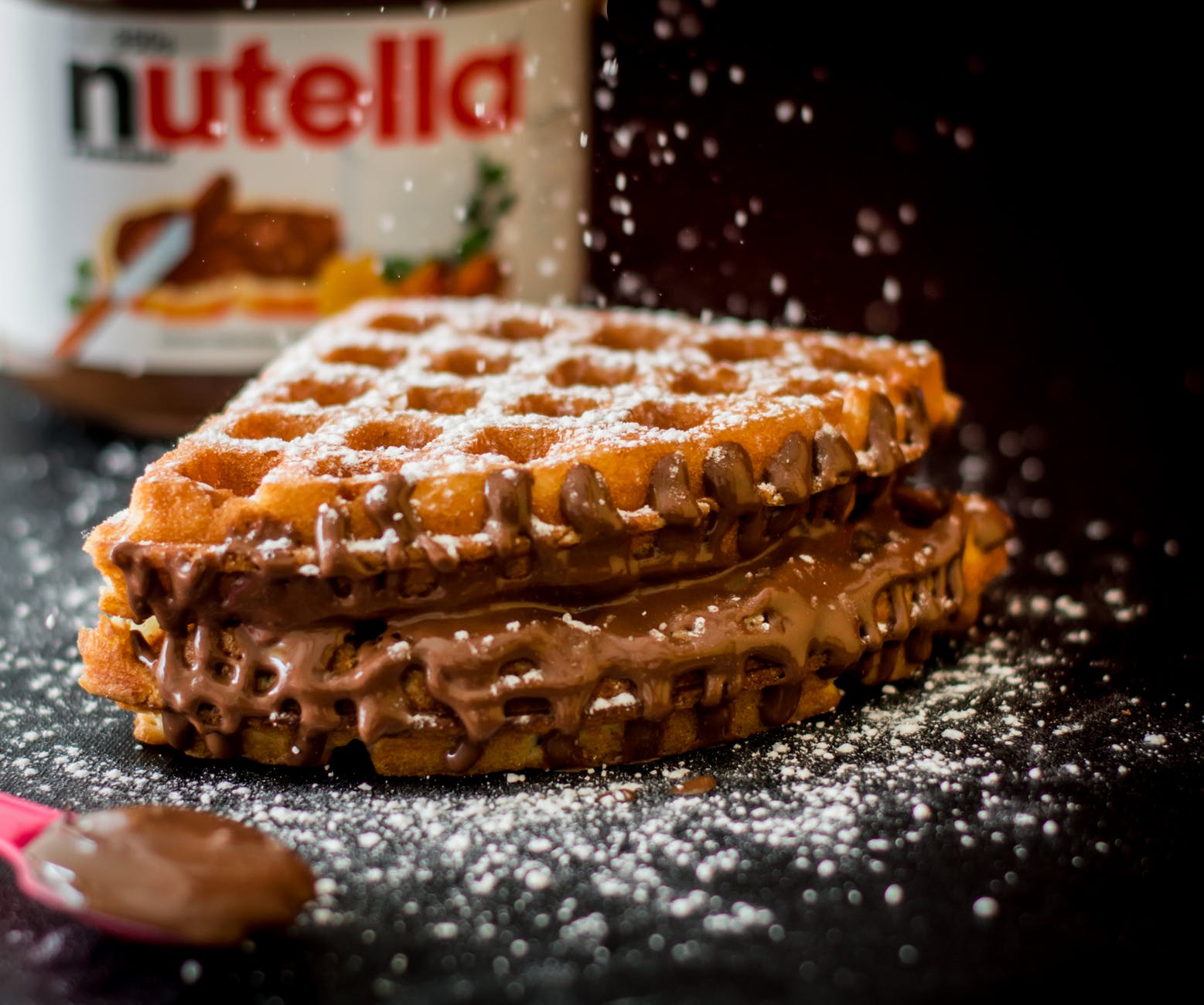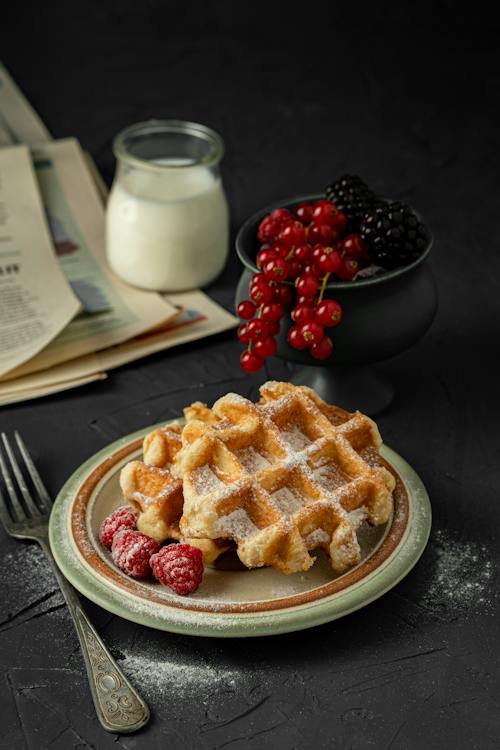
The Science of Waffle Texture: What Makes a Waffle Crispy or Fluffy?

When you bite into a waffle, do you prefer a crisp crunch or a soft, fluffy interior? Achieving that perfect texture isn't just about luck; it's a careful balance of ingredients and techniques. All-purpose flour provides structure, while buttermilk adds fluffiness through its reaction with baking powder. Whipped egg whites introduce airiness, and vegetable oil and cornstarch help maintain a crispy exterior.
But that's just the beginning. How you mix and cook the batter plays a vital role. Here are the steps you need to get your ideal waffle:
- Ingredients: Use all-purpose flour for structure. Add buttermilk to react with baking powder for fluffiness. Whip egg whites separately and fold them in to introduce airiness. Use vegetable oil and cornstarch to achieve a crispy exterior.
- Mixing: Combine dry ingredients in one bowl and wet ingredients in another. Gently fold the wet mixture into the dry ingredients. Finally, fold in the whipped egg whites carefully to keep the batter airy.
- Cooking: Preheat your waffle iron to the desired temperature, usually medium-high. Pour the batter in and cook until golden brown and crisp, usually 3-5 minutes.
By following these steps, you can achieve the perfect waffle texture.
Waffle Ingredients
When making the perfect waffle, the choice of ingredients is crucial for texture and flavor. Start with all-purpose flour, which provides the necessary structure. Adding baking powder ensures your waffles rise and become light.
For a richer flavor and softer texture, use buttermilk instead of regular milk. The acidity in buttermilk improves taste and reacts with baking powder to produce fluffier waffles. To achieve a fluffy interior, incorporate whipped egg whites. Whip them to stiff peaks and gently fold them into the batter. This creates air pockets, making your waffles airy and light.
Vegetable oil helps create a crispier waffle by reducing moisture and promoting caramelization during cooking. Add sugar to sweeten and aid in browning.
For extra crispiness, add cornstarch to your ingredients. Cornstarch absorbs excess moisture from steam, preventing sogginess. By carefully selecting and balancing these ingredients, you'll create waffles that are crispy on the outside and fluffy on the inside.
Mixing Techniques
Achieving the ideal waffle texture relies on proper mixing techniques. The way you combine the ingredients can determine whether your waffles are dense and chewy or perfectly fluffy and airy. Here's what you need to know:
- Gently fold: When mixing the batter, carefully fold the wet and dry ingredients together. This helps maintain a light texture and prevents overmixing, which can develop gluten and make your waffles dense.
- Separate and whip: Separate the egg yolks and whites. Whip the egg whites to stiff peaks, then fold them into the batter. This adds airiness, leading to fluffier waffles. Adding a pinch of sugar to the egg whites while whipping can stabilize them.
- Immediate cooking: Cook the batter immediately after mixing. This preserves the gas bubbles created by the baking soda reacting with the wet ingredients, crucial for fluffiness.
Using a spatula instead of vigorous stirring ensures you don't overmix, allowing for the perfect balance of airiness and structure. By mastering these mixing techniques, you'll create waffles with the ideal texture.
Cooking Methods
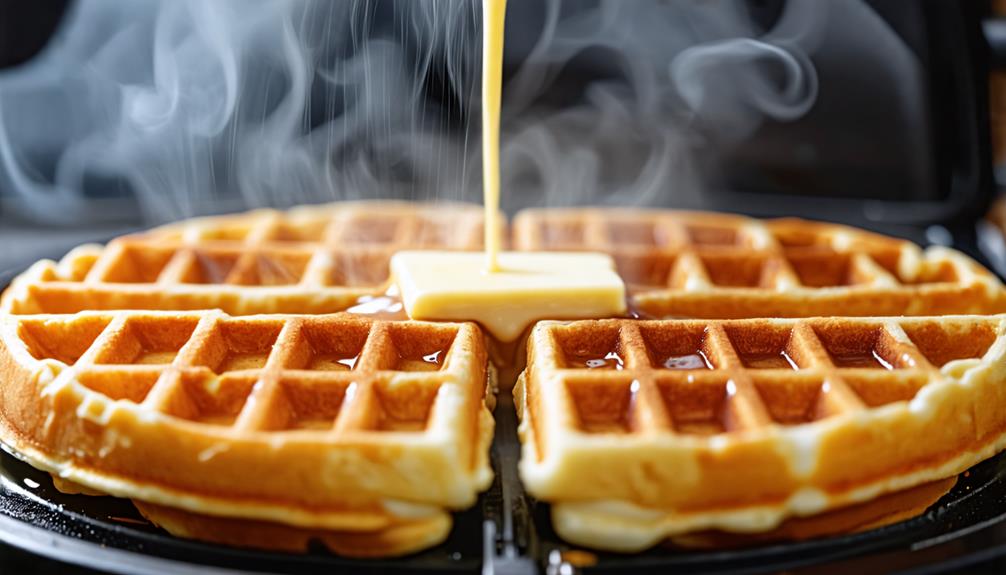
To consistently achieve the perfect waffle texture, understanding the cooking methods is essential. High temperatures are necessary for obtaining a crispy exterior. This is because high heat guarantees immediate crust formation, much like frying. Preheat your waffle maker for at least 10 minutes to ensure even heat distribution, resulting in a consistent texture and doneness.
Don't open the waffle iron too early; wait for the steam to subside before checking your waffle. This prevents sogginess and ensures a crispy outcome. For extra crispiness, try flipping partially cooked waffles in the maker. This technique allows for better heat exposure on both sides, enhancing even cooking.
Proper cooking techniques, like closely monitoring cooking time, are crucial. Overcooking can ruin the texture, causing waffles to lose their crispness. Keep an eye on the clock and follow your waffle maker's guidelines to achieve the best results. By mastering these methods, you'll be well on your way to consistently making perfect, crispy waffles every time.
Waffle Makers
When choosing a waffle maker, consider preheating time and consistency to ensure your waffles cook evenly and achieve a perfect crisp. Belgian waffle makers, with deep wells, provide a crispy exterior and fluffy interior. The flip mechanism helps heat reach all sides effectively. Whether you prefer square or round designs, the right model can greatly improve your waffle texture.
Preheating and Consistency
A properly preheated waffle maker is crucial for a crispy exterior. Preheating for at least 10 minutes ensures the cooking surface reaches the right temperature, allowing for immediate crust formation when the batter touches it. This step is key to maintaining a consistent cooking temperature, directly affecting your waffle's texture.
When the waffle maker is hot enough, the high temperature quickly seals the batter's moisture, preventing sogginess and creating a crispy finish. Keep these tips in mind:
- Monitor steam release: Wait for steam to subside before opening the waffle maker. This helps maintain the desired texture and prevents sogginess.
- Measure batter carefully: Using the right amount of batter avoids overflow and ensures consistent cooking.
- Reheat between batches: Allow your waffle maker to reheat for at least one minute between waffles to keep cooking consistent.
Deep Wells Vs. Shallow
Verifying that your waffle maker is properly preheated is essential for achieving the perfect texture. However, the type of waffle maker you use also plays a crucial role. Deep well waffle makers, often designed for Belgian waffles, are ideal for creating waffles with a crispy exterior and a tender, airy interior. These waffle makers have deeper grid patterns, forming large pockets that hold toppings and syrup, enhancing your eating experience.
Belgian waffles, because of their thickness, require longer cooking times compared to waffles made in shallow waffle makers. The extra depth in deep well waffle makers allows steam to escape more effectively, which is vital for developing a crispy exterior. At the same time, the interior remains fluffy, thanks to ingredients like yeast and whipped egg whites in the batter.
Preheat your deep well waffle maker for at least 10 minutes to ensure immediate crust formation. This step guarantees that your waffles cook evenly and achieve the perfect blend of textures. In contrast, shallow waffle makers produce denser, cake-like textures, which might not satisfy those looking for an authentic Belgian waffle experience.
Flip Mechanism Benefits
Waffle makers with a flip mechanism offer key benefits that enhance your waffle-making experience. Flipping the waffle during cooking ensures even cooking, which is crucial for getting a crispy outside and a fluffy inside. This mechanism helps the batter to spread evenly and get consistent heat from both sides.
Using waffle makers with a flip design provides:
- Even cooking: The batter spreads uniformly, ensuring every bite is perfectly cooked.
- Crispy exterior: The contact with the heating elements increases, promoting caramelization for a golden brown crust.
- Fluffy interior: Flipping allows steam to escape, keeping the waffle airy and preventing sogginess.
Many high-quality Belgian waffle makers use this flip mechanism to improve contact with heating elements, enhancing caramelization and crispiness. Flipping the waffle maker halfway through cooking also lets steam escape, which is essential to avoid moisture entrapment. This results in a waffle that is not just visually appealing but also has a great texture, combining a crispy exterior with a fluffy interior for a satisfying breakfast.
Storage and Reheating
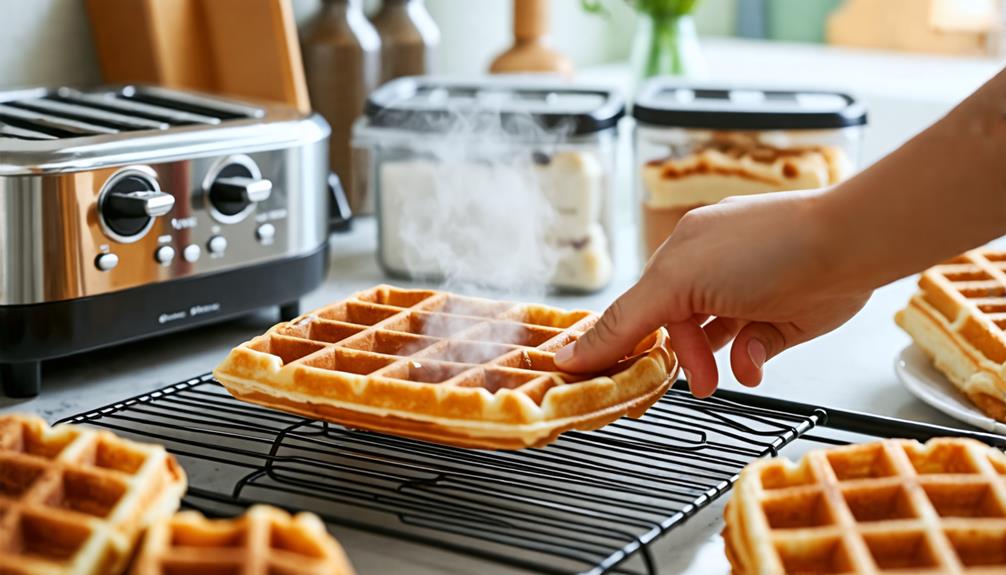
After cooking your waffles to a golden perfection, it's crucial to store and reheat them properly to maintain their ideal texture. For crispy waffles, place them in a low oven set between 200°F and 300°F on a wire rack. This allows air circulation and prevents steaming, which can make them soggy.
For storage, use airtight containers to keep your waffles fresh in the refrigerator for up to five days. If you prefer making a larger batch, freeze them for up to three months. Use airtight packaging or freezer bags to maintain their quality.
When reheating, avoid sheet pans as they can trap steam and lead to sogginess. Preheat your oven to 350°F and place the waffles directly on the oven rack for 5-10 minutes, adding an extra 5 minutes for frozen waffles. Alternatively, use a toaster, which is excellent for restoring crispiness.
Flavor Variations
When experimenting with waffle flavors, consider using seasonal ingredients like pumpkin puree in the fall or fresh berries in the summer. You can alternate between sweet and savory options by adding cheese and herbs or opting for chocolate chips and cinnamon. Also, try using alternative flours, such as buckwheat or almond, to introduce unique tastes and textures.
Seasonal Ingredient Additions
Elevate your waffle-making by using seasonal ingredients to enhance flavor and texture. Here are some tips to help you match your waffles to the seasons:
- Autumn: Add pumpkin puree and spices like nutmeg and cinnamon to your batter. These spices provide a warm aroma, while the pumpkin adds moisture, making your waffles both fluffy and crispy.
- Summer: Mix in fresh fruits like blueberries or strawberries. These fruits improve taste, add natural sweetness, and contribute to a softer, fluffier texture.
- Winter: For a festive twist, incorporate cocoa powder or chocolate chips into your batter. This creates a rich, chocolate flavor and balances a crispy exterior with a soft interior.
Adding ingredients like chopped nuts or citrus zest can also enhance your waffles. Experiment with these ideas to enjoy varied textures and flavors throughout the year.
Sweet Vs. Savory
Waffles provide a versatile base for exploring both sweet and savory flavors. Sweet waffles often include sugar, vanilla, and chocolate chips. These ingredients enhance caramelization during cooking, leading to a crispy exterior and a tender interior. To improve moisture and tenderness, add buttermilk or yogurt to your batter. These additions ensure your sweet waffles remain moist and tender.
Savory waffles, on the other hand, use ingredients like cheese, herbs, and spices. These create a complex flavor profile ideal for breakfast or brunch. Use whole grain flour in your batter to add texture and nutrition. Adding more fat to savory recipes can also make the waffles crispier.
Toppings further differentiate these waffles. Sweet waffles pair well with syrup, fruit compote, or whipped cream. Savory waffles go well with sour cream, poached eggs, or smoked salmon. Whether you prefer sweet or savory, the right ingredients and toppings can elevate your waffle experience, delivering a perfect blend of crispy exterior and tender interior.
Alternative Flour Choices
Exploring alternative flour choices can greatly enhance your waffle recipes, adding unique flavors and textures. Alternative flours like whole wheat, almond, or coconut flour bring new dimensions to your waffles. However, these flours often require adjustments in the liquid ratios of your batter.
- Buckwheat Flour: This flour offers a nutty flavor and denser texture, ideal for gluten-free waffle recipes.
- Oat Flour: Oat flour improves the nutritional profile and gives a tender texture due to its high fiber content.
- Spelt or Cake Flour Blends: These flours produce lighter, airier waffles while maintaining a crispy exterior.
For a sweeter flavor, try using spelt flour or cake flour. These help create light and airy waffles with a crispy exterior. For something visually appealing, specialty flours like matcha or cocoa powder can add unique flavors and colors.