The Impact of Waffle Houses on American Diner Culture
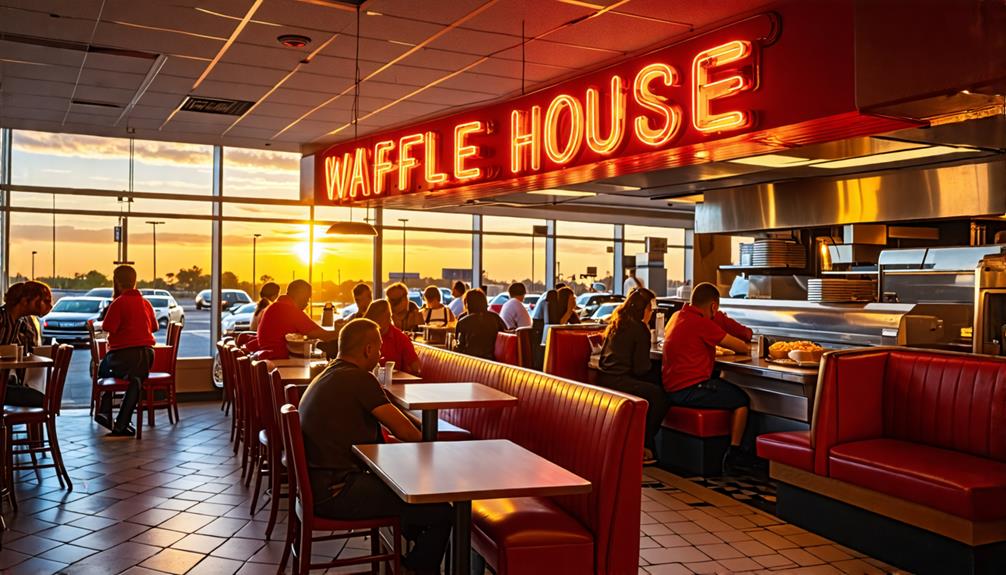
When you think of the classic American diner, Waffle House likely comes to mind with its yellow signage and 24/7 service. Since opening in 1955, it has been more than a place to grab a meal; it is a cultural staple that embodies Southern hospitality. So, how did a simple breakfast joint become a community hub, especially during emergencies? And how has Waffle House, with its customizable menu and affordable pricing, maintained its charm and relevance in an ever-changing food landscape? The answer lies in its unique approach to business and community engagement.
First, Waffle House's menu is straightforward and customizable. This flexibility allows customers to get exactly what they want, which keeps them coming back. Second, the pricing is affordable, making it accessible to a broader audience. These two factors alone make it a go-to spot for many people.
Waffle House also stands out for its community involvement. During emergencies, their locations often remain open, providing a reliable place for people to get a meal. This has earned them a reputation for dependability. Additionally, the company prioritizes hiring locally, which helps strengthen community ties.
In summary, Waffle House's success can be attributed to its adaptable menu, affordable prices, and strong community focus. These elements make it a lasting and cherished part of American diner culture.
Origins and Founders
Joe Rogers Sr. and Tom Forkner founded Waffle House on Labor Day weekend in 1955. They aimed to change the fast-food dining experience. The first Waffle House was in Avondale Estates, Georgia. Rogers had experience as a short-order cook, while Forkner had a background in real estate. Their goal was simple: offer affordable meals with table service in a family-friendly setting.
They designed the menu with cost-effectiveness in mind. The waffle, being the most profitable item, became the restaurant's namesake and a staple. Their focus on value and quality quickly attracted customers, leading to the original Waffle House's success.
The first location eventually closed due to road changes. However, the founders bought it back and turned it into a museum in 2010, preserving their legacy. They adopted a franchise model in the 1960s, which led to rapid expansion. Today, there are over 2,100 Waffle House locations across 25 states. Their dedication to affordable meals has made a significant impact on America's diner culture, showing that humble beginnings can lead to widespread influence.
Brand Identity
As Waffle House expanded through a franchise model in the 1960s, they saw the need for a strong brand identity to maintain consistency across locations. The distinctive logo, featuring bright yellow blocks and black letters, was designed to create a recognizable image that reflects Waffle House's friendly atmosphere and Southern hospitality.
Waffle House's minimalistic branding approach sets it apart. They rely on word-of-mouth and customer stories rather than expensive advertising campaigns. This strategy has made Waffle House an essential part of American diner culture. The brand's slogan, "A Unique American Phenomenon®," highlights its status as a beloved institution that evokes nostalgia and familiarity.
Customer service is central to Waffle House's brand identity. Their focus on cleanliness, affordability, and friendly service fosters loyalty among a diverse customer base. This commitment to Southern hospitality ensures every visit feels personal and welcoming.
Cultural significance also plays a crucial role in their brand identity. References in popular music and films further cement Waffle House's place in American diner culture, especially in the South. Their brand identity goes beyond food; it's about creating lasting memories and connections.
Business Model
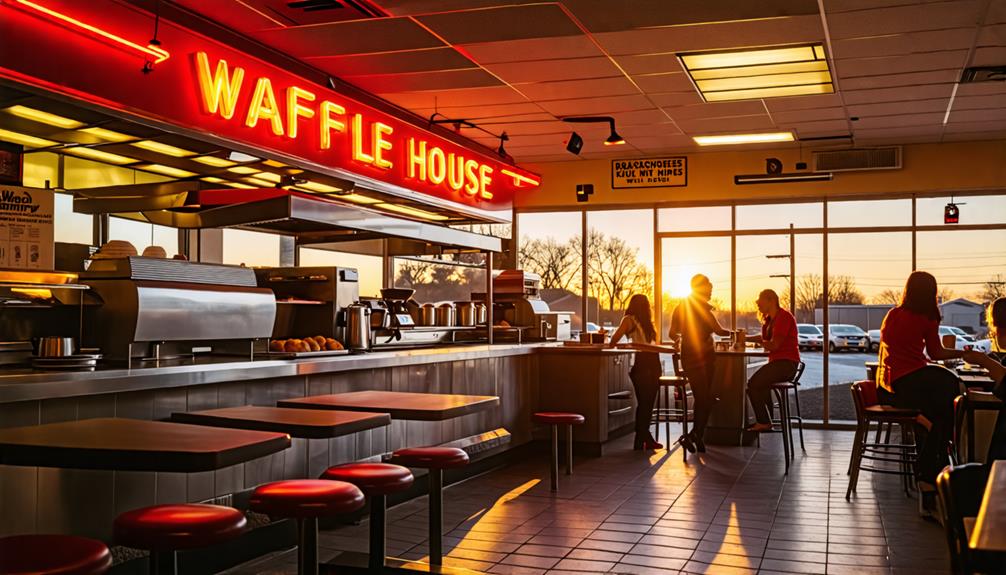
Understanding Waffle House's business model highlights their focus on efficient order-taking and a simple floor plan designed for quick service. Their 24/7 availability ensures you can always find a meal, no matter the time. This approach not only serves late-night customers but also makes Waffle House a reliable dining option for a wide range of people.
Efficient Order Taking
Waffle House's efficient order-taking system is a key part of its business model. Central to this system is the "shout system," where servers call out orders directly to cooks. This ensures quick communication and reduces wait times. This method highlights Waffle House's focus on efficiency and customer service. When you visit, you'll see the "Pull, Drop, Mark" process. Servers pull the order from you, drop it into the queue, and mark it for the kitchen staff. The kitchen staff then quickly start preparing your meal. This smooth process is crucial for operational success, especially during busy late-night hours.
Each Waffle House location is designed to be efficient. The layout allows a clear view from the kitchen to the dining area, so staff can easily see and respond to customer needs. Extensive training at Waffle House University ensures every team member masters this system, providing a fast and consistent dining experience. By prioritizing efficient order taking, Waffle House can handle a high number of customers without losing speed or service quality. This approach solidifies its place in American diner culture.
Minimalistic Floor Plan
A key element of Waffle House's business model is its minimalistic floor plan, designed for efficiency and customer interaction. The open kitchen layout lets you watch your meal being prepared, fostering transparency and engagement between staff and patrons. This setup is essential for their 24/7 service model, ensuring quick food preparation and turnaround times.
The straightforward design, featuring counter and booth seating, optimizes space to accommodate a high volume of diners, especially during peak hours. Bright yellow branding improves visibility and creates a welcoming atmosphere, making Waffle House easy to spot from afar.
Efficient use of space contributes to lower operational costs, allowing Waffle House to offer affordable pricing. This consistent design and pricing guarantee a reliable customer experience across its over 2,100 locations.
- Transparency: Open kitchen layout ensures you see your meal being prepared.
- Efficiency: Quick turnaround times are vital for 24/7 service.
- Optimized Space: Counter and booth seating accommodate a high volume of diners.
- Visibility: Bright yellow branding makes locations easy to find.
- Affordability: Lower operational costs result in affordable pricing for you.
This minimalistic floor plan is fundamental to Waffle House's enduring success.
24/7 Availability
Operating 24/7, Waffle House is a reliable option for late-night dining and post-bar gatherings. Its round-the-clock availability is a key part of its business model, making it a go-to spot at any hour. Whether you're craving breakfast at 3 AM or a late-night snack, Waffle House offers a wide array of affordable options, with most meals priced under $10. This affordability attracts a diverse crowd, from night owls to budget-conscious diners.
Waffle House is known for its minimal closures. The chain rarely shuts down, even during severe weather events, reinforcing its reputation as a reliable choice. The Waffle House Index, used by FEMA, gauges storm severity based on the operational status of its locations, highlighting its role in disaster recovery.
With over 2,100 locations across 25 states, primarily in the South, Waffle House ensures widespread availability. This extensive network means you're never far from a Waffle House, no matter the time. Its commitment to 24/7 service and affordability cements Waffle House as a staple in American diner culture.
Menu Highlights
Waffle House offers 95 base items that cater to diverse tastes. Key dishes include waffles, customizable hash browns, and various egg preparations. These items showcase the chain's focus on hearty, comfort food.
Hash browns are a must-try. Order them "scattered, smothered, and covered" to make your meal unique. This customization is a key part of the Waffle House experience. Eggs are another highlight. Since 1955, Waffle House has produced over 1.5 billion eggs, reflecting America's love for breakfast.
Prices are affordable. Most meals cost under $10, making Waffle House popular with budget-conscious diners. Notable items like Bert's Chili and Lib's Patty Melt add to the restaurant's cult following.
- Waffles: Iconic and delicious.
- Hash Browns: Customizable and flavorful.
- Eggs: Versatile and popular.
- Bert's Chili: Unique and hearty.
- Lib's Patty Melt: A classic with a twist.
These items make Waffle House a cornerstone of American diner culture.
Pricing Strategy
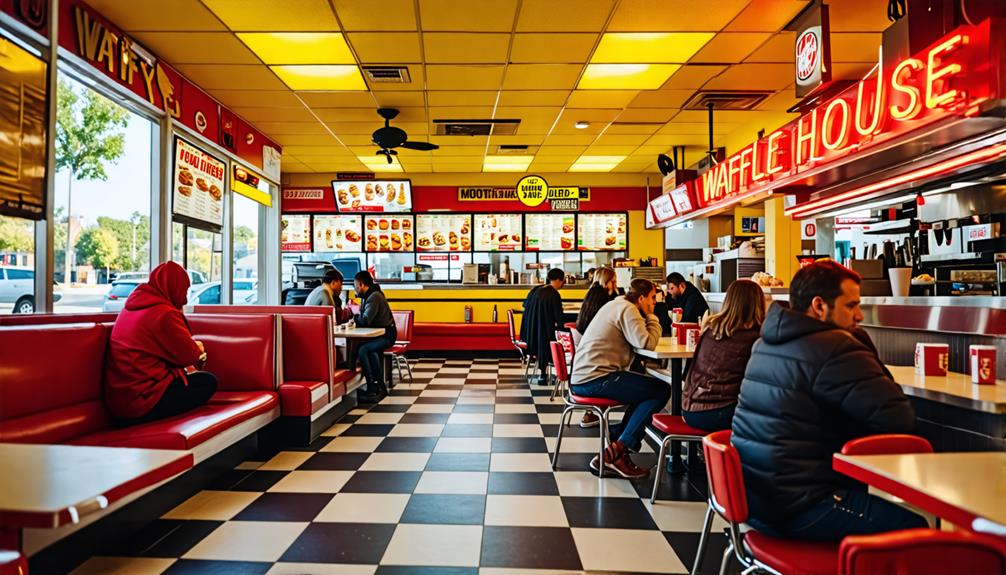
Waffle House's pricing strategy focuses on affordability, making it a popular choice for budget-conscious diners. Most menu items are priced under $10, providing cost-effective options for a wide range of customers, including late-night diners. For example, in 2007, a double cheeseburger cost $3.55 and a waffle was $2.55, showing the chain's commitment to budget-friendly meals.
This strategy supports Waffle House's high-volume business model, contributing to annual sales of about $325 million. By offering affordable, value-driven meals, Waffle House attracts a steady stream of diners who appreciate both quality and price.
The menu features 95 base items, allowing for meal customization without high costs. From breakfast to dinner, the variety ensures there's something for everyone, reinforcing Waffle House's reputation for affordable dining.
Instead of spending heavily on advertising, Waffle House relies on word-of-mouth marketing. This reduces costs and allows savings to be passed on to customers. This approach aligns with their pricing strategy, making Waffle House a lasting favorite for budget-friendly meals.
Customer Experience
Affordability is a key factor in Waffle House's appeal, but the customer experience truly sets it apart. When you walk in, you're greeted with a smile and a warm welcome, thanks to their customer service training program. The open kitchen layout allows you to see your food being prepared, promoting interaction and connection with the staff. This setup builds trust and engagement with your dining experience.
The menu features 95 base items, allowing for extensive customization. Whether you prefer your hash browns scattered, smothered, or covered, Waffle House caters to your tastes, making each visit feel personalized. Employees are required to work at least one shift behind the counter each year to understand the customer perspective and maintain high service standards.
Late-night dining is another key feature. The casual atmosphere and 24/7 availability make it a popular spot, especially during the 2 a.m. rush. This creates a lively, social environment where you can enjoy a meal at any hour.
- Greeted with a smile upon arrival
- Open kitchen layout for transparency
- Extensive menu customization
- Employees understand the customer perspective
- Popular late-night dining spot
Cultural Impact
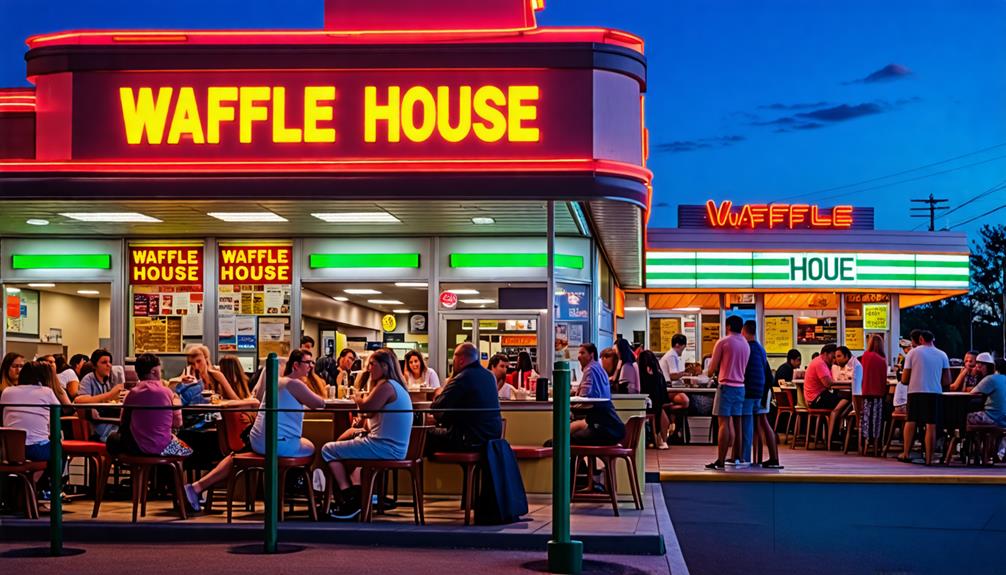
When considering late-night dining in the South, Waffle House stands out as a cultural icon. It operates 24/7 and serves as a gathering place for diverse groups. The atmosphere is nostalgic and lively. Waffle House is celebrated in pop culture and holds a special place in many people's hearts. It offers more than just a meal; it provides a glimpse into Southern life.
Late-Night Dining Hub
Waffle House is a key player in the late-night dining scene, operating 24/7. It's a popular choice for those seeking meals after hours. This includes party-goers, college students, and shift workers. Affordable comfort food and a welcoming atmosphere make it a favorite for late-night cravings.
Early morning hours at Waffle House are lively, serving as a social and community hub. The diverse mix of customers adds to the unique diner experience each visit. The menu, featuring customizable hash browns and signature waffles, is designed to satisfy late-night appetites. This makes Waffle House a staple in American diner culture.
Key reasons why Waffle House excels in late-night dining:
- 24/7 availability: Always open for customers.
- Diverse clientele: Attracts college students, shift workers, and more.
- Comfort food: Offers affordable, satisfying meals.
- Community hub: A place for socializing and bonding.
- Cultural significance: Commonly referenced in music and films.
Southern Cultural Icon
Waffle House is a true Southern cultural icon, representing the region's hospitality and culinary traditions. Founded in 1955, this establishment has over 2,100 locations, mainly in the South, especially metropolitan Atlanta. When you enter a Waffle House, you're greeted by a sense of community and nostalgia. It's not just a place to eat; it's a social gathering spot where diverse groups, like college students, shift workers, and families, come together for a meal.
The menu offers comfort food staples, including regional favorites like pecan waffles and hash browns. With over 2.5 billion customers served, Waffle House has become a beloved part of Southern life. Its casual, welcoming environment fosters a community spirit that few other establishments can match.
Here's a quick overview:
| Year Founded | Number of Locations | Customers Served |
|---|---|---|
| 1955 | Over 2,100 | Over 2.5 billion |
| Iconic Dish | Cultural Impact | Media References |
| Pecan Waffles | Southern Identity | Music and Film |
Waffle House is more than a restaurant; it's a cultural institution that has had a lasting impact on Southern identity and American diner culture.
Community Engagement
Waffle House is more than a restaurant; it is a vital community hub, especially during crises. FEMA even uses the Waffle House Index to measure storm impact and closures. This shows the chain's importance in local resilience, providing a reliable place for the community in times of need. Waffle House's customer engagement strategy is strong, using social media and hosting community events to create a sense of belonging.
Here's why Waffle House is a cornerstone in your community:
- Local Resilience: Always open, Waffle House offers a dependable refuge during emergencies.
- Customer Engagement: They keep you informed and connected through social media.
- Inclusivity: Open 24/7, it is a safe gathering spot for everyone, from late-night patrons to shift workers.
- Personal Connections: Employees engage directly with you, enhancing the community feel.
- Cultural Events: Sponsorships of local events show their commitment to your local culture.
Each of these factors ensures that Waffle House remains a crucial part of your community, providing both support and a sense of unity.
Celebrity Connections
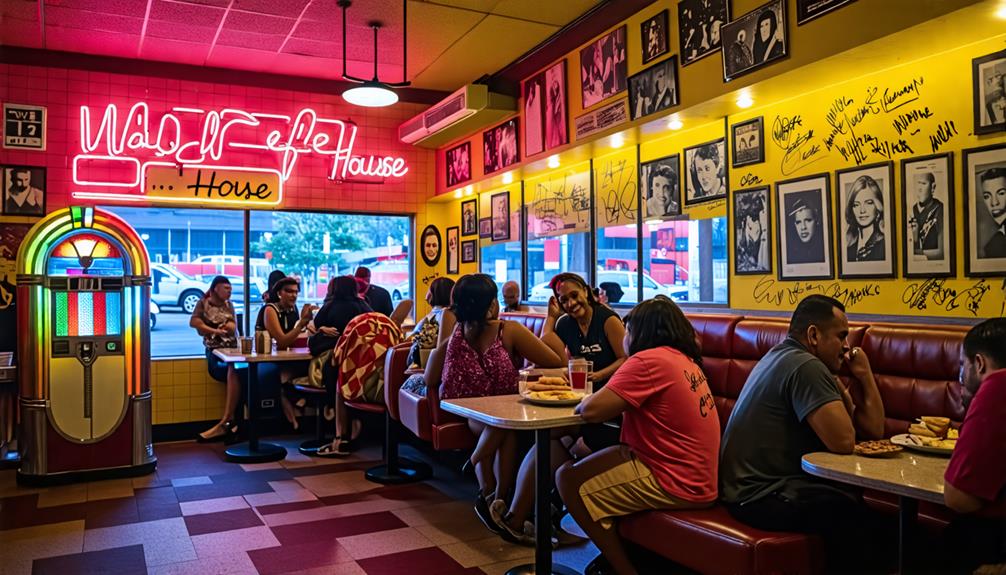
Celebrities often visit Waffle House, making it a popular spot for star sightings. Whether it's Kim Kardashian and Kanye West on a double date or chef Anthony Bourdain praising its atmosphere, Waffle House has become a notable part of pop culture. Bourdain's admiration highlighted its role in American dining, connecting high-profile culinary critique with everyday comfort food.
Musical tributes also strengthen Waffle House's celebrity ties. Hootie and the Blowfish named their album "Scattered, Smothered, and Covered" after popular hash brown styles. This nod from the music world shows the restaurant's influence beyond just food.
Waffle House has appeared in films like "Crossroads" and "Tin Cup," making it a familiar setting in American cinema. The establishment even has its own record label with breakfast-themed music, blending food and entertainment uniquely.
These celebrity connections and pop culture appearances show how Waffle House is more than just a diner. It has become a cultural icon.
Controversies
Waffle House, despite its iconic status, has faced several controversies that affect its reputation. Since the 1990s, over 20 racial discrimination lawsuits have raised questions about its commitment to inclusivity. These legal issues challenge the chain's image as a welcoming community dining option and spark debates about its role in the civil rights movement.
The restaurant has also been linked to bizarre incidents, including high-profile arrests and reports of violence. These events often overshadow Waffle House's contributions to American diner culture, turning it from a beloved eatery into a symbol of sensationalism.
Additionally, the Waffle House Index, which highlights the chain's role in disaster recovery, has faced criticism for its operations during crises. This duality complicates public perception, contrasting the brand's dependable image with its controversial realities.
Points to consider:
- Racial discrimination lawsuits question inclusivity.
- High-profile arrests and violence impact public perception.
- History tied to the civil rights movement sparks debate.
- The Waffle House Index shows importance in disaster recovery.
- Controversial incidents overshadow the community dining reputation.
Navigating these controversies, Waffle House's role in American diner culture remains a mix of praise and criticism.