10 Fascinating Facts About the History of Waffles
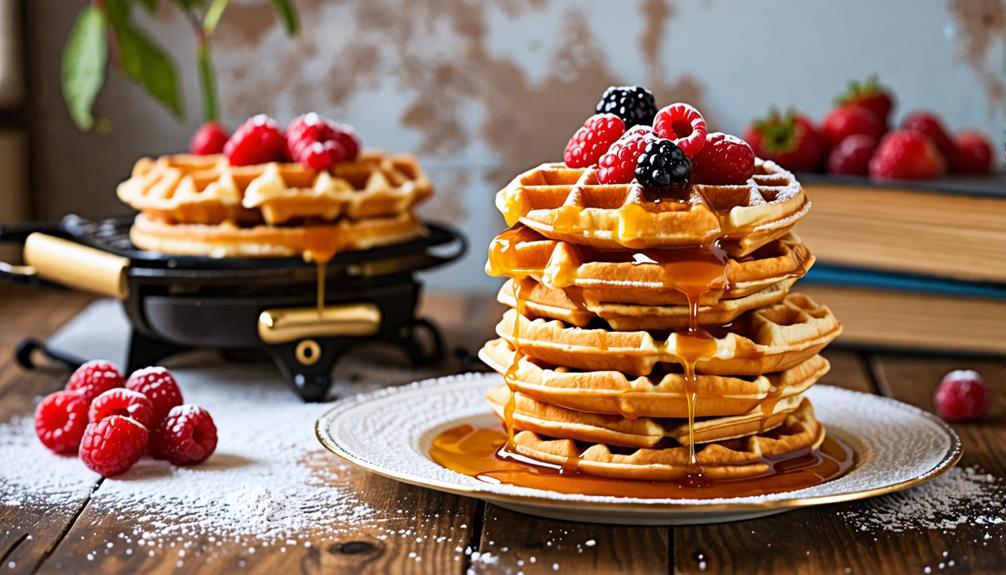
Waffles are a popular breakfast choice, but their history is equally fascinating. Ancient Greeks called them "obleios," and they have evolved significantly since then. In medieval times, waffles featured intricate religious designs. The modern waffle iron was invented in 18th-century France. Thomas Jefferson helped introduce waffles to America.
Want to know more? Chicken and waffles are a well-known pairing, and there's even a record for the world's largest waffle. There's a lot to discover about this beloved dish.
Ancient Greek Origins
Waffles originate from ancient Greece, where they were called "obleios," flat cakes cooked between heated metal plates. These early waffles were quite different from the sweet, fluffy versions we enjoy today. In ancient Greece, obleios were mainly savory, designed to hold meats and other toppings rather than being sweet treats.
The cooking method was simple: a cereal-based batter was toasted between two heated metal plates. This batter lacked the leavening agents found in modern waffles, so the result was a denser and flatter cake. Despite their simplicity, these flat cakes were versatile. They could be customized with different shapes and toppings, showing early signs of the creativity that would evolve in waffle-making over the centuries.
Ancient Greek waffles set the stage for future culinary innovations. The idea of toasting batter on heated surfaces was an ingenious solution that would later influence waffle-making techniques in medieval Europe. Understanding the history of waffles reveals how these simple beginnings in ancient Greece led to the varied and delicious waffles we enjoy today.
Medieval Waffle Evolution
During the medieval period, innovation in waffle-making advanced significantly due to cultural and technological progress. In medieval Europe, waffles evolved from simple flat cakes into more intricate designs, thanks to the introduction of waffle irons. These irons became more sophisticated, often featuring detailed imprints of religious symbols, family crests, and landscapes.
Waffles were closely tied to religious practices. The Catholic Church often served them alongside communion wafers, which were also embossed with sacred imagery. This practice added a spiritual dimension to waffles, making them more than just a tasty treat.
The Crusaders played a crucial role in enhancing the flavor of medieval waffles. They brought back exotic spices that made waffles appealing to different social classes, from peasants to nobility. As a result, waffles became common at festivals and gatherings, enjoyed by everyone.
Birth of Modern Waffles

In the 18th century, the invention of the waffle iron in France changed waffle making significantly. The grid patterns in the iron allowed the batter to cook more evenly and quickly, creating the iconic shape we recognize today. This innovation made it easier to produce consistently delicious waffles.
Thomas Jefferson played a key role in bringing waffles to America. After visiting France in the late 18th century, he introduced the French waffle iron to the United States. This sparked a growing interest in waffles across the nation. By the 19th century, waffles had become common in American kitchens. Cornelius Swarthout's patented waffle iron in 1869 made waffle making even more accessible.
In the early 1960s, Belgian waffles started gaining popularity in the U.S., especially during the World's Fairs. Known for their light and fluffy texture, Belgian waffles quickly became a breakfast favorite. The term "waffle," derived from the Dutch word "wafel," reflects the treat's evolution from its historical roots to its modern form.
Thomas Jefferson's Influence
Thomas Jefferson introduced the first waffle iron to America after visiting France. This simple action changed American breakfasts and made waffles a popular choice. Jefferson's travels show how exploring new places can influence our food preferences and traditions.
French Waffle Iron Import
Thomas Jefferson's visit to France in the late 18th century broadened his political perspectives and sparked his appreciation for French cuisine. This led him to introduce the first waffle iron to America. Jefferson's waffle iron had a long handle, allowing it to be used over an open flame, similar to traditional models in Europe. This import marked a significant moment in American culinary history by popularizing waffles as a breakfast staple.
Key points to note include:
- Jefferson's culinary curiosity: His interest in French food led him to import various kitchen tools, including the waffle iron.
- Early American breakfasts: The waffle iron transformed breakfast tables across the nation.
- Patented innovation: Cornelius Swarthout patented the first American waffle iron in 1869, further entrenching the waffle in American culture.
- National Waffle Day: August 24 is National Waffle Day, commemorating Swarthout's patent.
Jefferson's influence extended beyond politics. His introduction of the waffle iron laid the foundation for a cherished part of American breakfast traditions.
Revolutionizing American Breakfast
Jefferson's interest in French cuisine didn't stop at tasting exquisite dishes; he also brought transformative tools like the waffle iron to America. When Jefferson introduced the first waffle iron from France in the late 18th century, it changed American breakfast culture. His long-handled waffle iron made it easier to cook over an open flame, making waffles more accessible to American households.
Before Jefferson, Pilgrims made crude versions of waffles, but they were far from the delicious treat we know today. Jefferson's introduction of the waffle iron helped make waffles a popular breakfast item. This paved the way for their surge in popularity during the 19th century. As waffle irons became more available, more families could enjoy waffles regularly.
August 24th is National Waffle Day in the U.S., marking the date in 1869 when Cornelius Swarthout patented the first U.S. waffle iron. This further solidified waffles in American breakfast traditions. Thanks to Jefferson, the waffle has become an integral part of American breakfasts.
Culinary Impact of Travel
Jefferson didn't just bring back a waffle iron from France; he introduced a culinary tool that changed American breakfasts. His import of the waffle iron in the late 18th century marked a new era for American meals. This was a long-handled model, making cooking over an open flame safer and more efficient.
Jefferson's appreciation for French cuisine helped popularize waffles in the United States. This led to more diverse and elaborate breakfast options, which was groundbreaking at the time.
Here's why Jefferson's contribution was impactful:
- Introduction of the Waffle Iron: Jefferson brought the first long-handled waffle iron to America.
- Culinary Sophistication: He added French culinary sophistication to American breakfasts.
- Popularization of Waffles: His actions made waffles a breakfast staple.
- Evolution of Waffle-Making: The waffle iron he introduced played a key role in the evolution of waffle-making in American homes.
Chicken and Waffles
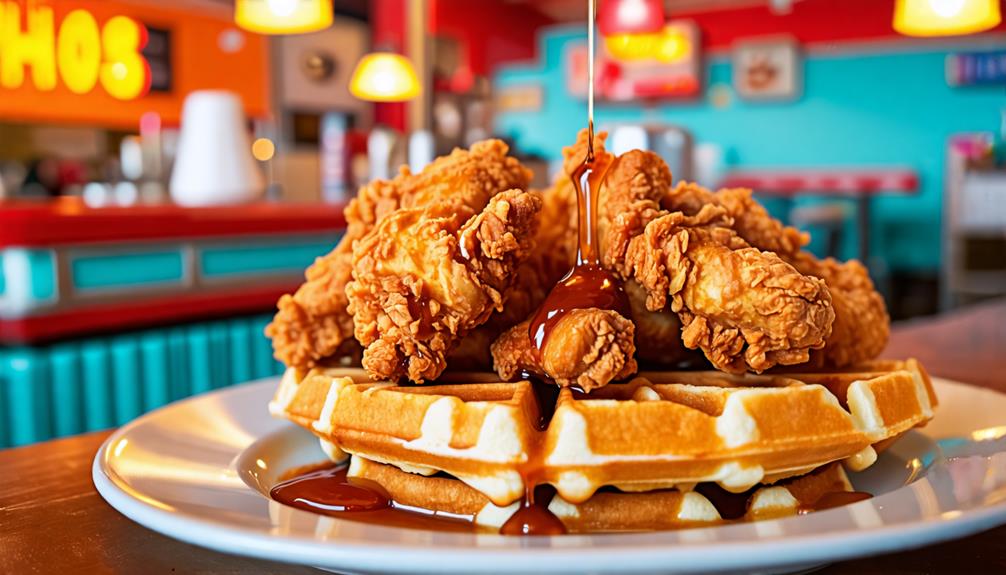
Chicken and waffles, a popular culinary pairing, likely started in the Southern United States during the late 19th century. This dish combines fried chicken, often a special meal, with waffles, which were becoming popular as a breakfast item. This mix of foods shows the blend of breakfast and dinner cuisines, highlighting the soul food tradition.
In the 1930s, chicken and waffles became famous at Wells Supper Club in Harlem. Jazz musicians and celebrities enjoyed this unique combination, and its appeal spread, making it a part of American culture. Fried chicken was often served after church on Sundays, making chicken and waffles a popular weekend comfort food in many Southern homes.
Today, chicken and waffles remain a popular dish, featured in restaurants and food festivals. Here's a quick overview:
| Aspect | Details |
|---|---|
| Origin | Southern United States, late 19th century |
| Popularization | Wells Supper Club, Harlem, 1930s |
| Cultural Significance | Soul food tradition, fusion of meal times |
| Traditional Serving | Sunday comfort food after church |
| Modern-day Popularity | Restaurants, food festivals |
This dish's journey from Southern kitchens to national fame shows its lasting appeal.
Belgian Waffle Differences
Belgian waffles are known for their deeper pockets, which are ideal for holding generous toppings. The batter typically includes yeast and whipped egg whites, resulting in a light and airy texture. These features distinguish Belgian waffles from other types, making them unique and enjoyable to eat.
Deeper Pocket Design
Belgian waffles are known for their deeper pocket design, which allows you to add more toppings and syrup than traditional American waffles.
Key features of Belgian waffles include:
- Deeper Pockets: These pockets hold more syrup and toppings, enhancing the flavor.
- Texture: The batter typically includes yeast and whipped egg whites, resulting in a fluffier, lighter waffle.
- Size: Larger waffle makers produce thicker and softer waffles, unlike the denser American variety.
- Origins: Initially called Brussels waffles, they were introduced to the U.S. at the 1962 Seattle World's Fair and later marketed as "Belgian waffles."
The deeper pocket design is practical, holding more toppings like fruit, whipped cream, or syrup. In Belgium, these waffles are often enjoyed plain or with powdered sugar, showcasing their rich flavor and unique texture.
Distinct Batter Components
Belgian waffles are known for their unique texture and taste, thanks to a special batter recipe. This batter uses yeast and whipped egg whites, resulting in a lighter, fluffier texture. Unlike the denser American waffles, Belgian waffles are airy and delicate. A key component of the batter is its higher sugar and butter content, which gives the waffles their rich flavor and crispy exterior. These ingredients make Belgian waffles taste more indulgent.
Belgian waffles are also larger and thicker, with deeper pockets designed to hold more toppings. In Belgium, they are often enjoyed as a sweet treat on their own or with a dusting of powdered sugar, rather than with maple syrup. To enhance the flavor further, you can add vanilla or almond extract to the batter. This makes the recipe versatile and customizable to your taste preferences.
Waffle Irons' History
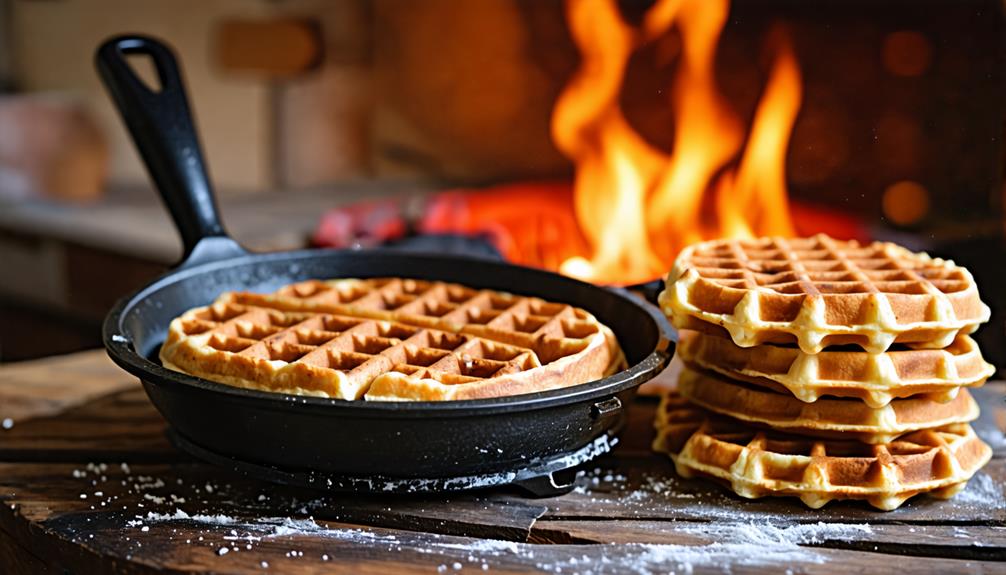
Waffle irons have a long history. Originally, they were made of cast iron, hinged, and used over open flames. This method ensured the batter cooked evenly. The first U.S. waffle iron patent was by Cornelius Swarthout on August 24, 1869. Today, we celebrate this date as National Waffle Day. Swarthout's invention made it easier to cook waffles at home without using an open flame.
The next big step came in the 1910s when General Electric developed the electric waffle maker. This made cooking waffles more convenient. By the 1930s, waffle irons had become common kitchen appliances. Improved designs made them essential tools in many homes.
Here are the key points in waffle iron history:
- Early cast-iron waffle irons: Used over open flames.
- Cornelius Swarthout's 1869 patent: Led to National Waffle Day.
- Electric waffle irons by General Electric: Made home cooking easier.
- 1930s adoption: Improved designs made them common.
Waffle iron designs continue to evolve. They now come in many shapes and sizes to meet modern cooking trends and preferences.
Nutritional Insights
As waffle irons have evolved, so has our understanding of the nutritional content of waffles. An average serving contains between 200-300 calories, mainly from carbohydrates, making them a quick energy source. The caloric content can vary based on the ingredients used. Traditional waffle batter usually includes more sugar, butter, and eggs than pancake batter, which increases the calorie count.
For healthier options, consider whole grain waffles. They provide more fiber and nutrients than refined versions. Fiber promotes better digestive health and helps you feel fuller longer, making whole grain waffles a better choice for those mindful of their diet.
Pay attention to toppings as well. High-sugar toppings like syrup or whipped cream can make waffles less nutritious. Instead, opt for fresh fruits and nut butters, which add beneficial vitamins and healthy fats. By making small adjustments, you can enjoy waffles as a more nutritious meal.
Popular Toppings

When enjoying waffles, the right toppings can elevate your meal from simple breakfast to gourmet delight. Here are some popular choices to enhance your waffle experience:
- Maple Syrup: A staple in North America, maple syrup's rich, sweet flavor complements the crispiness of waffles. A drizzle can transform your breakfast into a comforting meal.
- Fresh Fruits: Adding fresh fruits like strawberries, blueberries, and bananas introduces a nutritious twist. These fruits add lively colors and balance the sweetness of the waffle with their natural flavors.
- Whipped Cream: For a more indulgent treat, add a dollop of whipped cream. This topping provides a rich, creamy texture, often seen in dessert-style waffles, making them feel luxurious.
- Ice Cream: If you're in the mood for dessert, top your waffle with a scoop of ice cream. The warm waffle and cold ice cream create a delightful contrast.
These toppings can turn your waffle into a culinary masterpiece, perfect for any occasion.
Fun Waffle Facts
National Waffle Day in the U.S. is celebrated on August 24. This date honors the patent of the first waffle iron in 1869. In 2013, the world's largest waffle was made, measuring 8,000 square feet. These facts show how much waffles are enjoyed in our culture.
National Waffle Day
National Waffle Day, observed on August 24th, marks the patenting of the first waffle iron by Cornelius Swarthout in 1869. This day celebrates the significance of waffles in American cuisine, providing an excellent opportunity to enjoy this popular dish. Many restaurants offer special deals and waffle-themed menus.
Here are some key facts about National Waffle Day:
- Historic Patent: Cornelius Swarthout patented the first waffle iron in 1869, starting the tradition of waffle-making in the U.S.
- Daily Consumption: Americans consume over 500,000 waffles daily, highlighting the dish's popularity.
- Restaurant Celebrations: Waffle House, a well-known American diner chain, has over 2,000 locations and sells about 145 waffles per minute.
- Global Appreciation: In addition to National Waffle Day, International Waffle Day is celebrated on March 25th, recognizing the global love for waffles.
To celebrate National Waffle Day, consider visiting a restaurant that offers special deals or try making waffles at home using various recipes and toppings.
World's Largest Waffle
Creating the world's largest waffle is a significant achievement. The team at Stitching Gouda Oogst in the Netherlands accomplished this in 2013. The waffle measured 8 feet long and weighed 110 pounds. This record set a new standard in the culinary arts, demonstrating the creativity and dedication of waffle enthusiasts.
Originally called Brussels waffles, these breakfast treats are popular worldwide. This record-breaking event highlighted their cultural significance. The size and weight of the waffle symbolize a unique achievement, celebrating the versatility of waffles. The effort, precision, and passion required to bake something of this scale are noteworthy.
This achievement shows the lengths people will go to celebrate their love for waffles. Whether enjoying a simple breakfast or marveling at a world record, waffles bring comfort and delight. The world's largest waffle is more than just a record. It is a tribute to the appeal of waffles and the joy they bring to people everywhere.