What's in an Irish Breakfast?
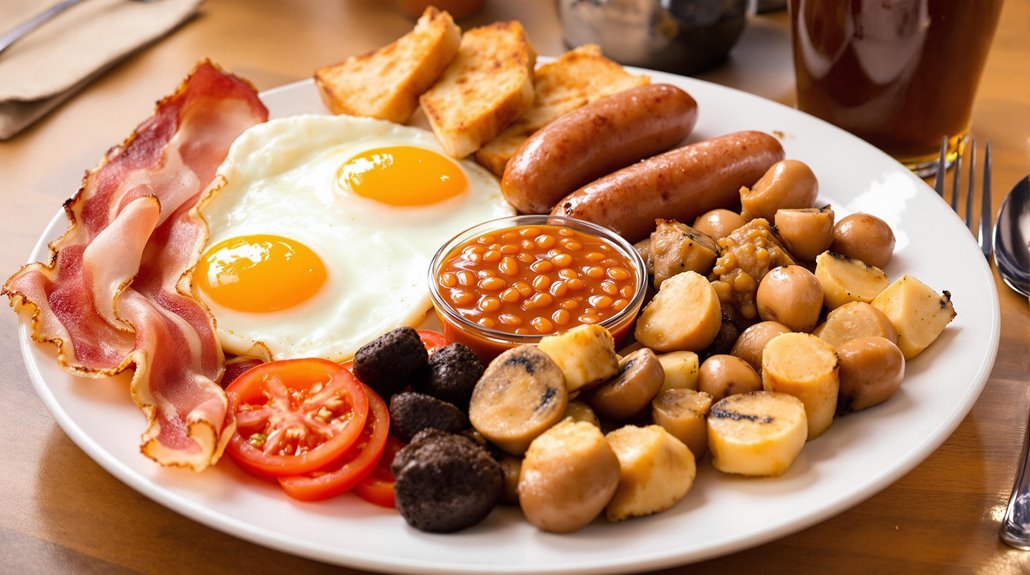
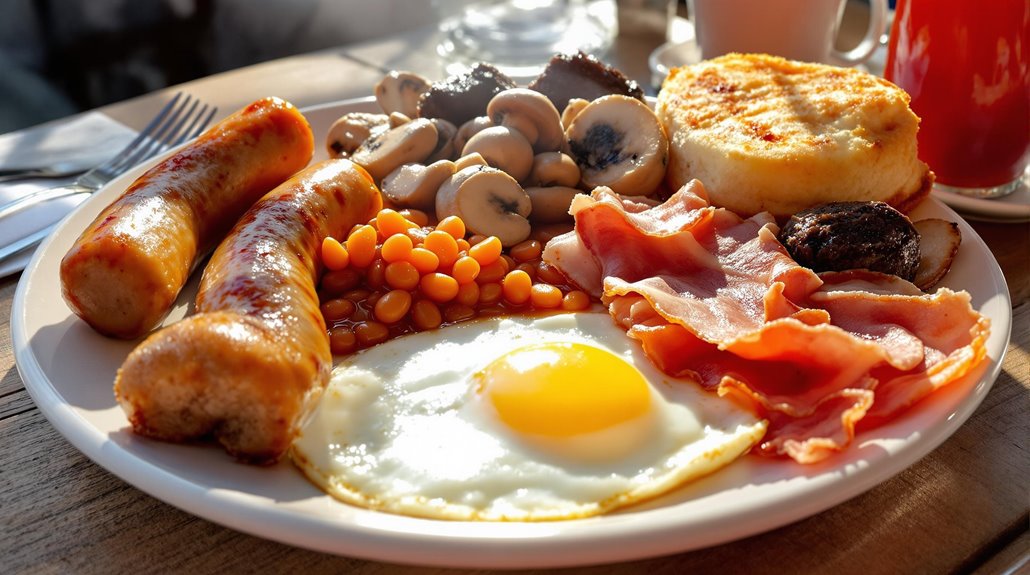
In a traditional Irish breakfast, you'll find crispy bacon rashers, savory sausages, and eggs cooked to your preference, typically with runny yolks. The plate includes grilled tomatoes, sautéed mushrooms, and classic sides like baked beans, black pudding, and white pudding. Irish soda bread or brown bread rounds out this hearty feast, served with strong Irish breakfast tea. There's even more to uncover about this filling morning meal's regional variations and cooking techniques.
Essential Components of a Traditional Irish Breakfast
What makes a traditional Irish breakfast stand out among other morning meals? You'll find it's a hearty combination of savory items that'll keep you satisfied well into the day. At the heart of this filling breakfast are crispy bacon rashers and sausages, perfectly paired with eggs cooked to your liking.
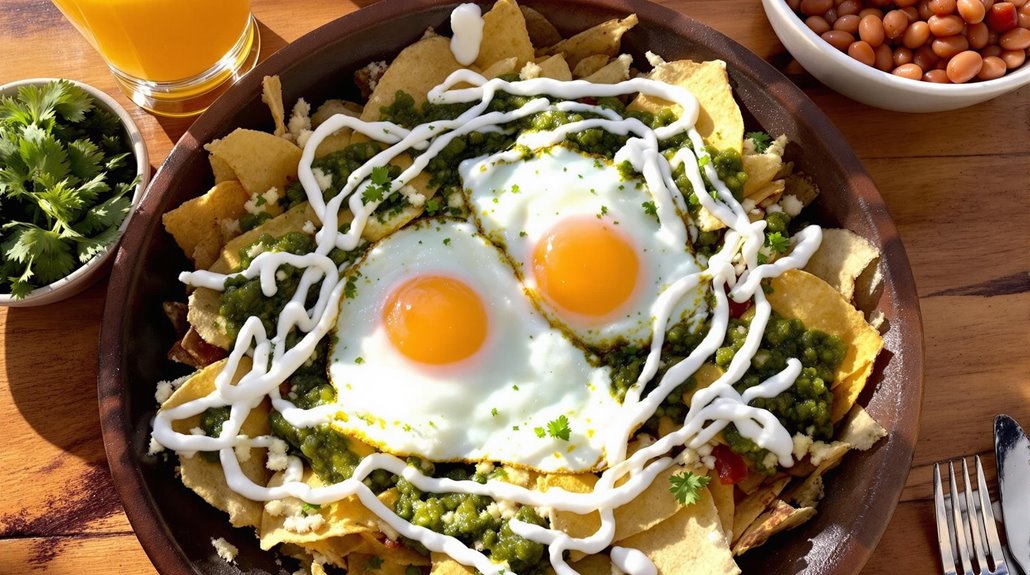
The Traditional Irish breakfast wouldn't be complete without its signature sides. You'll uncover grilled tomatoes and sautéed mushrooms adding freshness to your plate, while baked beans provide a rich, savory element. Both black and white pudding offer unique flavors that are distinctly Irish. Don't forget the bread - whether it's warm Irish soda bread, brown bread, or wheaten varieties, it's essential for soaking up every last bit. With hot tea or coffee to wash it all down, you're experiencing a true Irish morning feast. Like eggs in purgatory from Italy, the Irish breakfast celebrates eggs as a cornerstone of a hearty, satisfying morning meal.
The Art of Cooking an Irish Fry-Up
While becoming proficient in the traditional Irish fry-up takes practice, the cooking process follows a strategic sequence to confirm every component reaches the table at its pinnacle. You'll want to start by heating your Irish butter in a large skillet, then carefully orchestrate the timing of each ingredient for the full Irish experience.
Begin with slow-cooking items like black pudding, white pudding, and Irish bacon, as they'll need the most time to achieve the perfect crispy exterior. Add your baked beans to a separate pan while frying eggs until the whites set but yolks remain runny. Toast your Irish soda bread last, ensuring it's warm and ready to soak up the rich flavors.
The entire process takes about 20-30 minutes, and you'll know you've perfected it when everything arrives hot and perfectly cooked at the same time. For perfectly fried eggs, spoon hot fat over the tops while cooking to ensure even doneness.
Regional Variations Across Ireland
Regional differences across Ireland's four provinces have shaped distinct variations of the traditional Irish breakfast. In Northern Ireland, you'll find soda farls taking the place of traditional soda bread, while southern establishments often feature fresh seafood like smoked salmon and kippers on their breakfast plates.
If you're traveling through the western regions, you'll notice their distinctive oatmeal-based black pudding, which sets it apart from versions found elsewhere on the island. The contrast between urban and rural areas is equally striking - rural establishments exalt themselves on incorporating locally-sourced ingredients into their morning spreads.
Whether you're dining in a coastal village or an inland county, each area's unique interpretation of the Irish breakfast reflects its local culture and available ingredients, making breakfast a journey through Ireland's culinary landscape. Some restaurants even serve their Irish breakfast with buttermilk pancakes, similar to those popular in North America.
Breads and Beverages That Complete the Meal
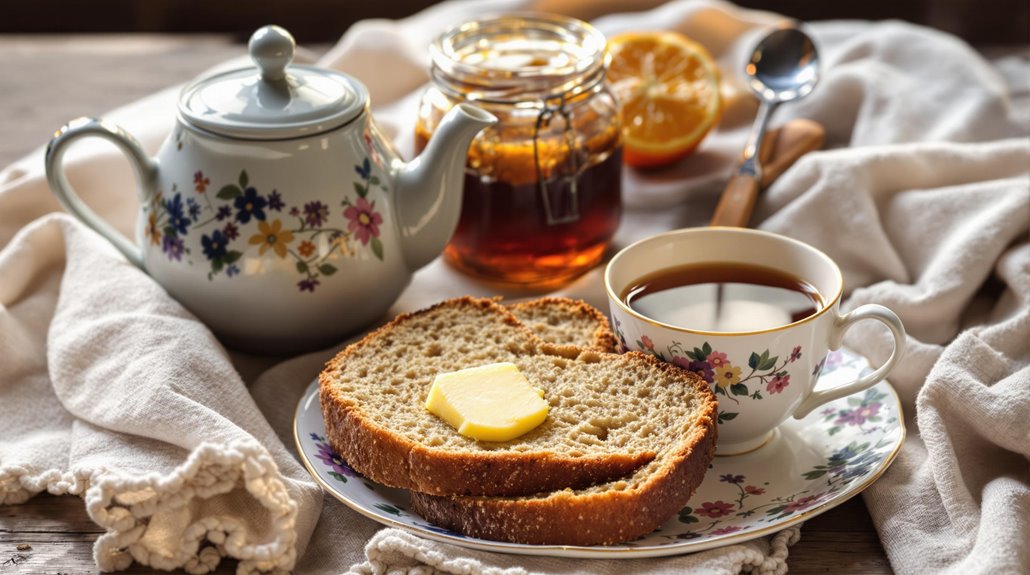
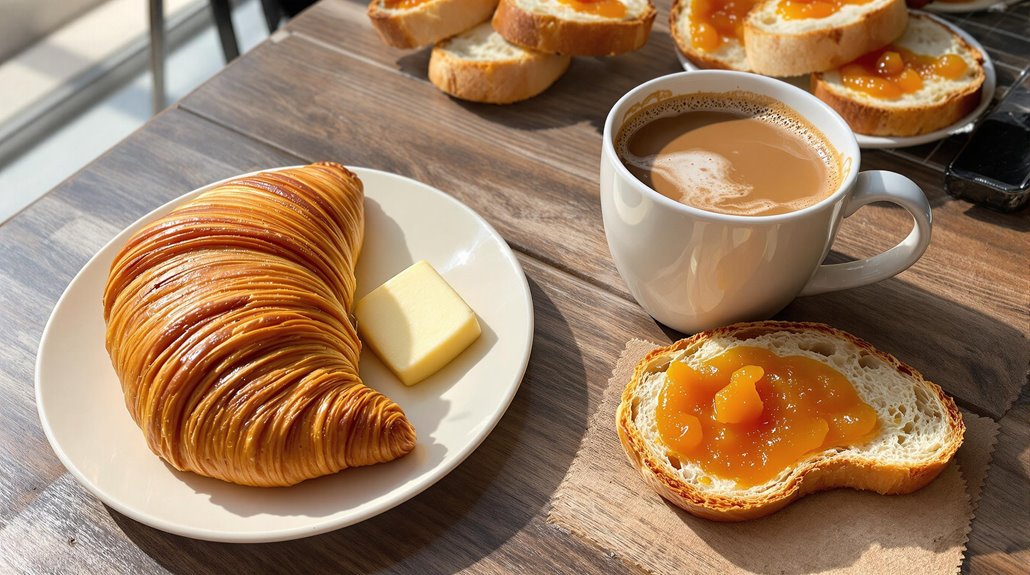
No Irish breakfast experience is complete without its signature breads and beverages. You'll find an array of traditional breads, including Irish soda bread, brown soda bread, wheaten bread, bannocks, and butteries (also known as rowies). While tea remains the dominant drink, coffee has gained popularity in recent years as a breakfast beverage.
- Fresh homemade breads served warm, perfect for spreading butter and jam
- A strong cup of Irish breakfast tea or freshly brewed coffee
- A glass of invigorating orange juice to complete your meal
Whether you prefer the heartiness of wheaten bread or the simplicity of a bannock, these accompaniments shape your breakfast into an authentic Irish dining experience.
History and Cultural Significance of the Irish Breakfast
Throughout Ireland's history, the full Irish breakfast emerged as a reflection, expression, or symbol of both necessity and hospitality. The traditional Irish breakfast helped sustain farmers through long workdays, providing the calories needed for manual labor, especially on cold winter mornings.
The meal's components showcase local produce and Ireland's rich farming heritage. The combination of Irish brown and Irish black puddings, along with potato bread and Irish soda bread, represents centuries of culinary tradition. Whether you're enjoying a cup of tea with brown sauce on your eggs or savoring each bite of locally sourced meat, you're participating in a custom that dates back generations. This hearty breakfast tradition also reflects the legendary Irish hospitality, where hosts would offer guests the best portions from their pantry.