What Do South Koreans Eat for Breakfast?
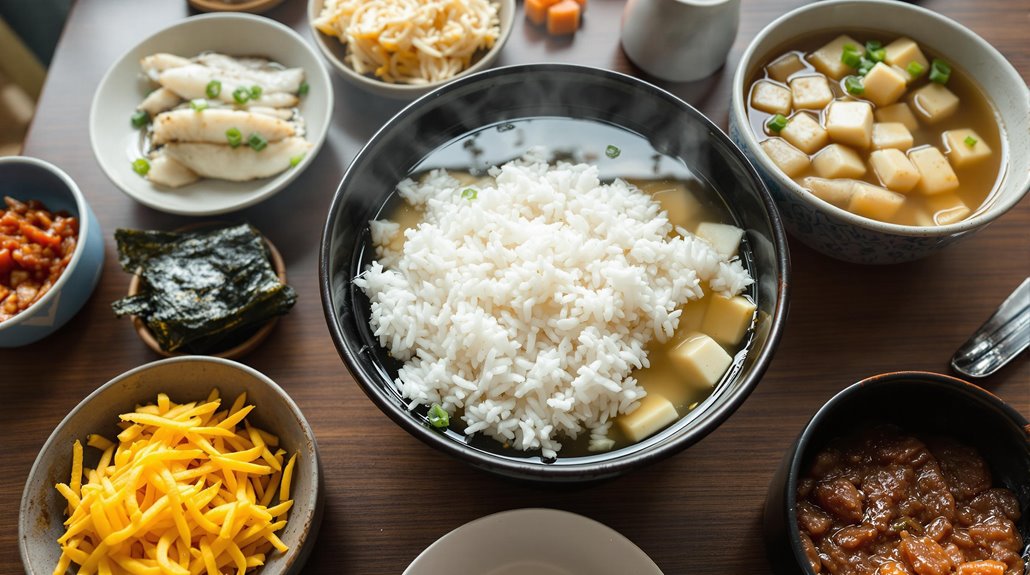
You'll find that a traditional Korean breakfast looks quite different from Western morning meals. Instead of cereal or toast, Koreans typically enjoy steamed rice accompanied by various banchan (side dishes), including the essential kimchi. You'll also uncover hearty soups like haejang-guk, savory stews, and protein-rich options such as fish and eggs. Street food favorites like tost-u and banana uyu offer modern alternatives. There's so much more to plumb about Korea's diverse morning cuisine.
The Cultural Significance of Korean Breakfast
While many cultures treat breakfast as a quick, simple meal, Korean breakfast traditions reflect deeper cultural values of family bonding and nutritional balance. In Korean households, you'll find families gathering around the table to share traditional Korean breakfast, starting their day with meaningful connections over steaming bowls of Korean rice and nourishing soups.
Unlike Western breakfast options, Korean cuisine emphasizes a wholesome morning spread featuring various Korean side dishes. You'll typically encounter an array of banchan, from fermented Korean radish to Korean soybean preparations, providing essential nutrients for the day ahead.
The importance of breakfast in Korean meals extends beyond mere sustenance - it's a ritual that strengthens family ties and promotes overall well-being. While Korean street food might be popular later in the day, breakfast remains a sacred, home-centered tradition. This dedication to morning meals differs from countries like France, where simple French crêpes are a beloved breakfast staple.
Traditional Rice-Based Morning Meals
At the heart of South Korean breakfast lies the prominence of rice-based dishes that anchor the morning meal. You'll find that traditional breakfast foods in Korea center around steamed rice accompanied by nourishing soups and Korean side dishes called banchan.
- Steamed rice served with various banchan, including the essential kimchi
- Juk (rice porridge) in both savory and sweet variations
- Nurungji, the crispy rice from the pot's bottom, offering an appealing texture
- Hearty soups like haejang-guk (hangover soup) to start your day
- An assortment of vegetable side dishes that complement the rice dishes
While street vendors now offer modern alternatives, these rice-based meals remain fundamental to Korean breakfast culture, providing sustenance and continuing centuries-old traditions. Unlike the buttermilk pancakes commonly enjoyed in North America, Korean breakfasts favor savory flavors over sweet ones.
Popular Breakfast Soups and Stews
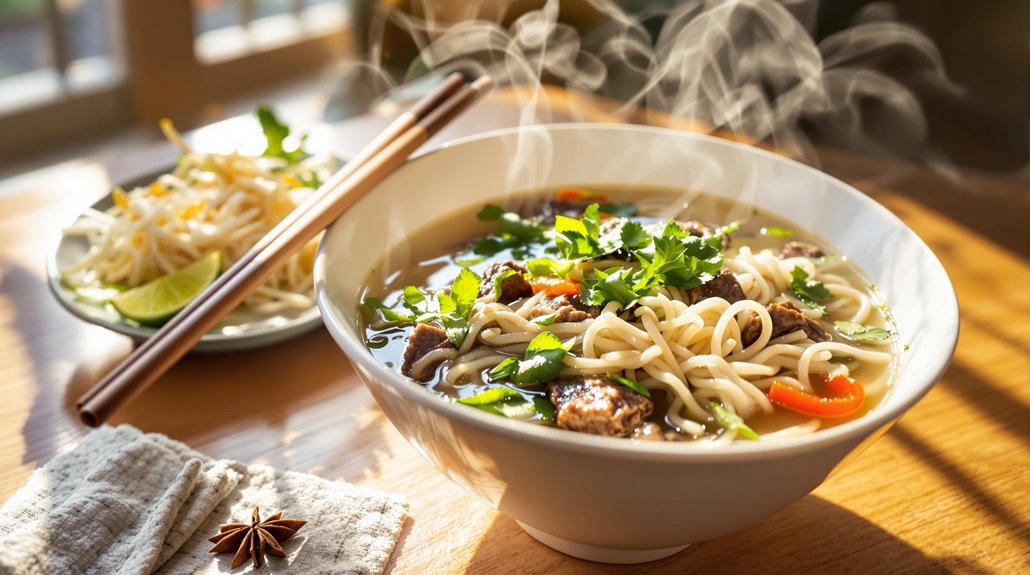
Many Korean breakfast soups and stews offer hearty, flavorful starts to the day. You'll find traditional dishes like galbitang, a slow-cooked short rib stew that's perfect for cold mornings. If you're looking to cure a hangover, you can't go wrong with haejangguk, a spicy soup that's become a popular morning remedy. For lighter options, there's miyeokguk, a comforting seaweed soup that's gentle on your stomach.
The classic doenjang jjigae, a soybean paste stew, brings rich umami flavors to your morning meal. Koreans also enjoy bugeo-guk, a simple yet satisfying soup made with dried pollock fish, soybean sprouts, and tofu. While these soups and stews might differ from typical Western breakfasts, they're deeply rooted in Korean culinary tradition and provide nourishing morning meals. Like many ancient cultures that saw divine sustenance as essential to morning rituals, Korean breakfast soups carry deep cultural significance.
Essential Banchan Side Dishes
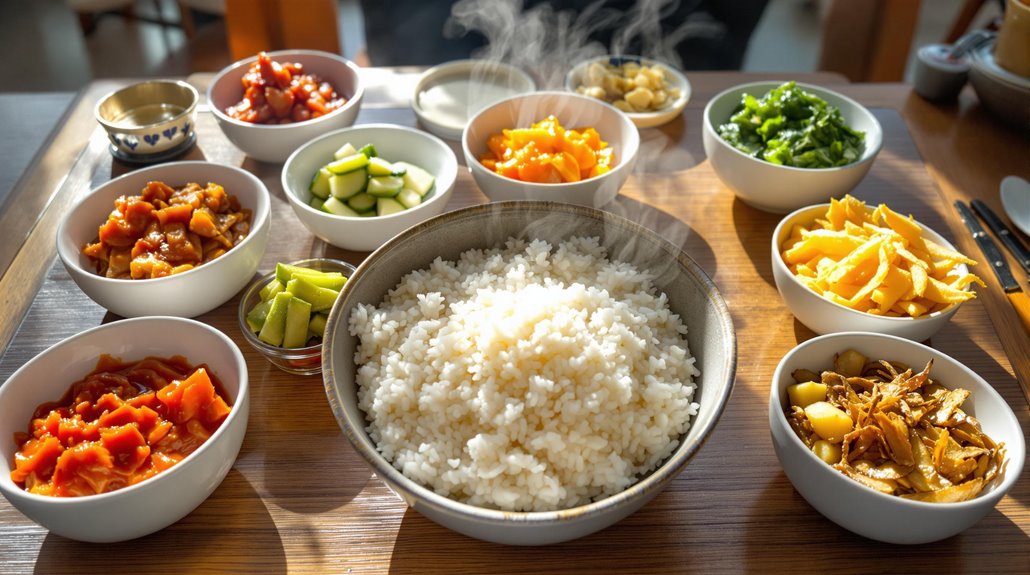
Korean breakfast tables come alive with an array of banchan side dishes that complement the main soups and stews. Koreans are known for their diverse selection of small plates that add flavor, texture, and nutrition to their morning meals. Korean recipes often incorporate green onions, rice flour, and nuts and seeds to create these essential accompaniments.
The quintessential fermented cabbage dish - Kimchi, a crispy, nutrient-rich addition - Roasted seaweed (gim), stir-fried vegetables seasoned with garlic and sesame oil - Namul, made with vegetables or seafood - Savory pancakes (jeon), Protein-rich sides - including Gyeran Bap (egg rice) and fish dishes. These banchan guarantee you'll start your day with a well-balanced, flavorful Korean breakfast that's both nutritious and satisfying.
Street Food Breakfast Favorites
While traditional Korean homes serve elaborate breakfast spreads, the lively streets offer quick and satisfying morning options for those on the go. You'll find vendors in South Korea selling tost-u, a popular breakfast sandwich featuring eggs, cabbage, and brown sugar. For a sweet start, try banana uyu, a rejuvenating banana-flavored milk that's become a breakfast staple.
If you're craving something more substantial than side dishes, street food vendors offer chapssal donuts made from sweet rice flour and gyerangbbang, a unique Korean Street creation combining corn muffin batter with a perfectly baked egg center. When you're seeking a convenient breakfast option, you can also grab classic favorites like kimbap or hotteok from the countless food stalls dotting the streets, making your morning commute a delectable journey.
Modern Korean Breakfast Trends
Recent decades have witnessed a significant shift in South Korean breakfast habits, as younger generations increasingly adopt Western-style morning meals. You'll find more Koreans choosing cereal, pastries, and eggs over traditional rice and side dishes.
Key changes in Korean breakfast culture:
- Western breakfast items are now widely available in local stores
- About 21% of people skip breakfast entirely
- Traditional korean dishes like rice and stews remain popular choices
- Many breakfast items are also eaten at other meals
- Time-saving options like instant noodles and porridge are common
Despite the growing Western influence, most Koreans still prefer their traditional breakfast featuring rice, hot stews, and banchan side dishes. This balance between modern convenience and cultural heritage reflects South Korea's evolving food setting, where both Western and Korean breakfast options coexist.
Regional Breakfast Specialties
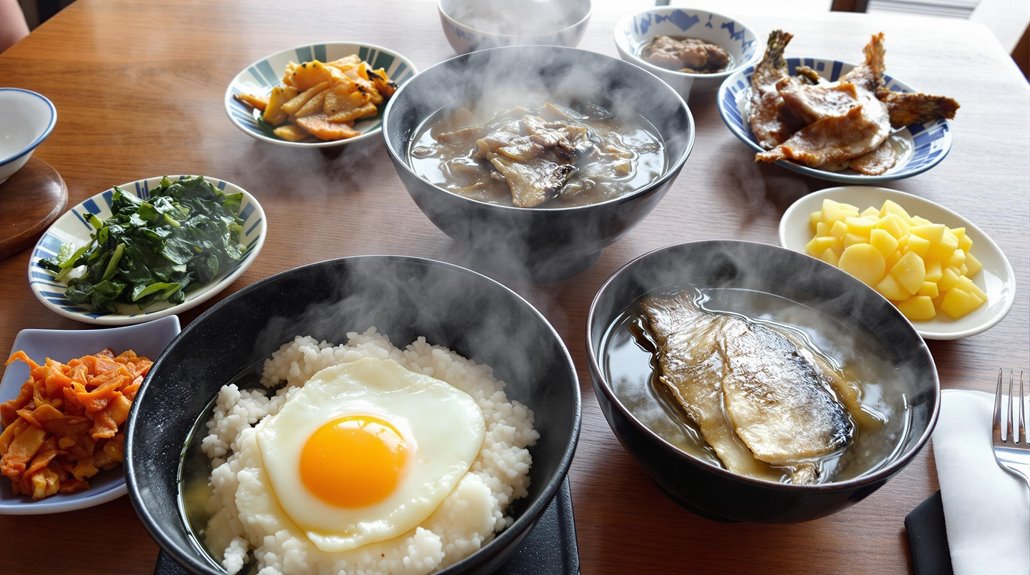
Throughout South Korea's diverse regions, you'll immerse into unique breakfast specialties that reflect local ingredients and cultural traditions. In Busan, your first meal might include spicy seafood gimbap with side dishes, while Jeju's haenyeo start their day with jeonbok gukbap, a soup made from fresh abalone and dried anchovies.
In Gangwon-do, dishes are usually paired with makgeolli and warm bindaetteok, creating a hearty breakfast combination. If you're exploring Gyeonggi-do's street food scene, don't miss ssiat hotteok, where sweet rice dough envelops a fragrant mixture of cinnamon and pine nuts.
Meanwhile, Gyeongsangbuk-do's nokdu bindaetteok offers a savory alternative with crunchy sprouts and doenjang paste, often garnished with sesame seeds, rivaling the popularity of traditional pork belly dishes.
Seasonal Breakfast Variations
As the seasons shift in South Korea, you'll uncover breakfast tables metamorphose to welcome nature's changing bounty. The seasonal breakfast options reflect both tradition and practicality, adapting to the weather and available ingredients.
Spring brings light, nutritious choices like miyeokguk (seaweed soup) with rice. Summer cools you down with invigorating naengmyeon (cold noodles). Fall introduces warming dishes featuring seasonal pumpkin porridge. Winter warms you up with hearty meat stews and hot soups. Each season showcases unique regional specialties using local ingredients.
You'll find that Korean breakfast adapts naturally to the climate, providing exactly what your body needs. From cooling summer noodles to warming winter porridge, these seasonal variations guarantee you're always enjoying the perfect start to your day while making the most of nature's produce.
Healthy Korean Breakfast Options
Wellness sits at the heart of traditional Korean breakfast cuisine, offering a balanced array of nutritious options that'll energize your morning. You'll find protein-rich choices like kongbap, made with soybean sprouts, and omega-3-packed grilled mackerel that fuel your body for the day ahead.
For a lighter start, try miyeokguk (seaweed soup), which delivers essential minerals and aids digestion. Rice serves as a versatile foundation, complemented by vitamin-rich side dishes like kimchi and namul.
If you're seeking comfort food that's still nutritious, juk (rice porridge) provides a warm, easily digestible meal that you can customize with various healthy ingredients. These breakfast options showcase how Korean cuisine naturally combines nutrition with flavor, giving you a wholesome start to your day.
Korean Breakfast Etiquette and Customs
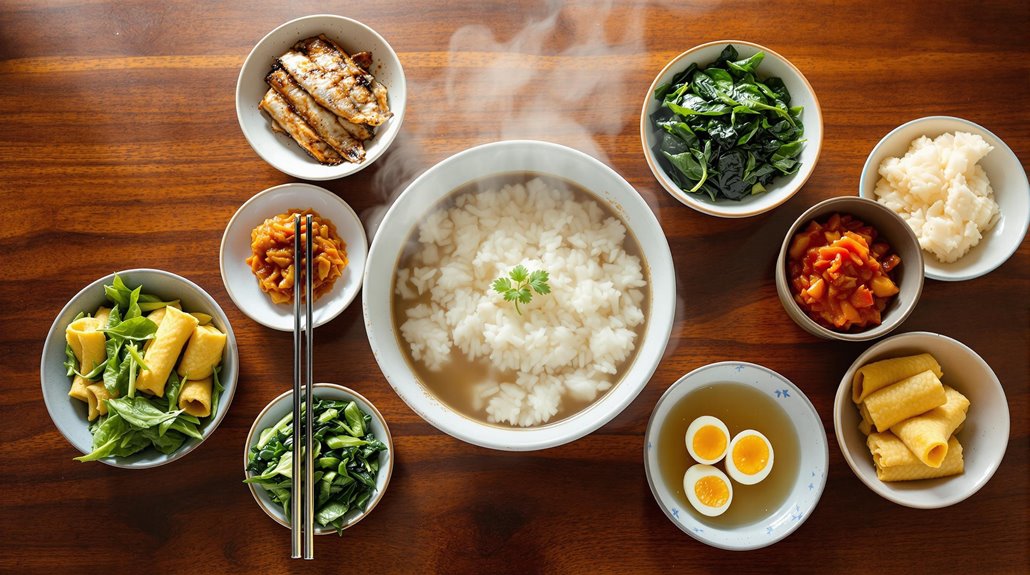
When you join a Korean family for breakfast, you'll quickly notice that the meal involves more than just eating - it's a cherished cultural ritual. Koreans often gather around a communal table where elders guide younger family members through this important meal of the day.
Key aspects of Korean breakfast etiquette:
- Always wait for elders to begin eating before you start
- Share side dishes respectfully with others at the table
- Hold your rice bowl with one hand while eating
- Never leave chopsticks standing vertically in rice
- Express gratitude before and after the meal
The morning meal provides an opportunity for family bonding, whether you're enjoying traditional dishes or a hangover cure like haejang-guk. While modern breakfast habits are changing, these customs remain deeply rooted in Korean culture, connecting generations through shared dining experiences.