Understanding Sugar Levels in Waffle Syrups

When you're enjoying waffle syrups, understanding their sugar levels is essential for health. Pure maple syrup offers natural sugars with around 13.4 grams of carbohydrates per tablespoon, and it's lower on the glycemic index, leading to a steadier rise in blood sugar. On the other hand, pancake syrups, often made from high fructose corn syrup, spike your blood sugar quickly and lack nutritional benefits. Opting for natural syrups like pure maple can provide minerals and antioxidants absent in artificial syrups. Knowing this can help you make more informed breakfast choices and enjoy your waffles without compromising health.
Key Takeaways
- Pure maple syrup contains approximately 13.4 grams of carbohydrates per tablespoon from natural sugars.
- Pancake syrup, primarily made from corn syrup, has a higher sugar content and leads to quicker blood sugar spikes.
- Maple syrup has a lower glycemic index compared to pancake syrup, leading to a steadier rise in blood sugar levels.
- Pure maple syrup offers nutritional benefits like minerals and antioxidants absent in pancake syrup.
- Portion control is crucial; one tablespoon of maple syrup contains significant carbohydrates, impacting sugar levels.
Types of Waffle Syrups
With regards to waffle syrups, you'll mainly encounter two types: pure maple syrup and pancake syrup. Pure maple syrup offers a complex flavor profile, rich in nutrients, while pancake syrup, often made from corn syrup, lacks depth and beneficial properties. When choosing a syrup, understanding these differences can enhance your waffle experience.
Pure maple syrup is graded by color and flavor into four categories: Golden (delicate taste), Amber (rich taste), Dark (robust taste), and Very Dark (strong taste). Each grade offers unique culinary applications, enhancing distinct dishes with its unique flavor. The natural sugars in maple syrup provide a sweetness that's more nuanced compared to the straightforward sweetness of pancake syrup.
Moreover, pure maple syrup has a lower glycemic index (GI) than pancake syrup, resulting in a slower, steadier rise in blood sugar levels. This is due to its higher mineral content, which includes calcium, potassium, and zinc. With approximately 61.5 grams of carbohydrates per 100 grams, maple syrup offers a balanced sweetening option.
When you compare syrups, consider the caloric and carbohydrate content. One tablespoon of maple syrup contains about 13.4 grams of carbohydrates, making it a mindful choice for your waffle dishes.
Sugar Content in Syrups
When evaluating the sugar content in syrups, you'll notice significant differences between pure maple syrup and pancake syrup. Pure maple syrup contains approximately 61.5 grams of carbohydrates per 100 grams, with most being natural sugars. A single tablespoon of maple syrup adds about 13.4 grams of carbohydrates to your diet, primarily from these natural sugars. This can impact your blood sugar levels, but thanks to its lower glycemic index compared to pancake syrup, the rise in your blood sugar will be steadier.
In contrast, pancake syrup is mostly made from corn syrup, which is composed primarily of high fructose corn syrup. This type of syrup lacks the beneficial nutrients found in maple syrup and tends to have a higher glycemic index, causing a quicker spike in blood sugar levels. When considering the measure of sugar content, pancake syrup is generally sweeter but less complex in flavor compared to maple syrup.
Here's a quick comparison:
- Maple Syrup: 61.5 grams of carbohydrates per 100 grams
- Pancake Syrup: Primarily high fructose corn syrup
- Glycemic Index: Lower in maple syrup
- Flavor Profile: More complex in maple syrup
Choose wisely based on your nutritional needs and flavor preferences!
Maple Syrup Grades

Understanding the sugar content in syrups is significant, but it's likewise fascinating to investigate the different grades of maple syrup. Maple syrup is classified into four distinct grades: Golden, Amber, Dark, and Very Dark. Each grade offers a unique color and flavor profile, providing a range of choices for numerous culinary uses.
Golden syrup, with its delicate taste, is produced at the beginning of the maple season. It's perfect for light dishes, offering a subtle sweetness with a low glycemic index (GI). Amber syrup, harvested mid-season, boasts a rich taste and is quite popular for general use, such as drizzling on pancakes or waffles.
Dark syrup has a robust taste, harvested later in the season, and is ideal for hearty recipes. Its strong maple flavor makes it excellent for glazes on meats and baked goods. Lastly, Very Dark syrup, produced at the end of the season, has an intense flavor akin to molasses. This grade is best used in cooking and baking, where its bold taste can truly shine.
The grading system guarantees high quality by emphasizing clarity, density, and flavor, making certain you can pick the perfect syrup for any dish.
Artificial Vs. Natural Syrups
Although both natural and artificial syrups can sweeten your breakfast, they differ considerably in composition and nutritional value. Natural syrups, like pure maple syrup, are derived from the sap of maple trees and contain beneficial minerals such as manganese and zinc. In contrast, artificial syrups are primarily made from corn syrup and high fructose corn syrup, with added artificial flavors.
When you choose pure maple syrup, you're treated to a rich, complex flavor profile characterized by caramel-like notes, known as the Flavors of Maple Syrup. On the other hand, artificial syrups offer a generic sweet taste, lacking depth.
Here are some key differences:
- Ingredients: Natural syrups are made from tree sap, while artificial syrups use corn-derived sugars.
- Flavor: Pure maple syrup has a rich, complex flavor, whereas artificial syrups are simply sweet.
- Production: Natural syrup production involves boiling sap, while artificial syrups undergo refining and filtering with preservatives.
- Nutritional Content: Pure maple syrup contains antioxidants and beneficial nutrients, whereas artificial syrups primarily offer empty calories.
Additionally, natural maple syrup has a lower glycemic index compared to pancake syrup, meaning it causes a slower, steadier rise in blood sugar levels.
Nutritional Comparison
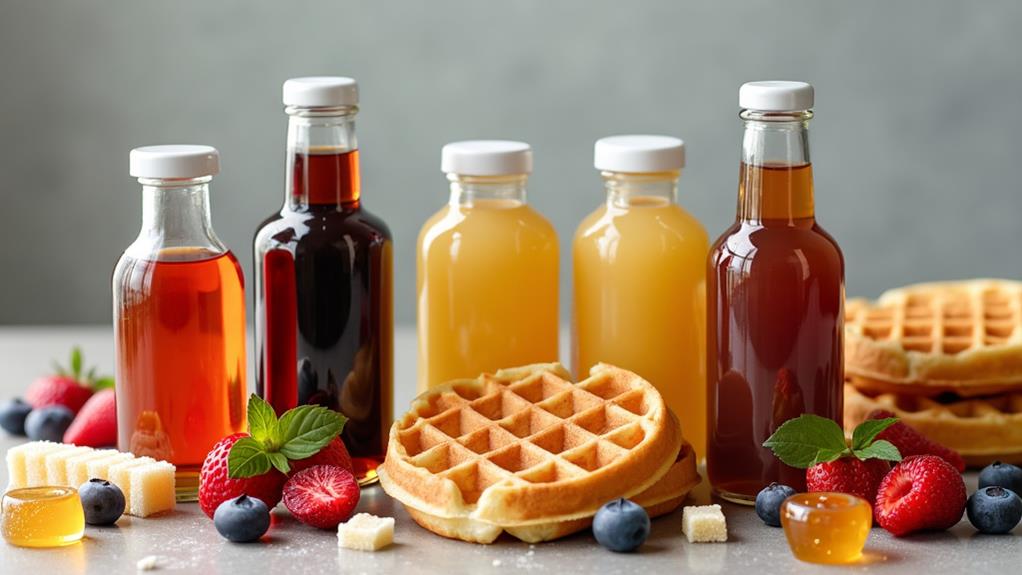
Plunge into the nutritional comparison between maple syrup and pancake syrup, and you'll quickly see the advantages of choosing natural over artificial. Maple syrup contains around 61.5g of carbohydrates per 100g, derived from natural sugars. In contrast, pancake syrup is primarily made from corn syrup, offering little nutritional value. Maple syrup's richness in minerals like manganese, zinc, and calcium further sets it apart.
With regard to the glycemic index, maple syrup has a lower GI compared to pancake syrup. This translates to a slower rise in blood sugar levels, making it a healthier option for maintaining stable energy. The higher mineral content and complex sugars in maple syrup contribute to this effect.
A tablespoon of maple syrup contains about 13.4g of carbohydrates, comparable to pancake syrup regarding adding carbs to your waffles. However, the presence of antioxidants like polyphenols in maple syrup provides further health benefits that pancake syrup simply lacks.
In short, maple syrup not only tastes great but also offers significant nutritional advantages over pancake syrup. Choose wisely, and your body will thank you for opting for the natural, nutrient-rich option.
Glycemic Impact
When you're choosing a syrup for your waffles, the glycemic impact is a significant factor to reflect upon. Understanding the glycemic index (GI) and glycemic load (GL) of different syrups can help you make a more informed decision. Maple syrup, for instance, has a lower glycemic index compared to pancake syrup. This means it causes a slower, steadier rise in blood sugar levels, which is beneficial for managing blood sugar spikes.
Here are a few key points to take into account:
- Glycemic Index (GI): Maple syrup has a lower GI than pancake syrup, making it a better choice for blood sugar stability.
- Glycemic Load (GL): The GL of syrups can be significant, especially when used in large quantities. It's crucial to monitor your intake to manage overall blood sugar levels.
- Mineral Content: Maple syrup contains minerals like manganese and zinc, which help slow down sugar absorption, further aiding blood sugar management.
- Corn Syrup in Pancake Syrup: Pancake syrup, often made from corn syrup, has high sugar content, leading to quicker blood sugar spikes and potential health risks.
Healthier Syrup Choices
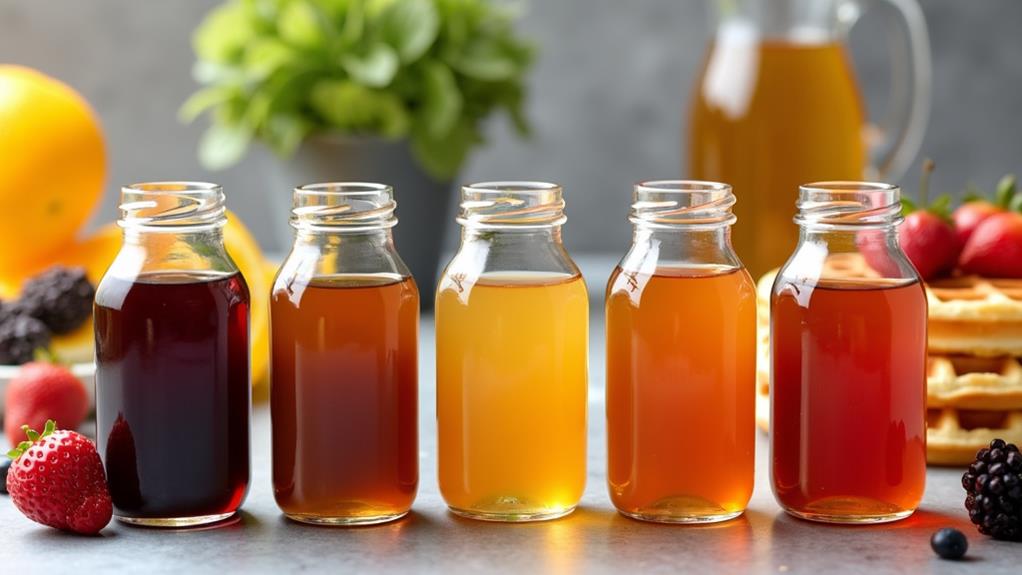
To make healthier syrup choices for your waffles, consider both the nutritional content and the glycemic impact. Maple syrup is a great option because it contains beneficial minerals and antioxidants, unlike pancake syrup, which is mostly empty calories from sugar. When selecting maple syrup, go for Grade A Amber. It offers a balanced sweetness and rich flavor without the drawbacks of overly processed syrups.
Another way to reduce your sugar intake is by using fruit toppings. Strawberries or blueberries not only cut down on sugar but also add nutrients and fiber to your meal. If you still prefer syrup, try pairing pure maple syrup with whole-wheat flour waffles. Whole grains can improve insulin sensitivity and lower blood sugar spikes, making your breakfast more nutritious.
Remember to monitor your portion sizes. Just one tablespoon of maple syrup has about 13.4 grams of carbohydrates, which can affect your general sugar levels. By being mindful of the glycemic index and making these smart choices, you can enjoy your waffles without compromising your health.
Frequently Asked Questions
How Do You Measure Sugar in Syrup?
To measure sugar in syrup, you use sugar measurement techniques like a refractometer, which checks the syrup's density and indicates its sugar concentration. Aim for a Brix value between 66.9 to 68.9 for pure maple syrup. Furthermore, employ syrup tasting methods to guarantee flavor profiles meet standards. Confirm the syrup is clear, as impurities can skew Brix readings, verifying accurate sugar content measurements.
What Do Different Grades of Syrup Mean?
Different grades of syrup mean variations in flavor profiles and color. The syrup grading system includes Golden (delicate), Amber (rich), Dark (robust), and Very Dark (strong). Golden syrup is made early in the season, while Very Dark syrup comes later. Each grade suits specific culinary uses, like drizzling or cooking. This system guarantees you get pure, high-quality syrup, with consistent clarity and density across all grades.
Can Diabetics Eat Waffles With Syrup?
Yes, diabetics can eat waffles with syrup if they make smart choices. Opt for whole-grain waffles and pure maple syrup, which has a lower glycemic index than pancake syrup. Keep an eye on your portion sizes since even pure maple syrup contains carbohydrates. You can also investigate sugar alternatives like stevia or sugar-free syrups as waffle toppings to better manage your blood sugar levels. Always monitor your carbohydrate intake.
What Should the Sugar Content of Maple Syrup Be?
When considering the sugar content in maple syrup, you should look for a syrup with a Brix level of approximately 66.9 to 68.9, indicating its density and sugar concentration. Pure maple syrup contains around 61.5 grams of carbohydrates per 100 grams, with the majority being natural sugars from maple sap. Unlike pancake syrups with added sugars, pure maple syrup's sugar content comes entirely from natural sources, ensuring a rich, authentic flavor.