Scandinavian Breakfast: The Art of Open-Faced Sandwiches

Scandinavian open-faced sandwiches, known as smørrebrød, combine artistry and tradition on a slice of hearty rye bread. You'll start with dense, flavorful bread as your canvas, then layer protein-rich toppings like smoked salmon, herring, or egg salad. Add creamy Norwegian cheeses, pickled vegetables, and fresh herbs to create the perfect balance of salty, tangy, and rich flavors. Whether you prefer classic combinations or modern twists, these beloved sandwiches hold centuries of Nordic culinary wisdom waiting to be uncovered.
The Heritage of Scandinavian Open-Faced Sandwiches
Simplicity meets artistry in the Danish tradition of smørrebrød, open-faced sandwiches that have graced Scandinavian tables since medieval times. You'll find these carefully arranged slices of bread at the heart of Scandinavian cuisine, where they've evolved from humble beginnings to become an integral part of Danish culture.
During the 19th century's industrial revolution, factory workers altered these open-faced sandwiches into their daily sustenance, packing them for lunch and elevating them to an art form. Today, they're more than just food - they're a reflection of Denmark's down-to-earth values and pursuit of happiness.
While there's proper etiquette to follow when enjoying smørrebrød, don't let that intimidate you. Once you've grasped the basics, you'll uncover why this cherished tradition continues to bring families together around the table. Like the practical and economical food choices of ancient farmers, these sandwiches represent a timeless approach to nourishing meals that cross social boundaries.
Essential Ingredients for Your Smørrebrød
Craftsmanship begins with choosing the right foundation for your smørrebrød, starting with dense, hearty rye bread that serves as the canvas for your culinary creation. You'll want to layer your toppings thoughtfully, combining different textures and flavors for the perfect balance.
Start with protein-rich options like smoked salmon or traditional egg salad, which provide a satisfying base for your open-faced sandwich. Add creamy elements with Norwegian cheeses like Jarlsberg or the distinctive brown goat cheese, geitost. To cut through these rich flavors, incorporate pickled red onions, tangy beets, or other preserved vegetables. This combination of salty, creamy, and acidic ingredients creates the authentic taste that's made smørrebrød a beloved Scandinavian breakfast tradition.
Each ingredient plays an essential role in achieving the perfect harmony of flavors. For a sweet complement to your savory smørrebrød, consider serving it alongside Austrian Kaiserschmarrn, a shredded caramelized pancake that pairs wonderfully with breakfast.
Selecting the Perfect Bread Base
At the heart of every authentic smørrebrød lies the crucial choice of bread, with traditional Danish rye serving as the gold standard. When you're crafting open-faced sandwiches, you'll want a hearty bread that can support your carefully chosen toppings while adding its own distinctive flavor to the mix.
If you can't find traditional rye bread or pumpernickel at your local bakeries, don't worry. You can opt for a sturdy artisanal loaf that features whole grains, oats, and seeds. Just make sure to lightly toast your bread slices to create the perfect foundation for your toppings.
Whatever you do, steer clear of soft white bread - it simply won't provide the necessary structure or taste that makes smørrebrød special. The key is choosing a dense, flavorful base that complements your toppings. This tradition of carefully selecting bread bases dates back to the days when honeycomb-patterned irons were first used to create textured flatbreads in medieval Europe.
Traditional Topping Combinations
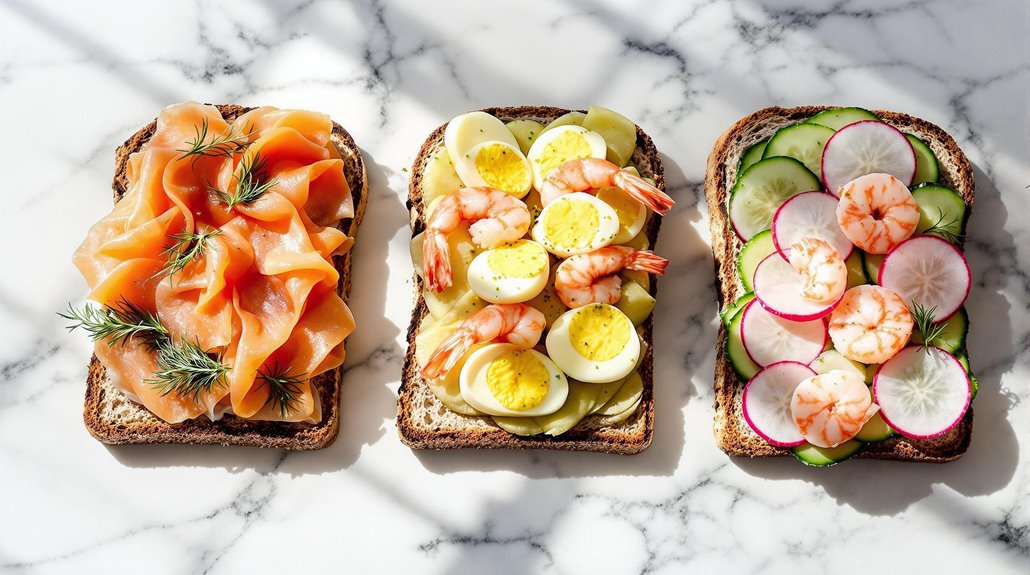
While Scandinavian open-faced sandwiches can feature countless combinations, several time-honored pairings have become beloved classics. You'll find roast beef topped with crisp pickles and remoulade sauce, creating a perfect balance of savory and tangy flavors.
Pickled herring pairs wonderfully with fresh dill and red onion, offering a taste that's quintessentially Nordic.
For protein-rich options, you can't go wrong with perfectly boiled egg slices accompanied by sweet pickles, or tender shrimp dressed in mayonnaise and fresh chives. Smoked salmon with a squeeze of lemon remains a perennial favorite.
If you're craving something sweet, try combinations like Nutella topped with fresh cherries and almond slivers. The key is choosing complementary flavors that enhance each other while maintaining the simplicity that defines Scandinavian cuisine.
Modern Twists on Classic Recipes
Modern Scandinavian cuisine celebrates innovation without abandoning its roots, as creative chefs reimagine traditional open-faced sandwiches with contemporary ingredients and techniques. You'll find classic sandwich toppings enhanced, like smoked salmon amplified with a zesty marinade of olive oil, rice vinegar, and capers. Dill and lemon add brightness to these modern open-face sandwiches.
For plant-based alternatives, you can now enjoy vegan "leverpostei" crafted from mushrooms, lentils, and nuts, or try scrambled Just Eggs with fresh chives. The versatile maple-dill mustard brings a unique twist to your open-face sandwich creations, working equally well on vegetables and boiled potatoes. These innovative adaptations preserve the essence of Scandinavian breakfast while offering fresh, contemporary flavors that cater to modern dietary preferences.
Proper Assembly and Presentation Techniques
The art of assembling a Scandinavian open-faced sandwich begins with proper layering techniques to guarantee both visual appeal and structural integrity. Start with your slice of bread, spreading a protective layer of butter or mayonnaise to keep your local food creations fresh and crisp.
When you arrange the toppings, remember to create a visually striking presentation with contrasting colors and textures.
- Position larger ingredients like seafood or meats in the center to create a focal point
- Layer complementary ingredients around the main protein for balance
- Finish with fresh herbs or edible flowers for a refined touch
Present your open-faced masterpieces on a wooden board to maintain authenticity. This traditional serving method not only honors Scandinavian heritage but also makes it easier to transport and showcase your creations.
The Art of Layering Flavors
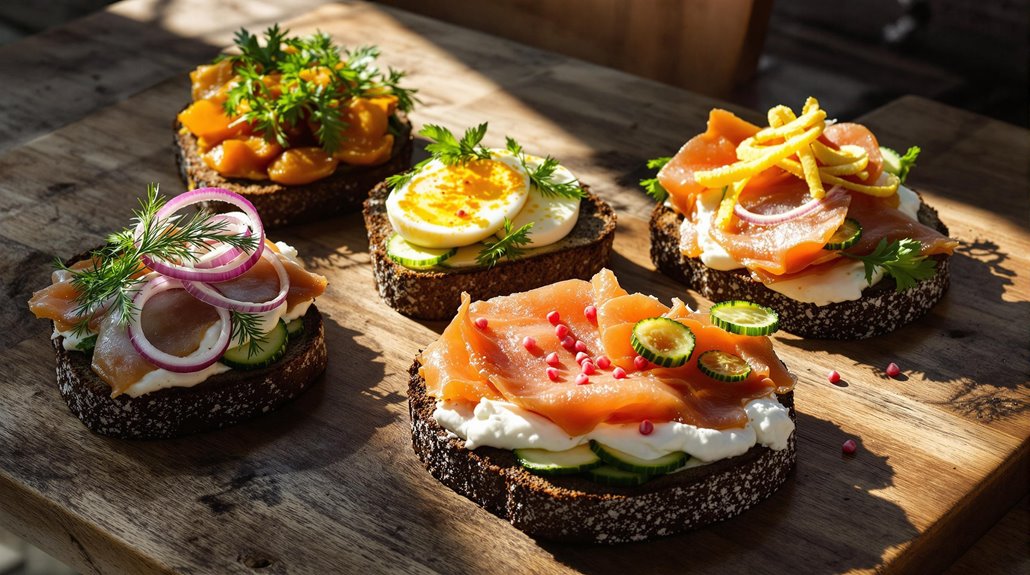
Commanding flavor layering in Scandinavian breakfast begins with understanding how each ingredient contributes to a harmonious whole. When building your open-faced masterpiece, you'll want to start with hearty rye bread as your foundation.
You can then add creamy spreads, followed by protein-rich toppings like smoked salmon or a perfectly cooked egg.
The key to exceptional flavor lies in the balance between rich and bright elements. You'll find that pickled vegetables and tangy remoulade cut through the richness of cured meats, while fresh herbs add aromatic highlights. Each layer should complement the others, creating a symphonic composition of tastes and textures.
As you build your smørrebrød, consider how crisp, creamy, and savory elements work together to achieve the perfect bite.
Seasonal Variations and Inspirations
Seasonal changes in Scandinavia directly influence the ingredients you'll find atop traditional open-faced sandwiches. You'll uncover fresh spring greens and radish slices in early months, while summer brings ripe tomatoes and crisp cucumber slices to your plate.
As autumn arrives, you'll move to heartier fare, and winter showcases preserved delicacies.
- Spring/Summer: Light, seasonal combinations featuring egg salad, fresh dill, and crisp vegetables
- Autumn: Warming combinations of roasted root vegetables, regional cured meats, and local cheeses
- Winter: Festive creations incorporating holiday flavors like gingerbread and traditional preserved foods, including pickled herring and smoked fish
Regional specialties add another layer of variety, from Swedish liver pâté to Danish rolled pork sausage, making each creation uniquely Scandinavian.
Pairing Suggestions and Accompaniments
To bolster your Scandinavian breakfast experience, thoughtful beverage and condiment pairings can enhance each bite of your open-faced sandwiches. For a sophisticated touch, pair your spread with Batàr, a Tuscan-influenced white wine that perfectly complements the savory, umami-rich flavors of Nordic cuisine. The 2017 vintage is especially remarkable for special occasions.
Don't forget the essential accompaniments. Transform your boiled egg experience by adding maple-dill mustard, a Nordic-inspired sauce that combines Dijon mustard with fresh herbs and a touch of lemon juice. For a plant-based option, try vegan leverpostei, crafted from mushrooms and lentils, which delivers the traditional pâté experience without animal products. These thoughtful pairings will raise your open-faced sandwiches from simple breakfast fare to a memorable culinary experience.
Hosting Your Own Smørrebrød Gathering
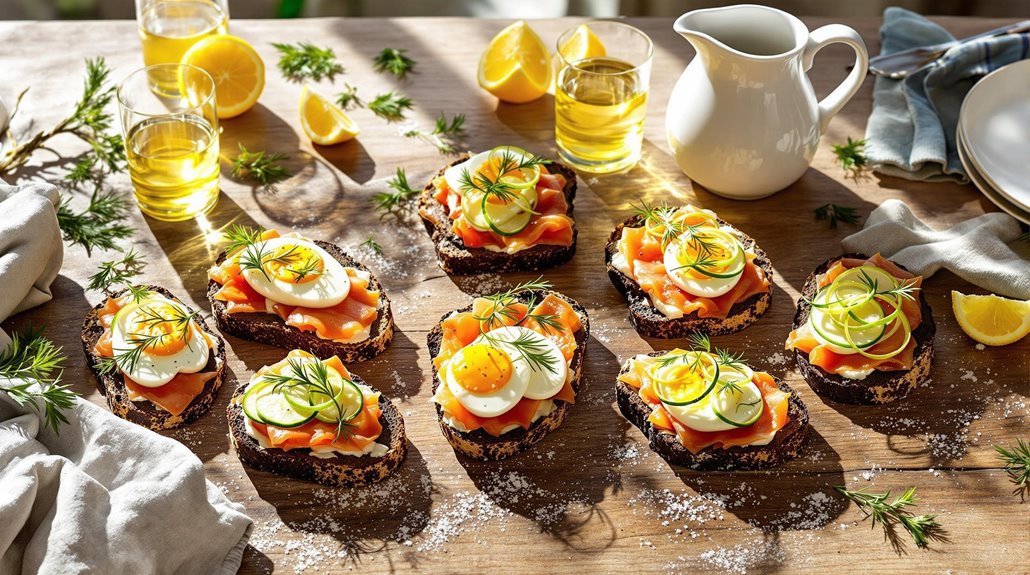
Hosting a smørrebrød gathering brings the warmth and conviviality of Scandinavian dining culture into your home. I'm sharing this tradition that brings back memories of leisurely weekend brunches.
Start by visiting your local grocery store to select quality artisanal breads and fresh ingredients for an impressive spread.
- Arrange a wooden board with an array of breads and toppings, allowing guests to craft their own open-faced sandwiches
- Create a relaxed atmosphere where friends can mingle while building their perfect combinations of smoked salmon, eggs, or pickled herring
- Complement the experience with traditional drinks like aquavit or beer
Set up your space to encourage casual movement and conversation as guests sample different flavor combinations. This interactive dining style alters a simple meal into a memorable social experience that celebrates Scandinavian hospitality.
Related posts