Pakistani Breakfast: a Flavorful Start With NāShtā and Parathas
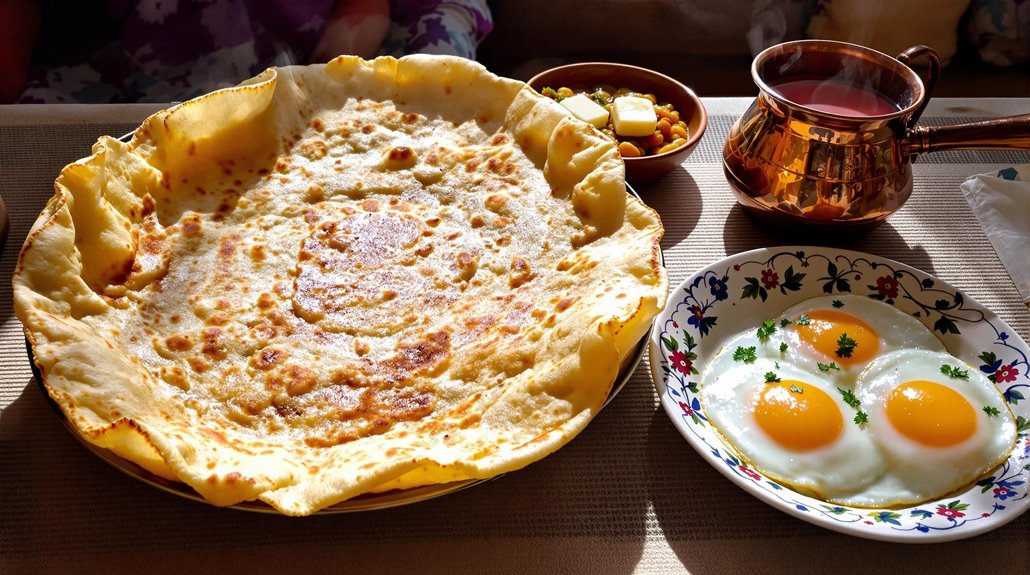
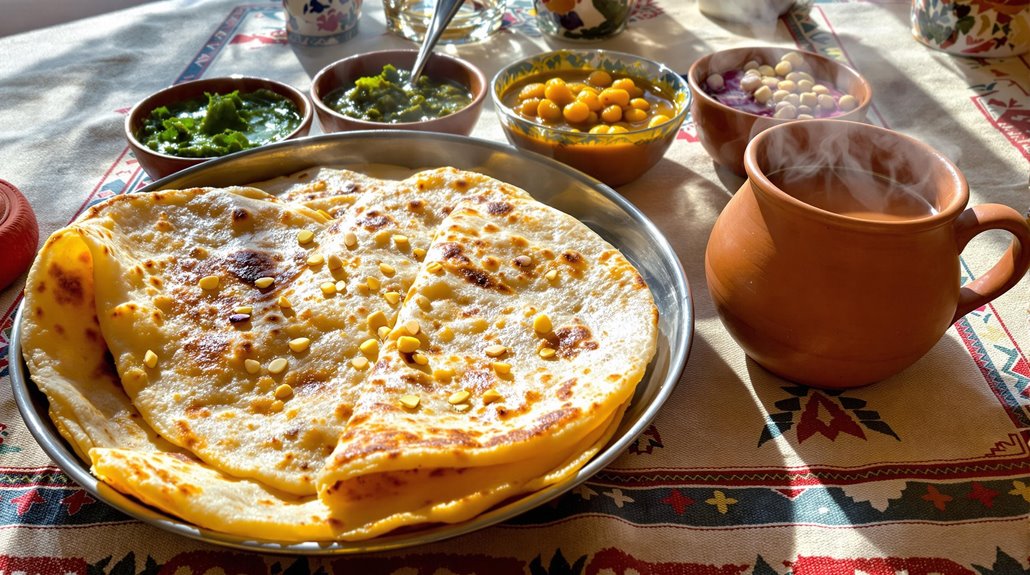
You'll uncover lively Pakistani breakfast traditions through nāshtā, a morning feast that weaves together South Asian, Middle Eastern, and Central Asian influences. From golden-brown parathas stuffed with spiced potatoes to hearty bowls of nihari stew, each dish offers a perfect balance of flavors and textures. Pair your meal with traditional chai tea and fresh accompaniments like chana masala or yogurt.
There's an entire world of regional specialties waiting to reinvent your morning routine.
The Rich Heritage of Pakistani Morning Meals
Pakistani breakfast, known as nāshtā, weaves together three distinct culinary influences: South Asian, Middle Eastern, and Central Asian traditions. You'll explore this rich heritage in beloved dishes like halwa puri, aloo paratha, and hearty nihari stew, which bring families together over steaming plates filled with aromatic spices and freshly baked breads.
As you journey through Pakistan's provinces, you'll encounter fascinating regional variations that showcase the country's cultural diversity. From Balochistan's sajji to Khyber Pakhtunkhwa's Kabuli palaw, each region adds its unique touch to the morning meal. Whether you're enjoying a warm paratha or savoring a bowl of traditional nāshtā, you're participating in a time-honored tradition that values both nutritional sustenance and community connection at daybreak. Like the beloved pancakes with lemon enjoyed in England, Pakistani breakfast offerings balance contrasting flavors to create memorable morning meals.
Essential Ingredients in Traditional NāShtā
While regional variations abound, traditional nāshtā relies on a core set of pantry staples that form the backbone of Pakistani morning cuisine. In a typical Pakistani breakfast, you'll find whole wheat flour as the foundation for essential items like parathas, especially the beloved anda paratha.
The traditional Pakistani breakfast wouldn't be complete without tea paired with savory accompaniments like chana masala, amplified with aromatic spices and green chilies.
Among the most cherished breakfast dishes, you'll encounter halwa poori, which requires basic ingredients like flour, ghee, and sugar. Other common food items include eggs, butter, fresh herbs, and yogurt. These ingredients, when combined, create the hearty, flavorful meals that have sustained Pakistani families for generations. Unlike French crêpes, which are characteristically thin and folded with sweet fillings, Pakistani breakfast breads tend to be heartier and more substantial.
Popular Paratha Varieties and Their Preparation
Among the varied selections in nāshtā, parathas stand out as the crown jewels of Pakistani breakfast cuisine. You'll find these made with precision across Pakistan, where local cuisine celebrates diverse fillings and cooking techniques.
The most popular variety, Aloo Paratha, combines spiced potatoes with garam masala for a hearty meal, while Lachha Paratha offers a distinctly flaky alternative to regular naan.
For those craving dairy products, Paneer Paratha delivers an enjoyable combination of textures with its cottage cheese filling. If you're looking for a more substantial breakfast, try Keema Paratha with its rich minced meat interior. Each variety is carefully cooked on a griddle with ghee until golden-brown, creating the perfect companion for your morning Halwa or other breakfast favorites. Like the versatile chilla in India, these flatbreads have become an essential part of the breakfast tradition, often served during special occasions and family gatherings.
Regional Breakfast Specialties Across Pakistan
Throughout the varied terrain of Pakistan, regional breakfast traditions offer unique culinary experiences that reflect local cultures and available ingredients.
In Balochistan, you'll find hearty meat dishes like mutton rosh served as a main meal, while Khyber Pakhtunkhwa's food culture embraces Turko-Persian influences with popular breakfast items like Kabuli palaw.
The Gilgit region offers a whole different experience with its non-spicy but flavorful dishes. You'll uncover Chapshoro, made from wheat and served as both a breakfast staple and side dish.
In Punjab, breakfast traditions vary dramatically across its sub-regions, each featuring distinct spice blends and preparation methods. Whether you're in Nagar enjoying their pizza-like Chapshuro or in Ghizer sampling kelawo with honey, Breakfast in Pakistan provides a captivating expedition through regional specialties.
Health Benefits of Pakistani Breakfast Dishes
A traditional Pakistani breakfast offers astonishing nutritional benefits that extend far beyond mere sustenance. When you enjoy a variety of dishes from this South Asian cuisine, you're fueling your body with perfectly balanced nutrients.
Made with whole wheat, staples like parathas provide complex carbohydrates that'll keep your energy levels stable throughout the day.
The spicy curry dishes, enhanced with black pepper and chili powder, aren't just delicious - they're packed with antioxidants and anti-inflammatory properties. You'll also find health benefits in the yogurt-based drinks like lassi, which support your gut health and immune system.
What's particularly impressive is how these filling breakfast options naturally encourage portion control, helping you maintain a healthy diet while enjoying every flavorful bite of these traditional morning meals.
Tips for Creating Authentic Pakistani Breakfast at Home
Creating authentic Pakistani breakfast dishes at home starts with commanding five essential techniques. You'll need to become skilled in the art of kneading dough for frequently eaten parathas, ensuring you've incorporated eggs and whole wheat flour properly. When preparing popular Pakistani dishes like Halwa Puri, focus on achieving the right consistency in your semolina pudding by carefully combining sugar syrup and milk powder.
For a side of tangy Choolay, pair your Pathooray with chickpeas for a rejuvenating contrast. If you're adventurous, try making Siri Paye, usually served with naan or rice, by slow-cooking the meat until tender. Don't forget that in Pakistani cuisine, breakfast often served includes Bun Chai - become adept at brewing traditional tea to honor these culinary traditions properly.
Related posts