Gallo Pinto: The Classic Costa Rican Breakfast Dish You'll Love
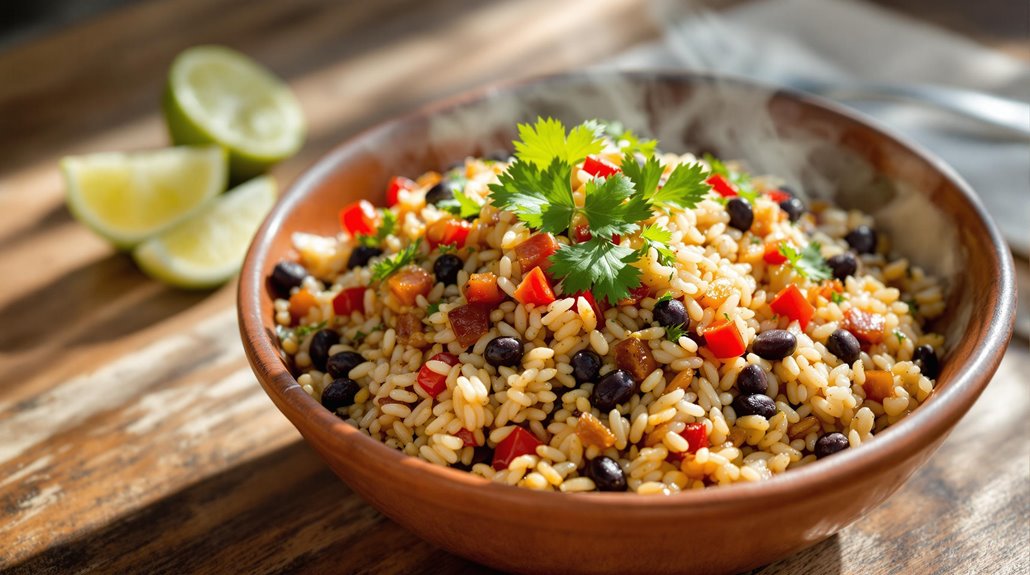
Gallo pinto is Costa Rica's beloved national breakfast dish that you'll want to add to your morning routine. This hearty combination of rice, black beans, and aromatics gets its distinctive flavor from Salsa Lizano, a popular Costa Rican condiment. You'll find it's easy to prepare, especially when you've got pre-cooked rice and beans ready to go. Serve it with fried eggs, queso fresco, and tortillas for an authentic experience. There's much more to uncover about this satisfying dish's rich cultural heritage and preparation methods.
The Rich History Behind Gallo Pinto
While many nations claim ownership of their signature dishes, few culinary debates have sparked as much passion as the origin of Gallo Pinto. This iconic breakfast dish has been the center of a heated rivalry between Costa Rica and Nicaragua, with both countries asserting their rightful claim to the recipe. The dispute reached a boiling point when Nicaragua set a world record in 2007 by preparing enough Gallo Pinto to feed 22,000 people, only to be outdone by Costa Rica's massive 2009 response feeding 50,000.
You'll find the cultural significance of this rice and beans combination deeply woven into Costa Rican identity. The name "spotted rooster" perfectly describes the speckled appearance of this national dish, and as locals say, "mas tico que el gallo pinto" - nothing's more Costa Rican than Gallo Pinto. Unlike buttermilk pancakes, which dominate North American breakfast tables, Gallo Pinto offers a heartier start to the day.
Essential Ingredients and Kitchen Tools
Creating this beloved Costa Rican breakfast dish requires just a handful of simple ingredients and basic kitchen tools. You'll need cooked white rice, black beans (either canned or fresh), and fresh produce including yellow onion, red pepper, garlic, and cilantro. The key ingredient that gives gallo pinto its authentic flavor is Salsa Lizano, a popular Costa Rican condiment, along with olive oil for cooking.
As for kitchen equipment, you'll primarily work with a large skillet for combining and cooking the ingredients. Keep a sturdy spoon handy for stirring, and you'll want a chopper for your vegetables. If you're starting from scratch, a rice cooker can be helpful but isn't essential. Remember to have all ingredients prepped before you start, as the cooking process moves quickly. Much like Fruity Pebbles cereal has endured for over 50 years as a breakfast staple, gallo pinto remains a timeless morning tradition in Costa Rica.
Step-by-Step Cooking Guide
Making gallo pinto involves three main cooking phases: sautéing the vegetables, combining the rice and beans, and adding the final seasonings.
Start by heating oil in a large skillet over medium-high heat. Add diced onions, bell peppers, and garlic, then cook until they're soft and aromatic.
Next, drain your black beans but save some of the liquid. Add the beans to the skillet and fry them with the vegetables for about 3 minutes. Now, it's time to incorporate your pre-cooked rice. Gently fold the rice into the bean mixture, making sure you don't break the grains.
Add Salsa Lizano or Worcestershire sauce, along with salt and pepper to taste. Let everything cook together for 5 minutes, stirring occasionally until the flavors meld and the rice gets slightly crispy.
Similar to how ancient civilizations made pancakes by cooking simple flour mixtures on hot rocks, this dish showcases how basic ingredients can create something truly delicious.
Serving Suggestions and Traditional Pairings
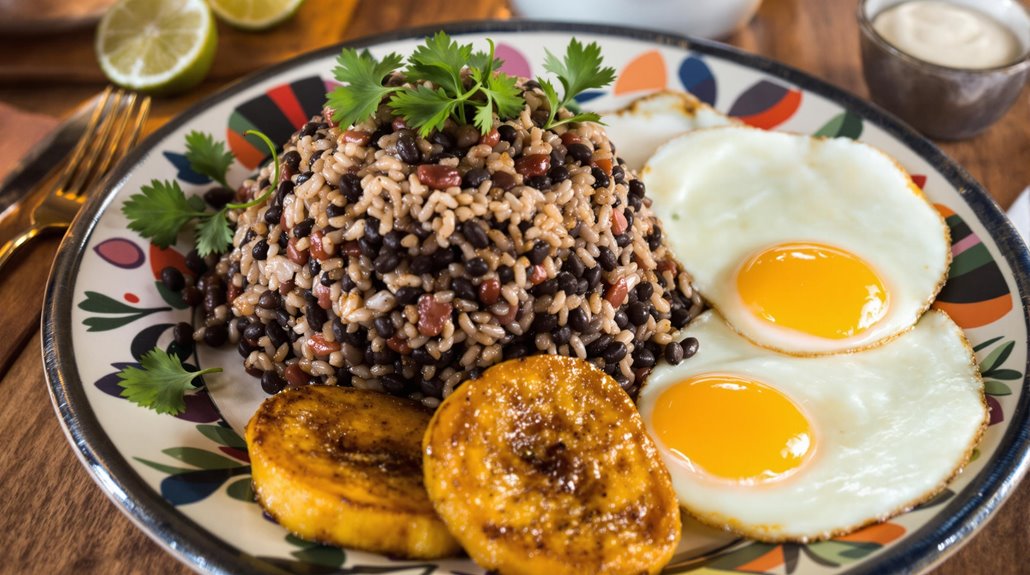
To enjoy gallo pinto at its finest, serve it alongside the classic Costa Rican breakfast companions. You'll want to pair your rice and beans with fried eggs, queso fresco (white cheese), and your choice of tortillas or toast. Don't forget the essential Lizano sauce, Costa Rica's beloved national condiment, which adds a distinctive flavor you won't want to miss.
For the complete traditional experience, include these complementary items:
- Fried plantains for a touch of sweetness
- Sliced avocado for creamy texture
- Sour cream to add richness
- Hot sauce to adjust the spiciness to your liking
- Fresh chopped cilantro for a bright finish
While gallo pinto shines as a breakfast star, you can also serve it as a satisfying side dish any time of day.
Make-Ahead Tips and Storage Methods
Whether you're meal prepping for the week or planning a big family breakfast, gallo pinto's versatility extends to its storage options. You can store this flavorful dish in an airtight container in the fridge for up to a week, preventing odors from affecting other foods.
When you're ready to enjoy your leftovers, you'll find the dish reheats beautifully. Simply sprinkle some water over the rice and beans, cover, and re-steam on the stovetop or in the microwave. For longer storage, freeze portions in freezer-safe containers for up to three months, making sure to thaw completely in the refrigerator before reheating. The best part? The flavors actually continue to meld together during storage, and the texture remains intact when properly stored, making this dish ideal for advance preparation.
Variations and Regional Adaptations
While gallo pinto's core recipe remains beloved throughout Costa Rica, regional adaptations have given rise to delicious variations of this morning staple. You'll find exciting twists that blend traditional methods with local preferences, from the addition of coconut milk to the use of sofrito for enhanced flavor.
Discover these popular variations across different regions:
- Coastal areas often incorporate coconut milk and pinto beans instead of black beans
- Some versions feature green bell pepper rather than red for a distinct taste
- Creative cooks add Worcestershire sauce and sofrito for deeper flavor
- Traditional toppings include fried plantains, avocado, and queso fresco
- Heartier versions come topped with shredded beef or chicken in a tomato-based sauce
These regional adaptations showcase how versatile gallo pinto can be while maintaining its authentic charm.
Related posts