Full English Breakfast: The Hearty UK Classic That Keeps You Full
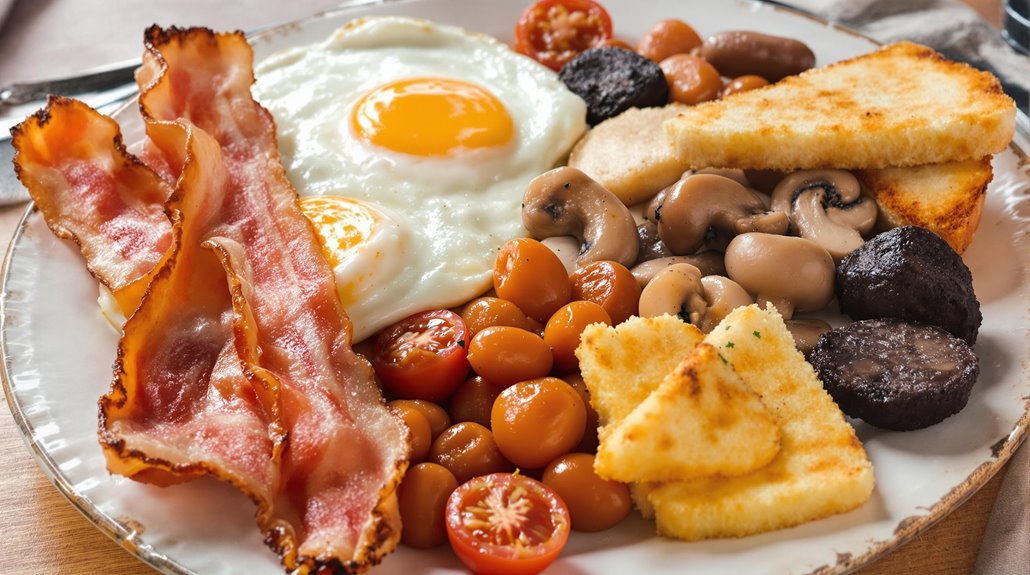
The classic Full English Breakfast offers you a hearty combination of crispy back bacon, sausages, eggs, grilled tomatoes, sautéed mushrooms, baked beans, and fried bread. This traditional morning feast traces its roots to the Norman conquest and showcases Britain's rich culinary heritage. You'll find regional variations across the UK, from Scotland's haggis to Wales' laverbread. Perfecting the timing and choosing quality ingredients will help you create this iconic breakfast that'll keep you satisfied until dinner.
The Rich History Behind the Full English Breakfast
Three distinct periods shaped the evolution of Britain's most iconic morning meal. The origins of the Full English breakfast can be traced back to the Norman conquest, when Anglo-Saxon culinary practices began altering into what you'd recognize today.
During the second period, the landed gentry emerged as custodians of this cherished tradition, using the traditional full English to showcase their estates' abundance and hospitality.
The final change occurred in the late 19th century when improved agriculture, reduced food costs, and better transportation made these hearty breakfasts accessible to the working classes. You'll find this democratization led to its widespread popularity, though some feared it diminished its prestigious reputation.
Today, thanks to organizations like the English Breakfast Society, you're witnessing a renaissance focusing on quality ingredients and authentic preparation methods. Like Shrove Tuesday pancakes, this hearty breakfast became deeply embedded in British culinary traditions, reflecting the nation's appreciation for substantial morning meals.
Essential Components of an Authentic Full English
Building on its rich heritage, today's authentic Full English Breakfast consists of specific ingredients that define its character. You'll find quality British pork sausages and crispy back bacon at its heart, accompanied by perfectly cooked eggs with runny yolks. Grilled tomatoes and sautéed mushrooms add essential flavors and textures to your plate.
No Full English is complete without fried bread, cooked in the flavorful meat drippings until golden and crispy. Heinz baked beans provide that signature sauce that ties everything together. For an extra layer of savory depth, you might find black pudding on your plate, especially in certain regions of the UK. Each component requires proper preparation to achieve that authentic taste that's made this breakfast a beloved British institution. The back bacon used in this classic breakfast is notably different from American streaky bacon, as it comes from the leaner pork loin rather than the fatty belly.
Regional Variations Across the British Isles
While the classic Full English remains a beloved staple, each region of the British Isles has developed its own distinctive take on this hearty breakfast. As you travel across the UK, you'll plunge into how these regional variations of the traditional English breakfast reflect local culture and available ingredients.
The most notable regional interpretations include:
- Scotland's version features Lorne sausage, tattie scones, and the iconic haggis
- Welsh breakfasts incorporate coastal elements like laverbread and cockles
- Irish adaptations showcase white pudding, soda bread, and potato farls
These unique twists on the Full English Breakfast demonstrate the rich diversity of British food culture. By sampling these regional variations, you'll embrace how each area has adapted the classic morning meal to capture its distinct culinary heritage and local produce. For a lighter alternative to the Full English, consider trying Australian pikelets, small thick pancakes traditionally served with cream and jam during afternoon tea.
Mastering the Art of Timing and Temperature
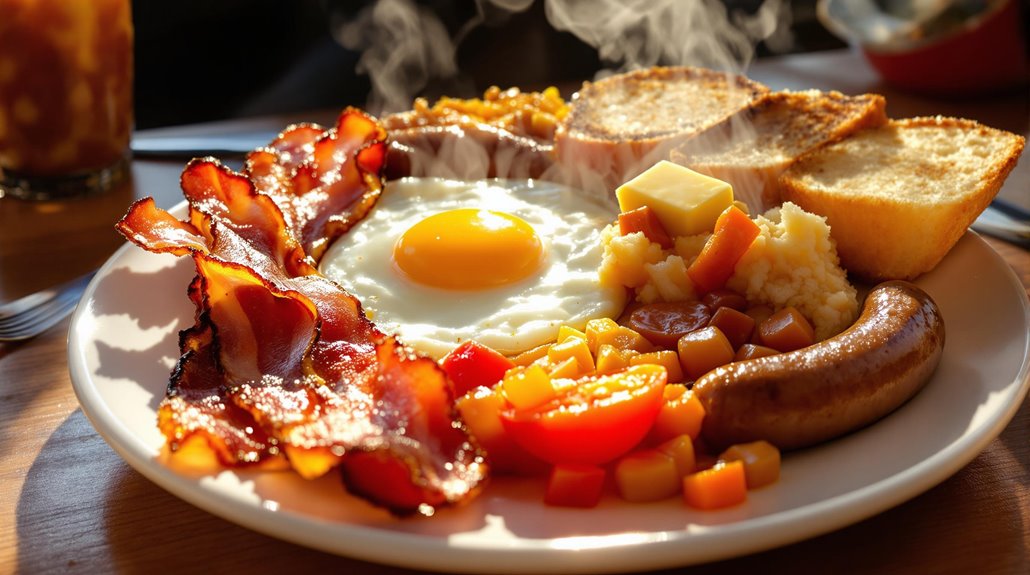
Beyond the regional variations lies the technical skill of preparing a Full English Breakfast - a culinary concerto that demands expert timing and precise temperature control.
You'll need to orchestrate each component carefully to achieve perfection. Start by cooking the bacon and sausages at high heat to develop that sought-after crispy exterior while maintaining their juicy interior. While they're sizzling, turn your attention to softly scrambling the eggs or preparing them sunny-side up, ensuring those golden yolks remain deliciously runny.
At medium-high heat, sauté your mushrooms and tomatoes until they're beautifully caramelized. Don't forget to warm your beans gently on the stovetop - they should be hot and saucy, not dried out. The key is to have everything reach peak perfection simultaneously, creating a harmonious breakfast experience.
Choosing Quality Ingredients for the Perfect Plate
Creating an exceptional Full English Breakfast depends on selecting premium ingredients that shine in both flavor and freshness. You'll want to choose high-quality sausages and bacon that deliver rich, savory notes, while incorporating traditional black pudding adds a distinctive depth to your breakfast plate.
When sourcing your ingredients, focus on these essential elements:
- Fresh, ripe tomatoes and mushrooms for natural sweetness and earthy undertones
- Premium baked beans in a thick tomato sauce to balance the savory components
- Thick-cut bread that toasts to a perfect golden-brown, creating ideal textural contrast
Your ingredient choices greatly impact the final result, so don't compromise on quality. Each component plays a vital role in achieving that authentic Full English experience, from the perfectly cooked eggs to the buttery toast that soaks up all the delicious flavors.
Traditional Cooking Methods and Techniques
Now that you've gathered your premium ingredients, perfecting the traditional cooking methods will convert them into a proper Full English breakfast. Start by frying your bacon until crisp and cooking your sausages thoroughly, either by grilling or frying.
While those are sizzling, prepare your eggs according to preference - whether scrambled, fried, or poached.
For the traditional British accompaniments, sauté your tomatoes and mushrooms to enhance their natural sweetness. Pan-fry the black pudding until it develops a crispy exterior while maintaining its distinctive texture inside. You'll want to warm your baked beans gently on the stovetop, letting their sauce thicken slightly.
Finally, don't forget to toast and butter your bread - it's essential for soaking up all those delicious flavors on your plate.
Proper Plating and Presentation Tips
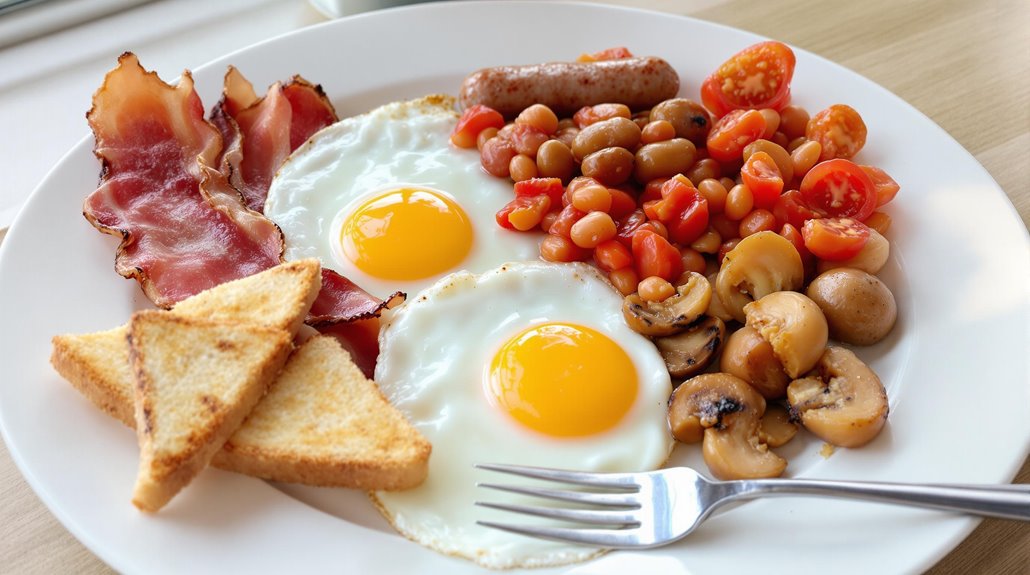
The art of plating modifies your Full English from a simple breakfast into a feast for the eyes. As you arrange each component, think of your plate as a canvas where every element plays an essential role. Position your sausages and bacon strategically, then complement them with perfectly cooked eggs.
For a professional presentation, follow these key steps:
- Place beans in a neat portion, keeping them from flowing into other ingredients
- Group tomatoes and mushrooms together to create lively color contrast
- Add a fresh herb garnish, like parsley or chives, for that restaurant-quality finish
Complete your pinnacle by serving it alongside a steaming cup of English tea. Remember, a well-presented Full English isn't just about taste - it's about creating an inviting morning experience that engages all your senses.
Common Mistakes to Avoid When Preparing
While presentation brings your Full English to life, even the most beautiful plating can't mask common cooking errors. When preparing this traditional breakfast, avoid rushing your ingredients to come together at different times, leaving some items cold while others are hot.
Don't overcrowd your pan when cooking mushrooms, as they'll steam instead of developing a golden-brown crust. Never pierce your sausages while cooking, as this releases their essential juices and flavors.
For this classic meal, resist the urge to use low-quality ingredients or substitute key components. Don't overcook your eggs - the yolks should remain runny for dipping your toast. Finally, remember timing is imperative - start with ingredients that take longest to cook, like sausages and black pudding, before moving to quick-cooking items like eggs.
Health Considerations and Modern Adaptations
Modern health consciousness has altered how we approach the traditional Full English breakfast, leading to creative adaptations that maintain its beloved character while reducing its nutritional impact. While the fried and hearty nature of this traditional Scottish-influenced dish remains popular, you'll find numerous ways to make it healthier without sacrificing flavor.
Consider these smart modifications to lighten up your breakfast:
- Replace traditional pork sausages with lean turkey or plant-based alternatives
- Use an air fryer instead of deep-frying to reduce oil consumption
- Control portions by splitting the meal or saving half for later
You'll find many cafes now offering customizable options that let you balance indulgence with nutrition. Adding a side salad or grilled vegetables can reconfigure this classic into a more wholesome experience while preserving its satisfying essence.
Pairing Your Full English With the Right Beverages
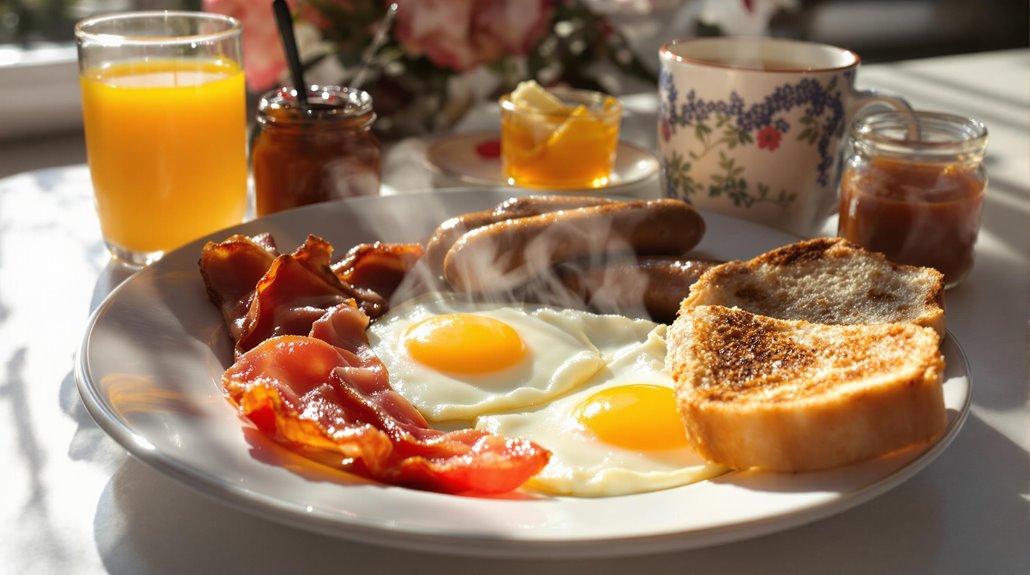
Selecting appropriate beverages for a Full English breakfast can alter your dining experience from good to exceptional. Traditional English breakfast tea pairs well with this substantial breakfast, offering a powerful flavor that complements the savory components. You'll want to brew it strong and serve it with milk, as the British typically do.
If you're not a tea enthusiast, coffee makes an excellent alternative, particularly a medium or dark roast that can stand up to the hearty flavors. For a non-caffeinated option, orange juice provides a stimulating contrast to the rich, savory elements while adding essential vitamin C to your meal. Regardless of your choice, serve your beverages hot or cold as preferred, but avoid anything too sweet that might overwhelm the breakfast's natural flavors.
Related posts