Filipino Breakfast: Why Longganisa, Rice, and Pan De Sal Rule the Morning
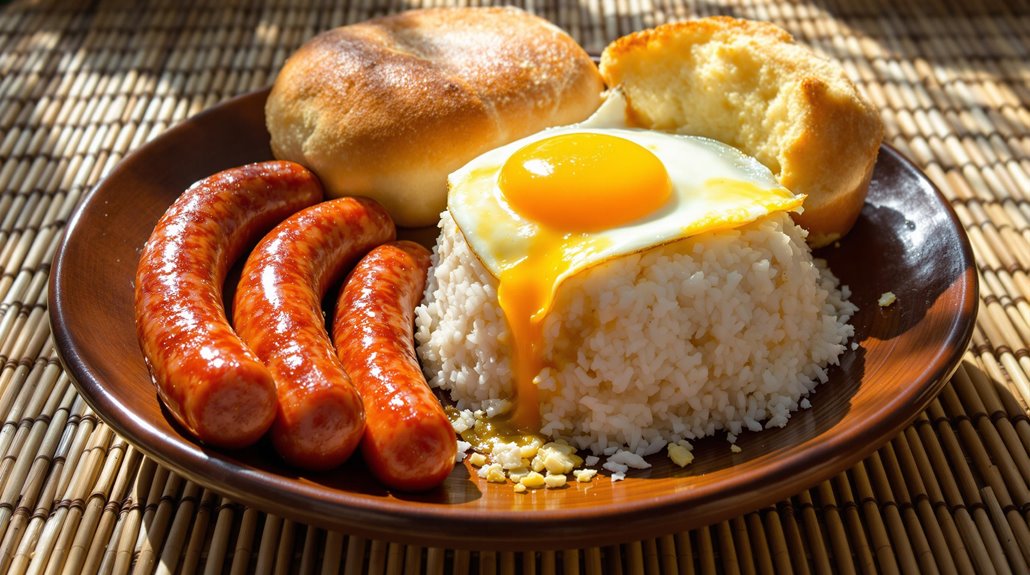
You'll find three iconic elements ruling Filipino breakfast tables: sweet-savory longganisa sausage, garlicky sinangag (fried rice), and warm pan de sal rolls. This hearty combination emerged from practical needs to fuel agricultural workers but evolved into a cherished cultural tradition. Each region puts its own spin on longganisa, while garlic rice and pan de sal remain consistent nationwide favorites. The rich story behind these morning staples reveals centuries of Filipino culinary heritage.
The Cultural Significance of Filipino Morning Meals
Every Filipino breakfast tells a story of family, tradition, and cultural identity. As you sit down to a morning meal of garlic fried rice, egg, and your choice of protein, you're participating in a ritual that's been passed down through generations. It's a moment where families gather, share stories, and strengthen their bonds before starting their day.
You'll find that Filipino breakfast dishes were originally designed to sustain agricultural workers through long hours in the fields. Today, these hearty meals continue to bring people together, whether they're enjoying a traditional silog plate or adapting recipes to fit modern lifestyles. When you experience the warmth of freshly cooked rice and the aroma of garlic wafting through the kitchen, you're connecting with a culinary heritage that's deeply woven into the fabric of Filipino culture. Much like how ancient Greek pancakes evolved into various global breakfast traditions, Filipino breakfast foods have adapted while maintaining their cultural essence.
Breaking Down the Classic Silog Combination
When you investigate Filipino breakfast cuisine, you'll uncover that the silog combination stands as the cornerstone of morning meals. At its heart, this satisfying food trio features sinangag (garlic fried rice) paired with a protein and topped with a fried egg. The most beloved version, longsilog, showcases sweet pork sausage alongside the fragrant rice and perfectly cooked egg. While many cultures enjoy pancakes with syrup for breakfast, Filipinos prefer their savory morning combinations. You'll find that silog meals aren't complete without a tangy vinegar condiment that cuts through the richness.
Whether you choose longganisa, tocino's sweet cure, or tapa's savory beef, each protein works harmoniously with the garlic fried rice foundation. This Filipino breakfast combination delivers the perfect balance of carbohydrates, protein, and fats, providing the energy you need to tackle your day.
Regional Variations of Longganisa Across the Philippines
Throughout the Philippines, longganisa sausages showcase distinctive regional flavors that reflect local culinary traditions. When paired with sinangag and a fried egg, you'll uncover how each region's longganisa brings unique character to this Filipino cuisine staple.
You'll find Vigan's garlicky and salty variety contrasting with Lucban's spicier take, while Pampanga offers sweet hamonado longganisa caramelized in brown sugar and soy sauce. In Tuguegarao, you'll encounter chunky, garlic-heavy sausages that complement garlic rice perfectly.
Laguna's skinless Longanisang Hubad, enhanced with chicken livers, provides a different texture experience. Meanwhile, Batangas longganisa stands out with its aromatic blend of star anise and black pepper. Each regional variation creates a distinct breakfast experience that's just as satisfying as traditional dried fish combinations.
Like the diverse kaiserschmarrn in Austria, these regional longganisa variations have become an integral part of the country's culinary heritage.
Pan De Sal: The Beloved Filipino Breakfast Bread
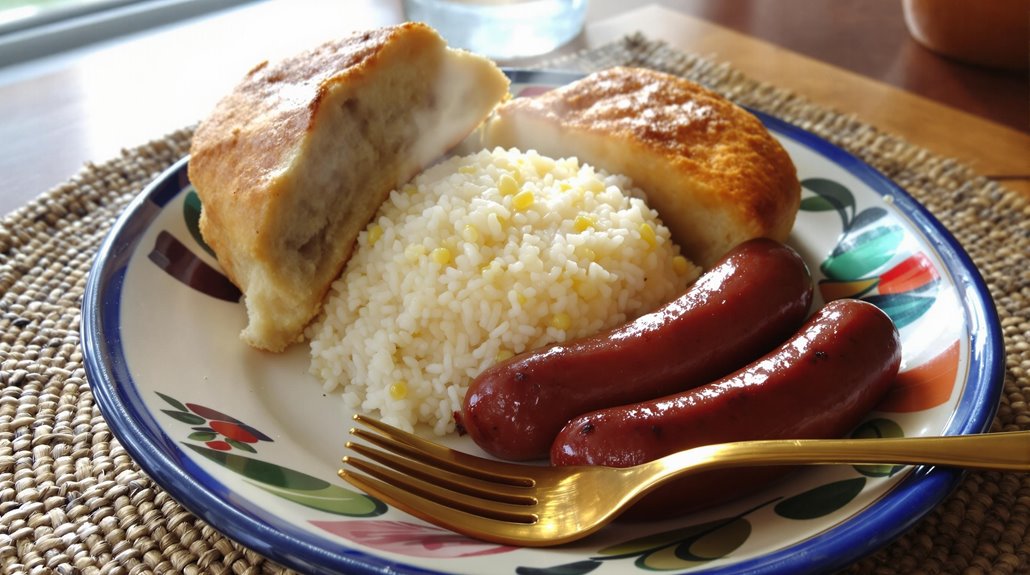
No Filipino breakfast table is complete without freshly baked pan de sal, the country's most cherished morning bread. You'll find Filipinos lining up at local bakeries each morning, ardent to bring home these warm, lightly sweetened rolls that are perfectly coated in breadcrumbs.
In every Filipino household, pan de sal serves as a versatile breakfast food that you can enjoy in multiple ways - on its own, dunked in your morning coffee, or as the perfect companion to sinangag.
The small, pillowy bread roll's popularity has made it such a vital part of the morning ritual that the government guarantees it stays affordable for everyone. You'll often find it stuffed with classic Filipino breakfast favorites like longganisa or tocino, making it an indispensable part of the country's breakfast culture.
The Art of Perfect Garlic Rice (Sinangag)
Since time immemorial, sinangag has been the cornerstone of Filipino breakfast tables, converting humble leftover rice into a garlicky chef-d'oeuvre that'll wake up your taste buds.
You'll find that the secret to perfect sinangag lies in using day-old steamed rice, not freshly cooked grains. This Filipino food staple alters ordinary leftover rice into a fragrant dish as the aged grains separate beautifully when fried.
When you're making this aromatic fried rice, you'll want to be generous with minced garlic, letting it turn golden brown before adding your rice. Season it simply with salt to let the garlic's natural flavors shine through.
For the authentic Filipino breakfast experience, serve your hot sinangag alongside protein-rich dishes like longganisa or tocino. You'll understand why this humble dish remains a breakfast essential.
Modern Twists on Traditional Filipino Breakfast Staples
Modern Filipino breakfast adopts innovation while honoring cherished traditions. You'll find familiar staples reimagined in exciting new formats, like longsilog transformed into a handheld sandwich with sinangag and eggs tucked between soft pandesal rolls.
The humble pandesal now serves as a versatile base for creative breakfast sliders, featuring longganisa paired with fresh vegetables and spicy sriracha mayo.
Traditional proteins like tocino are finding their way into breakfast burritos and bowls, offering convenient ways to enjoy classic flavors. Even preparation methods are changing, with achiote oil adding lively color and depth to homemade longganisa.
These contemporary interpretations preserve the essence of Filipino breakfast while adapting to modern dining preferences, proving that beloved dishes can shift without losing their cultural significance.
Related posts