Why Maple Syrup Elevates Homemade Pancakes

Drizzling maple syrup over homemade pancakes takes them to new heights by adding a rich, natural sweetness that complements the fluffy texture you've worked hard to achieve. It seeps into every nook and cranny, enhancing the complete flavor experience. The syrup's warm, buttery undertones marry perfectly with ingredients like fresh fruit, nuts, or even crispy bacon. This delicious combination offers a balance of sweetness and savory notes, making each bite more satisfying. There's more to investigate if you're curious about maximizing your pancake game.
Key Takeaways
- Natural Sweetness: Maple syrup offers a rich, natural sweetness that complements the flavor of pancakes without being overpowering.
- Distinct Flavor: It provides a unique, aromatic flavor profile that enhances the overall taste experience of homemade pancakes.
- Texture Contrast: The syrup's smooth consistency creates a delightful contrast with the fluffy texture of pancakes, enhancing mouthfeel.
- Nutritional Benefits: Maple syrup contains minerals like zinc and manganese, adding a nutritional boost to your breakfast.
- Versatile Pairing: Its versatility allows it to pair well with various pancake toppings like fruits, nuts, and whipped cream for a balanced taste.
Key Ingredients
When making pancakes, the key ingredients you'll need are flour, baking powder, sugar, milk, and eggs. Flour serves as the foundation of your pancake batter. All-purpose flour is versatile, but you can also use whole wheat or gluten-free options based on your dietary needs.
Baking powder is vital for achieving fluffy pancakes. It typically requires 1-2 teaspoons to create those integral bubbles that give your pancakes a light texture. Don't skip this; it's what makes them rise beautifully.
Sugar, usually 1-2 tablespoons, sweetens your batter just right. You can adjust the amount to suit your taste, but remember, you don't want it to overpower the natural flavors. Milk, around 1.5 cups, adds richness. Regardless of whether you use dairy or plant-based milk, it blends all the dry ingredients smoothly, ensuring a consistent batter.
Eggs add both moisture and structure, fundamental for fluffy and tender pancakes. They bind everything together and help create that perfect texture.
And let's not forget, topping your pancakes with pure maple syrup enhances the whole experience. Maple syrup contains natural sugars that complement the pancakes' sweetness, making your breakfast truly delightful.
Preparing the Batter
To prepare the perfect pancake batter, start by whisking together 1 cup of all-purpose flour, 1 tablespoon of baking powder, 1 tablespoon of sugar, and a pinch of salt in a large bowl. This step guarantees all dry ingredients are evenly distributed.
In a separate bowl, combine 1 cup of buttermilk, 1 large egg, and 2 tablespoons of melted butter. Whisk until smooth to create a rich and creamy wet mixture. Once both mixtures are ready:
- Gradually pour the wet ingredients into the dry mixture.
- Stir until just combined to avoid overmixing, which can lead to tough pancakes.
- Allow the batter to rest for about 5-10 minutes. This will help with hydration and contribute to a tender texture.
- Preheat your non-stick pan on medium heat.
When your pan is ready, use a ladle or measuring cup to pour the batter onto it, aiming for uniform sizes. This consistency will make your stack of pancakes look professional and cook evenly. By following these steps, you'll create a batter that's perfect for pairing with maple syrup, enhancing the flavor and texture of your homemade pancakes.
Cooking Techniques
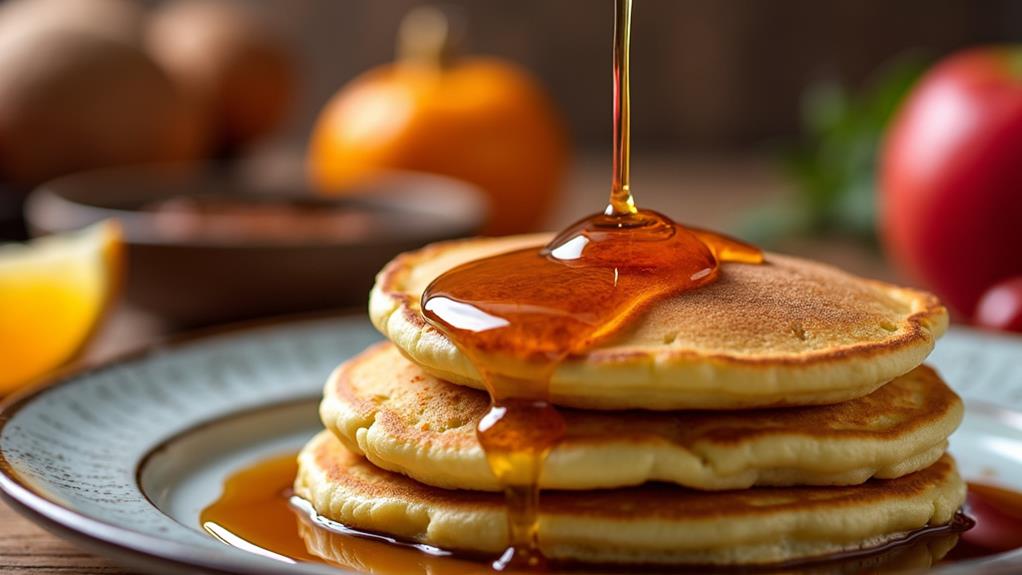
Cooking pancakes to perfection involves more than just a good batter; it requires mastering several key techniques. Start with choosing the right pan—a non-stick skillet or griddle is your best bet. This guarantees your pancakes with maple syrup won't stick and will flip easily, maintaining their shape.
Preheat your cooking surface over medium heat for about 5 minutes to achieve a desirable golden color. A properly heated pan allows the pancakes to cook evenly, which is vital for that perfect texture. Lightly grease the pan with a small amount of butter or cooking spray to prevent sticking and promote a beautiful golden-brown finish.
When it comes to cooking time, pour the batter and cook the pancakes for 2-3 minutes on the initial side until bubbles form and pop. Then, flip the pancakes and cook for an extra 1-2 minutes until golden brown. Adjust the heat as needed to avoid over-browning or undercooking.
Serving Ideas
Achieving those perfectly cooked pancakes is just the beginning; how you serve them can make all the difference. Enhance your maple syrup pancakes into an unforgettable breakfast treat with these serving ideas.
- Fresh Fruits: Top your pancakes with a medley of fresh fruits like blueberries or strawberries. The burst of freshness complements the sweetness of the maple syrup and adds a beautiful visual appeal.
- Whipped Cream: Add a dollop of whipped cream or Greek yogurt on top of your stack. This creamy richness balances the sweetness and makes each bite indulgently satisfying.
- Crunchy Toppings: Sprinkle nuts or seeds over your pancakes. This adds a delightful crunch and provides supplementary health benefits like healthy fats and protein. A handful of walnuts or chia seeds can turn your breakfast into a nutritious feast.
- Savory Sides: Pair your pancakes with crispy bacon or sausage. Drizzling maple syrup over these savory sides creates a classic sweet-savory combination that's hard to resist.
For perfectly cooked medium-sized pancakes, confirm you cook for an extra minute if needed to get that ideal golden brown. With these serving ideas, your breakfast treat will be the star of the morning!
Storage Tips
Storing your leftover pancakes properly guarantees you can enjoy them just as much the next day. Start by placing your pancakes in an airtight container and storing them in the fridge for up to 3 days. To keep them from sticking together, use parchment paper between each layer. This simple storage tip helps preserve their flavor and texture, ensuring they stay delicious.
If you've made more pancakes than you can eat in a few days, freezing is a great option. Lay the pancakes out in a single layer on a baking sheet and freeze them until solid. Once they're frozen, transfer them to a freezer-safe container. This method keeps them fresh for up to 2 months. When you're ready to enjoy them again, you can easily reheat pancakes using a microwave, oven, or toaster oven. Just make sure they're heated through for the best taste.
Frequently Asked Questions
How Does Maple Syrup Affect Baking?
Maple syrup benefits your baking by enhancing flavor with its distinct sweetness. It acts as a natural sweetener, offering a richer profile than refined sugars. You'll notice improved moisture retention, resulting in softer, tender crumbs. Caramelization effects help achieve a beautiful golden-brown color. Plus, it allows for ingredient substitutions, reducing the need for extra fats or oils, making your treats healthier and delicious.
Why Do My Pancakes Rise so Much?
Your pancakes rise so much because you've nailed the balance of rising agents and ingredient ratios. The right batter consistency is essential, and allowing it to rest activates the gluten. A preheated cooking surface guarantees even cooking and ideal fluffiness. Be cautious not to overmix; small lumps are okay. These fluffiness factors all contribute to that perfect pancake texture, making them rise beautifully every time.
Why Maple Syrup on Pancakes?
When you pour maple syrup on your pancakes, you're not just adding a natural sweetener. You're enhancing the flavor with a rich, complex sweetness that makes breakfast special. Maple syrup benefits include its nutritional value, offering vital minerals and antioxidants. Plus, it's one of the best pancake toppings, providing a delightful texture contrast. Don't forget the regional varieties that add a unique touch to your meal!
How Do You Reduce Maple Syrup in Baking?
To reduce maple syrup in baking, start by decreasing the syrup by 25% and adjust other liquids to maintain consistency. Try maple syrup substitutions like honey or agave nectar. Improve flavors with vanilla or cinnamon to reduce sweetness. Add mashed bananas or applesauce for moisture. Adjust baking time slightly to account for changes in moisture and caramelization effects. With these tips, you'll maintain flavor without overpowering sweetness.