Why Make Your Own Pancake Syrup?
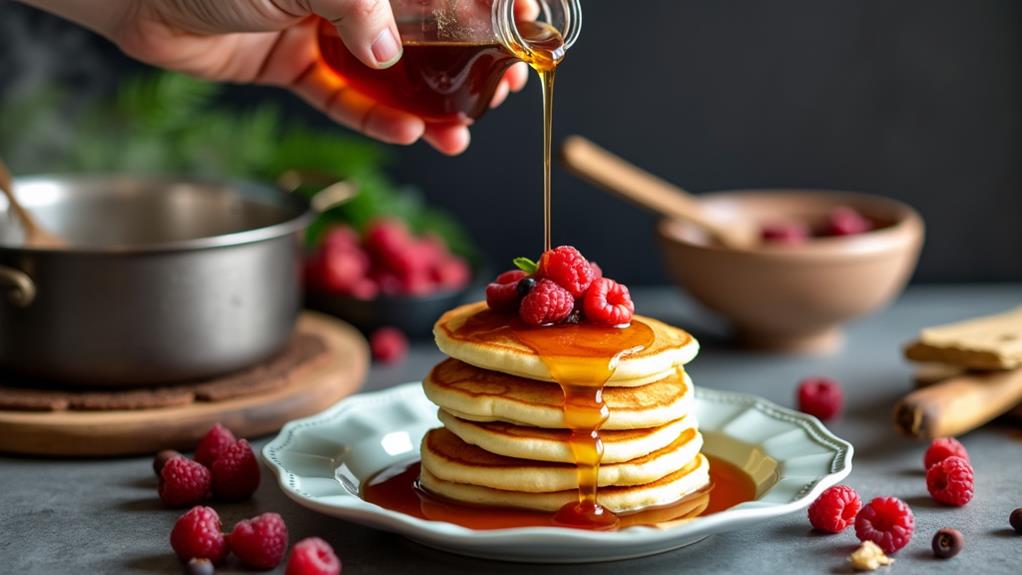
Making your own pancake syrup is cost-effective, healthier, and allows for customization. You'll save money since homemade syrup costs just a fraction of store-bought options. Control the sugar content and avoid unhealthy additives by using natural ingredients. Adjust sweetness levels, add your favorite extracts, and experiment with spices for unique flavors. The preparation is simple, taking just a few minutes, and you can store the syrup for up to a month. Plus, it's a fun activity that brings families together. Curious about all the ways you can improve your breakfast experience?
Key Takeaways
- Homemade syrup costs less than $1 per batch, saving money compared to commercial brands.
- Control over ingredients ensures a healthier option without preservatives or unhealthy additives.
- Customizable sweetness and flavors allow for personalized and unique taste experiences.
- Simple preparation requires minimal time and effort, making it a convenient option.
- Family bonding and satisfaction from creating personal recipes enhance the homemade experience.
Cost-Effectiveness
In the domain of making your own pancake syrup, you'll find it's not only easy but also incredibly cost-effective. When you consider that ingredients like sugar and water cost just a few cents per batch, homemade syrup becomes a budget-friendly option compared to store-bought alternatives. Real maple syrup, for instance, can exceed $10 per pint, while homemade versions cost less than $1 for multiple servings.
By opting for homemade syrup, you avoid the high expenses associated with commercial brands that often contain unhealthy additives and high fructose corn syrup. This not only saves you money but also steers clear of hidden costs related to health issues. Plus, the ability to customize your syrup at home means you can experiment with flavors without the extra costs that come with purchasing different flavored store-bought syrups.
Making your own syrup also encourages smaller batch cooking. This reduces waste and the expense of buying large quantities of commercial syrup that might go unused. Ultimately, homemade syrup offers a cost-effective, budget-friendly, and customizable solution for your pancake needs, letting you enjoy quality without breaking the bank.
Health Benefits
Beyond the financial perks, making your own pancake syrup offers significant health benefits. By crafting your syrup at home, you avoid the unhealthy ingredients common in store-bought versions, such as high fructose corn syrup and preservatives. This promotes a cleaner diet and allows for better control over your intake.
Here's why homemade syrup is a healthier alternative:
- Control Sugar Content: You can customize the sugar content, helping you reduce total sugar intake compared to commercial options.
- Use Natural Flavoring Extracts: Improve your syrup's taste with natural flavoring extracts like vanilla or maple, avoiding artificial additives and elevating nutritional quality.
- Healthier Sweeteners: Incorporate healthier sweeteners or lower sugar alternatives, making your syrup suitable for those managing their sugar consumption.
- Include Nutrients: Experiment with flavors and ingredients such as spices or fruit purees, which can introduce extra nutrients and health benefits.
Customizable Ingredients
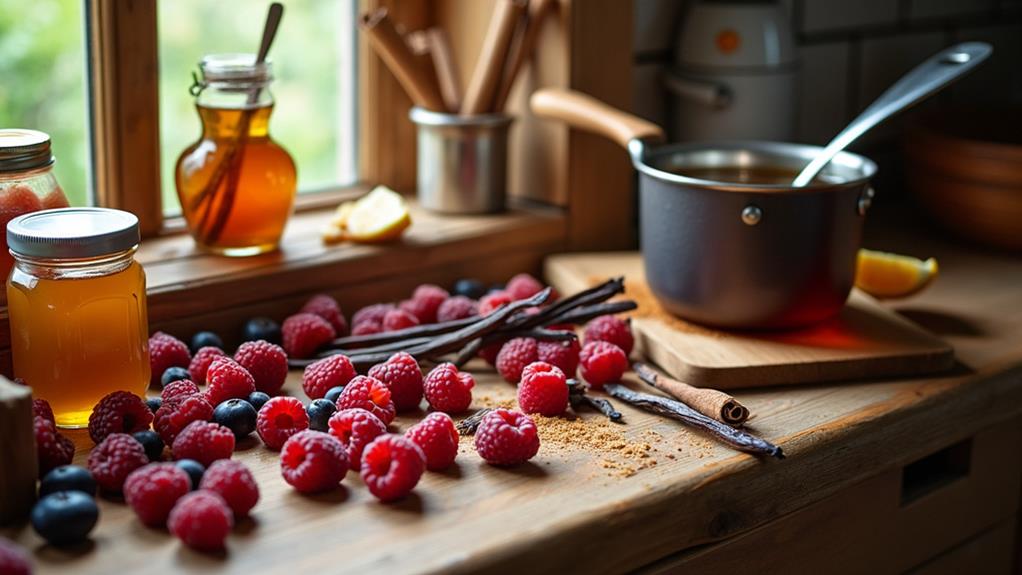
Crafting your own pancake syrup opens up a world of customizable ingredients that can transform your breakfast experience. With homemade pancake syrup, you're in control of the sweetness. Adjust the ratios of white and brown sugar to suit your taste preferences, creating a unique flavor profile every time. For those who love experimenting, incorporating vanilla, almond, or maple extracts offers personalized flavor combinations tailored to your palate.
Don't stop there. Enhance your syrup's taste by incorporating spices like cinnamon or nutmeg. These additions can provide creative and delicious alternatives to standard recipes. If you're feeling adventurous, try blending in fruit purees, which not only add natural sweetness but also a burst of flavor.
Using dark brown sugar instead of light brown sugar can greatly intensify the flavor, giving your syrup a richer color and texture. Plus, making your own syrup means you're eliminating unhealthy additives commonly found in store-bought options. This way, you control the quality of the ingredients, ensuring a healthier alternative for your breakfast.
Embrace the freedom of homemade pancake syrup and enjoy the endless possibilities of customizable ingredients and flavor combinations.
Simple Preparation
Preparing homemade pancake syrup is a straightforward and rewarding process. You'll love how quickly and effortlessly it comes together. In just 10 minutes, using common ingredients like white sugar, brown sugar, water, and flavor extracts, you can whip up a batch of easy homemade syrup that's perfect for your breakfast table.
Here's all you need to do:
- Combine Ingredients: Mix equal parts white sugar and brown sugar with water in a saucepan.
- Boil the Mixture: Bring the mixture to a boil, stirring occasionally until the sugars dissolve completely, forming a simple syrup.
- Add Flavoring: Remove the saucepan from heat and stir in your desired flavor extracts. Maple flavoring is a popular choice for that classic pancake syrup taste.
- Cool and Adjust: Let the syrup cool, allowing it to thicken. You can adjust the thickness by altering the cooking time during the boiling step.
A typical recipe yields about 2¾ cups of syrup, enough to complement multiple breakfasts. Plus, involving your kids in these simple preparation steps can turn cooking into a fun family activity. With this easy homemade method, you can enjoy the rich, customizable maple flavoring tailored to your liking!
Storage Tips
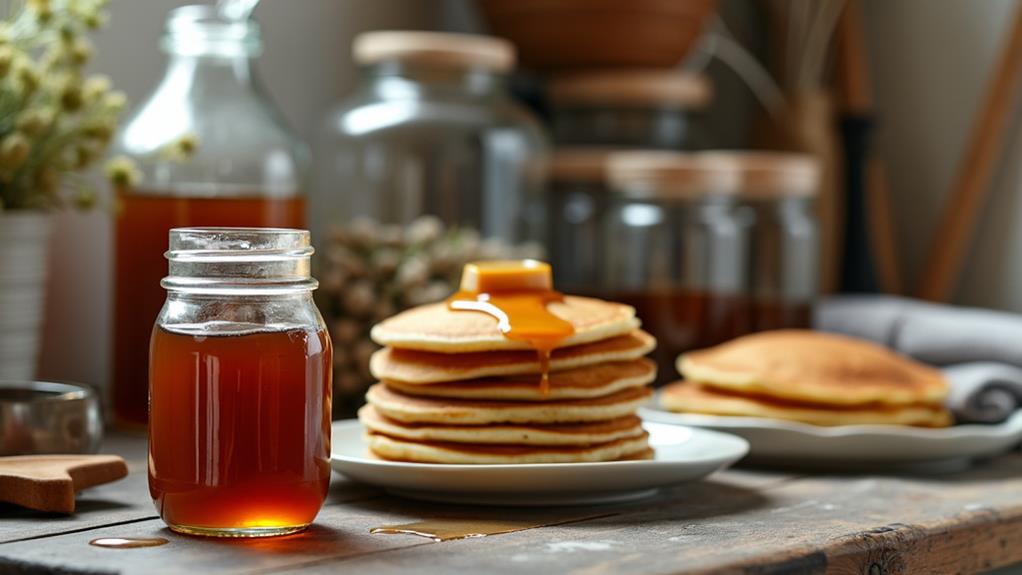
Once you've made your delicious homemade pancake syrup, proper storage is key to maintaining its quality and flavor. To store homemade pancake syrup effectively, use an airtight container to prevent crystallization and keep it fresh for up to 1-2 months in the refrigerator. A glass jar with a lid is ideal for this purpose, guaranteeing that the syrup stays fresh and is easy to pour when needed.
It's essential to label the container with the date you made the syrup. This way, you can keep track of its shelf life and make sure you're enjoying it at its best. Although the syrup can last up to two months, aim to consume it within a month for the best flavor and texture.
If you notice any crystallization occurring, don't worry. Simply reheat the syrup gently while stirring to dissolve the crystals before serving. This quick fix will restore your syrup to its smooth consistency.
Flavor Variations
Exploring flavor variations in your homemade pancake syrup can improve your breakfast experience and cater to diverse taste preferences. By experimenting with different ingredients, you can create unique and delicious syrups that suit your palate perfectly.
Here are some fun and tasty ideas:
- Warm Spiced Syrup: Add spices like cinnamon or nutmeg to your syrup for a comforting, spiced profile. This variation pairs wonderfully with classic pancakes and waffles.
- Fruity Twist: Incorporate fruit purees, such as strawberry or raspberry, into your syrup. This not only boosts the sweetness but also adds a delightful fruity twist, making your breakfast more lively.
- Rich and Complex: Use dark brown sugar instead of light brown sugar in your syrup recipe. Dark brown sugar provides a richer, more complex flavor that can raise your syrup to a gourmet level.
- Personalized Extracts: Experiment with different flavor extracts like almond or maple. These extracts allow you to tailor the syrup to your taste, offering endless possibilities to complement your breakfast dishes.
User Experiences
User experiences with homemade pancake syrup highlight the satisfaction and delight of creating something personalized and delicious. Many users report that making their own pancake syrup is easier and quicker than they expected, often taking less than 10 minutes to prepare. This quick process makes it convenient for busy mornings or spontaneous brunches.
One of the most appreciated aspects is the customization available with homemade syrup. You can experiment with different flavor extracts, such as vanilla or almond, tailoring the syrup to your taste. This flexibility allows you to create a unique flavor profile that commercial options simply can't match.
Positive testimonials also emphasize the fun and engaging nature of making syrup, especially when involving children. Kids find it exciting to participate in the cooking process, turning breakfast into a shared family activity. However, some users mention issues with crystallization. Thankfully, these can usually be resolved by reheating and stirring the syrup, making it a minor inconvenience.
Nutritional Information
When considering the nutritional information of homemade pancake syrup, it's important to recognize that a typical serving contains around 100 calories, making it a relatively calorie-conscious choice compared to some store-bought varieties. This makes homemade syrup an appealing option for those mindful of their calorie intake.
However, keep in mind that a serving can contain approximately 25 grams of total sugars, mainly from granulated and brown sugars. This high sugar content means you should enjoy it in moderation to avoid excessive sugar consumption. Homemade syrup generally lacks fat and protein, classifying it primarily as a carbohydrate source. This is vital for you if you're tracking your macronutrient intake.
You can also personalize the nutritional content by adding flavorings like vanilla or cinnamon. These enhancements can offer minimal health benefits without markedly changing the calorie count. While homemade syrup has negligible vitamins and minerals, using ingredients like dark brown sugar can slightly improve its mineral content.
Here's a quick breakdown of the nutritional highlights:
- Calories: Around 100 per serving.
- Sugars: Approximately 25 grams per serving.
- Macronutrients: Primarily carbohydrates, no fat or protein.
- Customization: Flavorings like vanilla or cinnamon for added benefits.
Enjoy your homemade syrup mindfully!
Common Issues
Common issues can arise when making homemade pancake syrup, often stemming from storage practices and cooking techniques. One of the most common problems is crystallization. This can happen if you don't store the syrup properly, usually due to incorrect water measurements or cooking the syrup at too high a temperature. To prevent this, make sure you use tightly packed brown sugar and monitor the syrup's cooking temperature carefully, keeping it around 150°F (65°C).
Another issue is the syrup becoming overly thick. This usually results from cooking the mixture for too long. Keep an eye on the consistency to achieve your desired thickness without overcooking. If the syrup does crystallize, don't worry; you can fix it by reheating the syrup and stirring until the sugar crystals dissolve back into the mixture.
You might also find that the sweetness and flavor of the syrup vary more than you'd expect. This can be due to the type of sugar or flavor extracts you're using. Feel free to adjust these ingredients to better suit your personal taste preferences. By keeping these tips in mind, you'll make a delicious homemade pancake syrup every time.
Community Feedback
Many home cooks rave about the benefits of making their own pancake syrup, often highlighting the superior taste compared to store-bought options. The community feedback overwhelmingly supports the move to homemade pancake syrup, citing several key advantages.
- Superior Taste and Quality: Users frequently mention that the taste of homemade syrup is unmatched. You can use high-quality ingredients and avoid preservatives, achieving a fresher and more natural flavor.
- Customize Flavors: One of the most praised aspects is the ability to customize flavors. Regardless of whether you prefer adding a hint of vanilla, a dash of cinnamon, or even experimenting with other spices, the possibilities are endless. This customization makes each batch unique to your family's taste.
- Family Bonding: Many home cooks report that making syrup along with their children is a delightful and engaging activity. It's a fantastic way to spend quality time, learn new skills, and create lasting memories in the kitchen.
- Ease of Preparation: The quick cooking time, typically between 3 to 10 minutes, is a significant advantage. This ease of preparation makes it a convenient option, even on busy mornings.
Frequently Asked Questions
Is It Cheaper to Make Your Own Syrup?
Yes, it's cheaper to make your own syrup. When you do a cost comparison, homemade syrup costs less than $2 per batch, while real maple syrup can exceed $10 per pint. By sourcing common ingredients like white and brown sugar, you save money. Plus, you can customize flavors to your liking without the extra expense of specialty syrups. In general, making your own syrup is a budget-friendly choice.
How Long Does Homemade Pancake Syrup Last?
Homemade pancake syrup can last 1-2 months in the refrigerator. For ideal freshness, use syrup storage tips like keeping it in an airtight container. Syrup flavor variations and ingredient options might affect how long it stays good, but proper refrigeration usually keeps it safe for up to two weeks, sometimes as long as three months. Labeling the jar with the date made helps track freshness and guarantees the best flavor.
How Is Pancake Syrup Different From Maple Syrup?
Pancake syrup and maple syrup are distinct syrup varieties. Maple syrup, derived from sugar maple sap, has a rich, complex flavor profile influenced by growth conditions. Pancake syrup, made from sugars and flavor extracts, offers customizable flavors like vanilla or almond. While maple syrup is natural and often pricier, pancake syrup can be more economical. Homemade pancake syrup allows control over ingredients, potentially offering better health benefits by avoiding unhealthy additives.
What Does Pancake Syrup Do to Your Body?
When you consume pancake syrup, its high sugar content gives you a quick energy increase, but it also causes spikes in blood sugar levels. These spikes can lead to energy crashes and hunger shortly after. Regular intake of syrup can contribute to weight gain and increase the risk of obesity-related health issues like type 2 diabetes and heart disease. Furthermore, its sugar content can harm your dental health, promoting tooth decay.