Why Choose Organic Classic Maple Syrup for Waffles?
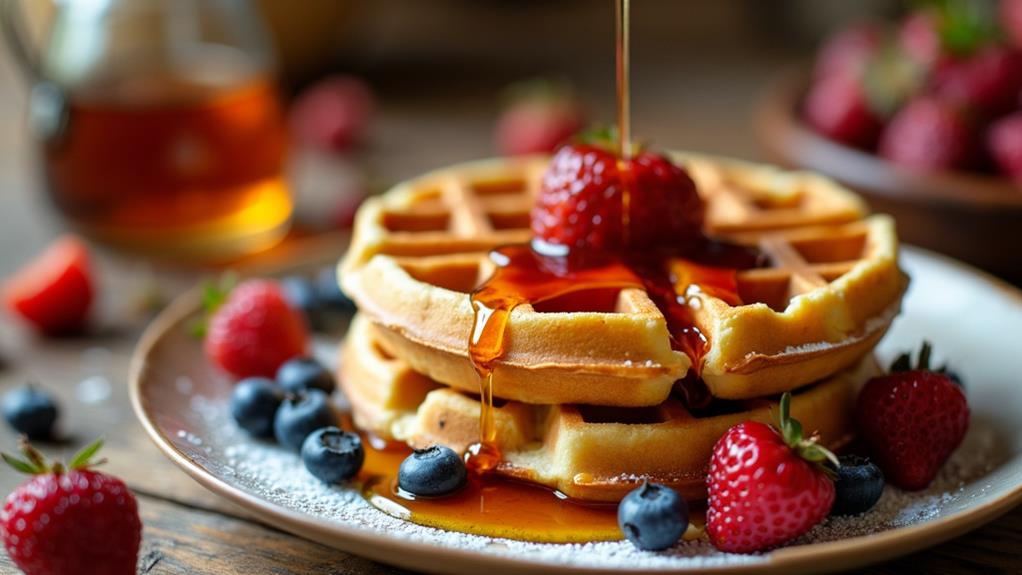
Choosing organic classic maple syrup for your waffles means indulging in a pure, natural sweetener free of artificial additives. Unlike pancake syrup, which is often loaded with high-fructose corn syrup, organic maple syrup offers a richer flavor and essential minerals like manganese and zinc. With a lower glycemic index, it's kinder to your blood sugar levels. Plus, it supports sustainable farming practices and local farmers. Storing it properly guarantees you always have fresh, high-quality syrup ready for your breakfast. For deeper insights into why this choice benefits both you and the planet, stick around.
Key Takeaways
- Organic maple syrup offers superior flavor with no artificial additives, enhancing the taste of waffles.
- Contains vital minerals and antioxidants, providing nutritional benefits beyond standard pancake syrup.
- Lower glycemic index reduces blood sugar impact, making it a healthier choice for breakfast.
- Supports sustainable farming practices, promoting environmental health and future product availability.
- Buying from local farmers strengthens community ties and supports local economies.
Maple Syrup Vs. Pancake Syrup
Regarding topping your waffles, you've probably wondered if to go for pure maple syrup or the more common pancake syrup. Pure maple syrup, made from the boiled sap of sugar maple trees, offers a rich, complex flavor profile with natural sweetness. It takes about 40 gallons of sap to produce just one gallon of this delightful syrup. On the other hand, pancake syrup is primarily composed of corn syrup and high-fructose corn syrup, leading to a singularly sweet taste due to added flavorings and preservatives.
Many consumers find the depth of flavor in maple syrup more appealing compared to the overly sweet profile of pancake syrup. Furthermore, pancake syrup often contains artificial additives and coloring, such as 4-MEI, which are absent in pure maple syrup. This makes organic maple syrup a more natural choice for your waffles.
Moreover, the nutritional benefits of maple syrup are significant. It contains critical minerals like manganese, riboflavin, and zinc, which you won't find in pancake syrup. Pancake syrup generally provides empty calories without these beneficial nutrients. So, with regard to enhancing your waffles, organic maple syrup offers not just a superior flavor but also added nutritional value.
Health Benefits of Maple Syrup
When you opt for organic maple syrup, you're not just choosing a delicious topping but also a nutritious one. This natural sweetener offers numerous health benefits that make it a smart supplement to your diet. Here's why:
- Rich in Vital Minerals: Organic maple syrup is packed with nutrients like manganese, zinc, calcium, and potassium. These minerals support different bodily functions, from bone health to immune system efficiency.
- Lower Glycemic Index: Compared to refined sugars, organic maple syrup has a lower glycemic index. This means it has a less dramatic impact on your blood sugar levels, making it a healthier option for those monitoring their sugar intake.
- Antioxidant Properties: Pure maple syrup contains antioxidants that help combat free radicals. These antioxidants can lower the risk of chronic diseases and promote general health.
- Nourishing Alternative: Organic farming practices guarantee that your syrup is free from artificial additives. Consuming it in moderation provides a natural source of energy—approximately 104 calories and 24 grams of sugar per two tablespoons—making it a nourishing alternative to processed sweeteners.
Understanding Maple Syrup Grades
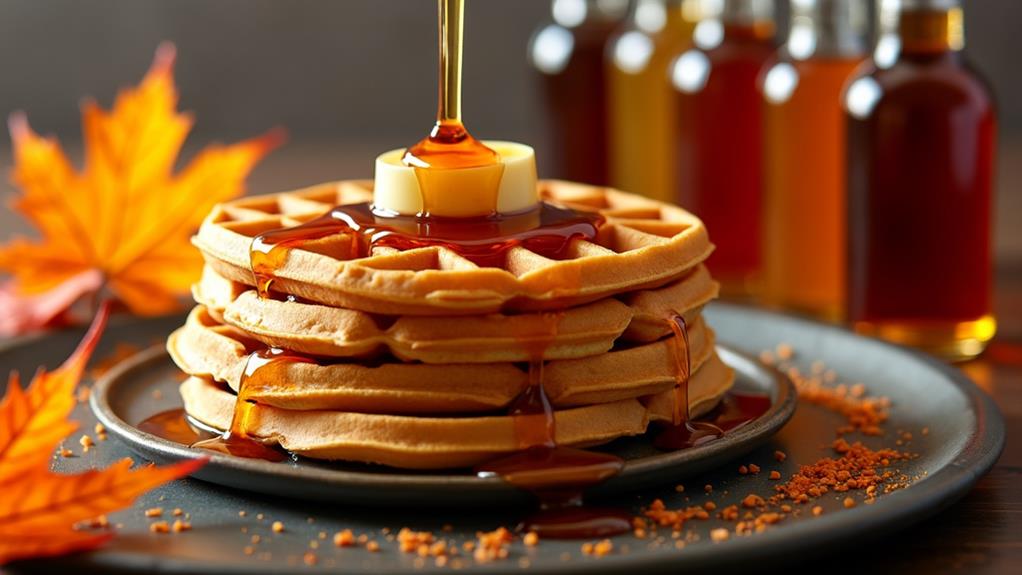
Choosing the right maple syrup can improve your culinary creations, but understanding the different grades is vital. Maple syrup is classified into four main grades by the USDA: Golden Color/Delicate Taste, Amber Color/Rich Taste, Dark Color/Robust Taste, and Very Dark Color/Strong Taste. These grades reflect both the color and flavor differences which result from how late in the season the syrup is harvested.
Grade A syrups are considered the highest quality and are typically lighter in color. They're perfect for drizzling over waffles or pancakes. On the other hand, Grade B syrup, which has a darker color and a stronger flavor, isn't inferior. It's often preferred for baking and glazing due to its robust flavor profile.
When choosing organic maple syrup, you're not just selecting based on taste. Certified organic maple syrup guarantees that the production process aligns with strict organic standards. Maple syrup producers who offer organic options provide you with syrups that might have higher nutritional values, including a greater antioxidant content, especially in darker grades.
Cost and Value of Maple Syrup
Understanding the different grades of maple syrup helps you make informed choices, but cost and value are also significant factors to contemplate. Organic maple syrup, known for its premium quality and sustainable practices, typically costs around $18 per quart from local farms. This investment not only guarantees a robust taste but also supports local agriculture.
When evaluating the cost and value of maple syrup, consider the following points:
- Farmers' Markets: Buying from farmers' markets often means you're getting competitively priced organic maple syrup directly from producers. This approach helps you obtain high-quality products while supporting local farmers.
- Larger Containers: Purchasing larger containers of organic maple syrup can be a cost-effective choice. They usually offer better value per serving, which is ideal if you use syrup frequently.
- Shipping Costs: If you're ordering online, keep in mind that shipping costs can add about $10 for two quarts within the U.S. Including this in your budget can help you avoid surprises.
- Alternative Options: Brands like BJs Wellsley Farms Organic Maple Syrup provide a robust taste at a lower price, making them a viable alternative if you're looking to save money without compromising on quality.
Considering these factors helps you make a well-rounded decision when choosing your next bottle of Vermont Maple Syrup.
Storing Maple Syrup Properly
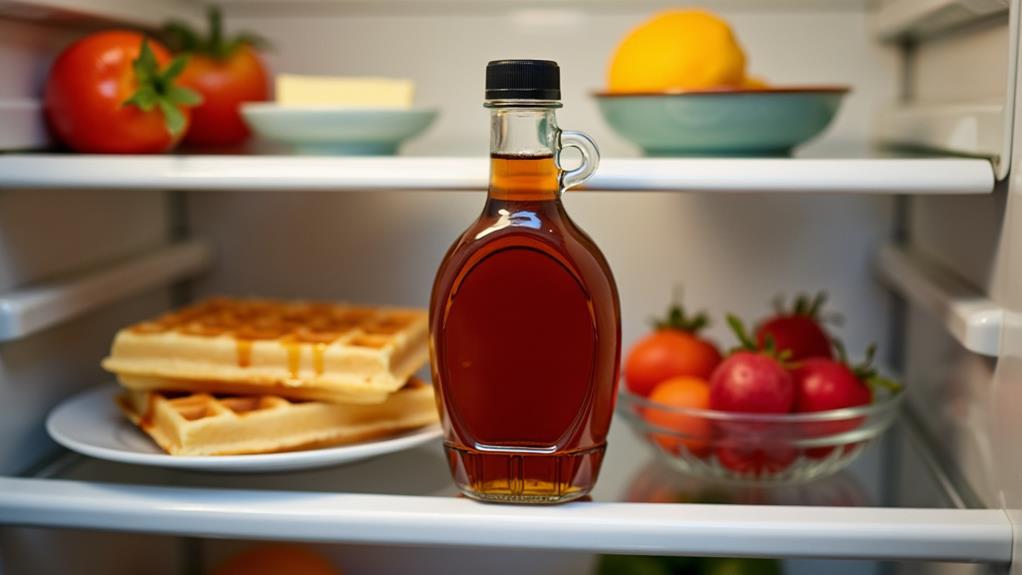
Properly storing your maple syrup guarantees it retains its delightful flavor and doesn't go to waste. In terms of organic maple syrup, following storage guidelines is essential for maintaining its quality and flavor. If you've got opened maple syrup, make sure to refrigerate it right away. This prevents mold from developing and keeps the syrup fresh for 6 months to a year.
Unopened maple syrup containers can be safely stored in a cool, dark place for up to 2 years without losing their quality. If you want to extend the shelf life even further, freezing maple syrup is a great option. It won't freeze solid, allowing for easy use whenever you need it.
Here's a quick guide to help you out:
| Syrup State | Storage Method | Duration | Notes |
|---|---|---|---|
| Opened Maple Syrup | Refrigerate | 6 months to 1 year | Prevents mold, maintains flavor |
| Unopened Maple Syrup | Cool, dark place | Up to 2 years | Retains quality and flavor |
| Any Maple Syrup | Freezer | Indefinite | Easy to use, doesn't freeze solid |
To enjoy the best flavor, bring the syrup to room temperature or gently heat it before serving. Happy syrup storing!
Organic Certification Importance
Securing organic certification for maple syrup isn't just about meeting a label requirement; it's about assuring a cleaner, safer product for you to enjoy. When you choose organic maple syrup, you're opting for a product free from synthetic pesticides and fertilizers, which means fewer contaminants and a more natural flavor.
Here's why organic certification matters:
- Purity and Safety: Organic certification assures that the syrup adheres to strict regulations, including lead safety standards, minimizing harmful contaminants.
- Sustainable Practices: The organic production process promotes the health of maple trees and surrounding ecosystems, fostering biodiversity through sustainable practices.
- Quality and Flavor: Organic maple syrup is often produced in smaller, controlled batches, enhancing its quality and flavor compared to mass-produced alternatives.
- Environmental Responsibility: By supporting organic syrup, you're promoting sustainable agriculture and contributing to environmental responsibility.
Moreover, choosing organic maple syrup means you're supporting local farmers who are committed to sustainable practices, assuring that the production process is beneficial for both the environment and the community. So, when you pour that golden syrup over your waffles, you can feel good about making a choice that's better for your health and the planet.
Supporting Local Producers
When you choose organic maple syrup, you're often supporting local producers, strengthening both regional economies and sustainable agriculture. Many small farms that produce organic maple syrup actively participate in farmers' markets, bringing you fresh, high-quality products. By buying locally, you help foster community connections, creating a direct link between you and the farmers.
Local producers offer unique flavors that reflect the specific terroir of the region, enhancing your culinary experience, especially on dishes like waffles. The nuanced taste of organic syrup from your area can make a significant difference, transforming a simple breakfast into a gourmet delight.
Supporting these local producers also means promoting environmentally friendly practices. Many organic farms prioritize sustainable practices that maintain healthy forest ecosystems and promote biodiversity. This commitment to the environment guarantees that future generations can continue to enjoy these high-quality products.
Moreover, engaging with local syrup producers provides valuable education about organic farming. You gain insights into the production process, learning about the benefits of choosing organic over conventional methods. This knowledge enriches your appreciation for the syrup and underscores the importance of supporting sustainable agriculture. By choosing organic, you're making a positive impact on your community and the planet.
Frequently Asked Questions
What Type of Maple Syrup Is Best for Waffles?
When choosing maple syrup for waffles, consider the different maple syrup varieties and their flavor profiles. Grade A Amber or Dark are top choices for robust flavor. Think about cooking applications and nutritional comparisons, as organic options offer health benefits. Regional differences and harvest methods can influence taste preferences. For pairing suggestions, try storing your syrup in the fridge to maintain freshness and improve your waffle experience.
Why Is Organic Maple Syrup Better?
Organic maple syrup is better because it offers numerous nutritional benefits, including vital minerals. Its production process avoids synthetic pesticides, making it cleaner. The environmental impact is positive, supporting sustainable sourcing practices and healthier ecosystems. When compared in a taste comparison, organic syrup often has a richer flavor profile. Adhering to strict quality standards, it provides health advantages and aligns with consumer preferences for natural products.
What Is the Healthiest Syrup for Waffles?
The healthiest syrup for waffles is natural sweeteners like organic maple syrup. It offers health benefits, including a lower glycemic index than refined sugars. Its rich flavor profiles and favorable nutrition facts, like vital minerals, make it a great choice. With fewer calories compared to pancake syrup, it suits diverse dietary preferences. Plus, sustainable sourcing and no allergens make it a safe, eco-friendly option for your breakfast.
Which Is Better Organic Honey or Organic Maple Syrup?
When comparing organic honey and organic maple syrup, consider their flavor profiles, nutritional benefits, and versatility. Maple syrup offers unique taste and vital minerals, while honey is higher in calories but has natural sugars. For sweetening alternatives, maple syrup has a lower glycemic index, making it better for blood sugar control. Maple syrup's antioxidants and sustainable sourcing practices make it environmentally friendly. Price comparisons show maple syrup can be costlier, but its culinary uses and baking applications are extensive.