Why Choose Nutritious Syrup for Pancakes and Waffles?

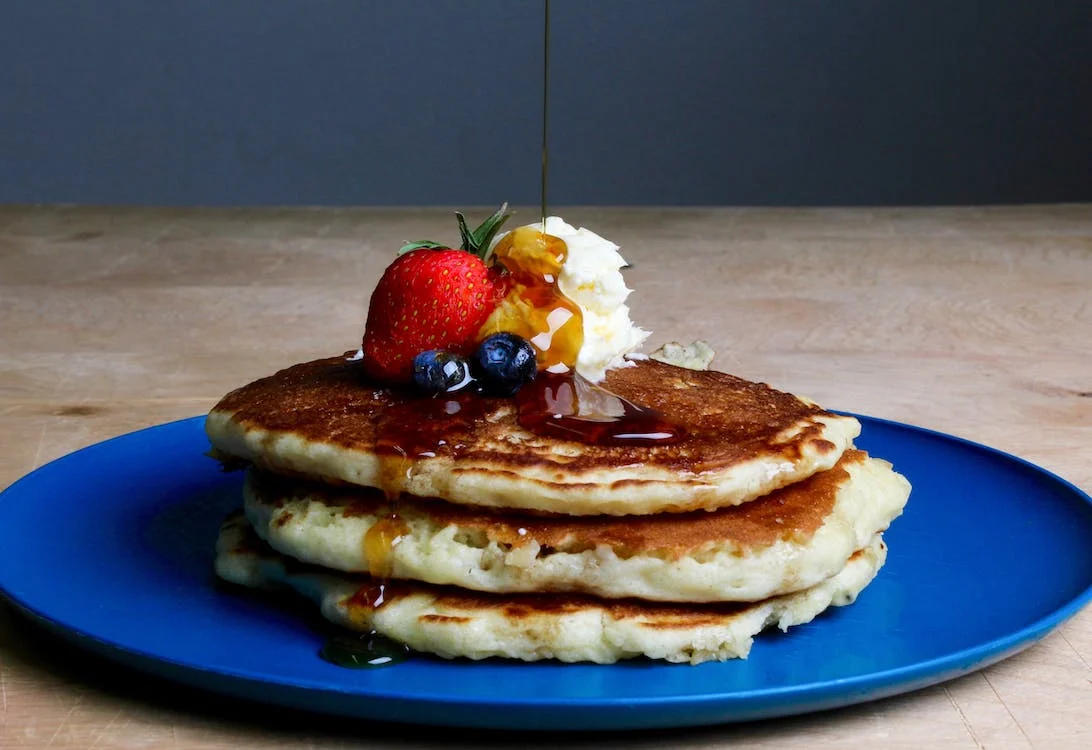
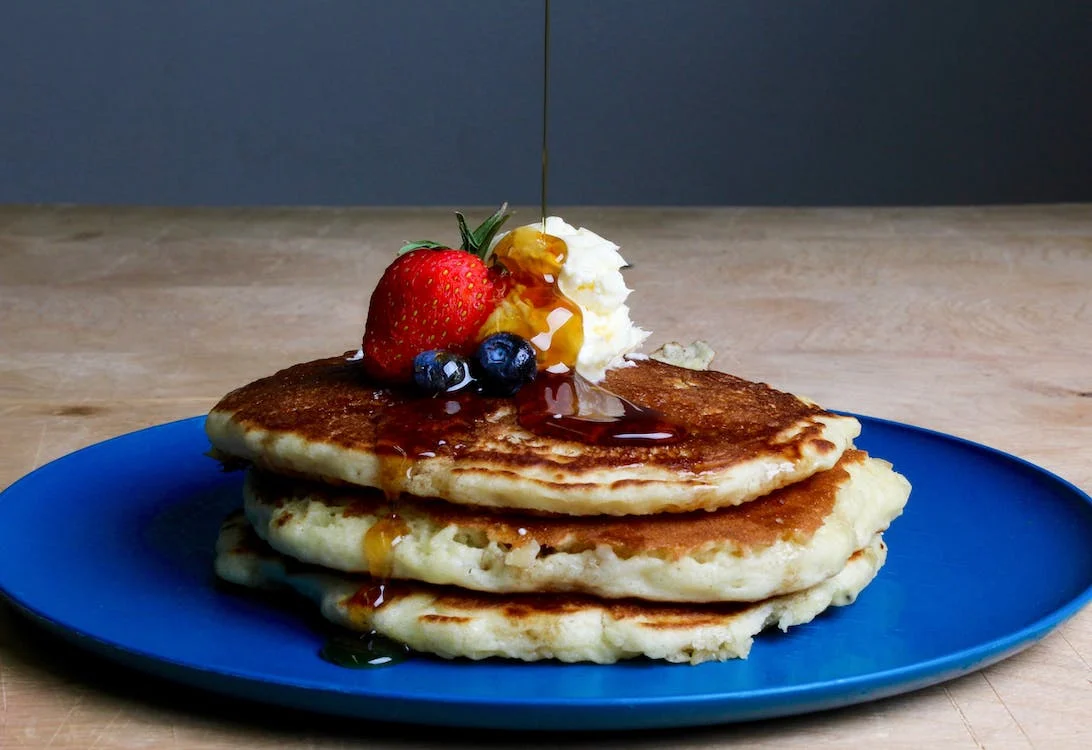
Choosing nutritious syrup for your pancakes and waffles enhances flavor and health. Pure maple syrup, made from sugar maple sap, offers a rich, complex taste with hints of caramel and vanilla. Unlike pancake syrup, it has no artificial additives and is packed with minerals like manganese, zinc, and potassium. Its antioxidants promote general well-being while its lower glycemic index supports stable blood sugar levels. This sustainable, eco-friendly option also enriches dishes beyond breakfast, from marinades to dressings. Uncover how nutritious syrup can transform your meals and support a healthier lifestyle.
Key Takeaways
- Pure maple syrup provides essential minerals like manganese, zinc, calcium, and potassium, supporting overall health.
- It has a lower glycemic index than refined sugars, promoting stable blood sugar levels.
- Rich in antioxidants, pure maple syrup can protect against oxidative stress and support immune function.
- The natural and complex flavor profile of maple syrup enhances the taste of pancakes and waffles.
- Unlike pancake syrup, pure maple syrup contains no artificial additives, making it a healthier choice.
Origins and Production
Maple syrup's path from tree to table is both fascinating and intricate. It begins with the sap of sugar maple trees, which are primarily found in the Northeastern United States and Eastern Canada. During maple syrup production, you'll see the labor-intensive process of tapping these trees to collect sap. This sap is then boiled down to produce the natural sweetener that people appreciate and love. Remarkably, it takes about 40 gallons of sap to yield just one gallon of pure maple syrup, underscoring the resource-intensive nature of this production.
Unlike pancake syrup, which is often made from corn syrup and high fructose corn syrup with artificial flavors and preservatives, pure maple syrup stands out for its simplicity and nutritional value. Tapping sugar maples is a sustainable practice that doesn't harm the trees, ensuring the health of maple forests for future generations. Pure maple syrup contains no artificial additives, making it a superior choice for those mindful of their nutritional intake. When you choose pure maple syrup, you're not only enjoying a delicious natural sweetener but also supporting a traditional, eco-friendly practice that maintains the integrity of natural forests.
Flavor Profile
When you savor pure maple syrup, you'll notice a rich and complex flavor profile that sets it apart from its artificial counterparts. Unlike the one-dimensional sweetness of pancake syrup, pure maple syrup offers nuanced hints of caramel, vanilla, and molasses. This complexity is natural, derived solely from the sap of maple trees, and varies by grade. Darker syrups, for instance, deliver a more robust and pronounced taste, improving the complete eating experience.
Choosing pure maple syrup means you're not just getting sweetness; you're embracing a symphony of flavors that uplift your meals. This unique flavor profile doesn't just complement pancakes and waffles; it also improves a variety of dishes, showcasing its versatility. From glazes to desserts, the natural taste of pure maple syrup can transform your culinary creations.
Many consumers prefer pure maple syrup over pancake syrup because it offers depth and complexity that artificial syrups can't replicate. This preference isn't just about taste; it's about appreciating the natural, unadulterated flavors that make each bite memorable. So next time you're drizzling syrup, consider the rich and complex profile of pure maple syrup for a truly enhanced experience.
Nutritional Aspects
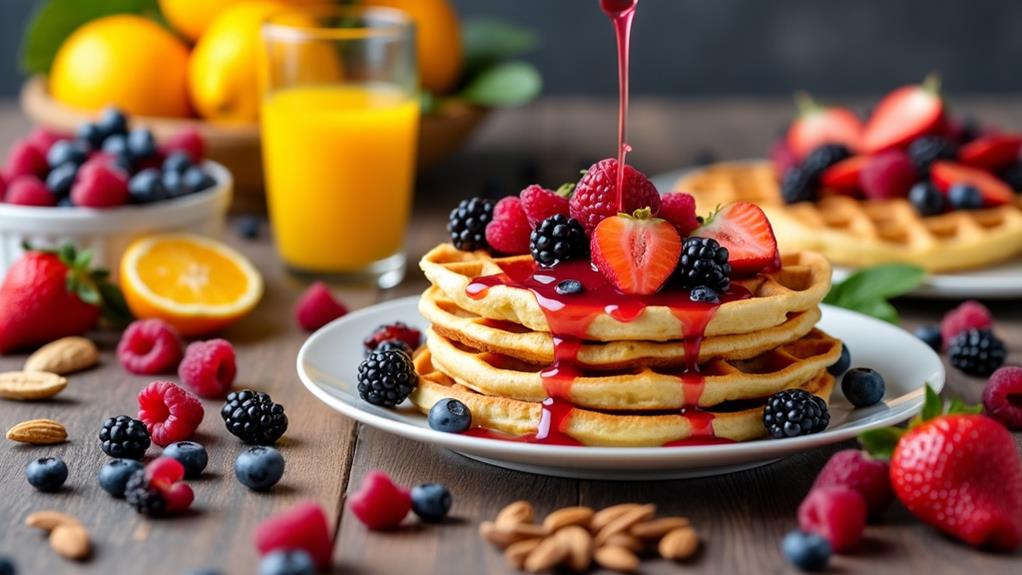
In conjunction with its rich and complex flavor, pure maple syrup offers numerous nutritional benefits that make it a superior choice over pancake syrup. Unlike pancake syrup, which is loaded with high fructose corn syrup and lacks crucial nutrients, pure maple syrup contains important minerals such as manganese, zinc, calcium, and potassium. These nutrients contribute to your overall wellness and support multiple bodily functions.
When it comes to managing blood sugar levels, maple syrup has a glycemic index lower than that of refined sugars. This means it causes a more gradual increase in glucose, making it a better option for those mindful of their blood sugar levels. Furthermore, a 100-gram serving of maple syrup provides 260 calories and 60.5 grams of total sugar, but this is balanced by its antioxidant content.
The antioxidant compounds in pure maple syrup, including Quebecol, help protect your body against oxidative stress and may lower the risk of chronic diseases. Choosing real maple syrup over pancake syrup not only improves the flavor profile of your dishes but also supports your health due to its natural composition and absence of artificial additives.
- Contains crucial nutrients
- Lower glycemic index
- Rich in antioxidants
Culinary Uses
Pure maple syrup isn't just for pancakes and waffles; it's a multifaceted ingredient that can improve a wide selection of culinary creations. Its rich, complex flavor profile, with hints of caramel, vanilla, and molasses, makes it an ideal natural sweetener for different recipes beyond breakfast.
You can use real maple syrup to raise savory dishes, adding depth and complexity. Try incorporating it into marinades for meats or as a glaze for roasted vegetables. Unlike pancake syrup, which is often overly sweet and one-dimensional, pure maple syrup brings a nuanced taste that complements a wide range of flavors.
In desserts, maple syrup can replace refined sugars, lending a unique charm to baked goods like cookies, cakes, and pies. Its natural sweetness pairs perfectly with ingredients like nuts, fruits, and spices. Even in cocktails, a splash of maple syrup can add a delightful twist, improving the drink's flavor profile.
In dressings and sauces, maple syrup's adaptability shines. Use it in vinaigrettes for a balanced sweetness or in barbecue sauces for a smoky, caramelized finish. The culinary uses of maple syrup are truly endless, making it a must-have in any kitchen.
Environmental Impact

While savoring the rich flavors of real maple syrup, you might not realize you're also making an environmentally friendly choice. Maple syrup production is a sustainable practice that doesn't harm maple trees. In fact, tapping these trees supports the health of maple forests through regulated harvesting methods. This contrasts sharply with pancake syrup, which often relies on intensive corn farming.
Corn farming, used in pancake syrup production, has a significant environmental impact. It contributes to soil degradation and pesticide runoff, harming ecosystems. On the other hand, maple syrup production relies on the natural growth cycle of trees, promoting forest conservation and biodiversity.
By choosing maple syrup, you support:
- Sustainable forestry practices that maintain forest health.
- Reduced soil degradation and pesticide runoff.
- Conservation efforts that benefit local ecosystems and communities.
Producing maple syrup is resource-efficient, using around 40 gallons of sap to create one gallon of syrup. This process underscores the natural resource efficiency compared to the high-volume production methods of pancake syrup.
Ingredients Comparison
When comparing the ingredients of maple syrup and pancake syrup, the differences are striking. Pure maple syrup is a natural product that consists solely of sap from maple trees, without any additives. This single-ingredient composition guarantees you're consuming a product free from artificial flavors, colors, or preservatives. On the other hand, pancake syrup is primarily made from high fructose corn syrup and corn syrup, often loaded with artificial ingredients that give it a one-dimensional sweetness.
To produce just one gallon of maple syrup, it takes around 40 gallons of sap, making it a labor-intensive and natural process. Nutritionally, maple syrup holds numerous antioxidants and minerals like potassium (212 mg) and calcium (102 mg) per 100 grams. These nutrients contribute to your total health, which you won't find in pancake syrup.
Pancake syrup, due to its high fructose corn syrup content, offers minimal health benefits and lacks the complex flavor profile found in pure maple syrup. Instead of the rich notes of caramel and vanilla in maple syrup, pancake syrup provides a straightforward, sugary taste. Choosing maple syrup means opting for a more natural, nutrient-rich option for your pancakes and waffles.
Health Benefits
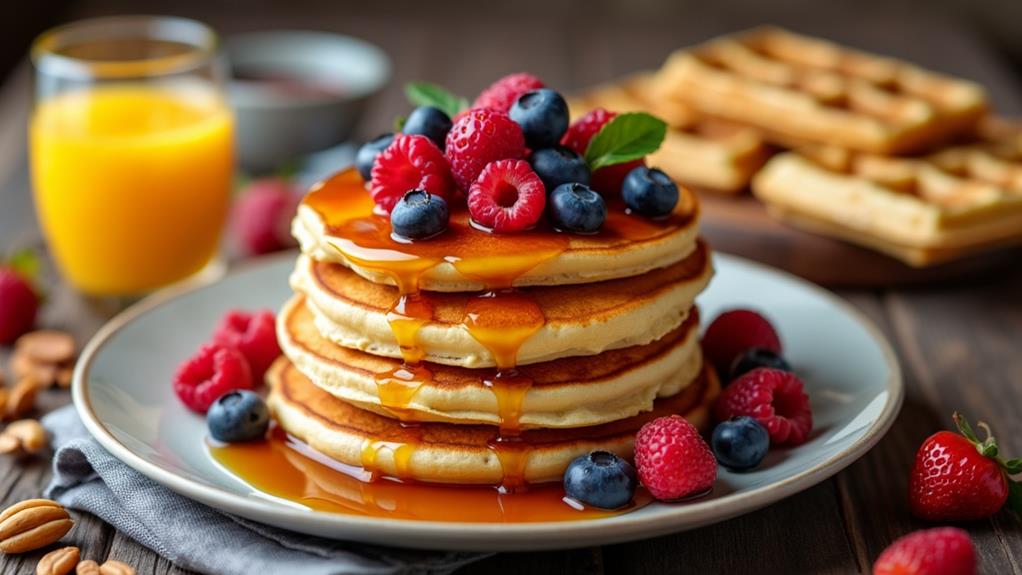
Opting for maple syrup over pancake syrup isn't just a matter of taste; it's a health-conscious choice. Maple syrup is packed with vital nutrients that your body needs, unlike pancake syrup, which often contains high fructose corn syrup with minimal nutritional value. One of the standout health benefits of maple syrup is its lower glycemic index compared to refined sugars, which helps maintain stable blood sugar levels. This makes it a better option if you're watching your carbohydrate intake.
Maple syrup is rich in antioxidants, minerals, and vitamins like manganese and riboflavin, which support general health and wellness. A 100-gram serving provides significant amounts of potassium and calcium, contributing to bone health and muscle function.
- Antioxidants: Maple syrup contains polyphenols, which may protect against free radicals and support heart health.
- Vital Nutrients: Provides potassium (212 mg) and calcium (102 mg), fundamental for bone and muscle health.
- Stable Blood Sugar: With a lower glycemic index compared to refined sugars, it helps maintain stable blood sugar levels.
Production Process
Producing pure maple syrup starts with tapping sugar maple trees in early spring to collect their sap. This sap is the lifeblood of the tree, and it takes about 40 gallons of it to produce just one gallon of maple syrup. The production process is labor-intensive but worth it for the rich, natural flavors you get.
Once the sap is collected, it's boiled down to concentrate its natural sugars. This evaporation method is vital as it preserves the syrup's natural flavors and nutrients, setting it apart from industrially processed pancake syrup. Unlike pancake syrup, which often involves refining and adding different ingredients, pure maple syrup remains a natural product.
During the boiling process, the sap undergoes a transformation, enhancing its flavor complexity. The result is a rich syrup with distinct grades based on color and taste, offering you multiple options to suit your preference. Proper storage is fundamental—always refrigerate your maple syrup to prevent spoilage and mold growth, as it contains no preservatives. This careful production process guarantees that when you pour that syrup over your pancakes and waffles, you're enjoying a pure, nutritious treat.
Nutritional Value
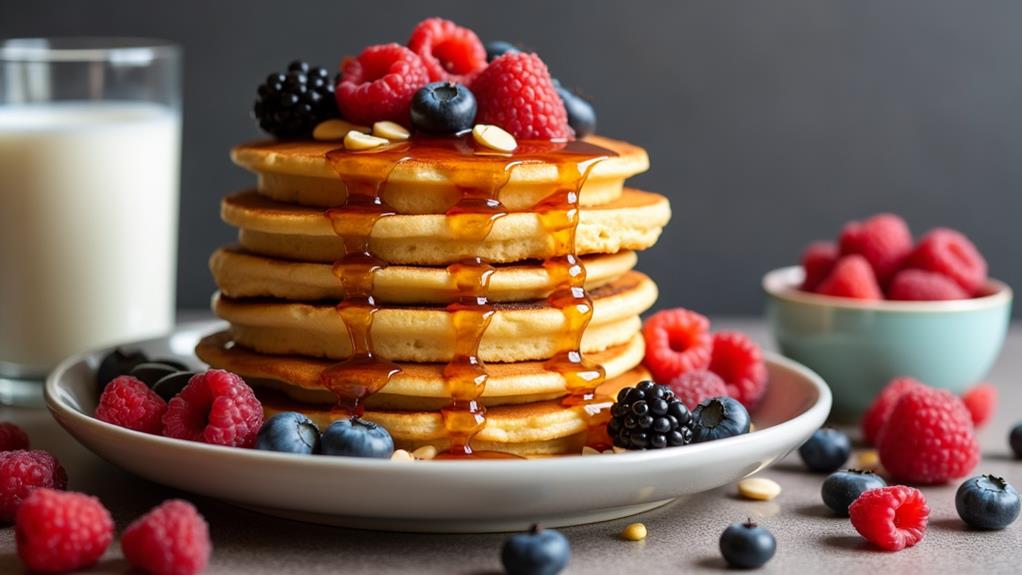
Packed with vital nutrients, pure maple syrup isn't just a sweet treat; it's a nutritious improvement to your breakfast. While it's true that maple syrup contains a high sugar content—60.5 grams per 100 grams—this natural sweetener also offers remarkable nutritional benefits. Unlike pancake syrup, which is mostly high fructose corn syrup with minimal nutritional value, pure maple syrup stands out as the Real Deal.
Key Nutritional Benefits:
- Essential Nutrients: Maple syrup contains manganese, supporting metabolism and antioxidant defenses, and riboflavin (Vitamin B2), which contributes to general health.
- Mineral Content: A 100-gram serving delivers 212 mg of potassium and 102 mg of calcium, aiding heart health and bone strength.
- Antioxidants: Maple syrup's antioxidants help protect against free radicals, potentially lowering cancer risk and improving digestion.
Additionally, maple syrup has a lower glycemic index compared to refined sugars, helping regulate blood pressure and support heart health. So, while moderation is key due to its high sugar content, the nutritional value of maple syrup makes it a preferable choice over its artificial counterparts. By choosing pure maple syrup, you're making a healthier, more advantageous decision for your breakfast table.
Frequently Asked Questions
What Is the Healthiest Syrup for Pancakes?
When you're wondering about the healthiest syrup for pancakes, pure maple syrup stands out. It offers nutritional benefits like manganese and riboflavin, unlike pancake syrup made from high fructose corn syrup. Opt for natural sweeteners like honey or homemade alternatives to control portions and avoid additives. Maple syrup's antioxidants support heart health, and its rich flavor enhances your breakfast without the overly sweet taste of artificial syrups.
What's the Difference Between Pancake Syrup and Waffle Syrup?
Pancake syrup ingredients typically include corn syrup and high fructose corn syrup, giving it a simpler, sweeter taste. Waffle syrup flavors might incorporate extra ingredients to improve the taste. You'll notice syrup texture differences, with pancake syrup being thinner and smoother, while waffle syrup is often thicker. For serving suggestions, pancake syrup works well with pancakes, while waffle syrup's richer texture complements the unique texture of waffles perfectly.
Is Pancake Syrup Healthier Than Sugar?
Pancake syrup isn't healthier than sugar. It's mostly made from high fructose corn syrup, offering minimal health benefits. When you compare syrup ingredients, pure maple syrup stands out as a better sugar alternative. It provides vital nutrients like manganese and zinc. Also, its calorie comparison shows fewer added sugars. Opting for pure maple syrup improves your health benefits and maintains steadier blood sugar levels, unlike refined sugars.
What to Put on Waffles Instead of Syrup Is Healthy?
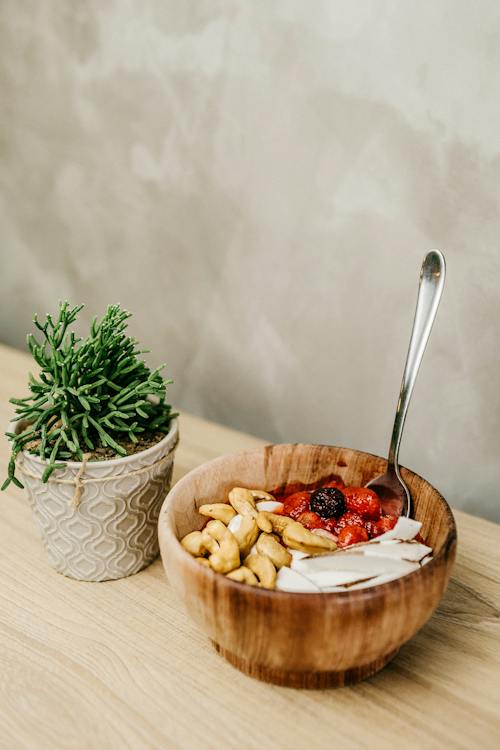
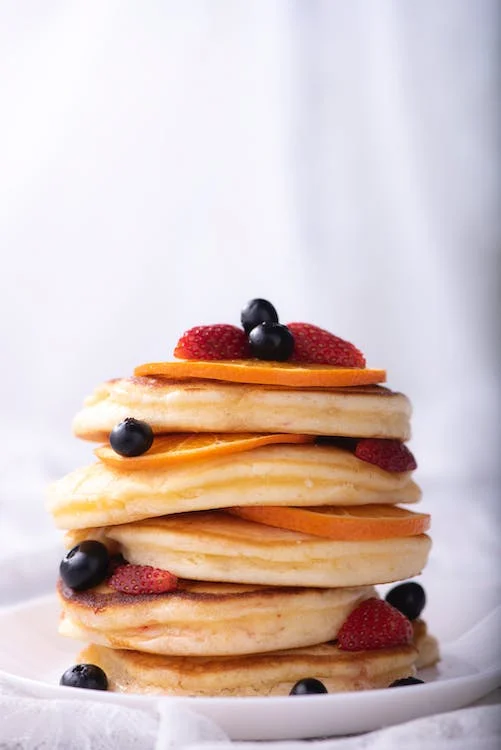
When you're looking for healthy waffle toppings instead of syrup, consider fruit toppings like berries or bananas for natural sweetness and vitamins. Try yogurt alternatives such as Greek yogurt for probiotics and calcium. Nut butters like almond or peanut butter add healthy fats and protein. For a touch of sweetness without refined sugars, honey options or pure maple syrup in moderation can provide antioxidants and minerals.