Where Is Maple Syrup Made?
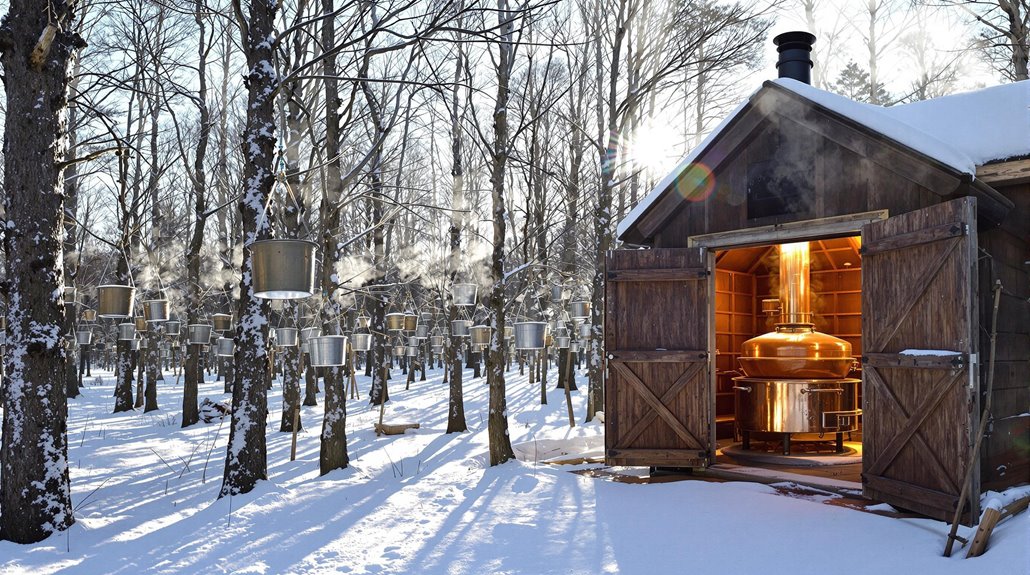
Maple syrup's made primarily in North America's Maple Belt, a unique region stretching from Quebec through the northeastern United States. You'll find most of the world's production (over 75%) concentrated in Quebec, Canada, while Vermont leads U.S. production. The area's perfect mix of freezing nights and warm spring days creates ideal conditions for sugar maple trees to produce their sweet sap. There's much more to explore about this fascinating regional specialty.
The Global Powerhouse of Maple Syrup Production
The sweet empire of maple syrup production rests firmly in Canada's hands, with Quebec leading the charge as the world's dominant producer. You'll find that Canada controls over 75% of global maple syrup production, exporting more than 61 million kg worth $515 million annually to countries worldwide.
While the United States claims second place in maple syrup production, with Vermont leading the charge, other significant regions include Ontario and New York. What makes these areas so special? It's the unique weather conditions in northeastern North America. You need freezing nights followed by warm days to produce high-quality maple syrup, and these regions offer exactly that. Canada's dominance in the market is so strong that it effectively sets global prices, making it the undisputed powerhouse of the maple syrup industry. This rich tradition dates back to the introduction of Quebec's first sugar shacks in 1868, which established the foundation for modern maple syrup production.
North American Maple Belt: The Perfect Climate
Stretching from Quebec's vast forests to Wisconsin's rolling hills, North America's Maple Belt provides nature's perfect recipe for maple syrup production. In these northeastern regions of North America, you'll find the ideal climate where sugar maple trees thrive and maple sap flows abundantly.
The perfect conditions for maple syrup include:
- Cold winters that allow trees to store sugar
- Warm spring days that encourage sap flow
- Freezing nights that maintain the best pressure within maple trees
- Sunny days that promote healthy sugar maple tree growth
When you investigate the Maple Belt, you'll uncover why this region produces the world's finest maple syrup. The unique weather patterns create a natural cycle where maple sap rises through the trees, shifting winter's stored sugar into spring's golden syrup. Indigenous techniques for collecting sap using diagonal slashes on maple trees and birch bark containers originated in these same fertile regions.
Major Maple Syrup Producing States
While Vermont leads America's maple syrup production with nearly half the country's output, several northeastern states contribute considerably to this sweet industry. New York ranks second, producing over 300,000 gallons annually, while Maine follows closely as the third-largest producer of maple syrup with approximately 600,000 gallons each year.
You'll find significant maple syrup production in Wisconsin and Michigan as well, though the amount of maple syrup produced in these states is smaller than their northeastern counterparts. It's worth noting that while these states are crucial to American maple syrup production, they're part of a larger North American industry. In fact, Canada dominates the global market, with Quebec alone accounting for more than 75% of the world's maple syrup production.
The success of maple syrup production in these regions depends on having the right sugar maple trees, which contain the highest concentrations of sugar in their sap.
Quebec's Dominance in the Industry
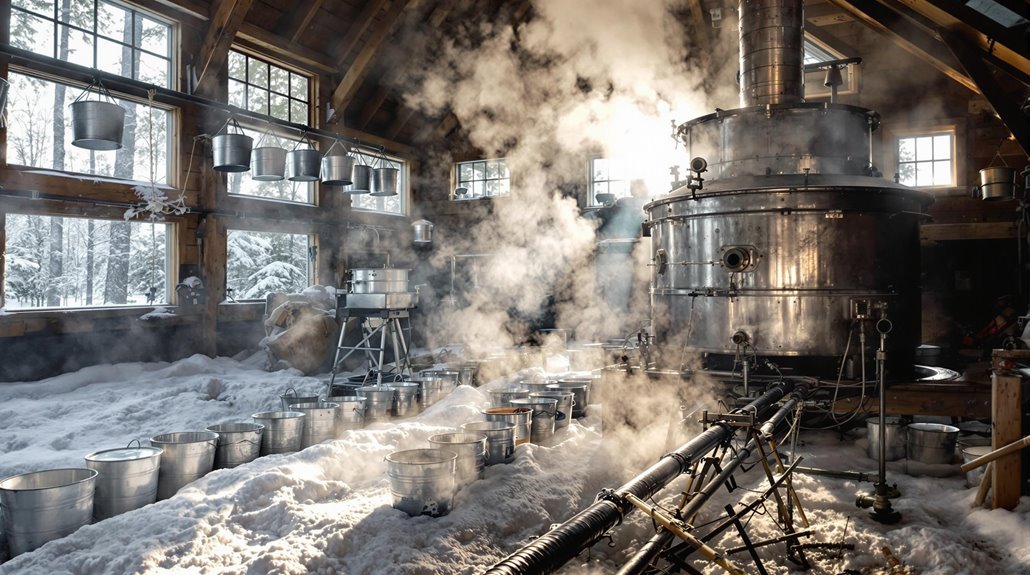
Located in eastern Canada, Quebec stands as an unrivaled powerhouse in global maple syrup production, generating nearly 8 million gallons annually and accounting for over 75% of the world's supply. During the sugaring season, you'll find Quebec's abundant sugar maple trees producing more than any other region in North America.
The province produces over 90% of Canada's total maple syrup output. Quebec's unique climate creates perfect conditions for sap production. The region exports over 61 million kg of maple syrup, valued at $515 million (2020). Their production capacity exceeds 10 million gallons during peak syrup season.
As both the largest producer and exporter, Quebec's maple syrup industry isn't just about economics—it's deeply woven into the province's cultural fabric and historical identity.
The Traditional Art of Maple Syrup Making
Long before modern production methods emerged, Indigenous peoples of northeastern North America unearthed and perfected the art of converting maple tree sap into sweet, golden syrup. This time-honored tradition relies on specific weather conditions - freezing nights followed by warm days - to allow the sap to flow freely through the trees.
Today's maple syrup producers honor these traditional methods while incorporating modern innovations. While plastic tubing systems are now commonly used to collect sap, the fundamental process remains unchanged. You'll find dedicated artisans working during a brief 3-8 week window each spring when sap production peaks. They carefully monitor growing maple trees and weather patterns to determine the ideal time for collecting the sap. Through patient boiling and evaporation, they make maple syrup in the world's most renowned syrup-producing region.
Commercial Production and Modern Methods
Modern maple syrup production has shifted from small-scale operations into a thriving commercial industry. You'll find today's sugarmakers using advanced technologies that make producing maple syrup more efficient than ever. These innovations have transformed how they collect sap and process it into the sweet syrup you love.
Key features of modern production include:
- Reverse osmosis systems that increase the sugar content before boiling
- Plastic tubing networks that automatically collect sap from thousands of trees
- Fuel efficient evaporator pans that reduce processing time and energy costs
- Computerized monitoring systems that optimize production quality
Quebec leads the industry as the world's largest producer, generating over 90% of Canada's maple syrup output. Vermont follows as the second-largest producer globally, representing the United States' significant contribution to worldwide production.
Economic Impact of Maple Syrup Regions
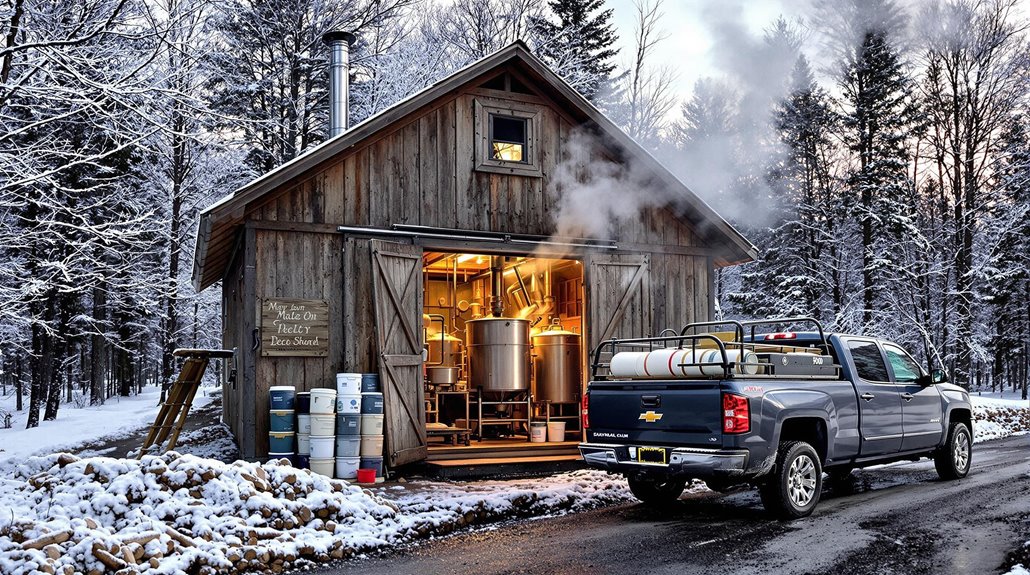
The maple syrup industry generates substantial economic benefits across North America's prime production regions. You'll find Quebec leading the charge, producing over 75% of the world's sweet sap and driving significant economic growth through its maple sugar production. The region's total sap output has shown impressive annual growth rates, strengthening Quebec's position as the global leader in maple producing territories.
Vermont stands as the second-largest producer, followed by New York in the United States. The Producers Association reports that these regions contribute millions of gallons of maple syrup annually, supporting local economies through job creation and tourism. In areas known as sugar making territories, particularly in Quebec, you'll uncover that gallons of maple syrup production has become more than just an industry—it's a cultural cornerstone supporting countless communities.