What Makes Maple Syrup Truly Natural?
You'll know maple syrup is truly natural when it comes from sap harvested sustainably without any chemicals. Certified organic syrup uses only food-grade equipment and organic defoamers, like safflower oil. Trees aren't exposed to chemicals for at least three years before tapping, ensuring purity. Forest management plans and annual inspections guarantee compliance with stringent organic standards. The process supports ecosystem health and biodiversity, making your syrup not just tasty but also eco-friendly. If you're curious about what else makes maple syrup exceptional, keep exploring.
Key Takeaways
- No chemicals are allowed near maple trees for three years before harvesting.
- Only food-grade equipment and organic defoamers, like certified organic safflower oil, are used.
- Annual inspections ensure compliance with organic standards and sustainable practices.
- Detailed forest management plans promote ecosystem health and biodiversity.
- Maple syrup has a natural composition, rich in beneficial minerals and antioxidants, aligning with clean eating trends.
Definition of Organic Maple Syrup
Organic maple syrup, often celebrated for its purity and ecological benefits, involves a stringent certification process by the USDA. When you see an organic certification on a bottle of maple syrup, it means the producer has adhered to rigorous standards ensuring sustainable practices in tree care, sap processing, and land management. To be certified organic, no chemicals can be used near the maple trees for at least three years before harvesting. This commitment promotes long-term soil and tree health, ensuring you're getting pure maple syrup free from synthetic additives and contaminants.
In maple syrup production, organic producers must use food-grade equipment and organic defoamers, like certified organic safflower oil, to maintain the syrup's purity. These practices are scrutinized through annual inspections by certified agencies like Vermont Organic Farmers (VOF). These inspections evaluate compliance with organic standards, including forest management plans that improve wildlife habitats and general ecosystem health.
The distinction between organic and non-organic maple syrup lies in these rigorous certification processes. When you choose certified organic maple syrup, you're supporting sustainable practices that benefit the environment and guarantee a pure, high-quality product.
Certification Process
Understanding the stringent certification process is key to appreciating the value of organic maple syrup. As you investigate the world of organic maple syrup, you'll find that certified agencies like Vermont Organic Farmers (VOF) play an essential role. They conduct annual inspections to guarantee that organic producers adhere to rigorous standards.
During the certification process, organic producers must follow detailed forest management plans. These plans are designed to promote ecosystem health and biodiversity. You'll see that tapping guidelines are strictly enforced to minimize tree damage and guarantee their long-term health. This careful management is a cornerstone of the certification process.
You'll also notice that only organic defoamers, such as certified organic safflower oil, are allowed in the production process. This requirement guarantees that the syrup maintains its high quality and complies with organic standards. Furthermore, strict safety measures must be followed to prevent any chemical contamination, which is vital for keeping the certification status intact.
Sustainable Practices
Sustainable maple syrup production hinges on maintaining the health of the sugarbush ecosystem, which in turn promotes biodiversity and wildlife habitats. To achieve this, farmers employ diverse sustainable practices. For starters, organic certification requires that at least 20% of the trees in your sugarbush be non-sugar maple species. This diversity boosts the ecosystem's resilience and supports a wide range of wildlife.
In terms of tapping, you must manage it carefully. You can use a maximum of three taps per tree, and only shallow taps, to minimize damage. These practices guarantee that trees remain healthy and productive for years to come.
Buffer zones are another essential element. These zones separate your organic sugarbush from chemically treated land, preventing contamination of your sap and syrup. This is critical for maintaining the purity and natural quality of your maple syrup.
Moreover, if you aim for organic certification, you need a written forest management plan. This plan should outline standards for wildlife habitat conservation and biomass recycling. These steps support long-term sustainability and help preserve the sugarbush ecosystem for future generations.
Importance of Compliance
Guaranteeing compliance with organic standards is fundamental for maintaining the integrity of natural maple syrup production. As a maple syrup producer, you're required to undergo annual inspections by certified agencies like Vermont Organic Farmers (VOF). These inspections are significant to guarantee that your practices align with evolving organic standards. An organic inspector will review your detailed records of syrup production and forest management plans, guaranteeing every step meets the criteria for organic certification.
Maintaining compliance isn't just about passing inspections. You need to keep careful documentation of your practices. This includes detailed records that prove adherence to sustainable practices and safety standards. If you fail to meet these organic standards, you risk losing your organic status, which can severely impact your marketability and consumer trust.
Continuous education on updates in organic regulations is important. Staying informed guarantees you're always adhering to the latest safety standards and sustainable practices, which are pivotal for supporting resource cycling, ecological balance, and biodiversity. By maintaining your organic certification, you help preserve the natural quality of maple syrup, guaranteeing it remains a truly natural product. Compliance isn't just a requirement; it's a commitment to maintaining the highest standards in your production process.
Consumer Insights
Recognizing consumer preferences is vital for any maple syrup producer aiming to thrive in the current market. You might be aware that consumers increasingly favor certified organic maple syrup, primarily due to its purity and absence of synthetic chemicals. Many people have experienced adverse reactions to non-organic maple syrup, likely because of potential additives, making the organic option much more appealing.
As a producer, understanding this trend towards organic products is fundamental. The demand for organic maple syrup has been growing steadily, reflecting a broader preference for natural food sources and healthier eating habits. Certified organic maple syrup must meet strict USDA standards, which include sustainable practices in tree care and sap processing. These rigorous standards amplify its appeal to health-conscious consumers who value nutritional value alongside environmental responsibility.
Additionally, the antioxidant-rich profile of pure maple syrup, containing beneficial vitamins and minerals, positions it as a healthier alternative to processed sugars. Its versatility in culinary applications—whether for cooking, baking, or as a natural sweetener—further elevates its popularity. By tapping into these consumer insights, you can better align your products with what the market desires, ensuring success in the competitive landscape.
Nutritional Benefits
Understanding consumer preferences not only helps in aligning your products with market demand but also highlights the importance of the nutritional benefits of natural maple syrup. This natural sweetener isn't just delicious; it's packed with nutrients that can enhance your health.
Maple syrup is rich in beneficial minerals like manganese, zinc, magnesium, calcium, and potassium. These minerals play key roles in maintaining your body's general wellness. Moreover, maple syrup has a higher antioxidant value than many fruits, such as cantaloupe and tomatoes. Antioxidants help reduce oxidative stress, which can lower your risk of chronic diseases.
Here are some key benefits of incorporating maple syrup into your diet:
- Lower calorie count: Compared to refined sugars, maple syrup is a healthier option for sweetening your foods and drinks.
- Anti-inflammatory properties: Consuming maple syrup in moderation can help support general wellness by reducing inflammation.
- Versatile ingredient: Its unique flavor and nutritional profile make it perfect for both sweet and savory dishes.
- Natural alternative: Unlike many artificial sweeteners, maple syrup is all-natural, providing a healthier choice.
Grading Standards
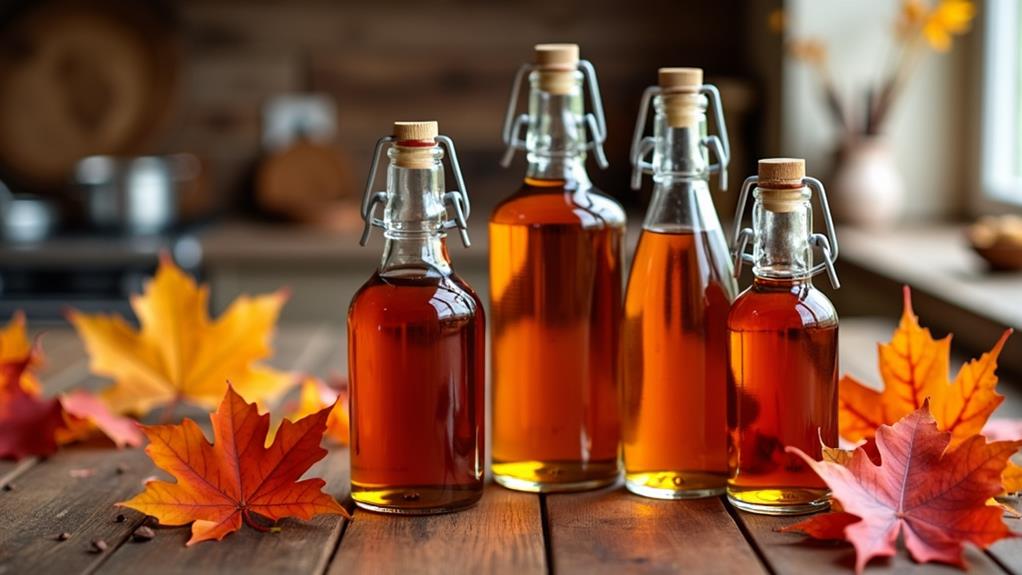
When shopping for maple syrup, you'll notice it's categorized by specific grades based on its color and flavor. The grading standards, established by the USDA, sort maple syrup into four main categories: Golden Delicate, Amber Rich, Dark Robust, and Very Dark Strong. These grades help guarantee you get a product that meets the minimum density requirement of 66 brix, vital for preventing spoilage.
Golden Delicate syrup offers a subtle maple flavor and lighter color, making it perfect if you prefer a milder taste. Darker grades like Dark Robust and Very Dark Strong provide a more intense and rich flavor, ideal for those who enjoy a bolder maple experience. The grading system was simplified in 2013 with the New International Grading System, merging U.S. and Canadian standards for clearer product choices.
Whether you're opting for organic or non-organic maple syrup, the same grading standards apply. The way maple syrup is made, including seasonal temperature changes affecting sap flow, results in varying color and flavor profiles each year. This natural variability adds to the unique charm of choosing your favorite grade of maple syrup.
Production and Storage
Maple syrup production starts with tapping sugar maple trees for sap, often during the late winter to early spring. Maple producers gather the sap and transport it in food-grade, chemical-free containers to guarantee the syrup remains uncontaminated. To make just one gallon of syrup, you must boil down about 40 gallons of sap. This intense concentration process is vital to achieve that rich, sweet flavor you love.
Proper storage is important for maintaining the quality of your syrup. Here's what you need to know:
- Store unopened containers in a cool, dark place; they can last indefinitely when stored correctly.
- Once opened, refrigerate the syrup to prevent spoilage.
- Plastic containers can store syrup for about 2 years, while glass containers can last around 3 years.
- If you notice any off smells or mold growth, don't worry. You can remove the mold by boiling the syrup, rinsing it, and repacking it.
Understanding these key points guarantees you get the most out of your natural maple syrup. By following these guidelines, you can enjoy the authentic taste of maple trees in every drop of syrup you pour.
Health Trends
In the present health-conscious society, the demand for natural sweeteners like maple syrup has skyrocketed as more people prioritize wellness. You're likely noticing more organic products on the shelves, and maple syrup is leading the charge. Recognized as a superfood, maple syrup is packed with crucial vitamins and minerals like manganese, riboflavin, and zinc, providing health benefits that refined sugars simply can't match.
Health trends are shifting towards cleaner, more natural food sources, and maple syrup fits right in. Studies show it offers a higher antioxidant value than many common fruits, making it a healthier alternative for those seeking natural sweeteners. You're not just getting sweetness; you're also getting a nutritious enhancement.
Maple syrup's natural composition, free from synthetic additives and chemicals, appeals to those of you who are health-conscious and keen on pure food sources. As clean eating gains popularity, you're likely drawn to maple syrup for its minimal processing and the absence of artificial ingredients. This aligns perfectly with the shift towards whole and natural foods. So next time you're seeking a sweetener, keep in mind that maple syrup isn't just natural; it's also packed with health benefits.
Frequently Asked Questions
Is Maple Syrup 100% Natural?
Yes, maple syrup is 100% natural. You can enjoy its health benefits and distinct flavor profiles knowing it's made purely from sugar maple sap. The production methods guarantee no additives or artificial ingredients are involved. Organic maple syrup follows strict sustainability practices, using only food-grade materials and organic defoamers. This commitment to natural processes makes maple syrup a wholesome and eco-friendly choice for your pantry.
How Is Maple Syrup Made Naturally?
You make maple syrup naturally by starting with tree tapping, where you drill holes into sugar maple trees to collect sap. During the sap collection, you gather the liquid as temperatures fluctuate. Next, the evaporation process kicks in, boiling the sap to concentrate its sugars and develop rich flavor profiles. This method requires minimal processing and guarantees the syrup retains its natural characteristics, resulting in a delicious, all-natural product.
Why Would Maple Syrup Not Be Organic?
Maple syrup might not be organic if it doesn't meet certification standards. Pesticide use during production methods can disqualify it. Also, geographical factors matter—trees tapped in areas treated with chemicals within the last three years can't produce organic syrup. Non-organic producers might skip rigorous inspections and compliance checks, so their practices could harm the ecosystem and lack the sustainable management required for organic certification.
What's the Difference Between Maple Syrup and Pure Maple Syrup?
You'll find the main difference between maple syrup and pure maple syrup in their ingredients and quality. Pure maple syrup, adhering to strict USDA standards and different maple syrup grades, offers unique flavor profiles and health benefits. It's 100% natural, perfect for cooking uses, and packed with nutrients. Regular maple syrup might contain additives, diluting its flavor and nutritional value, making it less desirable for health-conscious consumers.