What Is the Process of Egg Production?
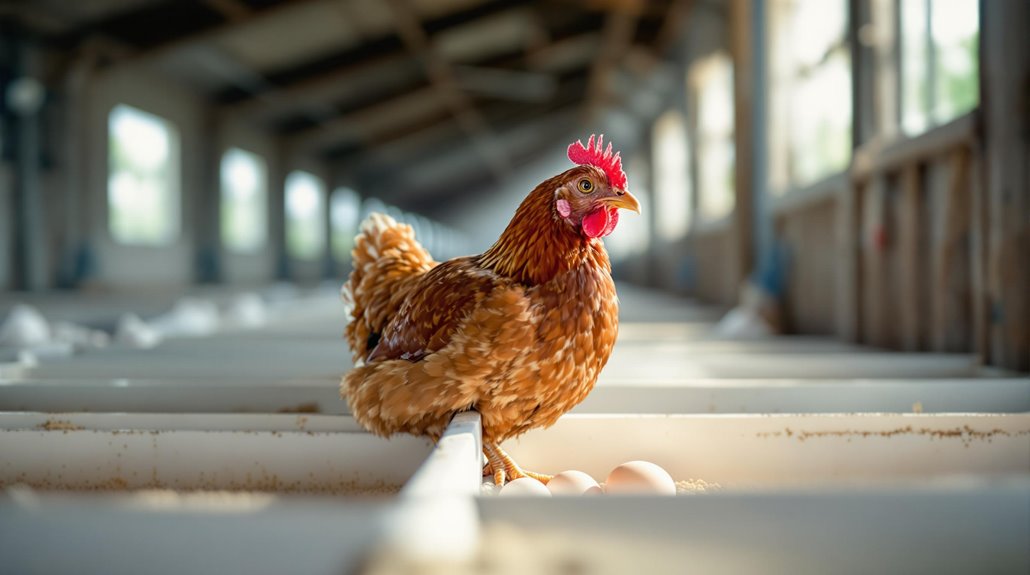
You'll find that egg production starts with day-old chicks that undergo an 18-week development period before they can lay eggs. During this time, farmers provide ideal conditions, including proper housing, nutrition, and gradually increasing daylight exposure to trigger the egg-laying cycle. Once mature, hens produce 180-300 eggs annually through a natural 23-27 hour formation process. Understanding the complete path from chick to table reveals fascinating details about modern egg farming.
The Journey From Chick to Laying Hen
Before a hen can begin producing eggs, she undergoes an 18-week development period that starts the moment she hatches. During this pivotal stage, specialized hatcheries guarantee ideal conditions for the chicks' growth before transferring them to dedicated growing facilities.
As your hens approach maturity, you'll need to carefully manage their exposure to daylight. You'll want to gradually increase the day length they experience, as this natural stimulus triggers their egg-laying cycle. Once they begin to lay eggs around week 20, you can expect peak production between 25-39 weeks of age. During this productive phase, your hens will lay eggs every 23-27 hours, with the shell formation occurring while they sleep. Well-managed hens can produce anywhere from 180 to 300 eggs annually, making them incredibly efficient food producers. Modern facilities like Hertzfeld Poultry Farms maintain strict welfare guidelines to ensure optimal egg production while prioritizing hen health and comfort.
Essential Factors in Commercial Egg Production
While successful egg production relies on multiple variables, becoming an expert in a few essential factors will heavily influence your operation's output.
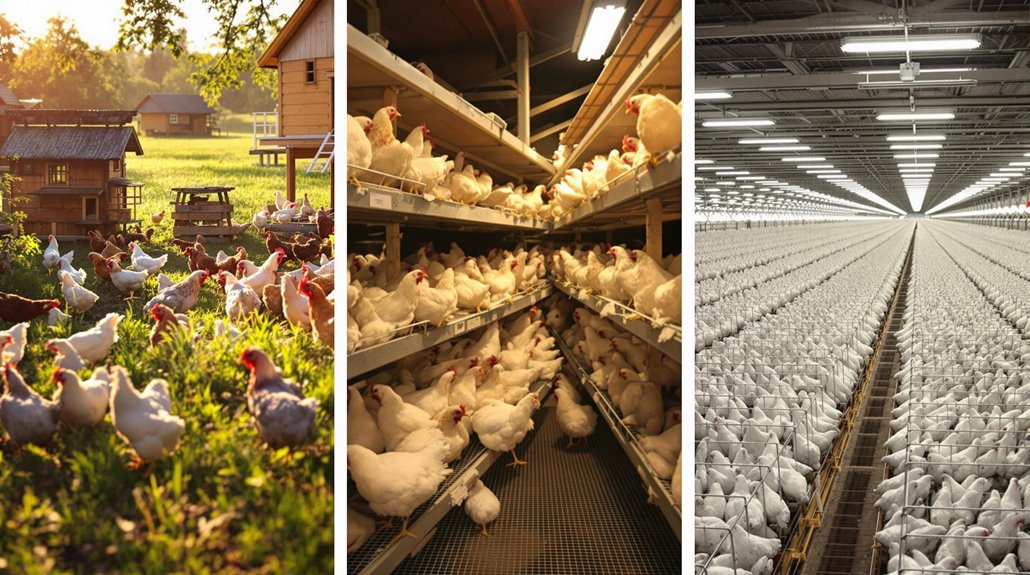
You'll need to focus on providing ideal conditions for your laying hens throughout their egg laying cycle. Start by selecting high-performing breeds that reach peak production between 25-39 weeks of age. Your choice of housing system matters - whether you opt for enriched cages, barns, or free-range setups, guarantee it meets current welfare standards.
Proper layer feed is indispensable; pay special attention to calcium levels to maintain strong eggshell quality. Remember that egg formation follows a natural 23-27 hour cycle, so you'll want to create a controlled environment that supports this process. Producers following certified humane standards must ensure hens have adequate outdoor space to forage naturally. These fundamentals are what distinguish top producers, like China and the EU's leading countries, in commercial egg production.
Modern Housing Systems and Welfare Standards
Modern housing systems have revolutionized commercial egg production, driven by heightened animal welfare awareness and regulatory changes. The EU's ban on conventional cages has altered how laying hens are housed, introducing enriched cages and alternative systems that prioritize animal welfare standards.
You'll find three main housing systems in today's egg production facilities:
- Enriched cages - providing nesting areas, perches, and dust-bathing facilities
- Barn systems - offering indoor space for natural behaviors
- Free-range setups - allowing outdoor access during daylight hours
If you're interested in organic eggs, these housing systems must meet additional requirements, including 100% organic feed and mandatory outdoor access. While these welfare-focused housing systems have increased production costs, they've considerably improved the living conditions of laying hens compared to conventional cages. A healthy hen in these modern systems can produce 200-250 eggs annually, providing a sustainable source of nutrition for consumers.
The Biological Process of Egg Formation

The outstanding process of egg formation begins when a hen reaches 18 weeks of age, triggering the development of thousands of immature yolks stored since birth. During the laying cycle, each selected yolk takes 10 days to grow before release.
Once your hen starts to lay, the egg white forms in layers of thick and thin proteins, creating the albumen. A spinning motion develops the chalazae, which keeps the yolk centered. The egg then spends an hour in the isthmus, where it gains its oval shape and membrane layers.
During egg production, the shell forms at night while the hen sleeps, requiring 4 grams of calcium. Finally, hens producing colored eggs will secrete pigments in the uterus, while white-egg layers won't. The process ends with a protective bloom coating as the egg passes through the vaginal area.
Collection and Processing Methods
Once eggs leave the nesting area, they enter a sophisticated collection and processing system designed to maintain quality from farm to market. During egg production, you'll find that automated systems quickly move fresh eggs through essential preparation stages.
The egg washing process harnesses specialized machines with either nylon or stainless steel brushes that thoroughly clean and sanitize each shell. Following this, a comprehensive egg examination confirms only the finest products move forward by scrutinizing:
- Shell integrity and cleanliness
- Albumen (white) quality
- Yolk condition and placement
After examination, egg grading machines sort the eggs by weight into standardized size categories. This efficient system guarantees you're receiving eggs that meet strict quality standards, properly cleaned, examined, and graded for commercial distribution. Every step maintains the eggs' freshness and safety.
Quality Control and Grading Systems
Building on the collection and processing methods, quality control and grading systems follow strict USDA guidelines to verify eggs meet market standards. You'll find that throughout the egg production life cycle, multiple checkpoints ascertain the quality of eggs meets industry requirements.
During egg grading, inspectors examine both interior and exterior characteristics, including shell cleanliness, shape, and thickness.
The egg industry uses specific grades: AA, A, and B. Grade AA eggs have thick, firm whites and high, round yolks. You'll notice Grade A eggs are similar but with slightly less firm whites, while Grade B eggs may have flatter yolks and thinner whites. These standards help you make informed purchases and confirm you're getting the quality you expect.
Regular testing for contaminants and proper documentation maintain the integrity of the grading system.
Environmental Impact and Sustainability Measures
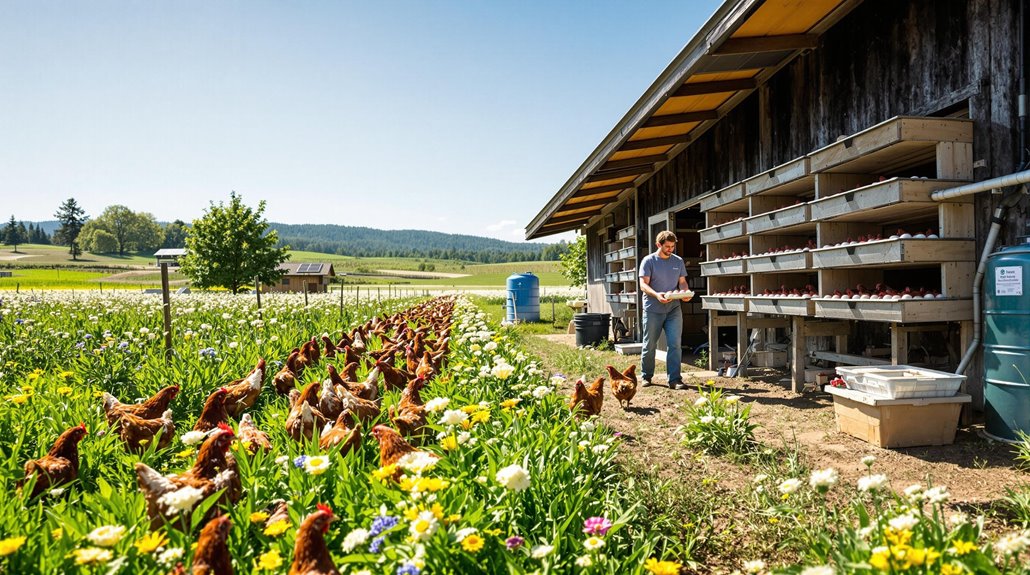
Modern egg production facilities face mounting environmental challenges, from greenhouse gas emissions to substantial water consumption and waste management issues. The environmental impact of laying hens varies extensively based on production methods, with free-range and organic systems typically having a lower footprint than conventional cage operations.
To enhance sustainability in egg production, you'll find producers implementing these key measures:
- Optimizing feed efficiency to reduce resource consumption
- Installing renewable energy systems to decrease emissions
- Implementing water conservation and recycling programs
While the industry's shift toward cage-free and free-range systems shows promise for animal welfare, it requires careful resource efficiency planning. You'll see more facilities adopting detailed approaches to environmental management, including better waste handling practices and energy-efficient technologies. These improvements help balance productivity with sustainability goals in modern egg production.