
What Do Germans Eat for Breakfast?
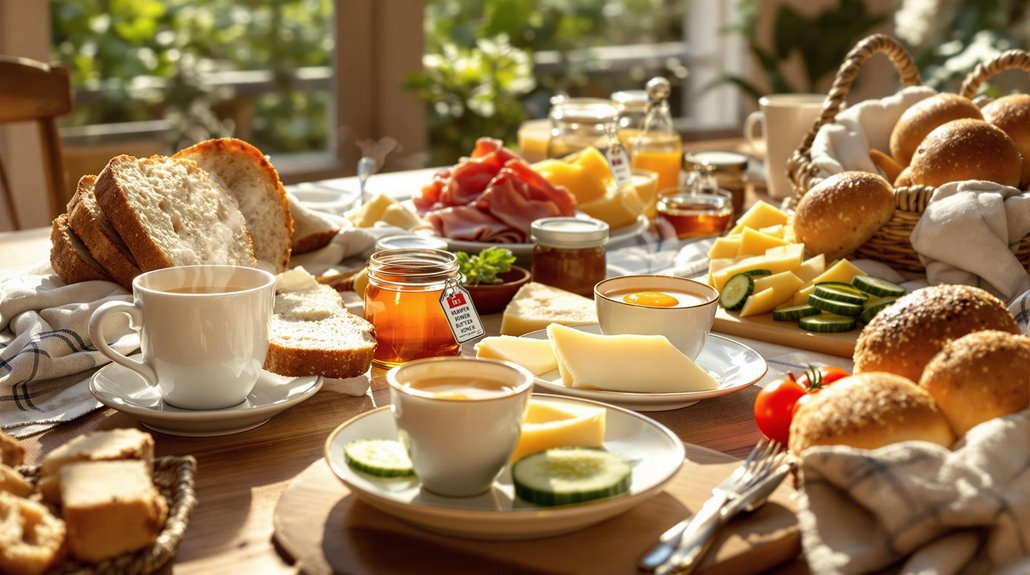
At a traditional German breakfast (Frühstück), you'll find a hearty spread that puts most morning meals to shame. You'll start with fresh Brötchen (crusty rolls) and dark bread varieties, paired with cold cuts like Black Forest ham and various wursts. Germans love their artisanal cheeses, both hard and soft, alongside homemade jams, local honey, and Nutella. This iconic breakfast experience offers just a taste of Germany's rich morning traditions.
The Cultural Significance of German Frühstück
Nearly every German recognizes breakfast, or Frühstück, as the cornerstone of their daily meals. You'll find that Germans take their morning meal seriously, following the age-old wisdom to "eat breakfast like a king." This philosophy shapes how they approach their entire day of eating.
Traditional German breakfast isn't what you might've seen in tourist-oriented articles or restaurants abroad. Instead, it's a thoughtful combination of fresh bread rolls, coffee, and various toppings that Germans actually eat in their homes every morning. The breakfast meal holds such importance in German culture that families often set aside extra time to enjoy it, especially on weekends. You'll rarely find a German rushing through their morning meal, as they view breakfast as an essential start to a productive day. While some cultures have embraced ancient pancake traditions dating back to the Stone Age, Germans have maintained their distinct breakfast customs through the centuries.
Setting the Perfect German Breakfast Table
The art of setting a German breakfast table reflects the same dedication Germans show to their morning meal ritual. When preparing your Traditional German Breakfast spread, you'll want to create an inviting atmosphere using heirloom china, matching breakfast sets, and traditional tablecloths.
Add flax linen napkins and lit candles to enhance the cozy ambiance while serving your fresh bread, rye bread, and Traditional cheeses.
- Use traditional china sets complete with egg cups, plates, and saucers for serving German bread and Bread rolls
- Arrange your meat and cheese platters featuring Black Forest ham on decorative serving plates
- Set out melamine teaspoons specifically for eggs
- Display an array of jams, honey, and fresh fruits in matching serving dishes
This thoughtful presentation changes your breakfast from a simple meal into a cherished morning experience.
For a truly international touch, serve Austrian Kaiserschmarrn as a sweet accompaniment to your traditional German breakfast spread.
Traditional Breads and Brötchen
At the heart of every German breakfast lies an impressive array of fresh breads and Brötchen, reflecting Germany's rich baking heritage of over 3,000 varieties. Germans eat everything from hearty Farmers Bread to crusty rolls and Mehrkornbrot made with multiple grains.
You'll find that a classic German breakfast always includes Brötchen, especially the white bread variety called Weiße Brötchen, known for its crispy exterior and soft center.
Many Germans make their way to the bakery every morning to pick up these essential breakfast rolls, which pack plenty of nutrients, fiber, and vitamins. A Typical German breakfast table features both traditional sourdough varieties like Sauerteigbrot and Pumpernickel, alongside various bread and rolls topped with seeds and made from wholemeal or rye flour. While waffles are now a popular breakfast choice worldwide, they weren't commonly enjoyed at breakfast until after the first waffle iron was patented by Cornelius Swartwout in 1869.
Cold Cuts and Cheeses Selection

On traditional German breakfast tables, you'll find an impressive spread of cold cuts and cheeses that perfectly complement fresh breads and rolls. Germans love their sliced meats, from salami to leberwurst, while children often favor the mild-flavored kinderwurst.
Unlike breakfast in the United States, German style morning meals emphasize savory flavors, pairing hard cheeses and pungent varieties with local breads.
- Traditional cold cuts include a variety of wursts, which are harder to find outside Germany
- Both soft and hard cheeses are served, with stronger varieties being most popular
- These proteins are often enjoyed alongside jams and local honey
- Every authentic German breakfast features multiple meat and cheese options
If you're recreating this experience at home, you might need to visit specialty stores to source genuine German cold cuts and cheeses.
Sweet and Savory Spreads
While German breakfasts feature plenty of protein-rich options, spreads play an equally important role in creating a complete morning meal. You'll find both sweet and savory varieties adorning freshly baked sourdough bread across breakfast tables throughout the country.
For those with a sweet tooth, Nutella remains a beloved breakfast food staple, while homemade jams made from strawberries, cherries, and blackberries offer fruity alternatives. Local artisanal honey adds another natural sweetness to your breakfast menu.
On the savory side, you can pair your bread with soft cheeses that spread easily, or layer on sliced salami, leberwurst, or kinderwurst for a heartier start to your day. These versatile toppings let you customize your morning meal, whether you're craving something sweet or savory.
The Art of German Breakfast Eggs
When it comes to German breakfast traditions, eggs take center stage as both a delicious protein source and a cultural ritual. You'll find that soft-boiled eggs, served in decorative egg cups with small spoons, are a quintessential part of continental-style German breakfasts. Many Germans rely on electric egg cookers to prepare their morning eggs perfectly with minimal fuss.
While soft-boiled eggs reign supreme, you'll also encounter other egg preparations:
- Fried eggs served sunny-side up, often paired with bread or potatoes
- Fluffy scrambled eggs prepared with butter and herbs
- Classic omelets filled with cheese or vegetables
- Traditional soft-boiled eggs in charming egg cups
Whether you prefer your eggs runny or firm, you'll uncover that eggs are an indispensable element of the German breakfast experience, reflecting both practicality and tradition.
Beverages and Morning Rituals
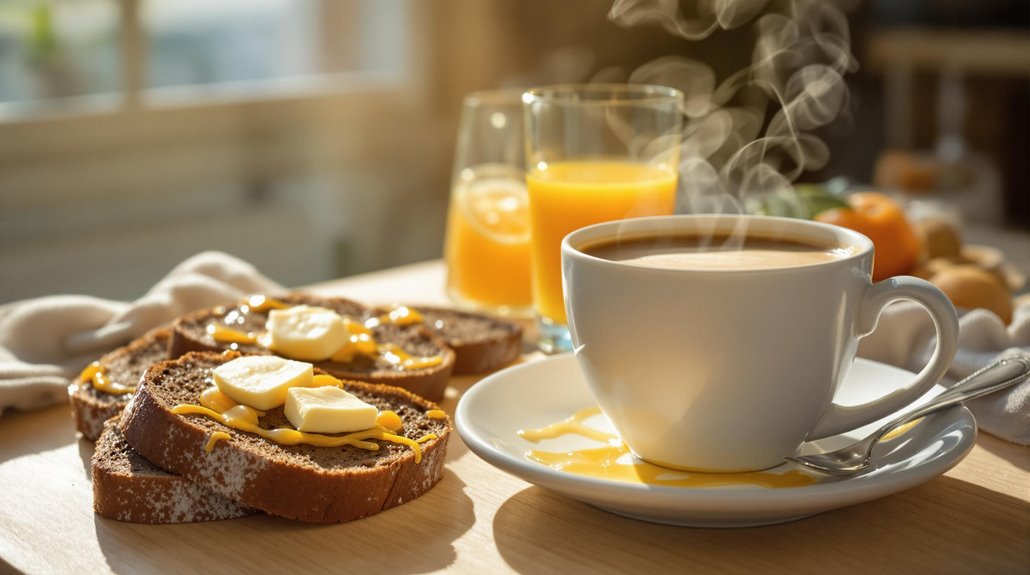
A proper German breakfast extends beyond eggs to include carefully selected beverages that complement the morning meal. You'll find freshly brewed coffee or tea taking center stage, with many Germans starting their day with a steaming cup of coffee. If you're not a coffee drinker, you might prefer black tea or herbal varieties, while children often enjoy hot cocoa.
As part of the morning ritual, you'll head to the local bakery to buy fresh bread rolls. Instead of tap water, you'll likely be served mineral water, and fruit juices are readily available too.
Don't be surprised if you're invited for a mid-morning coffee break, known as zweites frühstück. This pause in the day offers a chance to recharge with another beverage and perhaps a small snack before lunch.
Regional Breakfast Specialties
Just as Germany's terrain varies from coast to mountains, its regional breakfast specialties reflect distinct local traditions. To make a traditional German breakfast like a king, you'll uncover different types across the country.
In Bavaria, you won't find breakfast complete without Weisswürste paired with pretzels and Hefeweizen, while Rhineland's German breakfast tables feature kölsch beer with cold cuts.
Northern Germany's bold Mettbrötchen combines raw minced pork with onions on whole wheat rolls. The Swabian region puts its own spin on breakfast with hearty potato salad and sausage. Along the Schleswig-Holstein coast, smoked herring takes center stage. Rhineland residents enjoy their morning spread with pickled vegetables and local cheese.
These regional specialties showcase how good German breakfast varies dramatically from one state to the next.
Related posts