What Are the Steps in the Maple Syrup Process?
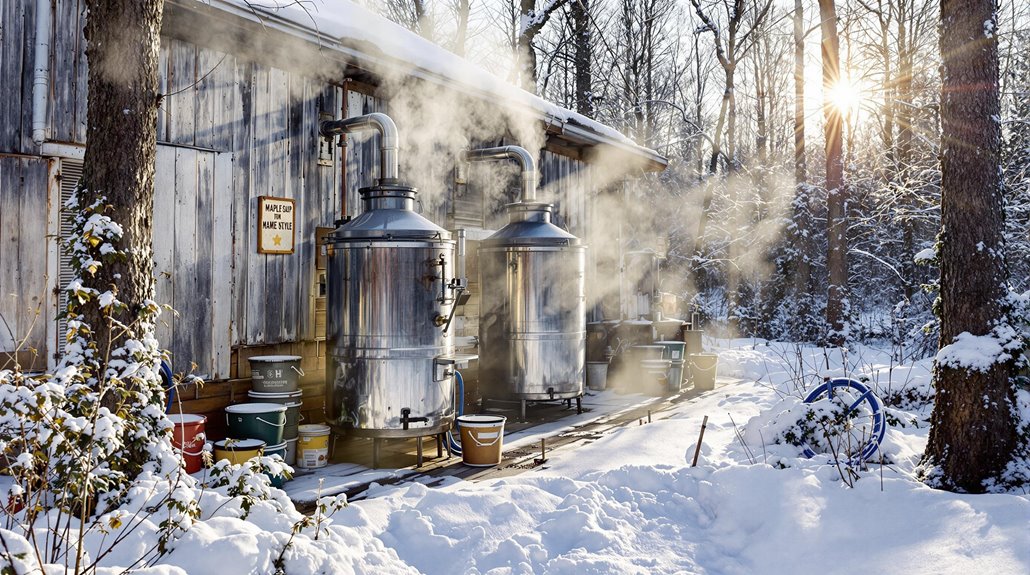
Making pure maple syrup involves five key steps that'll turn sap into sweet syrup. You'll start by selecting mature sugar maple trees and installing taps with collection systems during winter. Next, you'll harvest and store fresh sap when temperatures fluctuate between freezing nights and warm days. Then you'll boil the sap until it concentrates into syrup and filter out impurities. Guaranteeing each step's details and techniques secures your syrup reaches perfect golden perfection.
Selecting and Preparing Maple Trees
Before you can begin producing maple syrup, you'll need to identify suitable sugar maple trees (Acer saccharum) for tapping. Select maple trees that are at least 11 inches in diameter, which typically means they're around 40 years old. This size requirement guarantees the trees are mature enough to support healthy sap flow without causing damage.
Watch the weather conditions carefully to determine the ideal time to start the sugaring season. You'll want temperatures that fall below freezing at night and rise above freezing during the day to maximize sap flow and sugar content.
When conditions are right, drill a small tap hole into the tree at a slight upward angle. Insert a spout, also called a spile, into the hole to direct sap from the tree into your collection system. Traditional Indigenous peoples used diagonal slashes on maple trees instead of drilled holes to extract the sweet sap.
Installing Taps and Collection Systems
Once ideal weather conditions arrive, you'll need to install the maple tree taps and collection system. Begin by drilling 5/16-inch holes at chest height into your maple trees. Insert spiles (taps) into these holes, which will allow the sap to flow out of the tree. You can choose between two collection methods: traditional collection buckets hung directly on the taps, or a modern tubing system that connects multiple trees.
For larger operations, consider installing vacuum pumps with your tubing system to increase sap yield and efficiency. As the sap flows, it'll be transported to your sugarhouse, where you'll store it in food-grade containers. Remember to process the collected sap quickly to maintain its quality and prevent fermentation. Each tree can produce 1 to 3 gallons of sap daily during the season. The optimal sap collection period occurs during mid-January to mid-April, when temperature fluctuations trigger the best sap flow.
Harvesting and Storing Fresh Sap
During the maple season, you'll need to monitor your sap collection system daily to guarantee proper harvesting. The sap to flow process depends on freezing nights and warm days, which create ideal conditions for sugar maple trees to release their precious liquid. As you collect sap from your buckets or tubing system, remember that each tree needs proper attention to maintain a clean and efficient harvest.
Since it takes 40 gallons of sap to make just one gallon of maple syrup, vital storage of collected sap is critical for successful maple syrup production. You'll want to transfer the sap immediately into food-grade containers and keep it cold, either through refrigeration or freezing. This prevents fermentation and maintains the sap's natural 2% sugar content, ensuring the highest quality final product. Modern operations often utilize reverse osmosis technology to concentrate the sap's sugar content before processing, significantly reducing the water that needs to be evaporated.
Boiling and Concentrating the Sap
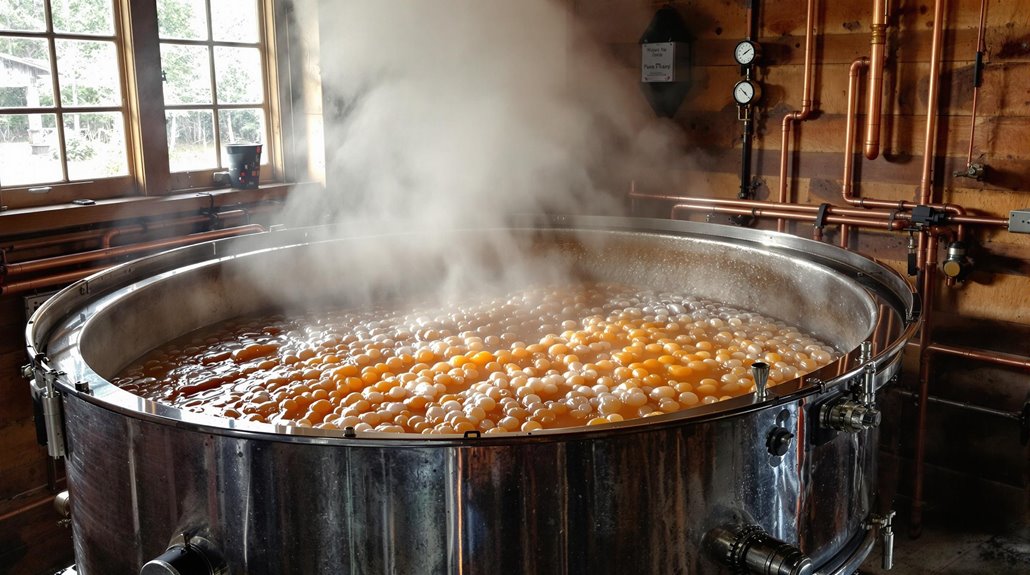
The steaming evaporator pan converts raw maple sap into golden syrup through a careful boiling process. In the sugar shack, you'll find sap from sugar maple trees being altered as it flows through stainless steel equipment. During Maple Production, you'll need about 40 gallons of sap to make one gallon of syrup.
Many producers now use a reverse osmosis machine to concentrate the sap before boiling, which saves time and energy. As you monitor the boiling point and specific gravity, the sap gradually thickens from 2% to 66% sugar content. During this process, the Maillard reaction creates the rich flavor and amber color you love in pure maple syrup. You'll know your syrup is ready when it reaches the proper density after several hours of boiling the sap.
Filtering and Packaging Pure Maple Syrup
After reaching the proper density, your maple syrup must undergo careful filtering to remove any remaining impurities. You'll use either a wool filter or a more sophisticated filter press to guarantee your pure maple syrup is crystal clear. Quality control is essential at this stage, as the product must be 100% pure with zero compromises.
Once filtered, your syrup will be graded into one of four classifications based on its color and taste characteristics, though each grade contains identical sugar content. You'll then need to package the syrup while it's hot, at precisely 190°F. The immediate sealing of containers prevents any potential contamination. Whether you're selling retail or wholesale, you can package your syrup in various container sizes to meet your customers' needs.