What Are Scotched Eggs?

Scotch eggs are a classic British pub snack that you'll find both filling and flavorful. They consist of hard-boiled eggs wrapped in seasoned pork sausage meat, coated in breadcrumbs, and deep-fried until golden brown. While Fortnum & Mason claims to have invented them in 1738, they may have been inspired by India's nargisi kofta. From traditional recipes to modern vegan versions, there's much more to explore about this iconic British creation.
The Rich History Behind Britain's Beloved Pub Snack
How did a humble egg wrapped in sausage meat become one of Britain's most iconic pub snacks? While you might think the scotch egg has Scottish roots, the name actually refers to a cooking process rather than its origin. The earliest documented recipe comes from London's Fortnum & Mason in 1738, though some believe it drew inspiration from India's nargisi kofta.
You'll find this combination of boiled egg wrapped in sausage has evolved far beyond its beginnings. Creative variations like the Manchester egg, which features a pickled egg surrounded by local pork and black pudding, show how versatile the recipe can be. Once served merely as an appetizer, the scotch egg gained new status in 2020 when it was recognized as a more substantial dish, leading to increased popularity and inspiring cooking competitions nationwide. Much like sugar and lemon pancakes in England, the scotch egg demonstrates how simple ingredients can create a beloved cultural dish.
Essential Ingredients and Traditional Preparation
To create an authentic Scotch egg, you'll need just a handful of essential ingredients that come together to form this beloved British classic. The preparation starts with perfectly hard-boiled eggs wrapped in seasoned pork sausage meat. You'll then coat your sausage-wrapped eggs in all-purpose flour, followed by beaten egg and crispy breadcrumbs before deep-frying them to golden perfection.
- Fresh eggs (hard or soft-boiled to your preference)
- High-quality pork sausage meat
- All-purpose flour for the first coating
- Beaten eggs for the egg wash
- Fresh breadcrumbs for the crispy exterior
The traditional preparation method hasn't changed much since the 1880s, when these savory treats were known as "birds nests" in Scotland - a name that's still used today in countries like Belgium and the Netherlands. Much like ancient Roman pancakes, these savory delights incorporate basic ingredients like eggs and flour to create a timeless dish.
Mastering the Perfect Scotch Egg at Home
Making perfect Scotch eggs at home requires both precision and practice. Start by gently lowering your eggs into simmering water until they're hard-boiled, then carefully peel the eggs.
Mix your favorite sausage with herbs and spices, then wrap each egg completely in this seasoned mixture.
For the crispy exterior, roll your sausage-wrapped eggs in breaded coating until they're fully covered. When you're ready to cook, heat your oil and fry them until they're golden brown. You'll know they're done when the sausage is fully cooked and the outside is crispy.
Store any leftovers in an airtight container lined with parchment paper. While some suggest using lime powder to preserve them longer, they'll stay fresh in your refrigerator for up to four days. Reheat them in your oven or air fryer to maintain their crunch.
Like the versatile Frittata in Italy, Scotch eggs have become a beloved dish that combines eggs with savory ingredients to create a satisfying meal.
Modern Twists and Regional Variations
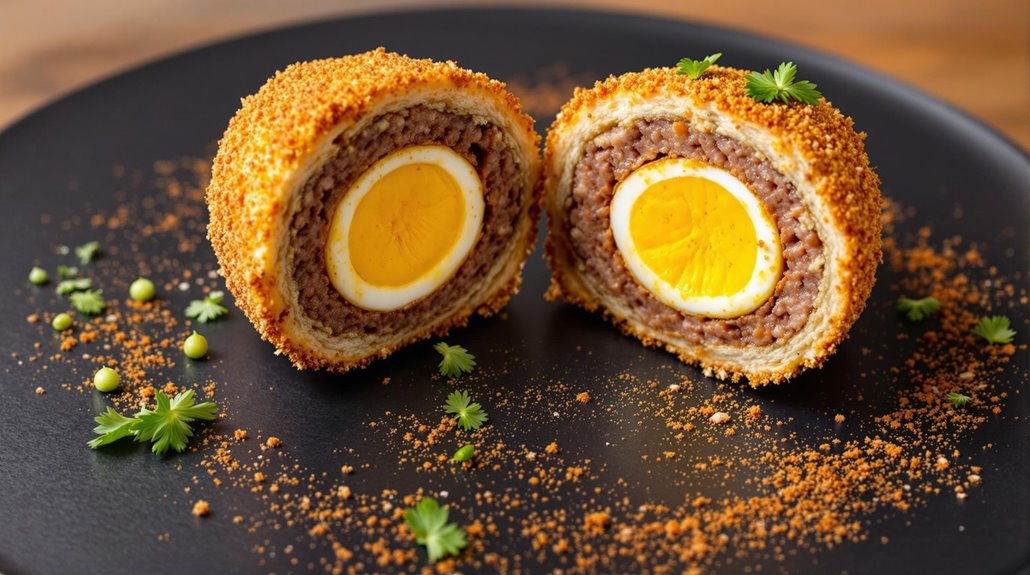
While traditional Scotch eggs maintain their beloved status, creative chefs and home cooks have reimagined this classic dish with modern interpretations. You'll find everything from a record-breaking 8.341-kilogram vegetarian version to the Manchester egg's regional twist featuring pickled eggs and black pudding.
Even Michelin-starred restaurants like The Harwood Arms showcase the dish's versatility with their vegetarian take.
- World's largest vegetarian Scotch egg weighs over 8 kilograms
- Manchester's unique version combines pickled eggs with Lancashire black pudding
- The Harwood Arms offers an upscale vegetarian interpretation
- Tesco markets vegan alternatives for plant-based diets
- In the Netherlands and Belgium, they're known as "vogelnestje" (little birds nest)
These innovative variations prove that Scotch eggs continue to evolve while honoring their culinary heritage.
Serving, Storing, and Reheating Tips
Whether you're serving Scotch eggs at a picnic or storing them for later enjoyment, proper handling guarantees the best taste and texture. You can serve these wrapped in sausage delicacies as appetizers with paper towels underneath to absorb any excess oil. For the best dining experience, pair them with a fresh side salad or your favorite dipping sauce.
If you're making them ahead, you can prepare Scotch eggs one day in advance, but fry them just before serving for ideal crispiness. Store any leftovers in the refrigerator for up to three days. When it's time to reheat, skip the microwave to avoid a soggy crust. Instead, warm them in a 350°F oven or, better yet, use an air fryer to maintain that wonderful crunch. Don't freeze them, as this can compromise their texture.