Waffle-Related Myths and Legends
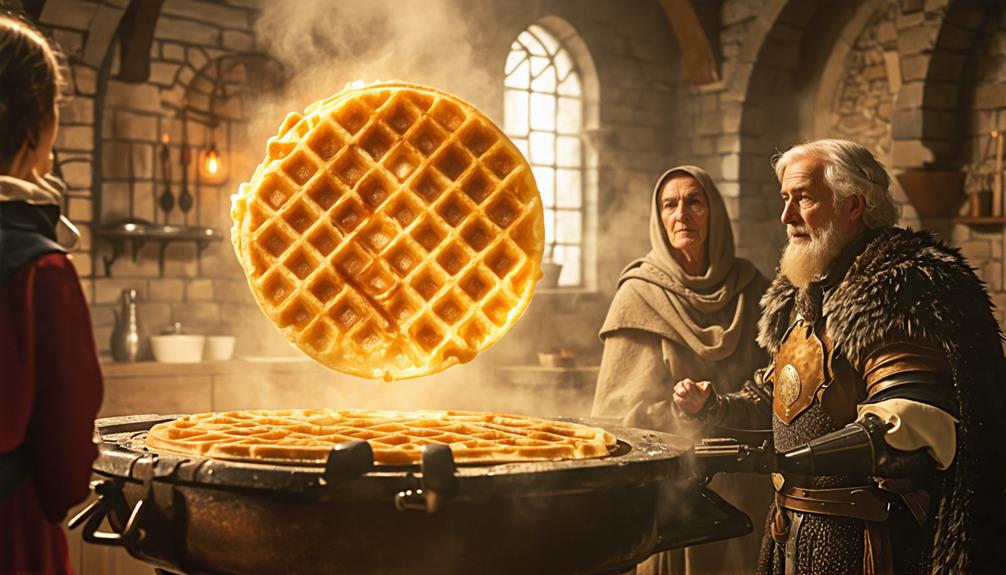
When you sit down to enjoy a waffle, you might not realize its history includes fascinating myths and legends. For example, one tale claims a crusader's mishap with oat cakes accidentally led to the grid pattern of modern waffles. Another story suggests blacksmiths played a role in shaping the flavors and appearance of this dish. These myths show how everyday events can become culinary traditions over time. If you're curious about how these myths evolved or what other legends surround waffles, there's much more to explore.
Ancient Greek Origins
Waffles trace their origins back to ancient Greece, where they started as flat cakes called "obleios." These simple creations were made from flour and water and cooked between heated metal plates. Unlike today's waffles, obleios were not sweet. They reflect the straightforward cooking practices of ancient Greece, focusing on basic, readily available ingredients.
Obleios were more than just everyday food; they often had symbolic meaning. In religious ceremonies, obleios were linked to the Christian tradition of communion, serving as spiritual symbols during sacred rituals. This gave obleios a significant role in the cultural and spiritual life of ancient Greek society.
The Greek method of cooking batter on heated plates laid the foundation for modern waffle-making techniques. The word "waffle" comes from the Old French "guafre," but its roots are tied to these ancient Greek practices. By understanding the role of obleios in both religious and daily life, you can appreciate how these simple flatcakes evolved into the waffles we enjoy today.
Medieval Myths and Stories
In medieval times, some legends claim that waffles originated from a knight's mishap. According to these stories, the knight accidentally sat on an oat mixture, which formed the now-iconic grid pattern. Others suggest that a blacksmith crafted the honeycomb design to enhance flavor retention. When Crusaders introduced spices like honey and cinnamon, these new flavors made waffles a favorite among the wealthy.
Crusader's Accidental Creation
Imagine a Crusader returning home from battle, tired and hungry. As he rests, he unknowingly sits on a batch of oat cakes. The weight of his armor leaves unique imprints on the cakes. This accidental act leads to an unexpected culinary innovation in medieval Europe. His wife notices that the butter on these flattened oat cakes stays within the intricate designs of his armor, enhancing their flavor.
They decide to name this new treat "warfres," inspired by the checkerboard pattern left behind. This creation sparks a weekly tradition, embedding the waffle into their lives and adding a new dimension to medieval culinary practices.
The story of the Crusader's accidental creation highlights how everyday life can lead to culinary innovations. Here are the key elements of the legend:
| Crusader's Role | Culinary Innovation | Cultural Significance |
|---|---|---|
| Sat on oat cakes | Butter enhancing flavor | Weekly tradition |
| Armor imprints | Created "warfres" | Lasting legacy |
| Serendipitous event | Checkerboard pattern | Medieval society |
This tale shows how simple incidents can lead to lasting culinary traditions.
Knight's Honeycomb Pattern
The Crusader's accidental creation wasn't the only unexpected moment in waffle history. According to medieval legend, a knight once left an imprint on his meal. While eating, the knight's armor supposedly pressed a grid design onto his food. This led to the honeycomb pattern we now see in waffles. The pattern, called "gaufre" in French, meaning honeycomb, became a key feature in European culinary traditions.
Medieval blacksmiths began making waffle irons with detailed designs, including the honeycomb pattern. These irons showed the blacksmiths' skill and had a practical purpose. The grooves allowed toppings and syrup to settle in, improving the waffle's flavor and look.
In the Middle Ages, waffles were more than a tasty treat; they were cultural symbols. They often had religious symbols and family crests, reflecting the artistry of the time. The knight's accidental imprint became an important moment in waffle history, combining practicality with beauty, and making the honeycomb pattern a lasting part of culinary tradition.
The Crusader's Accident
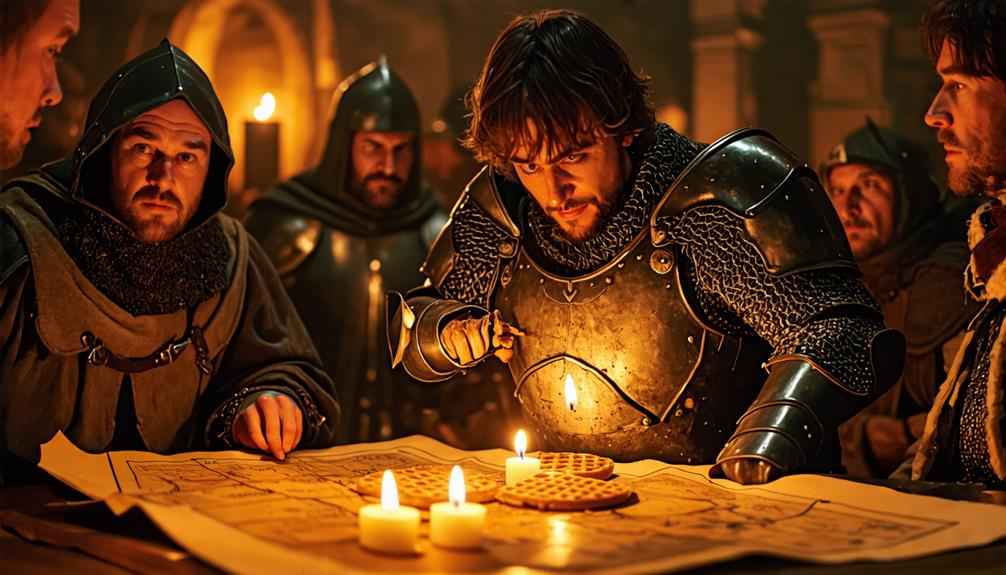
How did a simple accident lead to one of today's most beloved breakfast foods? The legend begins with a Crusader who, after a long day, accidentally sat on some oat cakes. The pressure from his armor created a unique pattern on the cakes and trapped the butter, improving their flavor. This unexpected treat was called "warfres," named after the checkerboard pattern, and soon became a favorite weekly snack for the Crusader and his wife.
In medieval times, this new bread captured people's imagination. The term "gaufre," which means "honeycomb" in French, was inspired by the grid pattern of medieval waffle irons. These irons were designed to mimic the armor's imprint, leading to the waffles we know today. Over time, different European cultures adopted and adapted the dish, each adding their own twist.
This story shows how a simple mishap can start a culinary revolution. Waffles evolved from a medieval delicacy to a popular street food, enjoyed by people of all social classes. They became a significant part of European culinary traditions.
Waffles in Religious Rituals
During the Middle Period, waffles played a significant role in religious rituals, particularly during Christian fasts. Unlike the sweet treats we know today, these waffles often accompanied communion wafers, highlighting their sacred role in the Catholic Church.
These early waffles were more than just food; they were decorated with religious symbols and Biblical scenes, emphasizing their spiritual importance. The Church used these decorated waffles to enhance the ceremonial aspects of their rituals. In a religious feast, each waffle served not only as sustenance but also as a reflection of faith and artistic expression.
The Catholic Church allowed waffle designs to feature family crests and landscapes, making them personal and meaningful. With the introduction of new spices by the Crusaders, the flavors of these waffles became more complex and appealing, adding another layer of enjoyment to religious festivities.
Over time, waffles evolved from strictly religious symbols to popular foods across all social classes. This adaptability shows their cultural significance and lasting appeal. So, next time you enjoy a waffle, remember its rich history and its once-central role in religious rituals.
Evolution of Waffle Irons

Using a 14th-century waffle iron involved cooking batter over an open fire with metal plates on long handles. In 1869, Cornelius Swarthout improved the design, making it safer and leading to the first American patent and National Waffle Day. By 1911, General Electric introduced electric waffle irons, transforming kitchen practices. Today, modern non-stick versions make waffle-making easy and efficient.
Early Waffle Iron Designs
Waffle irons have evolved significantly, reflecting advancements in technology and changing culinary needs. The journey began in the 14th century with simple waffle irons used to cook batter over an open fire. These early models had two metal plates with wooden handles. Cornelius Swarthout made a major advancement in 1869 by patenting the first American model. His design included a mechanism for easier flipping and uniform cooking, making it more user-friendly.
Key milestones in early waffle iron designs are:
- 14th-century iron: basic metal plates with wooden handles.
- Cornelius Swarthout's 1869 patent: more efficient and user-friendly.
- Electric waffle iron by General Electric in 1911: consistent heat distribution.
- Instant waffle mixes in the 1930s: popularized homemade waffles.
- Belgian waffles at the 1939 New York World's Fair: introduced new iron styles.
The electric waffle iron introduced by General Electric in 1911 transformed waffle-making. It provided consistent heat distribution and was easy to use. This innovation paved the way for Belgian waffles, which gained popularity at the 1939 New York World's Fair.
Advancements in Electric Irons
Electric waffle irons have significantly improved since the early 20th century. Before these inventions, making waffles required open flames and constant attention. Cornelius Swarthout's 1869 patent made home waffle-making possible, but it was General Electric's 1911 electric waffle iron that brought real change. It eliminated the need for open flames and provided consistent results.
The popularity of waffles increased with these innovations. The Belgian waffle, introduced at the 1939 New York World's Fair, demonstrated how modern waffle irons could handle thicker, yeast-leavened batters. This was not just a tasty treat but also a milestone in waffle iron technology.
In the 1970s, frozen waffles changed breakfast routines again. These became common in American homes, due to mass production enabled by advanced electric waffle irons. People could now enjoy waffles quickly and conveniently any day of the week.
From open flames to electric consistency, the evolution of the waffle iron reflects our pursuit of ease and perfection. Today, your morning waffle is the result of decades of innovation.
Waffles in Colonial America
Waffles in Colonial America
Dutch settlers introduced waffles to Colonial America in the early 1620s. They brought the tradition of cooking these treats over open fires. Waffles quickly became popular among the colonists due to their simple recipe and easy preparation.
In 1789, Thomas Jefferson returned from France with a long-handled waffle iron. This tool played a key role in popularizing waffles in America. Jefferson's enthusiasm for this European treat helped spread its popularity across the colonies.
Key points about waffles in Colonial America:
- Dutch settlers influenced Colonial American cuisine.
- Thomas Jefferson introduced the waffle iron.
- Cooking methods shifted from open fires to more modern techniques.
- Waffles became a versatile meal option.
- Waffles eventually rose to become a common breakfast item.
The first American waffle iron was patented by Cornelius Swarthout in 1869. This further solidified waffles' place in American culture. By the 19th century, waffles were often paired with maple syrup, an affordable and accessible topping for many families.
Jefferson's Waffle Legacy
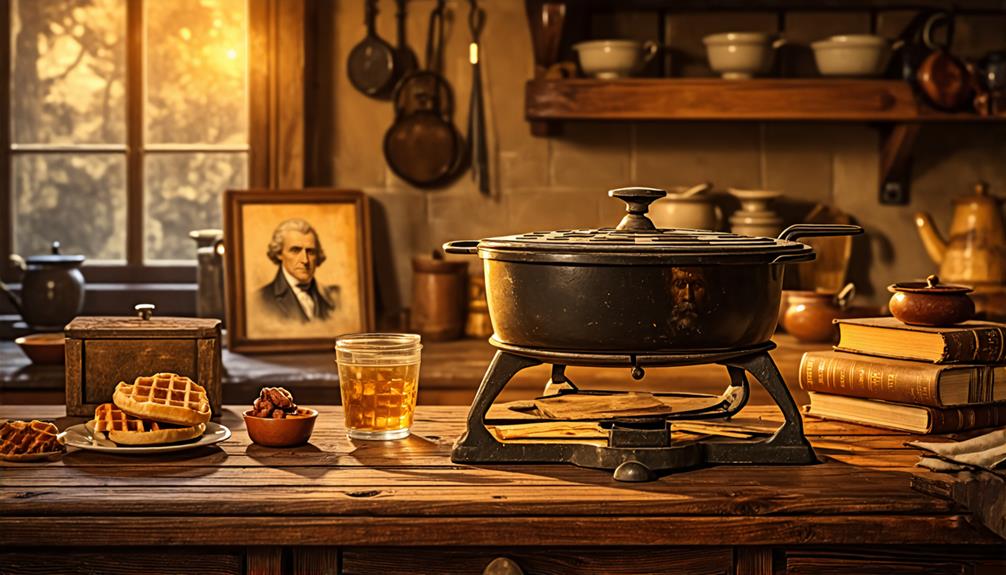
Thomas Jefferson significantly influenced the history of waffles in America. He brought a long-handled waffle iron from France and hosted waffle gatherings at Monticello. This helped popularize waffles and set new culinary standards. Jefferson's efforts transformed waffles into a popular breakfast choice and led to the variety of waffle styles we see today.
Jefferson's Waffle Iron
Thomas Jefferson brought the long-handled waffle iron to America after visiting France in the late 18th century. This tool changed American breakfast culture by making it easier for families to make waffles at home. The waffle iron he introduced allowed for efficient production, reflecting the culinary trends of that era.
Jefferson's impact extended beyond just introducing a new kitchen tool. His love for French cuisine and his efforts to incorporate it into American life made waffles more popular. By promoting these treats, he helped transform them from a European delicacy to a common part of American breakfasts.
Key points about Jefferson's waffle iron:
- It allowed families to produce waffles at home efficiently.
- It introduced a new social activity around breakfast—waffle gatherings.
- It helped popularize French culinary influences in America.
- It led to many adaptations and styles of waffles.
- It paved the way for the modern American breakfast.
Jefferson's influence on American breakfast culture is clear, with the waffle iron playing a crucial role.
Waffle Frolics Tradition
Jefferson's introduction of the long-handled waffle iron marked the beginning of an enduring American tradition: the waffle frolic. In 1789, Thomas Jefferson brought back a waffle iron from France, introducing a new way for Americans to gather and enjoy breakfast food. By hosting "waffle frolics" at his plantation, Jefferson highlighted the joy of culinary experiences and the social potential of waffles.
These events were more than just meals; they were social gatherings where friends and family enjoyed waffles with various toppings. Tables were filled with bowls of syrup, fresh berries, whipped cream, and even savory options like cheese and ham. This communal, festive atmosphere made waffle frolics a cherished tradition.
At a typical waffle frolic, you might have seen:
| Toppings | Description | Popularity |
|---|---|---|
| Maple Syrup | Classic and sweet | High |
| Fresh Berries | Tart and juicy | Medium |
| Whipped Cream | Light and fluffy | High |
| Cheese | Savory and rich | Medium |
| Ham | Salty and hearty | Low |
Jefferson's influence went beyond the waffle iron. His waffle frolics promoted a tradition of hospitality and breakfast food enjoyment that continues to shape American culture today.
Influence on American Cuisine
Thomas Jefferson's introduction of the waffle iron had a lasting impact on American cuisine. In the late 18th century, Jefferson brought a long-handled waffle iron from France to the United States. This simple act set the stage for the widespread popularity of waffles in America.
Jefferson hosted "waffle frolics" at his home, Monticello. These events showcased freshly made waffles and turned a European delicacy into an American favorite. His passion for French cuisine, including waffles, influenced American culinary practices. At these social gatherings, guests enjoyed the versatility and appeal of waffles, helping them gain popularity.
Waffles evolved from a niche delicacy to a common breakfast staple across the nation. Jefferson's introduction of the French waffle iron, his waffle frolics, and the spread of new cooking techniques all contributed to this transformation. Over time, waffles became commercialized, with frozen varieties available in stores.
Thanks to Jefferson's efforts, waffles moved beyond elite circles and became a part of American cuisine. Today, whether enjoyed as sweet breakfast items or savory dishes, waffles owe their place in American kitchens to Jefferson's influence.
Belgian Waffle Debut
The Belgian waffle made its American debut at the 1964 New York World's Fair. Maurice Vermersch, a Belgian citizen, introduced the Brussels waffle at the fair. He served it with toppings like powdered sugar, strawberries, and whipped cream. This waffle stood out because of its yeast-based batter and deep pockets, giving it a light and airy texture, unlike the traditional American waffle.
At the fair, Americans began calling the Brussels waffle a "Belgian waffle." This term was somewhat incorrect, as it did not refer to the thicker and sweeter Liège waffle, which many Americans had not yet tried. Despite this confusion, the Belgian waffle's introduction was a big success, making it a favorite in the U.S.
Its popularity grew as people enjoyed its taste and toppings. Belgian waffles soon became common in restaurants and homes, changing the American breakfast scene. The 1964 introduction at the fair is the reason for the widespread love of Belgian waffles today.
Modern Waffle Innovations

Modern waffle innovations have significantly improved our experience with this popular breakfast staple. Since the early 20th century, waffle irons have evolved from stovetop models to electric versions, making waffle preparation easier and faster. Simply plug in the machine, and you're ready to cook.
The advent of non-stick coatings, such as Teflon in 1938, further simplified the process. These coatings make it easy to release the waffles and clean the waffle iron afterward. By the mid-20th century, frozen waffles became available, thanks to advanced machines and brands like Eggo. This made breakfast quick and accessible for everyone.
Belgian waffles entered the American scene in 1964 at the New York World's Fair, offering a dessert-style option that became widely popular. Today, modern waffle advancements include a variety of flavors, gluten-free options, and gourmet toppings.
Key modern waffle improvements include:
- Electric waffle irons for quick and easy cooking
- Non-stick coatings for hassle-free cleaning
- Machines that produce frozen waffles for mass distribution
- The popularity of Belgian waffles in the U.S.
- Diverse flavors and ingredients to meet various dietary needs and tastes
Global Waffle Variations
Across the globe, waffles come in various forms that reflect regional culinary traditions. In Belgium, Liege waffles are popular street food. They are sweet and chewy, made with pearl sugar that caramelizes during cooking for a crunchy texture. Brussels waffles are different; they are light, fluffy, and have deep pockets. Typically, they are served with minimal toppings like powdered sugar or fresh fruits. American waffles are versatile and often topped with maple syrup, whipped cream, and fruits, making them a breakfast favorite.
In the Netherlands, Stroopwafels are a common treat. They consist of two thin waffles filled with caramel syrup. People often enjoy them with coffee or tea, which softens the filling for a gooey texture. In Hong Kong, Bubble Waffles are popular street food. They have a unique egg-like shape and a crispy exterior, often filled with various toppings and fillings.
Each type of waffle offers a unique taste experience, showing how waffles have become a global culinary phenomenon.