The Science of Bacon Texture: What Makes Bacon Crispy or Chewy?
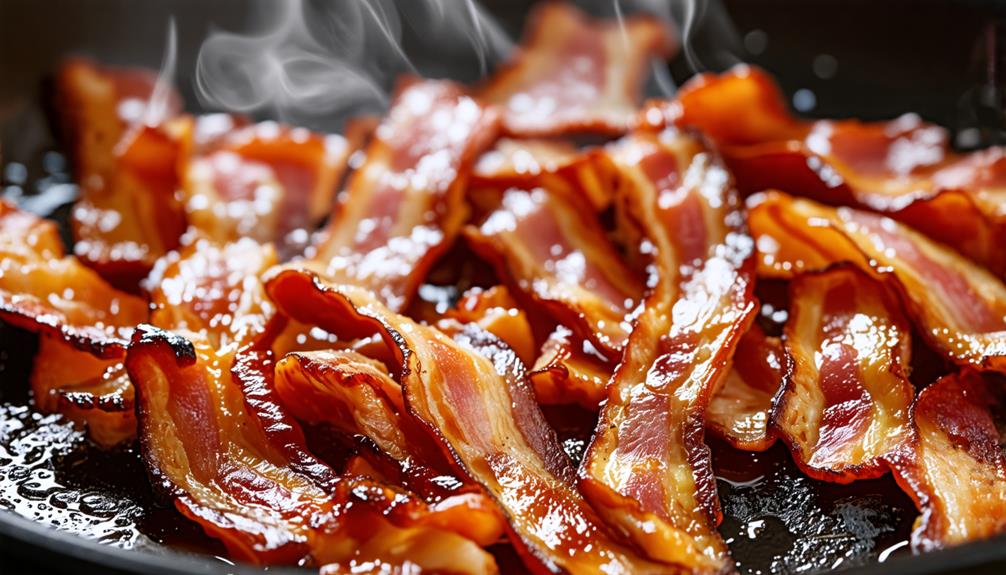
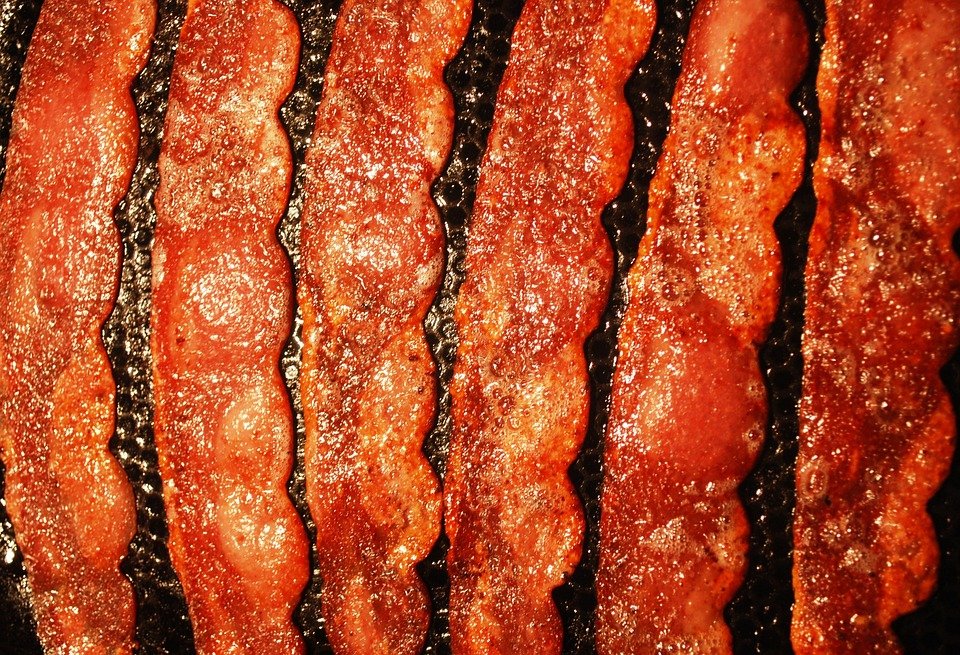
When you think about the ideal strip of bacon, do you prefer it crispy or chewy? The texture you love depends on more than just cooking time. It's influenced by fat-to-protein ratios, cooking methods, and slice thickness. High heat can make bacon crispy by rapidly melting fat and coagulating proteins. Lower temperatures preserve a chewy texture by rendering fat more slowly. So, what's the best way to achieve your favorite consistency? Let's explore how different techniques and choices impact that delicious bite.
To make bacon crispy:
- Use high heat.
- Cook in a preheated oven at 400°F for 15-20 minutes.
- Place slices on a wire rack over a baking sheet for even cooking.
To make bacon chewy:
- Use lower heat.
- Cook in a preheated oven at 325°F for 20-30 minutes.
- Lay slices directly on a baking sheet to retain more fat.
Choose thin slices for crispiness and thicker slices for a chewier texture. Experiment with these methods to find your ideal bacon.
Role of Fat and Protein
Understanding the role of fat and protein in bacon is essential for mastering its texture. The fat-to-protein ratio in bacon largely determines whether it turns out crispy or chewy. As you cook bacon, the fat melts and cooks out, while the protein coagulates. This transformation is key to achieving the desired texture.
Cooking temperature is crucial. At higher temperatures, the fatty acids in bacon break down quickly, making it crispier. If you prefer a chewier texture, cook bacon at a lower temperature. This allows the fat to render more slowly, preserving some chewiness.
The Maillard reaction also plays a part. This chemical process occurs when proteins and sugars in bacon are exposed to heat, creating complex flavors and crispy edges. For thicker cuts, more cooking time is needed to ensure the fat is fully rendered, whether you want it crispy or chewy.
Mastering these elements—fatty acids, cooking temperature, and the Maillard reaction—gives you control over bacon's final texture.
Cooking Methods
Cooking bacon to perfection requires choosing the right method for your desired texture. For crispy bacon, start with a cold skillet over medium heat. This ensures even fat rendering without burning the edges. Alternatively, bake bacon on parchment paper at 400°F for 15-20 minutes. This method offers consistent crispiness and minimal cleanup, ideal for larger batches. For uniformly crispy bacon in less time, use an air fryer. Set it to 400°F for about 8 minutes. Air frying provides evenly crispy bacon, but you'll need to drain the drippings between batches to prevent smoking.
If you prefer chewy bacon, the sous vide method is best. Cook the bacon at a low temperature for a long time to retain its moisture. Finish with a quick sear for a balance of chewiness and slight crispiness. Microwaving bacon takes just 4-5.5 minutes, resulting in a chewy texture due to moisture loss. However, it often lacks the crispy texture of other methods, making it less popular for those who want a crunch.
Choose your method based on your texture preference and enjoy!
Bacon Thickness
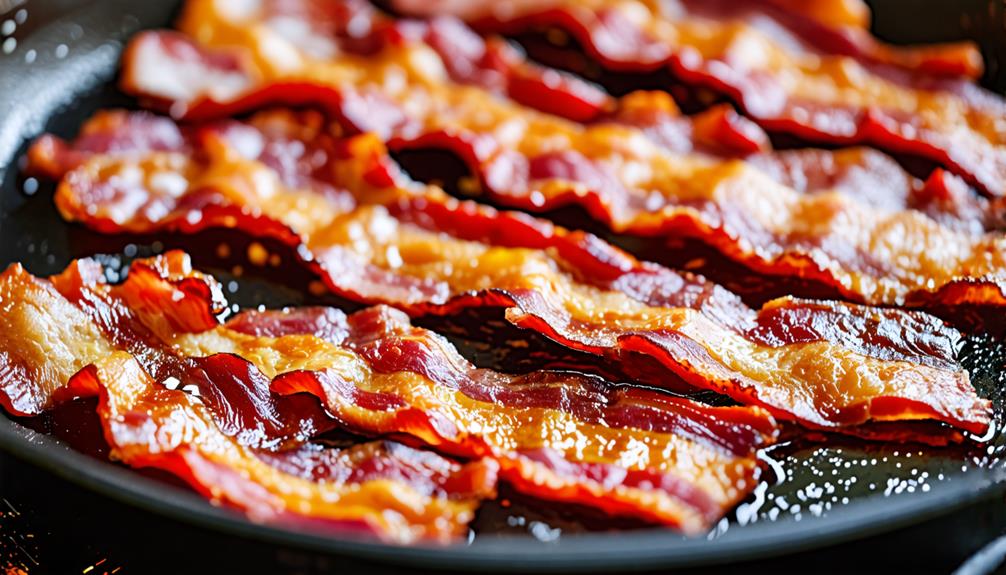
Perfecting your bacon texture depends largely on the thickness of the slices. Thinner slices cook faster and become crispy more quickly. Thick-cut bacon takes longer to cook and can be chewier if not cooked thoroughly.
When microwaving, thin slices need about 4 to 5.5 minutes, while thick-cut bacon takes around 5 to 6 minutes. This difference affects doneness and crispiness. For pan-frying, thin slices achieve crunchiness in roughly 7 to 10 minutes. Thick slices may require 11 to 13 minutes to render fat and develop a crunchy exterior.
Baking shows even more variation. Thick-cut bacon baked at 400°F generally needs around 24 minutes to become crispy. Regular-cut bacon only needs about 18 minutes. Thicker slices render more fat, leading to a chewier texture if not cooked long enough. To achieve your desired texture, adjust cooking time based on slice thickness.
Temperature and Time
Achieving the perfect bacon texture depends on the balance of temperature and time. For crispy bacon, use a higher temperature around 400°F and a shorter cooking time, typically 15-20 minutes. This method quickly evaporates moisture, giving you a crunchy texture.
If you prefer bacon chewier, lower the temperature. Cooking at a lower heat retains moisture and allows fat to render, resulting in a softer bite. Using a cold skillet over medium heat is effective for this, as it lets the fat render slowly and evenly.
Different cooking methods also affect texture. Bacon in an air fryer can become crispy in about 8 minutes. The sous vide method takes around 12 hours, offering precise control over texture, especially with a quick sear at the end.
Monitoring internal temperatures helps too. Aim for about 165°F for crispy bacon and around 145°F for a chewier texture. Understanding these temperature and time dynamics will help you master bacon cooking.
Choosing Quality Bacon
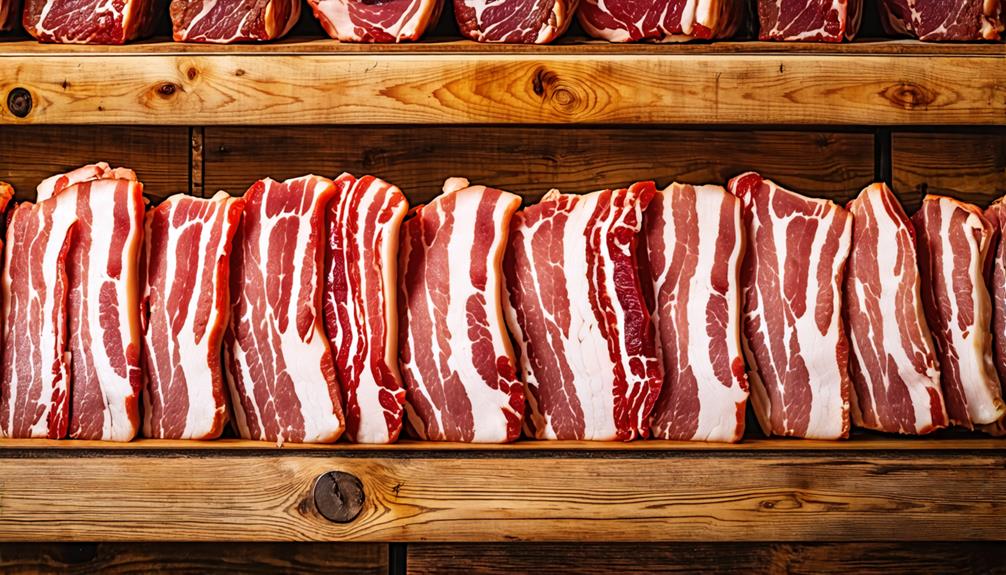
Selecting quality bacon is essential for achieving the best flavor and texture in your dishes. Start by looking for products from pasture-raised pigs. This type of bacon often has a richer flavor and a better balance of fat and meat. High-quality bacon will have more fat, which is important because the fat renders during cooking, enhancing both texture and flavor.
Read the labels carefully. Premium bacon usually contains fewer preservatives and artificial ingredients, making it a healthier option. Choose naturally smoked bacon rather than artificially smoked; this will boost flavor and aroma without leaving chemical residues.
Consider local sourcing from reputable farms or butchers. These options often provide fresher, superior quality bacon and can be competitively priced compared to mass-produced varieties.
| Criteria | High-Quality Bacon | Low-Quality Bacon |
|---|---|---|
| Pig Source | Pasture-raised pigs | Factory-farmed pigs |
| Fat Content | Higher fat content | Lower fat content |
| Additives | Fewer preservatives and additives | More preservatives and additives |
| Smoking Method | Naturally smoked | Artificially smoked |
| Source | Local farms/butchers | Mass-produced |