The Science Behind the Perfect Crispy Bacon
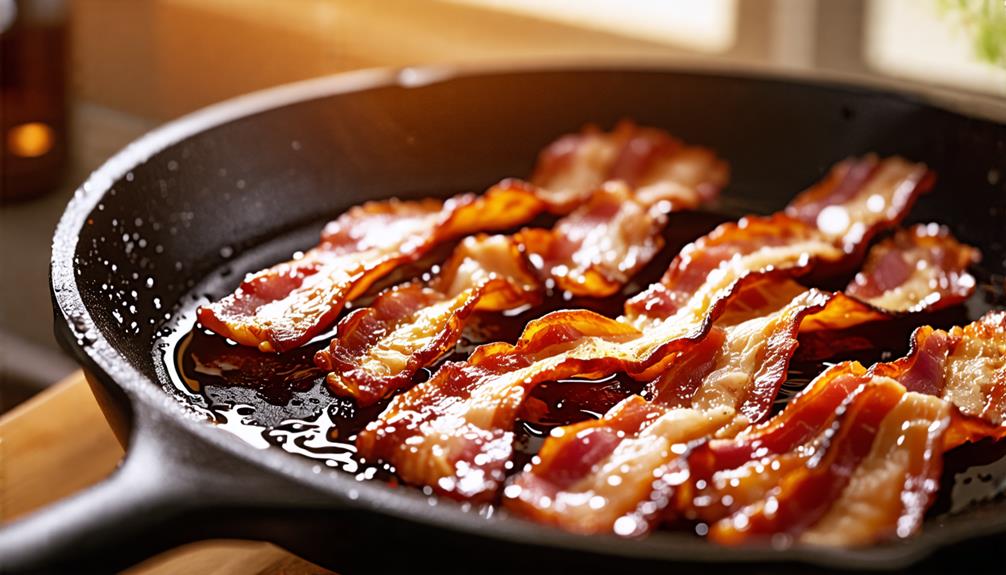
Cooking crispy bacon involves more than just tossing strips in a pan. The key lies in the Maillard reaction. This chemical process occurs at high temperatures, where amino acids and sugars interact to transform the bacon's flavor and texture.
Start by choosing your cooking method. Baking bacon on parchment paper ensures even heat distribution and helps in fat rendering. Alternatively, try the water skillet method, which involves adding a small amount of water to the skillet. This method can also help achieve even cooking.
The type of bacon you select matters too. Thicker cuts may require longer cooking times, while thinner slices cook faster. Cooling methods can impact crispiness as well. Placing cooked bacon on a wire rack allows excess grease to drip off, maintaining the crisp texture.
By understanding these techniques and factors, you can consistently create perfectly crispy bacon.
Maillard Reaction Explained
When you cook bacon to a perfect crisp, you're seeing the Maillard reaction at work. This chemical process happens when amino acids and sugars react under heat, turning bacon into a browned and flavorful treat.
To get crispy bacon, understanding the Maillard reaction is key. This reaction starts at temperatures above 140°C (284°F). As bacon cooks, heat triggers this process, creating many flavor compounds that give bacon its savory taste. Browning not only improves flavor but also makes bacon look more appealing.
Several factors affect the Maillard reaction: cooking time, temperature, and moisture content. Higher temperatures and longer cooking times usually enhance flavor and crispiness. To optimize this reaction, reduce moisture by drying the bacon before cooking and ensure even heat distribution. Methods like baking or using a cast iron skillet can help achieve this.
Baking on Parchment Paper
When baking bacon on parchment paper, follow these steps for consistent results: Preheat your oven for 10 minutes. For regular-cut bacon, bake for 18 minutes. For thick-cut bacon, bake for 24 minutes. The parchment paper will catch the drippings, making cleanup easy, as you won't need to rinse the pan. This method lets you cook up to 20 slices at once, ensuring evenly cooked, crispy bacon every time.
Cooking Time Consistency
Achieving crispy bacon every time you cook is all about consistency, and baking on parchment paper ensures it. When you bake bacon on parchment paper, you benefit from consistent cooking times, crucial for getting perfectly crispy bacon. Regular-cut bacon takes 18 minutes, while thick-cut bacon needs about 24 minutes, plus an extra 10 minutes to preheat the oven. This method allows for even heat distribution, ensuring each slice is evenly cooked without constant monitoring.
This technique is reliable. You won't have to worry about some pieces being overcooked while others are underdone. Every slice will achieve a uniform texture and appearance, enhancing the quality of your bacon. Parchment paper prevents sticking and collects drippings efficiently, helping maintain each slice's integrity. This method is ideal for cooking larger batches, up to 20 slices, with no mess.
Cleanup Efficiency
Using parchment paper for baking bacon significantly improves cleanup efficiency. When you line your baking sheet with parchment paper, it catches all the bacon fat drippings, making disposal easy. After cooking your bacon to crispy perfection, let the parchment paper cool, then fold it up with the grease and toss it in the trash. This eliminates the need to scrub or rinse the pan, saving you time and effort.
Parchment paper also has an overhang feature that prevents drippings from leaking onto the baking sheet. This is useful if you want to store or dispose of the grease separately. Simply pour the collected bacon fat from the parchment paper into a container without any spills.
Whether you're cooking a small batch or up to 20 slices, parchment paper remains effective. It ensures that nothing sticks or burns, keeping your pan clean. This method eliminates mess and hassle, providing a spatter-free cooking environment. In summary, using parchment paper makes cooking bacon simpler and enhances convenience during cleanup, improving your overall bacon-making experience.
Batch Cooking Benefits
When preparing for meal prep or a large gathering, cooking bacon in large batches on parchment paper offers significant advantages. This method allows you to bake 1 to 20 slices at once, making it highly efficient. The oven's uniform heat distribution ensures every piece of bacon cooks evenly, resulting in consistently crispy strips.
Here are three benefits of using parchment paper for batch cooking bacon:
- Even Cooking: Parchment paper distributes heat evenly, ensuring your bacon cooks uniformly. Say goodbye to undercooked or burnt pieces.
- Easy Cleanup: Parchment paper prevents sticking and burning, leading to a spatter-free experience. After cooking, just dispose of the paper for hassle-free cleanup.
- Drippings Collection: The parchment paper overhang collects bacon drippings. You can save these drippings to flavor other dishes or use them for cooking.
In 18 to 24 minutes of baking time, plus a 10-minute preheat, you can have perfectly crispy bacon ready for any occasion. This method not only makes cooking more efficient, but also improves the overall quality of your bacon.
Water in Skillet Method
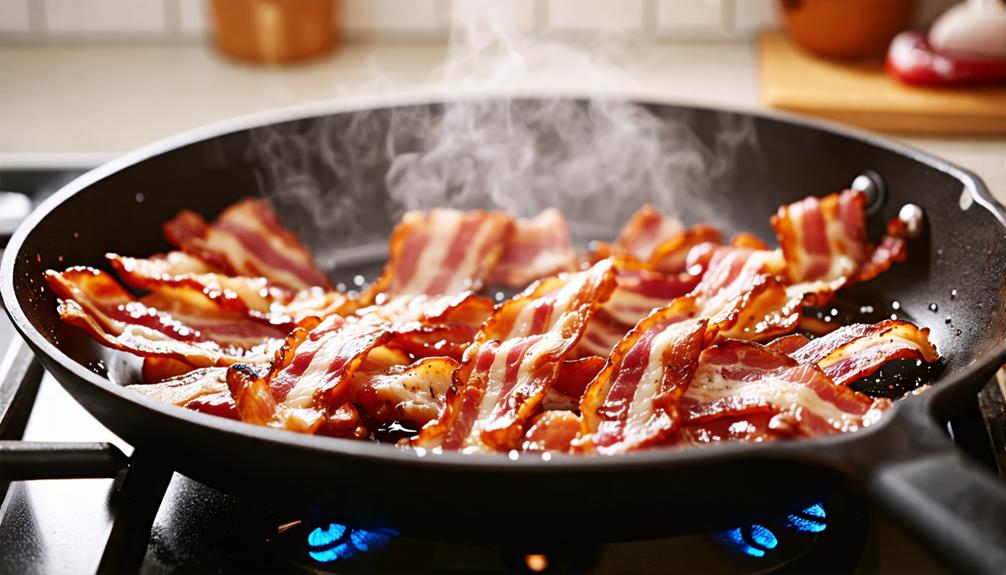
To cook bacon using the Water in Skillet Method, start with a cold skillet. Place the bacon strips in the skillet and add enough water to cover the bottom. This method helps retain moisture and allows the fat to render out gradually. As the water evaporates, the bacon will begin to sizzle, leading to crisp strips.
The total cooking time using this method is about 15-16 minutes, depending on the thickness of your bacon. Keep a close eye on the skillet to ensure even cooking. Some pieces may cook faster than others, so adjust their positions as needed.
One downside is the cleanup. The rendered fat and sticky residue can make washing the skillet more challenging compared to baking on parchment paper. However, with thorough cleaning, this method can produce a satisfying crunch. Consider trying the Water in Skillet Method for a crispy result next time you cook bacon.
Microwave Method
For quick and crispy bacon, use the microwave method, which takes 4 to 5.5 minutes. Place the strips between paper towels to absorb the grease, making cleanup easy. Note that this method can make the bacon more brittle compared to baking or frying.
Cooking Time Efficiency
Microwaving bacon is a quick and convenient way to achieve crispy results, especially when time is limited. Follow these steps to maximize cooking time efficiency:
- Prepare Properly: Place bacon slices between layers of paper towels. This prevents splattering and helps achieve even crispiness.
- Monitor Cooking Time: Cook for 4 to 5.5 minutes, depending on the thickness of the bacon. Watch closely to avoid overcooking and brittleness.
- Small Batches: The microwave is best for small batches. It usually fits only a few slices at a time, making it less efficient for large quantities.
Cleanup and Convenience
Ever wondered why the microwave method is so popular for cooking bacon? It's all about cleanup and convenience. Cooking bacon in the microwave takes only 4 to 5.5 minutes, making it one of the quickest methods available. Simply sandwich the bacon strips between two layers of paper towels. These paper towels absorb the excess grease, reducing splatter inside your microwave and simplifying the cleanup process.
Once your bacon is cooked, toss the greasy paper towels into the trash, leaving minimal mess behind. This efficient cleanup is a significant advantage, especially if you're in a rush or prefer not to deal with greasy pans and stovetops. The convenience of the microwave method means you can have a plate of bacon ready in just a few minutes without constant monitoring.
However, it's crucial to keep an eye on the cooking time, as the microwave's rapid heat can lead to overcooking. Despite this, the microwave method remains a favorite for those seeking quick, easy, and hassle-free bacon preparation.
Texture and Brittleness
Using the microwave to cook bacon is convenient but can affect its texture and brittleness. This method takes just 4-5.5 minutes, making it one of the fastest ways to prepare crispy bacon. However, the rapid cooking can lead to a drier texture and increased brittleness, especially since bacon is often placed between paper towels to absorb excess grease.
To achieve better results, consider these tips:
- Monitor Cooking Time: Rapid cooking increases the risk of overcooking. This can result in bacon that is too crispy and lacks the desired chewiness. Check the bacon frequently to prevent this.
- Address Uneven Heat: Microwaves can heat unevenly, causing some parts of the bacon to become overly crisp while others remain soft. Rearrange the bacon slices halfway through cooking to ensure even heating.
- Adjust Paper Towels: Paper towels absorb excess grease but can also make the bacon drier. Use fewer layers or adjust their placement to balance crispiness and chewiness.
Nonstick Skillet Method
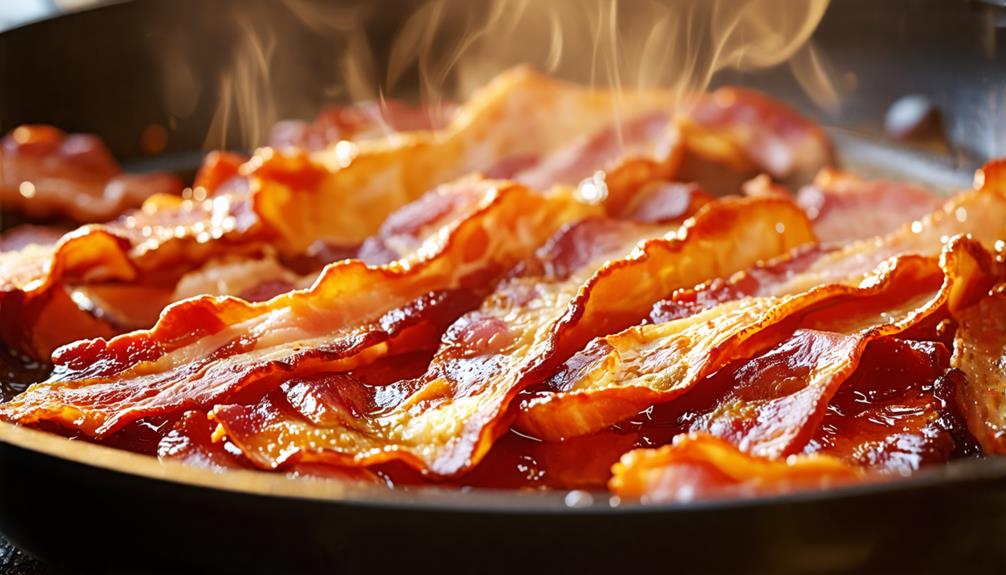
The Nonstick Skillet Method is a popular way to cook bacon. Start with a cold nonstick pan and place the bacon strips inside. Set the burner to medium heat. Gradual heating allows the bacon to render its fat slowly, ensuring even cooking. Thinner slices will cook faster, while thicker pieces will take longer. Typically, this method takes about 10 minutes, but watch closely to avoid overcooking.
Turn the bacon occasionally for uniform browning and crispiness. The nonstick skillet helps prevent sticking, although some charred spots may appear if the heat isn't distributed evenly. This method can be messy, as rendered fat can splatter, so be prepared for some cleanup. Despite this, it's a reliable way to achieve crispy bacon.
Here's a quick breakdown of the Nonstick Skillet Method:
| Step | Description | Tips |
|---|---|---|
| Start with a cold pan | Place bacon in a cold nonstick skillet | Allows fat to render gradually |
| Heat setting | Use medium heat | Prevents burning, ensures even cooking |
| Cooking time | Approximately 10 minutes | Varies with thickness of the bacon |
| Turn occasionally | Flip bacon for uniform crispiness | Helps avoid charred spots |
| Cleanup | Rendered fat may splatter | Wipe down stovetop after cooking |
Follow these steps for perfectly crispy bacon every time.
Air Fryer Method
For uniformly crispy bacon, the air fryer method is ideal. Set the air fryer to 400°F and cook the bacon for about 8 minutes. Make sure to place the bacon in a single layer. This method speeds up the process and results in perfectly crisp strips every time.
Quick Cooking Time
Cooking bacon in an air fryer at 400°F for about 8 minutes gives you uniformly crispy strips every time. This method is ideal for those who want convenience and efficiency. The air fryer circulates hot air around the bacon, ensuring even cooking, whether you use regular or thick-cut bacon.
To get the best results, follow these steps:
- Preheat your air fryer: Ensure it reaches 400°F before you begin.
- Monitor thickness: Adjust the cooking time slightly if using thick-cut bacon, as it may need an extra minute or two.
- Drain drippings: After the first batch, pour out the drippings to prevent smoking and maintain ideal cooking conditions.
The air fryer can cook small batches, making it a healthier option by reducing grease compared to traditional stovetop frying. Cleanup is also easier, with no splattered grease. This method saves time and delivers consistently crispy results, making it an efficient way to prepare bacon.
Uniform Crispiness Achieved
Achieving uniform crispiness in your bacon is easy with an air fryer. Cook the bacon at a high temperature of 400°F for 8 minutes. This ensures that hot air circulates evenly around each strip, eliminating the need to flip the bacon. Regular-cut bacon will have a consistent texture, delivering a perfect crunch without uneven spots.
Using an air fryer minimizes mess and hassle. Unlike traditional frying, you won't deal with grease splattering. After cooking the first batch, pour out the drippings to prevent smoke. This makes the process cleaner and healthier, as the air fryer uses less oil and reduces total grease.
Cleanup is simple. Wash the basket and outer pan. With an air fryer, you can cook bacon to a uniform crispiness every time. Enjoy a healthier, less messy, and more efficient cooking experience.
Sous Vide Method
The Sous Vide method offers a precise way to cook bacon by sealing it in a vacuum-sealed bag and cooking it at a low temperature of around 145°F (63°C) for up to 12 hours. This technique ensures the bacon remains moist, resulting in a juicy and tender product with a well-developed flavor.
Here's why the Sous Vide method is effective for cooking bacon:
- Precise Control: The controlled environment reduces the risk of burning or uneven cooking, common with traditional methods.
- Flavor Enhancement: The slow, even cooking process allows the bacon to develop a rich, deep flavor.
- Convenience: You can prepare Sous Vide bacon ahead of time, store it, and reheat it without losing quality, making meal prep easier.
After cooking Sous Vide, sear the bacon in a hot skillet or under a broiler for about 2.5 minutes to achieve a crispy exterior. This combination of slow cooking and quick searing produces bacon that is both succulent and crispy, elevating your cooking results.
Cast Iron Skillet Method
Using a cast iron skillet can elevate your bacon to new heights. This method is popular for good reason. Start with a cold skillet to ensure the bacon cooks evenly and crisps without burning. This slow approach allows the fat to render properly, making each slice crunchy and chewy.
Place your bacon strips in the cold skillet, then turn the heat to medium. For regular-cut bacon, cook for about 8 minutes. Thick-cut bacon will take around 11 minutes. Monitor the bacon, flipping the strips occasionally for even cooking. The cast iron skillet holds heat well, providing consistent temperatures throughout the process, which is essential for perfect bacon texture.
To prevent sogginess, drain excess grease between batches. This step ensures each piece of bacon remains crisp and flavorful. Be patient; don't rush this cooking method. The steady heat from the skillet enhances the bacon's nostalgic flavor. This method achieves a balance of crispy edges and tender centers, making your bacon a breakfast masterpiece.
Flour Coating Technique
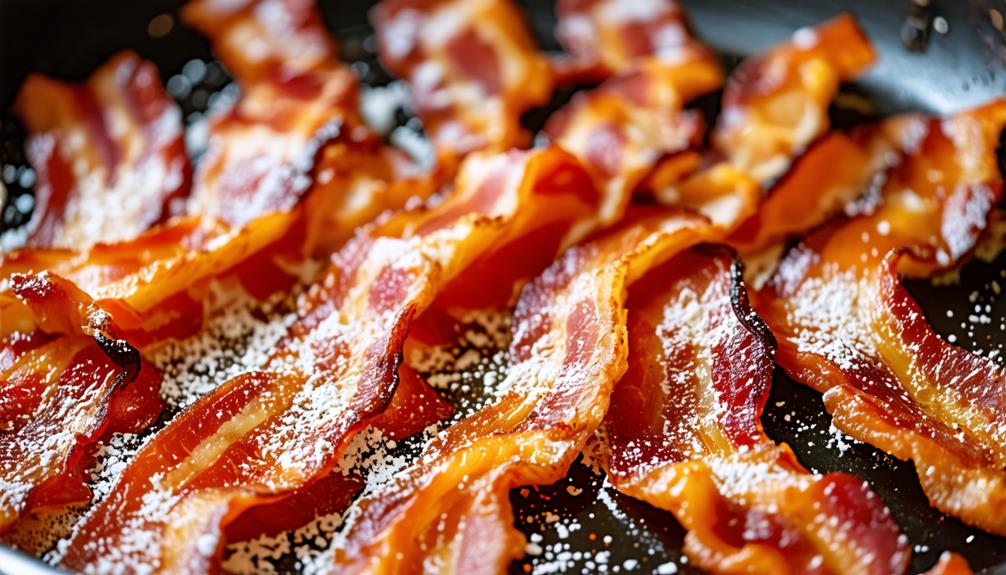
To make your bacon crispier, try using a flour coating before cooking. This simple technique can significantly improve texture. Follow these steps for best results:
- Coat with Flour: Lightly dust each bacon slice with all-purpose flour. The flour absorbs moisture, creating a drier surface that crisps well during cooking.
- Refrigerate: Place the flour-coated bacon in the refrigerator overnight. This allows the flour to set, enhancing crispiness when cooked.
- Cook: Cook the bacon as you usually do. The flour forms a barrier that reduces splattering and helps render the fat evenly.
You can experiment with different flours, like sweet rice or cornstarch, for varied textures and flavors. Whether you bake, fry, or grill, this flour coating technique ensures crispy bacon every time. A little preparation can make a big difference in your cooking results.
Choosing the Right Bacon
Choosing the right bacon can elevate your dishes. To get the crispiest bacon, choose high-quality belly bacon, also called streaky bacon in the UK. This type has the best balance of fat and meat, ensuring maximum crispiness.
For a heartier texture and better mouthfeel, select thick-cut bacon strips. These hold up well during cooking and offer a more substantial bite. Look for bacon with at least 70% meat. This balance improves texture and reduces greasiness.
Consider your flavor preferences. You can choose between salt-cured, smoked, or unsmoked bacon. Smoked bacon provides a richer, more complex taste that enhances your dishes.
When cooking, arrange the bacon strips in a single layer on a baking sheet lined with parchment paper. This ensures even crisping and prevents overcrowding, which can cause uneven cooking. By selecting quality bacon and following these tips, you'll achieve perfect crispy bacon every time.