The Role of Bacon in American Cuisine
Bacon is a staple of American cuisine, appearing in everything from breakfast dishes to gourmet meals and even desserts. But how did bacon become such an iconic part of American food culture? Its journey is as rich and varied as its flavor.
To understand bacon's impact, it's helpful to look at its history. Originally a way to preserve pork, bacon became popular because it was easy to store and cook. Over time, it found its way into a variety of dishes. Today, you might enjoy it in a morning omelet or a trendy bacon-topped donut.
Bacon's versatility is one reason for its popularity. It adds a savory, smoky flavor that enhances many recipes. When cooking bacon, it's important to choose quality cuts and cook them properly for the best taste. For crispy bacon, cook it slowly over medium heat, turning occasionally. For softer bacon, cook it at a lower temperature for a longer time.
Bacon also appears in many modern dishes. It's used as a topping for burgers, salads, and even desserts like chocolate-covered bacon. To experiment with bacon in your cooking, try adding it to dishes where you want a smoky, savory element.
In summary, bacon's role in American cuisine is significant and multifaceted. By understanding its history and how to use it effectively, you can make the most of this beloved ingredient in your own cooking.
Historical Context and Production Methods
Bacon's role in American cuisine began with ancient meat preservation techniques. Before refrigeration, curing methods like wet curing (using brine) and dry curing (using a salt rub) were essential. These techniques ensured that bacon could be stored and eaten long after it was prepared. The main ingredient, salted pork belly, originated in China and became a key component of many cuisines.
The word "bacon" comes from the Old High German word "bacho," which means "buttock." Over time, production methods evolved significantly. In the 1770s, John Harris set up the first commercial bacon processing plant in Wiltshire. This was a major development in the mass production of bacon, making it more widely available and consistent in quality.
Varieties and Cuts of Bacon
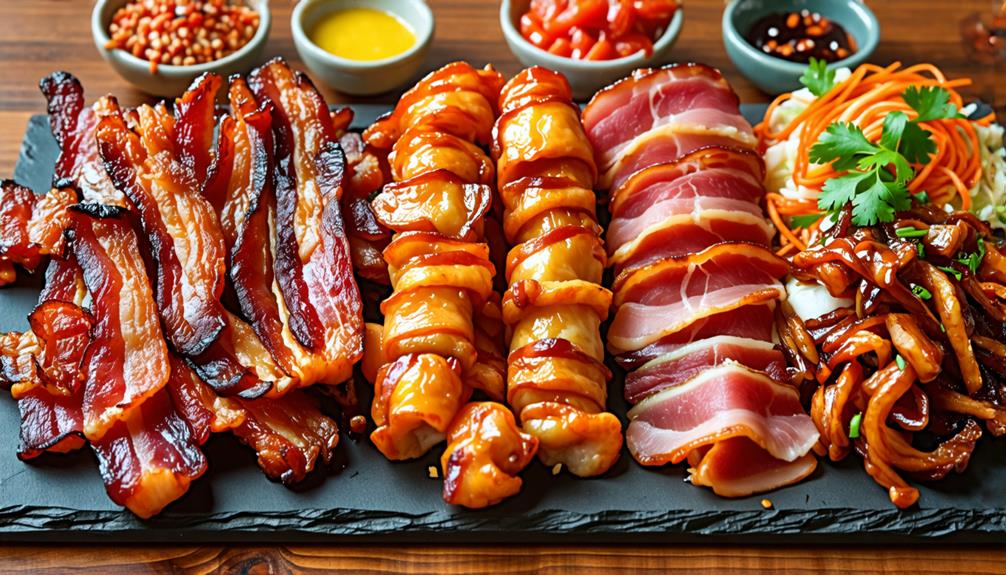
In American cuisine, several types and cuts of bacon stand out, each offering unique features. The most common is side bacon, or streaky bacon, from the pork belly. It has a high fat content and rich flavor. For a leaner option, try back bacon, known as Canadian bacon in the U.S. This cut from the loin is usually pre-cooked and thick-sliced, ideal for breakfast dishes.
If you enjoy experimenting, jowl bacon, made from pork cheeks, provides a different taste and texture. You might also find collar bacon, sourced from the back near the head, and cottage bacon, from the pork shoulder. Each type offers a distinct flavor.
Slab bacon, an unsliced piece of bacon, lets you cut it to your preferred thickness. This flexibility makes it versatile for different recipes. You can adjust the thickness to suit various cooking methods and dishes, enhancing your culinary creations.
Health Implications and Alternatives
Bacon, with its mouthwatering flavor, holds a significant spot in American cuisine. However, it's important to consider its health implications. Regular consumption of bacon, a processed meat, is linked to higher risks of mortality and cancer, especially colorectal cancer. According to the WHO, processed meat intake can increase cancer risk by 18%. Bacon is also high in saturated fats and cholesterol, with about 68% of its energy coming from fat, raising concerns about cardiovascular health.
To reduce these risks, consider alternatives to traditional bacon. Turkey bacon is a good option, offering lower fat and cholesterol levels. This makes it appealing to health-conscious consumers who still want a savory taste. For plant-based choices, vegetarian bacon, also known as facon or vacon, mimics the taste of bacon while being low in fat and cholesterol. These substitutes are suitable for those on plant-based diets and provide a healthier option without sacrificing flavor.
The growing awareness of bacon's health issues has led to more bacon-flavored products. These offer the taste of bacon without the health risks, giving you more diverse and healthier culinary options.
Bacon in Culinary Practices
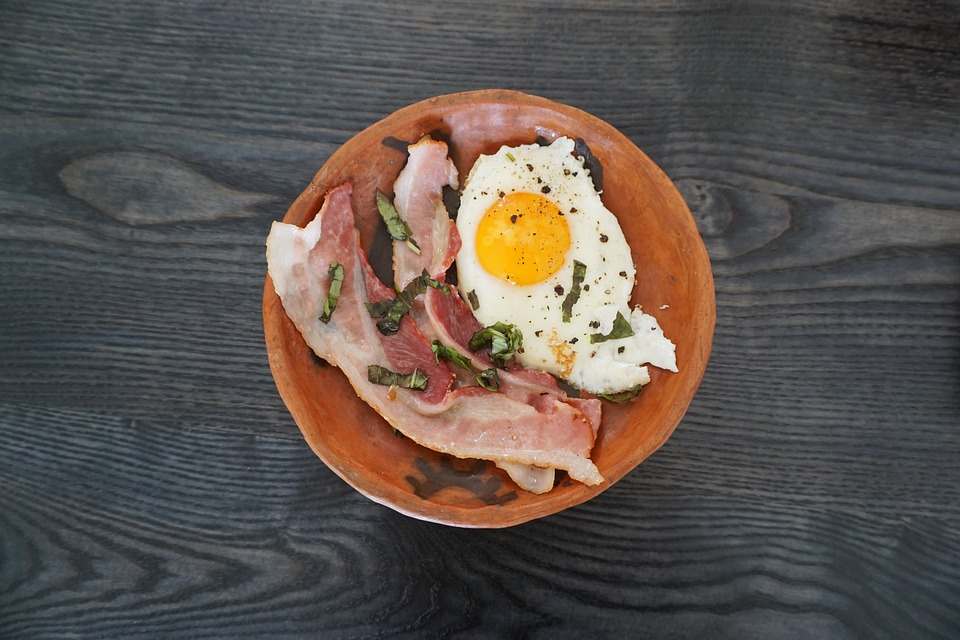
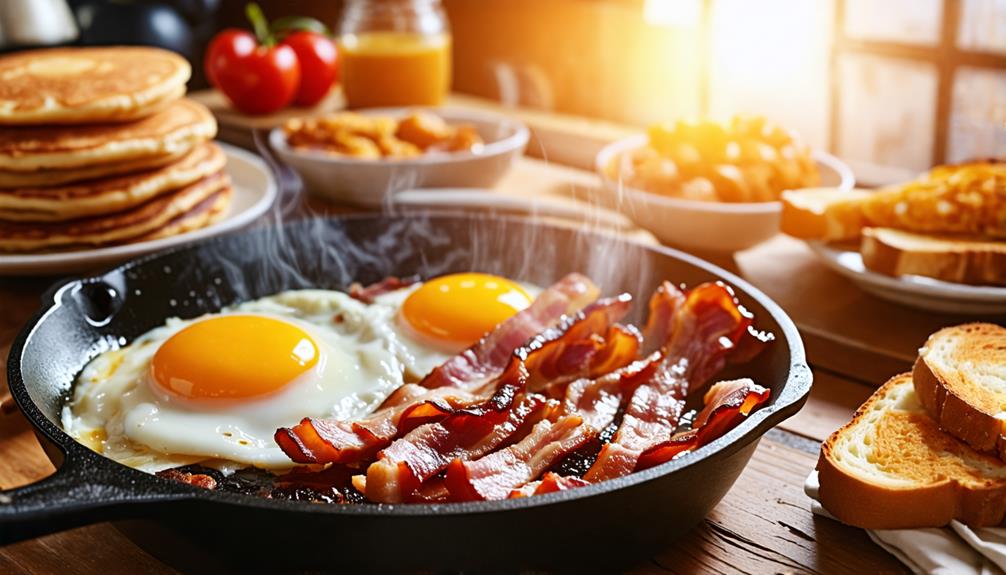
Whether you're preparing a traditional breakfast or a gourmet meal, bacon's versatility enhances many dishes in American cuisine. Americans use bacon in various innovative ways, with about 70% of bacon consumption occurring during breakfast. This includes popular items like omelets, pancakes, and breakfast sandwiches.
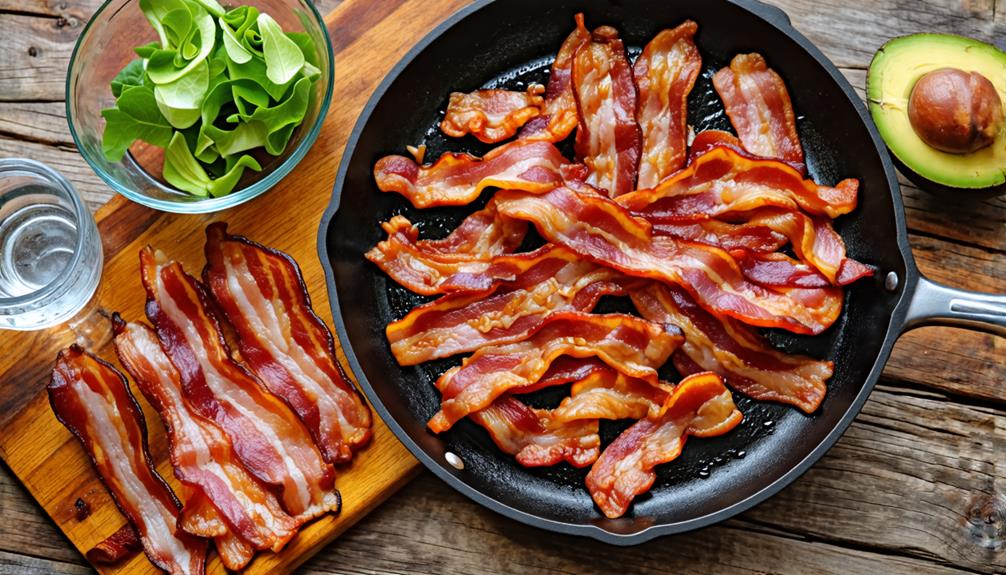
Bacon is not just for breakfast. Its rich, savory flavor enhances gourmet dishes like bacon-wrapped scallops and even desserts such as bacon ice cream. You can cook bacon using different methods: skillet frying, microwave cooking, or oven baking. Oven baking is especially recommended for large batches because it ensures even cooking and less mess, making it convenient for home cooks and professional chefs.
Additionally, bacon drippings are a useful byproduct. These flavorful fats can add depth to soups, sautéed vegetables, and other savory dishes, further demonstrating bacon's versatility. The popularity of bacon has led to specialty products and themed culinary events, highlighting its important role in American cooking.
Cultural Significance and Products
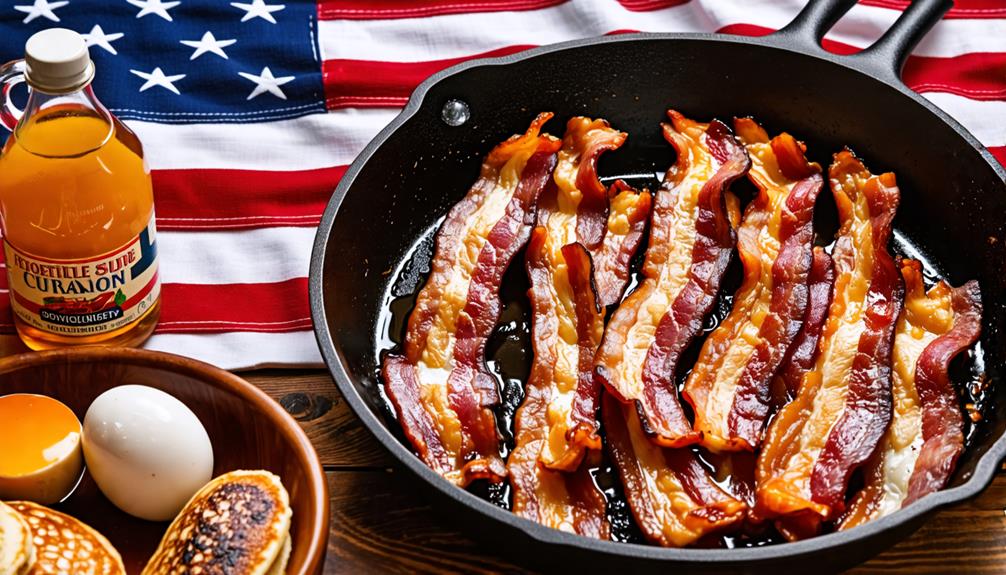
Bacon holds a special place in American culture, often symbolizing indulgence and comfort food. It is widely popular, with 65% of Americans supporting it as a national food. Bacon is not just a breakfast item; it represents culinary versatility and creativity. For bacon enthusiasts, there are many bacon-themed products available, such as bacon salt, Baconnaise, and bacon ice cream.
Bacon festivals, like the Blue-Ribbon Bacon Festival, celebrate bacon's cultural significance. These events attract fans who enjoy unique bacon dishes and share a love for this savory food. Social media also plays a role, often featuring bacon in humorous and popular contexts, which helps maintain its status in American cuisine.
The economic impact of bacon is significant. Entrepreneurs, known as "bacontrepreneurs," create and sell various bacon-themed products and experiences. This boosts local economies and highlights bacon's broad appeal. In essence, bacon is more than just food; it is a cultural icon that continues to inspire and delight people across America.