Roasted Eggs: The Unexpected Cooking Method You Need to Try
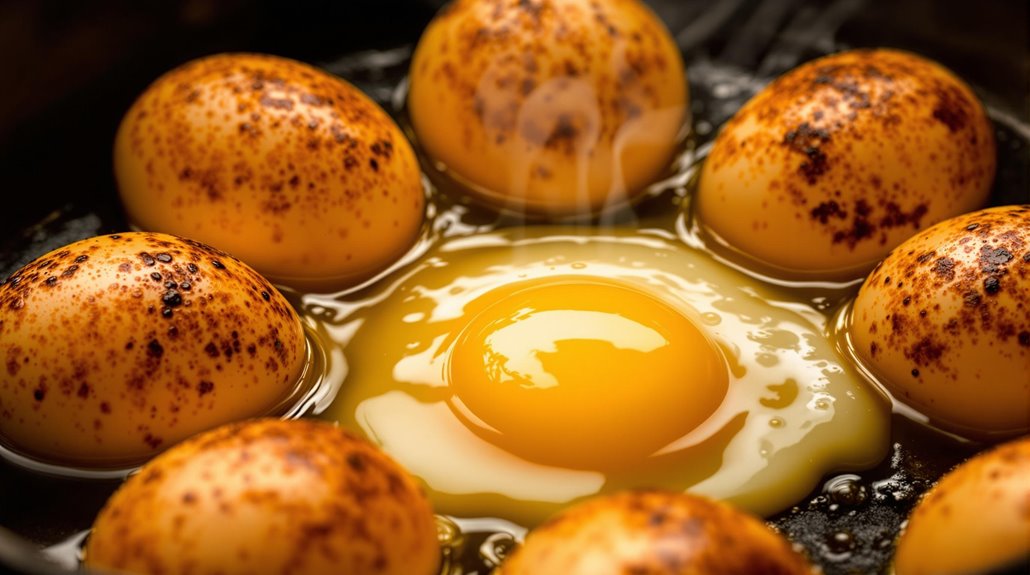
Roasting eggs in hot ashes offers a unique way to alter ordinary eggs into smoky delicacies. You'll need to control your fire carefully, maintaining temperatures above 284°F and positioning eggs strategically in white-hot ashes. Consider poking a small hole in the shell to prevent explosions, then roast for 15-25 minutes while rotating occasionally. This centuries-old technique creates rich, aromatic flavors you won't get from traditional boiling - and there's much more to explore about commanding this ancient method.
The Art of Fire Management
Three key elements define successful fire management when roasting eggs: temperature control, distance from the heat source, and continuous monitoring. Before you're going to make roasted eggs, you'll need to establish the right fire conditions, as both ground and ambient temperatures play indispensable roles in the cooking process.
Position your eggs strategically in relation to the fire, understanding that the heat intensity will directly impact your cooking time, which typically ranges from 15 to 25 minutes. Since there's no standard recipe to follow, you'll need to adapt and experiment with your fire management technique.
Keep a close eye on the heat levels and adjust the eggs' placement as needed. Your success depends on perfecting these variables and developing an intuitive understanding of how fire conditions affect the final result. Similar to the Maillard reaction in bacon cooking, maintaining proper heat above 140°C (284°F) ensures optimal browning and flavor development.
Essential Egg Preparation Steps
Before placing your eggs near the fire, proper preparation guarantees ideal results and prevents potential mishaps. You'll need to decide whether to poke a little bit of a hole in the shell - this choice affects both cooking time and final texture. While poking prevents explosions and allows faster cooking, leaving the shell intact results in less sticking but requires more patience during the roasting process.
Consider your egg size when planning, as larger eggs demand additional cooking time in the ashes. Once you've made your shell preparation choice, remember you'll need to rotate the eggs during cooking for even results.
Expect to spend between 15 to 25 minutes roasting, depending on your fire's intensity and the size of your eggs. For best results, start with Grade AA eggs since their firm whites and round yolks maintain better structure during the roasting process.
Mastering Cooking Times and Temperature
Getting the timing and temperature right makes the difference between perfectly roasted eggs and disappointing results. You'll need to adjust your cooking time between 15 to 25 minutes, depending on whether you prefer soft or hard-boiled eggs. Check the doneness every five minutes by gently wiggling the egg and inverting it.
The key to success lies in positioning your eggs at the right distance from the fire and managing its intensity. To prevent any unwanted explosions, consider poking a small hole in the shell, though leaving it intact will make peeling easier later. Remember that egg size matters - larger eggs require more time to cook through. Keep monitoring your eggs throughout the process to achieve your desired level of doneness and perfect texture. For best results, start with Grade AA eggs since they have firm whites and perfectly centered yolks that maintain their shape while cooking.
Achieving the Perfect Smoky Flavor

The smoky essence of roasted eggs comes from carefully exposing them to wood smoke during the cooking process. To maximize the smoky flavor in one egg, you'll want to remove just enough of the shell to let the smoke penetrate while keeping the structure intact. This partial shell removal technique prevents you from accidentally biting into fragments while still maintaining that rich, aromatic taste.
Whether you prefer your yolks runny or firm, you can achieve the perfect smoke infusion through proper roasting. You'll find that eating the egg directly from its partially opened shell enhances the overall experience, as the smoke compounds have permeated both the white and yolk. The shell acts as a natural vessel, keeping the smoky flavors concentrated until you're ready to enjoy your perfectly roasted egg.
Tips for Successful Ash Roasting
Successful ash roasting starts with establishing a bed of hot, white ash - not glowing coals. You'll want to carefully monitor your fire's temperature and consider both ambient and ground conditions, as these factors directly affect your cooking time.
When it comes to egg positioning, place your eggs strategically in the ash, maintaining consistent proximity to the heat source. You can prevent explosive mishaps by poking a tiny hole in the shell, though leaving it intact might make peeling easier later. Turn your eggs every few minutes during the 15-25 minute cooking process to guarantee even heat distribution.
Keep checking your eggs' progress regularly - they'll cook differently depending on your fire's intensity and environmental conditions. For the best results, you'll need to adjust their position and cooking time accordingly.