
Pastries and Coffee: The Simple Morning Rituals of France, Spain, and Italy
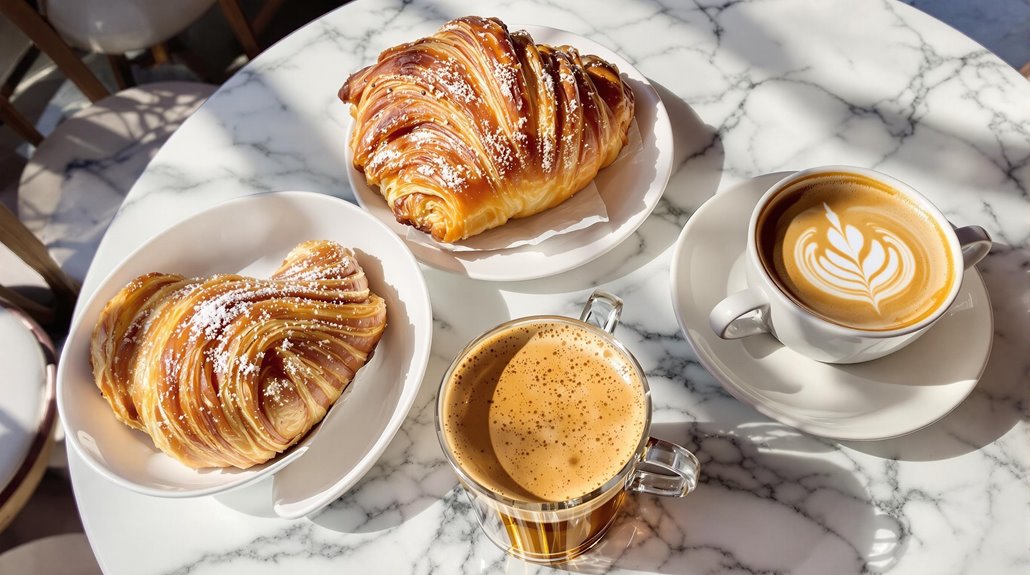
You'll find distinct morning coffee rituals across Mediterranean Europe, each with its own charm. In Italy, you'll join locals standing at the bar for a swift espresso with a cornetto, while France invites you to linger over buttery croissants and café au lait. Spain offers churros dipped in thick hot chocolate alongside café con leche. These daily traditions reflect each culture's unique approach to starting the day, with countless stories brewing beneath the surface.
The Art of Morning Coffee Across Mediterranean Europe
While the aroma of freshly brewed coffee fills morning air across the globe, Mediterranean Europe's coffee culture stands apart with its distinct rituals and traditions. You'll find each country has its own unique approach to morning coffee, from Italy's swift espresso at the bar to Greece's leisurely kafeneio experience. In France, the morning ritual typically includes simple light breakfasts featuring fresh bread or croissants with butter and jam. In Italy, you won't see locals sipping cappuccinos past breakfast, as Italian coffee rituals follow strict social codes.
Spain's coffee culture revolves around the perfect balance of espresso and milk in drinks like café con leche, while Greek coffee lovers gather in traditional cafes to enjoy their carefully brewed Balkan-style coffee. These coffee rituals aren't just about caffeine - they're about community, conversation, and starting your day the Mediterranean way.
Regional Pastry Specialties: From Croissants to Cornetti
Just as coffee rituals differ across Mediterranean Europe, each country's morning pastries tell their own delicious story. You'll find Italian cornetti alongside your espresso, offering a lighter, eggier alternative to French croissants. While coffee bars serve these pastries, you'll uncover the finest, freshest selections at local pasticcerie.
Cornetti come filled with delectable options like fruit jams, chocolate, and pistachio creams. Italian pasticcerie bake fresh pastries daily, unlike some coffee bars using frozen options. French croissants feature more butter due to France's dairy abundance. Quality varies substantially between pasticcerie and standard coffee bars. Morning pastries pair perfectly with Italian espresso or cappuccino.
When seeking authentic Italian pastries, head to a traditional pasticcerie where quality and freshness reign supreme, ensuring your morning coffee ritual includes the finest baked delights. In France, the morning ritual often includes simple French crêpes made with just flour, eggs, and milk for a light breakfast option.
Standing vs. Sitting: Cultural Differences in Coffee Consumption
Beyond the pastries served at European cafés, how you consume your morning coffee reveals distinct cultural patterns across Mediterranean countries. In Italy, you'll find locals gathered at the bar counter, where coffee is typically consumed standing - a practice that's both cheaper and deeply rooted in cultural heritage. This contrasts sharply with French customs, where you're expected to savor a leisurely coffee while seated, making it a social experience.
Spain follows a similar seated tradition, where you'll enjoy your café con leche at a table. While Italians consider standing the norm and may charge extra for table service, the French and Spanish prioritize a more relaxed approach. You won't find many Italians ordering coffee to go, as they view the drinking ritual itself as essential to their daily routine. In Hong Kong, street vendors often combine their coffee service with fresh egg waffles and puffs, creating a unique fusion of European and Asian breakfast traditions.
Sweet Breakfast Traditions: A Mediterranean Perspective
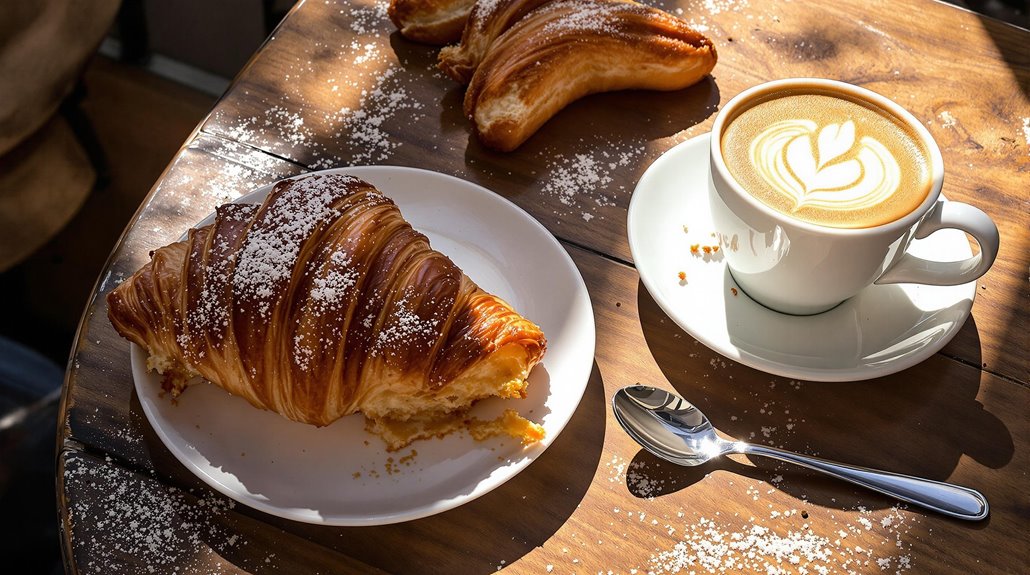
Although savory breakfasts dominate many global cultures, Mediterranean countries have accepted sweet morning treats as their breakfast staple. When you visit these regions, you'll find that the first thing locals reach for is often a sweet pastry paired with coffee.
In France, you'll uncover the iconic French croissant, often served with jam or chocolate. Spanish breakfast features churros dipped in thick hot chocolate. Italians prefer cornetti, their version of the croissant, filled with cream or honey. Greek morning rituals include bougatsa, a custard-filled phyllo pastry. Portuguese pastéis de nata complement morning coffee perfectly.
These sweet traditions showcase how Mediterranean cultures welcome sugar-forward breakfasts, contrasting with the heartier, savory morning meals found in other parts of the world. The combination of these delicate pastries and strong coffee creates a beloved morning ritual that's endured for generations.
The Social Aspect of Morning Coffee Rituals
The rich coffee culture of Mediterranean countries extends far beyond the pastries and beverages themselves. When you visit coffee shops in France, Spain, and Italy, you'll uncover that morning coffee rituals are deeply woven into the fabric of daily life.
You'll find Italians embracing "la pausa," where the coffee experience becomes a cherished moment to connect with others. In Spain, you can join locals as they linger over café con leche, watching the world go by while catching up with friends.
French cafes buzz with animated conversations as patrons combine their morning coffee with newspaper reading and social interaction.
These rituals aren't just about caffeine - they're about taking time to strengthen community bonds and savor life's simple pleasures in the company of others.
Traditional Coffee Preparations and Their Cultural Significance
Each Mediterranean country's signature coffee preparation tells a unique cultural story through distinct methods and serving traditions. You'll find that the Italian Morning Ritual centers around a quick shot of espresso at the bar, while French cafés boast themselves on their café au lait with perfectly steamed milk.
Spain's café con leche combines equal parts espresso with a splash of hot milk. Italy's caffè lungo extends the espresso extraction for a longer drink. France's café crème features espresso topped with steamed milk and silky foam. Italy's caffè macchiato offers espresso "stained" with a touch of foam. Spain's café solo delivers a pure espresso shot, often served with sugar.
These preparations reflect each culture's approach to morning rituals, from Italy's quick stand-up coffee bars to France's leisurely café terraces.
Timing and Etiquette: When to Drink What
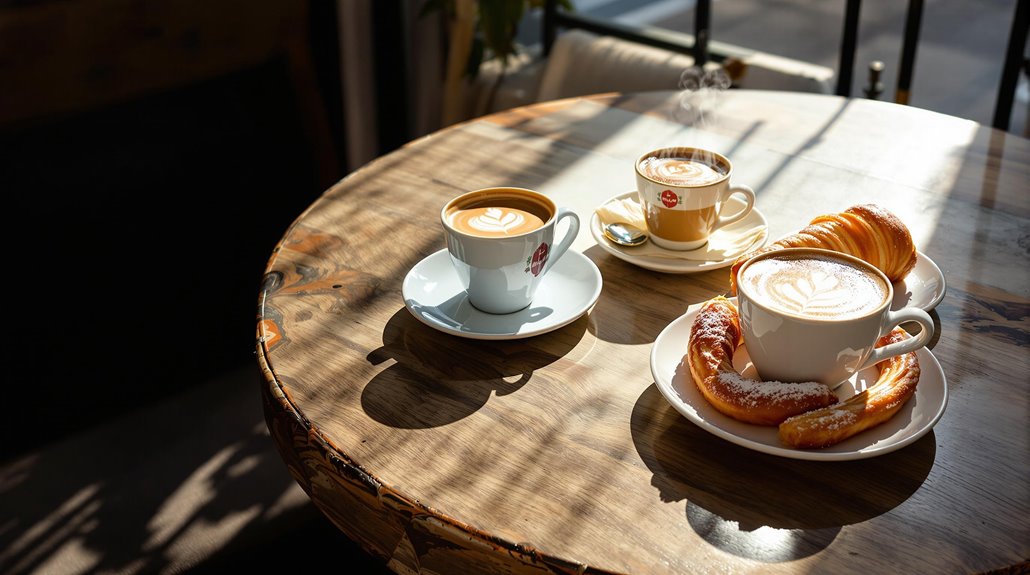
Understanding proper coffee timing and etiquette in Mediterranean countries can make or break your cultural experience, particularly in Italy where strict unwritten rules govern coffee consumption.
In Italian coffee houses, you'll notice that cappuccino is strictly a morning drink, never to be ordered after noon. To start the day like a local, pair your morning cappuccuccino with a cornetto or focaccia.
After meals, you'll want to order a simple "caffè" (espresso shot), as Italians do. When served hot coffee, resist the urge to blow on it to cool it down - it's considered poor etiquette.
These Rituals Around the World vary distinctly, but in Italy, coffee culture is deeply ingrained from childhood. The traditional moka pot brewing often serves as a nostalgic reminder of home, making coffee more than just a beverage.
Local Cafes and Their Unique Characters
Stepping into Mediterranean cafes reveals a world where design, tradition, and community seamlessly blend. You'll uncover that each cafe transforms coffee-making into an art form, whether it's a perfectly layered cafe au lait in France or a potent caff corretto in Italy.
These local establishments reflect their neighborhoods' unique characters through:
- Ornate Art Nouveau designs in French cafes, where morning pastries steam beside delicate cups
- Spanish terraces buzzing with conversation and clinking coffee cups
- Italian bars where expert baristas orchestrate melodic-like movements behind gleaming espresso machines
- Cozy corners where locals gather daily to read newspapers and exchange stories
- Traditional preparation methods passed down through generations, from Turkish coffee to regional specialties
Each cafe serves as a living museum of its community's heritage, offering you an authentic taste of local life.
The Evolution of Morning Pastries Through History
The rich tapestry of Mediterranean morning pastries tells a centuries-old story of culinary innovation and cultural exchange. You'll find these delicate confections typically enjoyed with steaming cups of coffee and warm milk around breakfast time throughout Europe's southern regions.
What started as simple bread-like creations has transformed into the buttery masterpieces you know today. In France, the croissant emerged from Vienna's kipfel, while Italy developed its unique cornetto using egg-enriched dough.
As local pasticcerie gained prominence, they elevated these morning treats beyond mass-produced alternatives, experimenting with diverse fillings from traditional jams to contemporary spreads like Nutella and pistachio cream. When you brush away the coffee grounds from your morning plate, you're participating in a breakfast ritual that spans generations and borders, celebrating the artistry of European pastry-making.
Modern Interpretations of Classic Morning Rituals
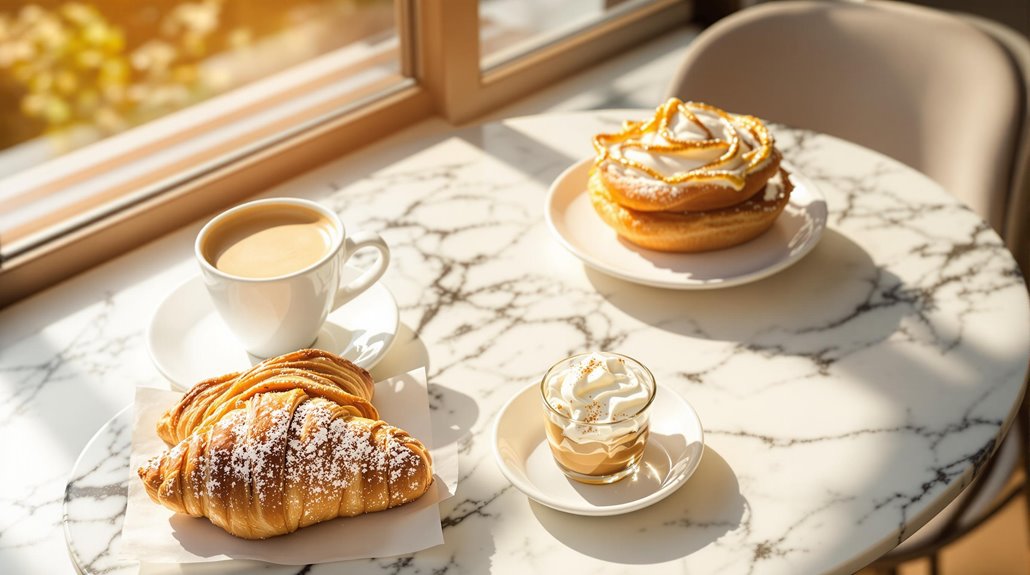
Modern coffee culture has altered Italy's traditional morning ritual while preserving its cherished essence. You'll find specialty cafes like Ditta Artigianale reinventing how they serve coffee, balancing innovation with time-honored traditions.
While strong coffee remains at the heart of Italian culture, you'll uncover new interpretations of milky coffee drinks alongside classic au lait options.
- Artisanal coffee shops emphasize craftsmanship and precision
- Traditional espresso bars now offer expanded beverage menus
- Design-forward spaces create immersive coffee experiences
- Morning rituals adapt to contemporary preferences
- Specialty cafes blend innovation with cultural authenticity
Today's Italian cafes are metamorphosing into sophisticated spaces where you can savor both traditional and modern coffee preparations. They've preserved the ceremonial aspects of coffee service while introducing fresh viewpoints that cater to evolving tastes.
Related posts