Pancakes in Literature: References and Symbolism
Pancakes in literature are more than just a breakfast item; they carry deeper meanings. Authors often use pancakes to symbolize comfort, family, and sometimes the chaos of life. For example, in Shakespeare's *As You Like It*, pancakes hold cultural importance. In Joan Bauer's "Pancakes," the main character's quest for perfection is reflected in her careful pancake preparation, showing her personal growth.
So, how do pancakes become significant in stories? First, understand their symbolic value. Pancakes often represent comfort and home, making them ideal for scenes involving family or personal reflection. Next, notice how authors use pancakes to reflect a character's inner life or struggles. For instance, a character making pancakes might be seeking control or comfort. Finally, look at the cultural context. In some stories, pancakes tie into traditions or societal norms, adding another layer of meaning.
By recognizing these elements, you can better appreciate how pancakes weave a rich narrative thread through literature.
Early Pancake References
Pancakes may seem like a modern breakfast staple, but their origins go back centuries. The earliest reference to a pancake comes from the ancient Greek poet Cratinus around 500 B.C.E., who described a "flat cake." This gives us a glimpse into the early history of this dish. In the late second century C.E., the Greek physician Galen included a pancake recipe, showing its longstanding role in culinary traditions.
By the medieval period, the term "pancake" emerged from Middle English, reflecting the dish's continued presence in cultural and culinary life. Historical cookbooks from the 16th century in France and England started featuring pancake recipes, marking their growing popularity and solidifying their place in everyday meals.
These early references and recipes illustrate how pancakes have transcended time and cultures. From ancient Greek poetry to medieval kitchens, the pancake has a rich history that adds depth to every bite you enjoy today.
Pancakes in Shakespeare
In Shakespeare's works, pancakes serve as a useful literary device that adds depth to his characters and settings. For example, Touchstone's pancake anecdote in *As You Like It* humorously highlights the absurdity of human experiences and relationships. This use of food in character development provides audiences with a relatable link to the characters' lives.
During Shakespeare's time, pancakes likely referred to both pancakes and fritters. A buttermilk pancake recipe from that period would have included flour, sugar, baking powder, buttermilk, and eggs. These basic ingredients emphasize simplicity and versatility, reflecting common breakfast foods of the time.
Pancakes also symbolize comfort and nourishment, contrasting with elaborate meals that indicate status and social interaction. This contrast helps underscore the different levels of society and their interactions in Shakespeare's plays.
Symbolism in Pancake Stories
In literature, pancakes often carry symbolic meanings. Ingredients like maple syrup and condiments can add depth, as seen in Jill's story, where they represent her struggle with control. Common narratives use pancakes to highlight themes of family, comfort, and the journey toward accepting life's messiness. In various cultures, pancakes symbolize a balance between order and disorder, reflecting the challenge of accepting human flaws.
Symbolic Ingredients and Meaning
Understanding the symbolic ingredients of pancakes in literature can offer valuable insights. The basic components like flour and eggs are not just for cooking; they symbolize key aspects of life. Flour stands for stability and the essential building blocks, while eggs represent creativity and the potential for growth and transformation.
Cooking pancakes often serves as a metaphor for personal development in stories. Characters may learn to accept life's imperfections, similar to how a pancake isn't always perfectly round or golden. This process can mirror the journey toward self-acceptance and growth.
Syrup, another important element, can symbolize chaos or disarray. When characters pour syrup over their pancakes, it shows their efforts to add sweetness and order to their lives. This act reflects their desire for comfort and stability amid uncertainty.
The communal aspect of sharing pancakes highlights themes of togetherness and nurturing relationships. Characters connect through pancakes, fostering a sense of community and mutual support.
Pancakes in Popular Narratives
Exploring the symbolism of pancakes in popular narratives shows how these simple treats represent comfort and domesticity. In Joan Bauer's story "Pancakes," the protagonist Jill deals with her perfectionism. Making pancakes reflects her internal chaos and need for control. Each pancake symbolizes her struggle to find balance, illustrating how a simple act can mirror complex emotions.
In Shakespeare's "As You Like It," Touchstone's pancake anecdote adds humor, showing the absurdities of daily life. This highlights the cultural importance of pancakes in social interactions and lighthearted moments.
In John Steinbeck's "The Grapes of Wrath," pancakes represent nourishment and simple joys during tough times. They provide normalcy and fleeting happiness, underscoring the value of basic sustenance.
Across various stories, pancakes often symbolize connection and community. They are not just food; they represent togetherness, enjoyed during gatherings and celebrations, reinforcing bonds and shared experiences.
Cultural Symbolism and Themes
Pancakes in literature often carry rich cultural symbolism and themes, reflecting various aspects of human experience. They frequently symbolize comfort and simplicity, offering characters stability during turbulent times. For example, in Jill's story, pancakes represent the positive aspects of her life and help anchor her during challenges.
Pancakes also serve as a medium for social connections and communal experiences in different cultural narratives. Their versatility allows them to be shared and customized, highlighting their role in fostering community and togetherness.
In many works, pancakes are linked to themes of indulgence and excess. Shakespeare often used food to signify deeper character traits and societal critiques, and pancakes are no exception. They can symbolize the pleasures and pitfalls of overindulgence.
Celebrations and rituals, such as Shrove Tuesday, often feature pancakes prominently. This day, also known as Pancake Day, involves using up rich ingredients before fasting. It embodies themes of sacrifice and change.
Pancakes and Character Development
When examining character development through pancakes, you can identify symbolic traits. For example, Jill's journey from perfectionism to acceptance in Joan Bauer's "Pancakes" illustrates this. Making or eating pancakes often leads to growth, pushing characters to face chaos and embrace life's messiness. These culinary moments reveal deeper emotional struggles and drive transformations, showing the importance of imperfections in personal growth.
Symbolic Character Traits
In "Pancakes," Jill's character development is symbolized by her approach to making pancakes. Her obsession with order and perfection is evident in her meticulous process. This precise method reflects her desire for control in a chaotic world. Each perfect pancake mirrors her struggle to maintain order in her life.
The story uses pancakes to illustrate Jill's rigid perfectionism. Her interactions with this simple food highlight her reluctance to accept anything less than flawless. As the narrative progresses, you see a shift in her character traits. Jill starts to realize that life's messiness can't always be controlled, just as not every pancake will turn out perfectly.
Pancakes in the story represent more than food; they symbolize Jill's journey toward personal growth and acceptance. Through her evolving relationship with pancakes, she learns to appreciate the beauty in imperfection. This transformation from a rigid perfectionist to someone who welcomes life's unpredictability highlights her character development in the story.
Growth Through Chaos
In Joan Bauer's "Pancakes," Jill's experience shows how chaos can drive personal growth. Managing pancake orders in a disorganized restaurant, Jill struggles for control. Her efforts mirror her internal conflict. The hectic environment and disorganized kitchen staff push her limits. This chaos represents life's unpredictability, and Jill's journey through it illustrates growth.
When her ex-boyfriend Allen Feinman helps her unexpectedly, Jill's view begins to change. His assistance shows the value of support systems in tough situations. She learns that controlling every detail isn't possible. The ever-changing and imperfect pancakes symbolize life's messiness.
As the story progresses, Jill understands that embracing chaos can lead to growth and better relationships. This experience highlights the need for adaptability and resilience. The chaotic restaurant, full of challenges, becomes the setting where Jill's character develops. It shows how disorder can lead to significant personal growth.
Embracing Imperfections
In "Pancakes," Joan Bauer uses Jill's struggle with perfectionism to highlight the importance of accepting imperfections. Jill's journey begins with a strong need for control, particularly in her demanding restaurant job. Her initial attempts to maintain order fall apart amidst the chaos of making pancakes. This disarray reflects her internal conflict and path to growth.
As Jill flips pancakes in the busy kitchen, her need for perfection is constantly challenged. Her interactions with her ex-boyfriend Allen and the hectic environment force her to face her fear of disorder. Over time, she begins to appreciate the spontaneity and beauty in life's imperfections.
Pancakes symbolize Jill's emotional growth, showing her shift from rigidity to flexibility. Through cooking, she learns that imperfections can lead to richer, more meaningful experiences. By the end of her journey, Jill finds joy in the process rather than focusing on a perfect outcome. Accepting imperfections helps her build stronger connections with others and find deeper fulfillment.
Cultural Significance of Pancakes
Pancakes have significant cultural importance across various traditions and civilizations. They have been a staple breakfast food and symbolize life and sustenance in many ancient cultures. For example, in Ethiopia, injera, made from teff flour, is more than just food; it is central to celebrations and reflects its deep cultural importance.
In literature, like Steinbeck's "The Grapes of Wrath," pancakes symbolize sustenance during tough times. This highlights their role as a basic yet essential food. Historically, pancakes have been a social dish, easy to prepare and customize, bringing people together from different cultural backgrounds.
On Shrove Tuesday, eating pancakes has special meaning. It prepares families for Lent by using up rich ingredients before the fasting period. This tradition shows the pancake's role in religious and cultural practices.
Pancakes' adaptability in different cultures, such as Russian blini and Indian dosas, showcases their global significance. Across civilizations, pancakes remain a symbol of togetherness, nourishment, and cultural heritage.
Global Pancake Variations
Exploring pancake variations around the world reveals different cultural stories. In Russia, blini are thin pancakes often served with caviar. French crêpes can be filled with Nutella, ham, or cheese, showing their versatility.
In Ethiopia, you'll find injera, a sourdough flatbread made from teff flour. It acts both as a pancake and an edible utensil, highlighting communal dining traditions. In India, dosas are crispy pancakes made from fermented rice and black gram batter, typically enjoyed with chutneys and sambar.
Venezuelan cuisine offers cachapas, sweet corn pancakes filled with cheese, suitable for breakfast or a snack. Korean buchimgae are savory pancakes with vegetables and sometimes seafood, served with a tangy dipping sauce.
Another Indian variation is the besan chilla, a savory pancake made from chickpea flour, seasoned with spices and vegetables. Each type of pancake, whether sweet or savory, provides insight into the culture that values it.
Modern Pancake Trends
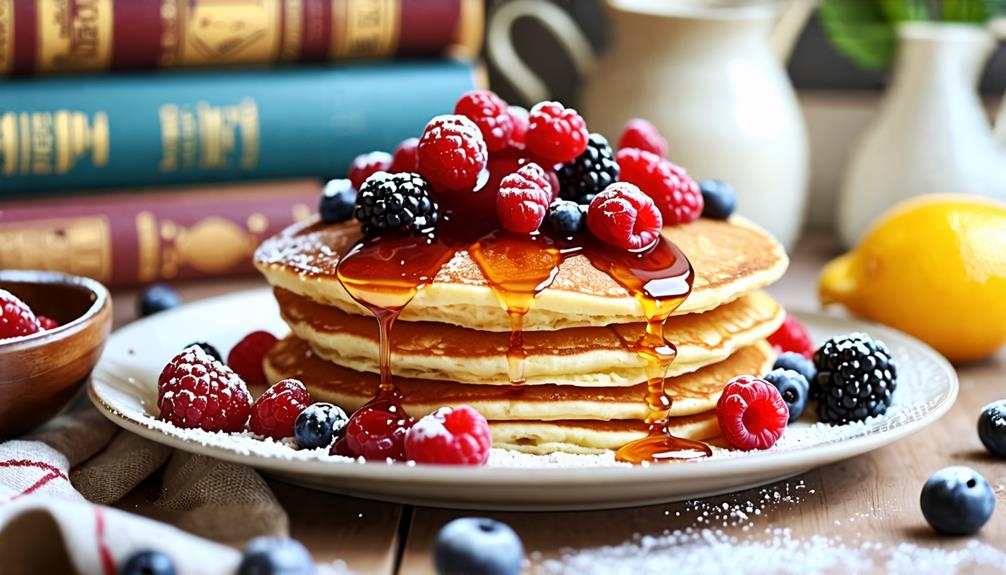
Curious about how pancakes have changed in recent years? Modern pancake trends have introduced new flavors and ingredients that appeal to health-conscious consumers. Ingredients like matcha, activated charcoal, and protein powders are now common, adding a nutritious twist to traditional pancakes.
Many food writers now promote making pancakes from scratch, providing recipes for various dietary needs, including gluten-free and vegan options. This reflects a wider trend toward personalized, health-focused eating habits.
Pancake festivals are becoming more popular, featuring competitions, tastings, and creative recipes using local ingredients. These events bring communities together and showcase the versatility of pancakes.
Topping choices have also expanded. Besides traditional options, you now see blueberries, chocolate chips, and savory items like cheese and herbs. Social media has influenced these trends, inspiring visually appealing creations like pancake art and stack towers. These designs encourage creativity and sharing, making pancakes more popular than ever.