Pancake Pan Buying Guide: What to Look For

When buying a new pancake pan, it's important to consider several key factors. First, think about the pan's material. A nonstick pan makes flipping pancakes easier, while a cast iron pan offers better heat retention.
Next, consider the size of the pan. A pan between 24 cm and 30 cm allows you to cook multiple pancakes at once, which can save time. Ergonomic handles are also important, as they make the pan easier to hold and maneuver. Even heat distribution ensures that your pancakes cook evenly, avoiding burnt or undercooked spots.
By focusing on these elements, you can find a pancake pan that will enhance your cooking experience and make your breakfast routine more efficient.
Material Options
When choosing a pancake pan, understanding the material options is crucial for making the best decision. Each material offers unique benefits that can impact your pancake-making experience.
Nonstick coatings, such as ceramic or eco-friendly options, are popular for their ease of flipping and cleaning. They require less oil for cooking, making them a favorite for hassle-free pancake preparation.
Cast iron is known for its exceptional heat retention and even cooking, providing consistently perfect pancakes. However, it is heavier, so it might take some practice to handle effectively. If durability is a priority, cast iron is an excellent choice due to its long-lasting nature.
Carbon steel pans offer efficient heat conduction, ensuring consistent cooking results. They are also lightweight, making them easier to maneuver, especially when flipping pancakes. Anodized aluminum is another lightweight option, known for its durability and excellent heat distribution, ensuring your pancakes cook evenly.
Compatibility with different cooktops is another significant factor. Many modern pans, including those made from cast iron and carbon steel, are designed to work with induction cooktops, adding versatility to your cooking methods.
Pan Size
When choosing a pancake pan, consider the ideal diameter for your cooking needs. A pan size ranging from 24 cm (9.5 inches) to 30 cm (12 inches) allows you to cook one or more pancakes easily. If you need more space for larger batches, a pan around 34 cm (13 inches) offers better efficiency.
Optimal Diameter Selection
Choosing the right diameter for your pancake pan is crucial for achieving perfect pancakes. A smaller pan, around 23 cm (9 inches), is ideal for making individual pancakes or thicker, fluffy ones. In contrast, a 30 cm (12 inches) pan works well for larger pancakes or as a griddle.
When selecting the best size, consider the following:
- Cooking habits: If you like flipping multiple pancakes, a larger pan offers more space.
- Stove size: Ensure the pan fits your stove burner for even cooking.
- Even cooking: Larger pancakes need a pan that heats evenly to avoid undercooked centers.
- Flipping: A spacious pan makes flipping pancakes easier and reduces mess.
- Individual pancakes: Smaller pans are great for uniform, thick pancakes.
Electric pancake makers usually start at 28 cm (11 inches) in diameter, providing ample space for even cooking and easy flipping. By considering your cooking habits and stove size, you can select an ideal pan diameter to guarantee delicious, perfectly cooked pancakes every time.
Handling Multiple Pancakes
To handle multiple pancakes efficiently, choose a pan size between 24 cm to 30 cm in diameter. A larger cooking surface lets you cook several pancakes at once, reducing your total cooking time. For those making breakfast for a crowd, griddle pans that are at least 30 cm are ideal. These pans can hold multiple batter pours without overcrowding, ensuring each pancake cooks evenly.
A lightweight pan is essential when flipping multiple pancakes. It makes handling easier, making flipping smoother and reducing the risk of pancakes sticking or tearing. Specialty pancake pans often have shallow edges, which help with flipping and stacking multiple pancakes in one session.
When choosing your pan, remember that a larger cooking surface and lightweight design improve cooking efficiency. Griddle pans with shallow edges are particularly useful for handling multiple pancakes, allowing you to pour batter easily and achieve perfect flips every time.
Handle Design
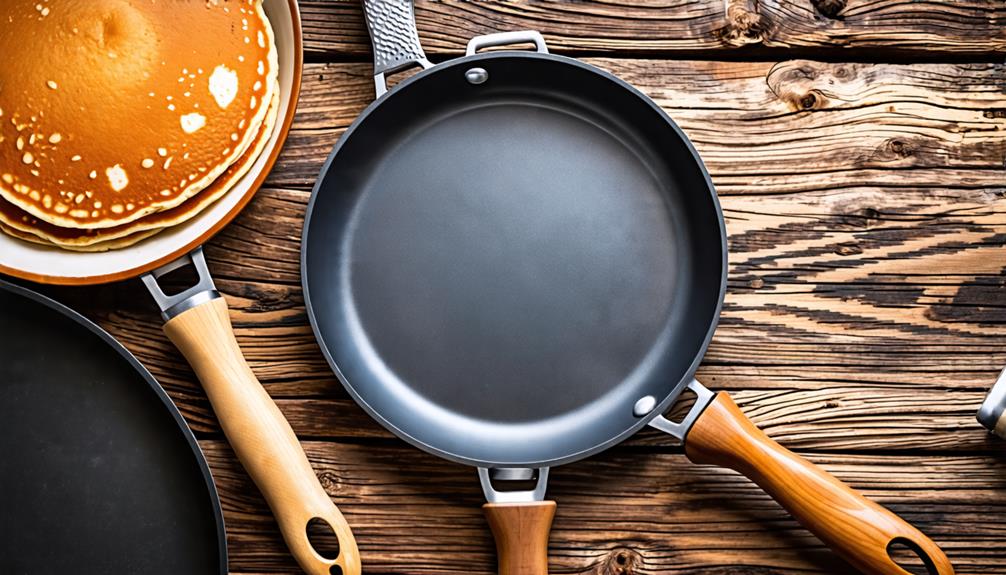
A well-designed handle is crucial for a good pancake pan. It's more than just a grip. When choosing a pancake pan, consider several key features that can improve your cooking experience.
First, opt for ergonomic handles. They offer a comfortable grip, enhance control, and reduce hand fatigue, especially during long cooking sessions. Handles with a stay-cool feature are important for safety. They prevent burns and make flipping pancakes easier.
Avoid pans with riveted handles. A rivet-free design makes cleaning easier by eliminating grime buildup around rivets. Lightweight handles are also important. They improve maneuverability, making it simpler to flip pancakes and move the pan from the stovetop to the serving area.
Finally, check if the pan is oven-safe. This feature allows you to finish recipes in the oven without worrying about the handle degrading.
Remember these key points:
- Ergonomic handles for a comfortable grip
- Stay-cool feature for safety
- Rivet-free design for easy cleaning
- Lightweight handles for better maneuverability
- Oven-safe capability for versatile cooking options
Heat Distribution
When choosing a pancake pan, prioritize heat distribution to achieve perfect pancakes. Good heat distribution ensures even cooking, preventing burnt spots and undercooked areas. This consistency is vital for uniform texture and flavor.
Materials like cast iron and hard-anodized aluminum excel in heat retention and distribution. A thicker pan base enhances heat distribution, ensuring consistent cooking across the surface. This is essential for perfectly golden pancakes.
A flat bottom on the pan also affects heat distribution. It eliminates hot spots, ensuring even cooking and preventing areas from cooking faster than others. Non-stick coatings further improve heat distribution by allowing the batter to spread evenly, which guarantees a uniform texture and flavor.
Investing in a pan with these qualities will improve your pancake-making experience. Focus on heat distribution when selecting your next pancake pan for the best results.
Nonstick Features
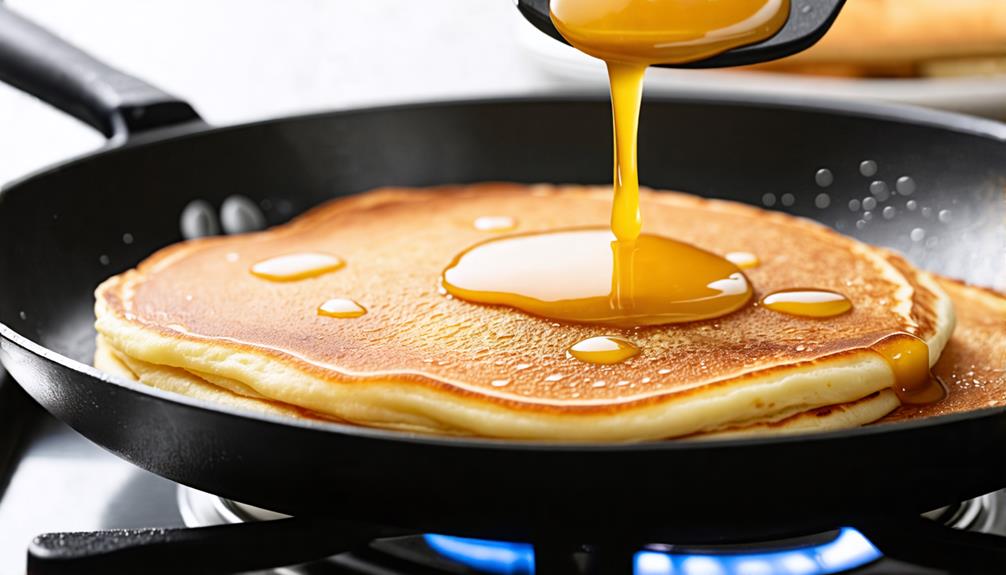
Nonstick features in pancake pans make cooking easier and more enjoyable. Modern nonstick coatings, made from materials like Teflon or ceramic, prevent pancakes from sticking and tearing. These coatings are free from harmful chemicals such as PFOA, ensuring safer and healthier cooking.
To get the most out of your nonstick pan, follow these steps:
- Use silicone, wood, or plastic utensils: These materials won't scratch the nonstick coating, helping maintain its performance over time.
- Cook healthier: Nonstick surfaces require less oil or butter, allowing you to make lighter, healthier pancakes.
- Hand wash your pan: Use mild detergents to wash it by hand. This helps keep the nonstick surface in good condition.
- Enjoy easy cleanup: Nonstick surfaces make cleaning up after meals quicker and easier.
- Store properly: Prevent scratches or chips by storing your pan carefully, ensuring it remains in top condition.