Natural Ingredients in Traditional Maple Syrup
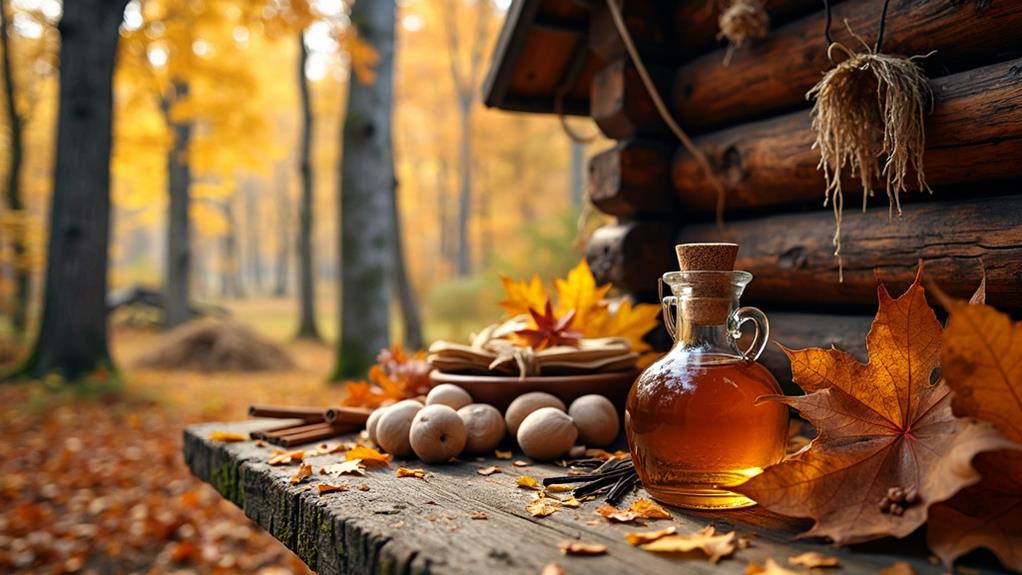
In traditional maple syrup, you'll find just one natural ingredient: the pure sap of sugar, black, or red maple trees. Harvested during specific temperature fluctuations, this sap is collected and heated to concentrate its sugar content to at least 66%. There are no additives or preservatives, ensuring you get an authentic, all-natural product. The end result is a nutrient-rich syrup that's not only sweet but also beneficial for your health. The difference in flavor and quality is tied to the specific tree species and the time of harvest, making every bottle unique. Curious about what makes each grade distinct? Keep going.
Key Takeaways
- Traditional maple syrup is made from the sap of sugar maple, black maple, or red maple trees.
- The sap naturally contains 2% to 5% sugar with no artificial additives.
- Pure maple syrup must have at least 66% sugar content to qualify as true maple syrup.
- The process involves heating sap to evaporate water, concentrating its natural sugars.
- Regulations ensure the purity and authenticity of ingredients in traditional maple syrup.
Production Process
Have you ever wondered how maple syrup is made? Maple syrup is produced from the sap of sugar maple, black maple, and red maple trees, which thrive in cold climates. To start, you drill holes into the tree trunks, allowing the sap to flow out and be collected in containers. This process begins as soon as the temperatures rise above freezing during the day and drop below freezing at night.
Once collected, the sap undergoes a vital transformation. It's heated to evaporate water, concentrating the syrup. For the final product to be classified as maple syrup in Canada, it must reach at least 66% sugar content. This guarantees the syrup's rich flavor and proper consistency.
Technological advancements in the 1970s greatly improved the efficiency of syrup processing methods. These innovations improved both yield and quality, making the production process more effective. Today, Quebec stands as the largest producer of maple syrup globally, contributing approximately 70% of the world's supply. This makes Quebec a significant player in Canada's maple syrup exports.
Historical Context
Long before modern techniques transformed the industry, the roots of maple syrup production can be traced back to the indigenous peoples of Northeastern North America. They were the initial to tap maple trees, collecting the sap and boiling it to produce syrup. These methods, passed down through generations, laid the foundation for the traditional practices still revered today.
When European settlers arrived, they recognized the value of this sweet treat and adapted indigenous techniques. They refined the process, making it more efficient and scalable. The settlers' innovations were crucial, leading to the modern methods we see now in the maple syrup industry.
Quebec has emerged as the world's largest producer of maple syrup, accounting for about 70% of global output as of 2016. The province's dedication to quality and tradition is unparalleled. In fact, Canadian maple syrup exports were valued at C$487 million in 2016, with Quebec contributing around 90% of this figure.
Grading and Quality
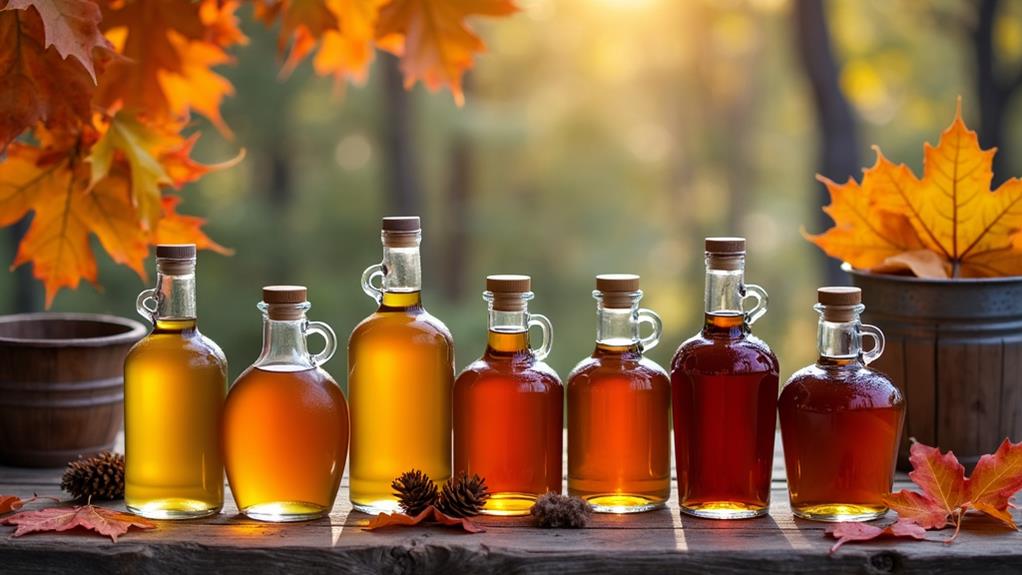
In relation to grading and quality, maple syrup is categorized based on its color and taste, offering a range of flavors from mild to robust. When selecting pure maple syrup, you'll notice it's graded into classifications like Grade A and Grade B. Grade A syrup is typically lighter in color and has a mild flavor, perfect if you prefer a subtle sweetness. On the other hand, Grade B syrup is darker and provides a stronger, more robust taste, ideal for those who enjoy a bolder maple flavor.
In the U.S., regulations guarantee that pure maple syrup is primarily made from sap harvested from specific maple tree species, such as sugar, black, or red maple. This assures you're getting an authentic product. The main sugar type in pure maple syrup is sucrose, which greatly contributes to its sweetness and distinctive flavor profile.
States like Vermont and New York have even stricter labeling definitions, so you can be confident that any syrup labeled as genuine maple syrup meets high-quality standards. By understanding these grades and quality markers, you can select the perfect pure maple syrup that suits your taste preference and culinary needs.
Culinary Uses
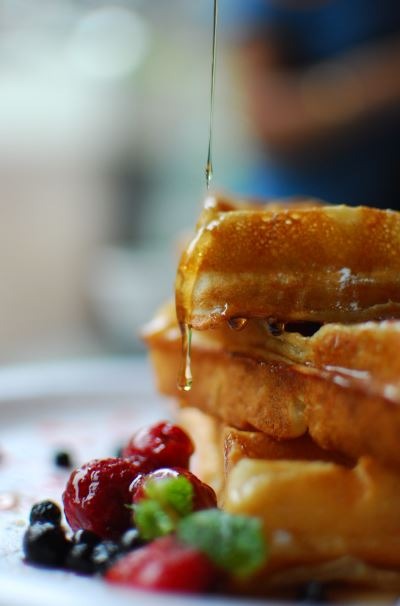
Why not explore the diverse culinary uses of maple syrup to improve your dishes? Maple syrup isn't just for breakfast anymore. Sure, drizzling it on pancakes, waffles, and French toast brings out a delightful sweetness, but its versatility stretches much further. When baking, it adds richness and moisture to cookies, cakes, and muffins, raising your treats beyond the ordinary.
In savory dishes, maple syrup's complex flavor profile can be a game-changer. It complements roasted vegetables and meats, giving them a natural sweetness and depth that's hard to achieve with other sweeteners. Imagine your roasted carrots glazed with maple syrup, or a rich maple-balsamic reduction over pork tenderloin—both mouth-watering possibilities.
Cocktail enthusiasts also swear by maple syrup. It adds a unique touch of sweetness and depth to drinks like old fashioneds and maple bourbon cocktails. You'll find it's a fantastic substitute for simple syrup, offering more complexity and richness.
The magic behind maple syrup's flavor lies in its natural compounds, which vary depending on the species of maple tree and the harvest time. This variability guarantees that every bottle of maple syrup you use brings a unique touch to your culinary creations.
Maple Tree Species
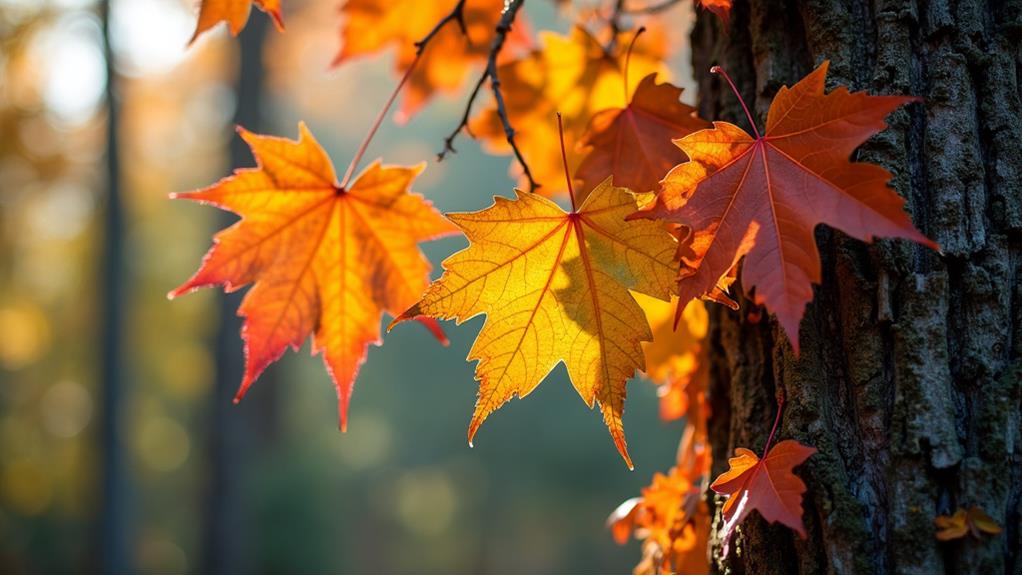
When diving into the world of maple syrup, you'll quickly realize that not all maple trees are created equal. Among the different species, the sugar maple stands out as the most prized for syrup production. This is largely due to its sap, which contains an impressive 2-5% sugar content. Such a high concentration makes the sugar maple ideal for producing that rich, authentic syrup you love.
You'll also encounter the black maple, often considered a subspecies of the sugar maple. It shares many characteristics with the sugar maple, including a similar sap sugar content, making it another excellent choice for syrup production. However, don't overlook the red maple either. While it has a shorter sap season because its buds open earlier in the spring, it still contributes to the syrup-making process, albeit to a lesser extent.
Occasionally, other species like the box elder are tapped, but they don't measure up regarding sugar concentration. This specificity in maple species is essential. Only certain varieties meet the necessary sugar content for producing authentic maple syrup, and the sugar maple tops the list every time.
Recipe Overview
Creating homemade maple syrup is easier than you might think, and it starts with just a few natural ingredients. To whip up your own homemade syrup, you'll need granulated sugar, water, and pure maple extract. These ingredients come together to create a delightful, authentic flavor profile that rivals any store-bought option.
Begin by combining one cup of granulated sugar with half a cup of water in a saucepan. Heat the mixture over medium heat until the sugar dissolves completely. This usually takes about five minutes of prep time. Next, add one teaspoon of pure maple extract to the mixture and stir it thoroughly. To introduce a richer taste and improve the syrup's thickness, consider using brown sugar instead of, or alongside, granulated sugar.
For extra depth, you might also incorporate a touch of vanilla extract. This small addition can raise the flavor and make your homemade syrup even more special. Cook the mixture for another 10 minutes, allowing it to thicken to your desired consistency. This simple recipe yields approximately 16 servings, making it a cost-effective and delicious alternative to store-bought syrups. Enjoy your homemade syrup over pancakes, waffles, or French toast!
Key Ingredients
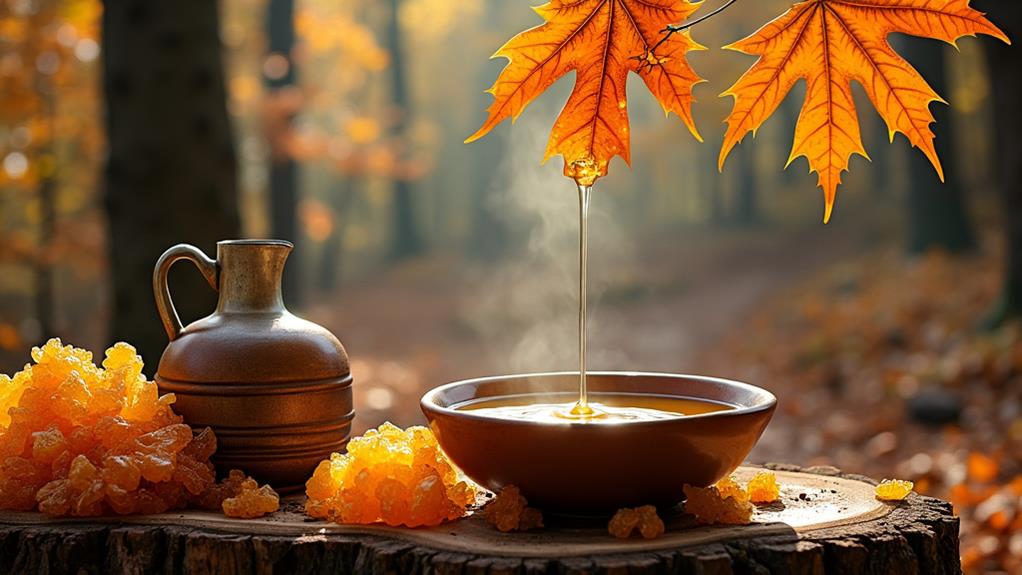
One of the most integral aspects of making authentic maple syrup at home is understanding the key ingredients involved. At its core, traditional maple syrup is made from the sap of sugar maple, black maple, or red maple trees. This sap is a natural marvel, containing a sugar content ranging from 2% to 5%. The magic of maple syrup lies in its simplicity—no additives are required. You're working with pure, natural ingredients, concentrating the sap through evaporation to create the sweet syrup you love.
To qualify as true maple syrup, the final product must contain at least 66% sugar. This purity is strictly regulated in Canada, ensuring you get nothing but the real deal. When making your own, you'll notice the difference in grades based on color and flavor. Lighter grades are milder, while darker grades boast a richer, more robust taste.
For an extra touch of authenticity without adding artificial components, consider using pure maple extract. It amplifies the natural flavor profile, giving your homemade syrup that quintessential maple essence. By understanding these key ingredients, you're well on your way to crafting delicious, traditional maple syrup.
Cooking Instructions
To start making your homemade maple syrup, gather your ingredients and kitchen tools. You'll need 2 cups of granulated sugar, 1 cup of water, 1 tablespoon of pure maple extract, and 1 teaspoon of vanilla extract. Begin by combining the granulated sugar and water in a saucepan over medium heat. Stir continuously until the sugar completely dissolves.
Next, bring the mixture to a low boil. Maintain this gentle boil for about 3-4 minutes, allowing the syrup to thicken to your desired consistency. Once you've reached the right texture, remove the saucepan from the heat.
Now, it's time to improve the flavor of your syrup. Stir in the pure maple extract and vanilla extract. For an even richer taste, you might want to substitute some of the granulated sugar with brown sugar.
Finally, let the syrup cool slightly before transferring it to glass jars. Store any leftover syrup in the refrigerator, where it will keep for up to one month. Reheat gently before using.
Key Steps:
- Dissolve Sugar: Combine sugar and water over medium heat until dissolved.
- Low Boil: Boil gently for 3-4 minutes.
- Flavor Improvement: Add maple and vanilla extracts after boiling.
Nutritional Information
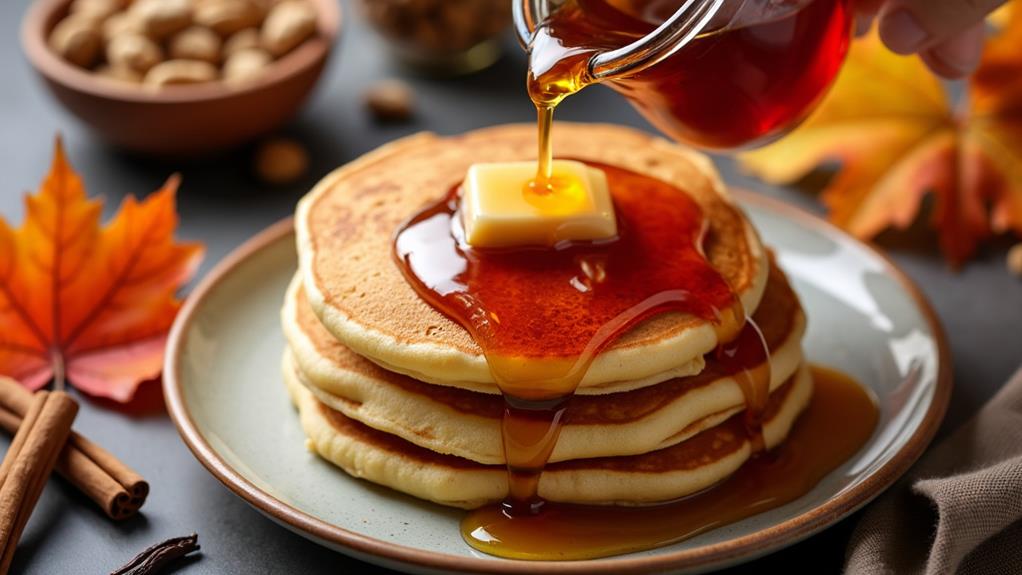
Packed with important nutrients, pure maple syrup is more than just a sweet treat. It's a nutritional powerhouse that offers fundamental minerals like manganese and zinc. These minerals are critical for your total health and wellness, supporting everything from bone development to immune function.
A single tablespoon of maple syrup contains about 52 calories and 13.4 grams of carbohydrates, primarily from natural sugars. While it does contain sugar, it's a natural form, unlike refined sugars. This difference is significant because maple syrup has a lower glycemic index. What does that mean for you? It helps maintain more stable blood sugar levels, making it a smarter option if you're mindful of your glucose intake.
Additionally, maple syrup is rich in antioxidants, which combat oxidative stress and inflammation in your body. These antioxidants can help protect your cells from damage and contribute to total longevity.
Another major advantage is its natural composition. Maple syrup is free from artificial additives and preservatives, making it a healthier alternative to many commercial syrups loaded with synthetic ingredients. So, when you choose maple syrup, you're not only indulging in a natural sweetness but also nourishing your body with fundamental nutrients.
Frequently Asked Questions
What Are the Ingredients in Real Maple Syrup?
When you're looking at the ingredients in real maple syrup, you'll find it's incredibly simple. It's made primarily from the sap of sugar, black, or red maple trees. Sometimes, a small amount of water is added during processing. There are no additives or artificial ingredients. The natural flavor variations you taste come from different sap qualities and processing methods, giving each bottle its unique character.
Is Maple Syrup 100% Natural?
Yes, maple syrup is 100% natural when it comes from the sap of specific maple tree species. Sustainable harvesting practices guarantee you get a pure product without additives or preservatives. Both Canada and the U.S. have strict regulations that maintain its natural status. Traditional methods, improved by modern technology, keep the natural integrity intact, making certain you enjoy the authentic flavor derived from boiling the sap.
What Is Maple Syrup Made of Chemically?
You're asking about the chemical composition of maple syrup. It's primarily made of sucrose, making up about 66% of its sugar content. Furthermore, it includes small amounts of glucose and fructose, which improve its sweetness and flavor. The syrup also contains organic compounds like phenolic compounds and organic acids, contributing to its unique taste. Trace minerals such as manganese, zinc, and calcium provide some nutritional benefits.
Is Maple Syrup a Natural Ingredient?
Yes, maple syrup is a natural ingredient. It comes straight from the sap of specific maple trees, like the sugar maple. The maple origin guarantees that it's free from artificial additives or preservatives. The production process is simple and involves heating the sap to concentrate its natural sugars. So, when you use maple syrup, you're choosing a sweetener that's both natural and pure, directly from nature.