Is Maple Syrup Healthier Than Honey?
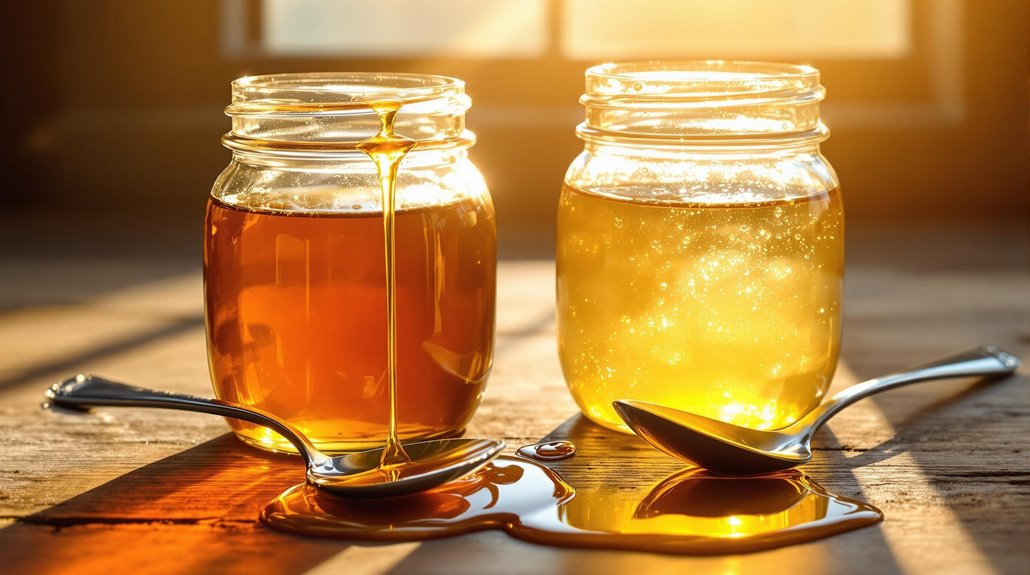
When choosing between maple syrup and honey, you'll find maple syrup offers more health benefits. It contains fewer calories and sugars per tablespoon while providing higher amounts of essential minerals like manganese and riboflavin. You'll also get more antioxidants and polyphenols, which can help reduce inflammation and provide anti-diabetic properties. While both are natural sweeteners, maple syrup's lower glycemic index and superior nutritional profile make it the wiser choice. There's much more to uncover about these golden elixirs.
Production Methods and Origins
While both maple syrup and honey are natural sweeteners, their production methods couldn't be more different. Maple syrup comes directly from the sap of maple trees and undergoes a rigorous quality control process managed by maple farmers. You'll find that maple syrup is vegan since it's purely plant-based, making it an attractive choice for those following a plant-based lifestyle.
In the honey versus maple debate, it's important to understand that honey bees collect nectar from flowers to produce honey. While honey provides natural sweetness, some UK honey products may contain sugar syrup dilutions. Pure Canadian maple syrup, on the other hand, maintains its authentic form without any additives. This key difference in production methods affects not only the purity of the final product but also its ethical considerations. Indigenous peoples of North America were the first to discover and develop the techniques for harvesting maple sap and producing syrup.
Taste Profile and Culinary Uses
Anyone comparing maple syrup and honey will notice their distinct flavor profiles and versatile culinary applications. While maple syrup offers a caramel-like taste with vanilla and butterscotch notes, honey delivers a sweeter, floral flavor.
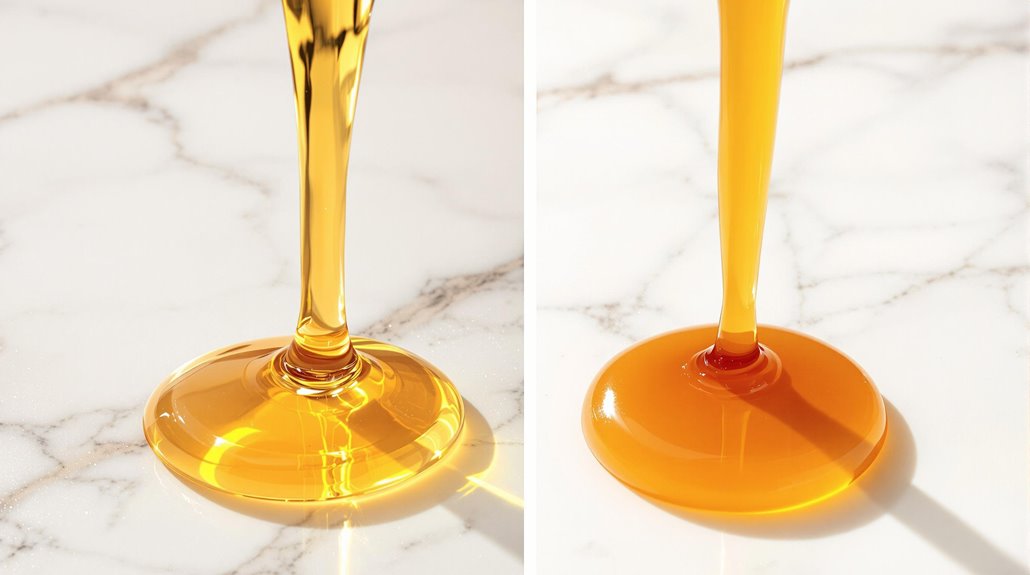
You'll find honey's thicker consistency perfect for marinades, dipping sauces, and salad dressings, while maple syrup works well in various sauces, drinks, and cooked dishes.
You can use these sweeteners interchangeably in most recipes with a 1:1 substitution ratio. Maple syrup shines in breakfast classics like pancakes and waffles, and you'll often see it featured in savory dishes such as roasted vegetables and meat glazes.
Honey, on the other hand, excels in baking and adds a delightful charming sweetness to teas and smoothies. Each ingredient brings its unique characteristics to enhance your culinary creations.
For a creative twist on traditional recipes, try using maple syrup in tangy dipping sauce for tofu nuggets or grilled vegetable dishes.
Nutritional Value Comparison
Beyond their distinctive flavors and culinary uses, maple syrup and honey offer unique nutritional benefits worth exploring. When you're choosing between these natural sweeteners, you'll find that maple syrup contains fewer calories and sugars per tablespoon than honey. It's also a superior source of essential vitamins and minerals, particularly manganese and riboflavin. The Grade A classification system helps consumers select maple syrup based on color intensity and flavor strength for different dietary needs.
While both sugar substitutes contain minimal fat and protein, honey takes a slight lead with its lower glycemic index of 58 compared to maple syrup's 54, meaning it won't spike your blood sugar as quickly. If you're interested in antioxidant content, maple syrup might be your better choice, as it typically contains higher concentrations of polyphenols. Both natural sweeteners can be part of a healthy diet when used in moderation.
Health Benefits and Research
Recent scientific research has revealed persuasive health advantages of maple syrup over honey. You'll find that maple syrup packs more antioxidants and offers superior cardiometabolic benefits compared to its golden counterpart. With a lower glycemic index of 54 versus honey's 58, maple syrup won't spike your blood sugar as much.
When it comes to minerals, maple syrup delivers higher amounts of essential nutrients like manganese and riboflavin. The polyphenols found in maple syrup have caught researchers' attention for their potential anti-diabetic properties and ability to reduce inflammation in your body. While both sweeteners should be used sparingly due to their sugar content, maple syrup's health benefits make it the smarter choice. Studies continue to uncover new ways this natural sweetener can positively impact your overall wellness.
Storage and Shelf Life
Storage solutions for maple syrup and honey reveal stark differences in their shelf lives. When comparing maple syrup vs honey, you'll find that honey's most extraordinary quality is its ability to last indefinitely without spoiling, though it may crystallize over time. You can easily fix crystallized honey by gently heating it.
Maple syrup, being more perishable, requires more careful storage. While unopened maple syrup can last for years when properly stored, you'll need to refrigerate it once opened. An opened bottle will stay fresh for about a year in the fridge.
To maximize the shelf life of both sweeteners, keep them in airtight containers away from heat and direct sunlight. Remember that storage conditions greatly impact their longevity, so proper handling is essential for maintaining their quality.
Making the Right Choice for Your Diet
When choosing between maple syrup and honey, you'll need to ponder more than just their shelf lives - your dietary goals and health needs should guide your choice. Both natural sweeteners offer distinct health benefits, but their nutritional makeup varies considerably.
If you're watching your sugar content, consider that honey has a slightly lower glycemic index, meaning it won't spike your blood sugar as quickly as maple syrup. However, both contain similar calories per serving. Maple syrup provides more minerals like manganese and zinc, while honey offers unique vitamins and antioxidants.
Your choice might also depend on how you'll use them. Honey's better for tea and baking, while maple syrup's ideal for pancakes and cooking. Remember that both can be part of a healthy diet when consumed in moderation.