How Long Does It Take to Make Maple Syrup?
You'll need 4-6 weeks to complete the maple syrup making process, from first tapping your trees to bottling the final product. During this time, you'll collect about 40 gallons of sap to make just 1 gallon of syrup. Each boiling session takes 4-6 hours, with modern collection methods speeding up the process greatly. Understanding the intricate timing of nature's cycles will help you become an expert in this sweet conversion from tree to table.
From Tree to Tap: The Preparation Timeline
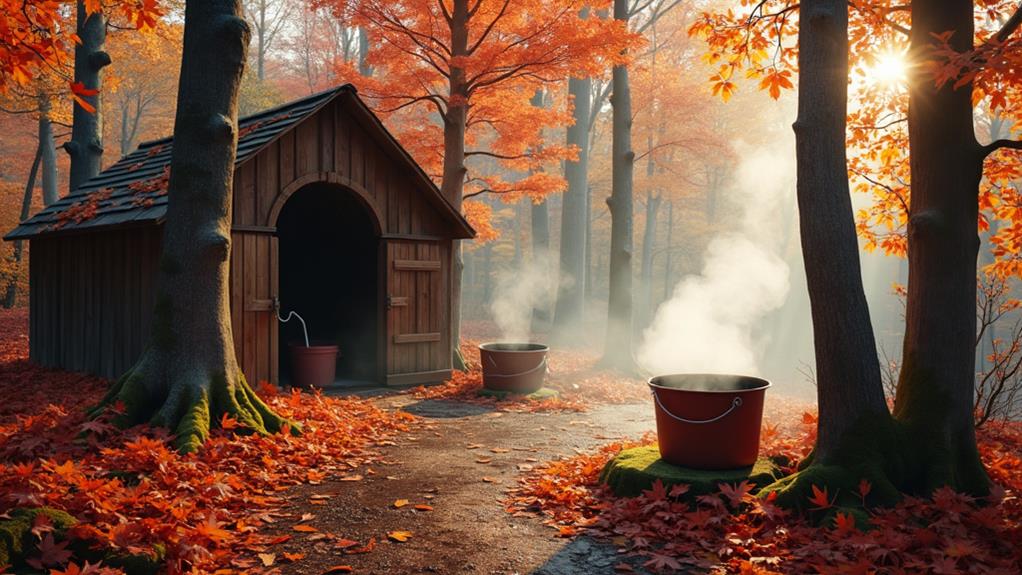
When does the path from tree to bottle begin? If you're planning to make maple syrup, you'll need to start in late winter when temperatures fluctuate between freezing nights and warm days. This weather pattern causes sap to flow freely through the maple trees, marking the beginning of sugaring season.
The process of tapping trees requires careful timing and preparation. Once you begin tapping a tree, you'll need to collect roughly 40 gallons of sap to produce just one gallon of pure maple syrup.
The next pivotal step involves boiling sap in a sugar shack until it reaches the perfect sugar concentration. Following Indigenous peoples' time-honored techniques, you'll spend about 4-6 weeks from your first tap to the finished syrup, making this traditional craft both time-intensive and rewarding. Early Native Americans perfected the process of collecting sap in birch bark containers and using heated stones to gradually evaporate the water.
Nature's Clock: Understanding Sap Flow Seasons
Nature's internal rhythm controls the flow of maple sap, making the sugaring season a race against time. You'll typically have 4-6 weeks to collect sap when the weather creates perfect conditions for the trees to release their sweet treasure.
The process begins when temperatures swing between freezing nights and warm days, causing the tree to expand and contract, which pushes the sap through your tap hole.
Watch the weather conditions carefully - they're pivotal for ideal sap flow. When temperatures stay too hot or too cold for extended periods, your maple syrup production could come to a halt.
You'll know it's time to stop collecting when you see leaf buds forming on your maple trees. At this point, the sap's sugar content changes, making it unsuitable for creating that golden syrup you're after.
The collected sap must be heated until it reaches 66% sugar content to officially qualify as maple syrup in Canada.
The Boiling Process: Time Requirements and Stages
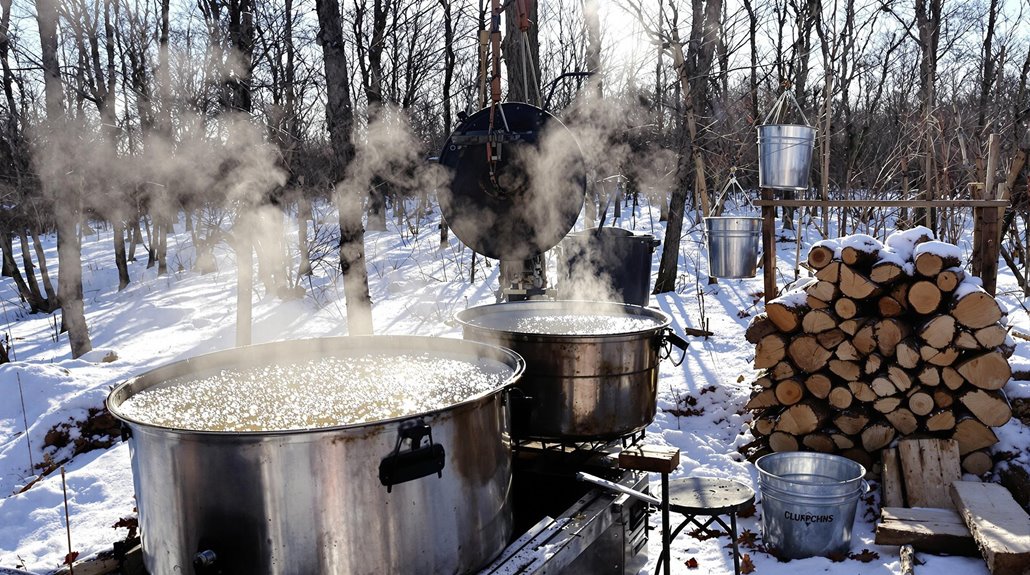
The conversion of maple sap into syrup demands both patience and precision during the lengthy boiling process. You'll need about 40 gallons of sap to make one gallon of syrup, and the boiling day can stretch from 4-6 hours, including time spent collecting sap.
When boiling the sap, you'll need to maintain temperatures above the boiling point of water, at approximately 219°F. The process of metamorphosing sap into syrup requires continuous heating for 3-4 hours in your main evaporator or fire pit.
As the water evaporates, the sugar content gradually increases until it reaches 66-67%. During the final stage, you'll transfer the concentrated sap to a finishing pan for the last 20 minutes of boiling before it's ready for filtering and bottling.
Modern producers have streamlined this process using reverse osmosis technology to concentrate the sap's sugar content before boiling, significantly reducing production time.
Collection Methods and Their Impact on Production Speed
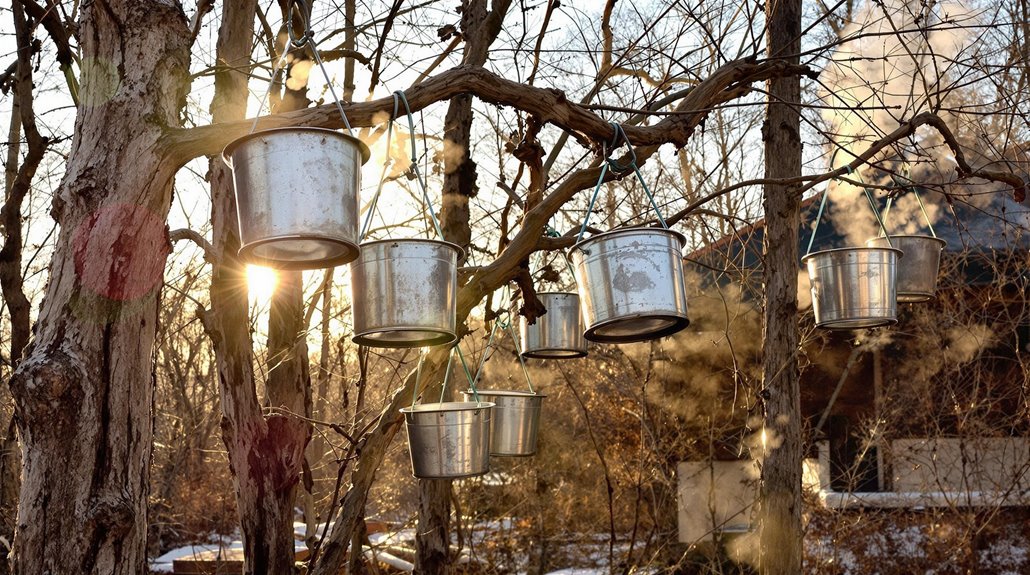
Modern collection methods can dramatically affect how quickly you'll produce maple syrup from start to finish. If you're using a tubing system instead of traditional buckets, you'll collect sap more efficiently and make syrup faster. When you add vacuum assistance to your tubing system, you'll increase sap flow enormously, even during variable daytime temperatures.
To speed up maple production even further, you can use reverse osmosis pre-treatment before the water is boiled away. This technology removes up to 75% of the water from your collected sap before it hits your stainless steel evaporator. While traditional bucket collection might take 8-12 hours to boil away enough water for syrup, modern methods can help you process the same amount in just 2-3 hours. You'll need only 40 gallons of sap to make one gallon of sugar-rich syrup.
Storage and Aging: The Final Phase of Syrup Making
Properly storing your finished maple syrup marks a critical step in preserving its rich flavor and ensuring food safety. Even though Mother Nature dictates the flow of sap with freezing at night, once your pan reaches the right consistency, you'll need to focus on proper storage techniques.
Make sure to bottle your finished product in airtight containers immediately while it's hot. Your large maple syrup batches can be divided into smaller portions, helping extend shelf life after opening. Feel free to use mason jars, which make it easy to monitor your remaining syrup levels.
When stored in a cool, dark place, unopened syrup can last indefinitely. However, once you've opened one container, keep it refrigerated or frozen to maintain freshness for months. Discard any syrup showing signs of mold, as it may contain harmful toxins.