How Is Maple Syrup Manufactured?
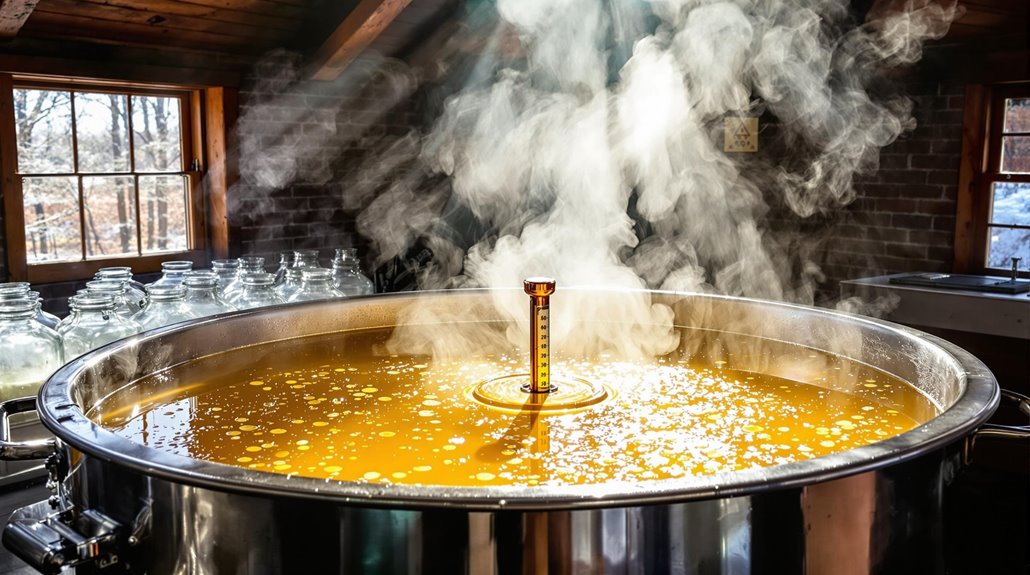
To make maple syrup, you'll need to tap mature sugar maple trees during late winter when temperatures fluctuate between freezing nights and warm days. You'll collect the sap through traditional buckets or modern tubing systems connected to vacuum pumps. Then, you'll boil down the collected sap, which has about 2% sugar content, until it becomes concentrated syrup. While the basic process hasn't changed for centuries, today's technology has streamlined production in fascinating ways.
The Rich Heritage of Maple Syrup Making
While Native Americans first uncovered the sweet potential of maple sap centuries ago, the art of making maple syrup has evolved into a cherished North American tradition. You'll find this heritage particularly strong in regions like Quebec, Vermont, and New York, where families have passed down their maple sugaring techniques through generations.
During sugaring season, which typically runs from late February to early April, you'll see steam rising from sugar shacks dotting the terrain. These rustic buildings, where sap becomes syrup, represent more than just production facilities - they're gathering places where communities celebrate the arrival of spring.
The tradition of maple sugaring connects you to both the land and its people, combining time-tested methods with modern innovations to create one of nature's most beloved sweeteners. The introduction of metal taps and pots in the 17th century revolutionized how settlers collected and processed maple sap into syrup.
Preparing the Sugarbush for Harvest
Success in maple syrup production begins long before the first drop of sap flows. You'll need to prepare your sugarbush months in advance by clearing access roads and removing fallen branches. It's crucial to cut and split firewood for the sugarhouse and repair any damaged tubing systems during this preparation phase.
When temperatures become milder, with freezing nights and warm days, you can begin tapping the trees. The process involves carefully drilling holes and inserting spouts or spiles into your sugar maple trees. If you're working with large, healthy trees, they can support 3-4 taps each. Don't worry about harming the trees - when done correctly, tapping won't damage them. In fact, a well-maintained sugar maple can provide sap for more than a century of harvests.
Modern spouts and tubing have come a long way since Indigenous peoples first used diagonal slashes and birch bark containers to collect maple sap.
Tapping Techniques and Tree Selection
Before you begin tapping maple trees, proper tree selection and technique are essential for a successful harvest. You'll need to identify healthy sugar maple or red maple trees that are at least 40 years old with a diameter of 10-12 inches or greater. This guarantees the trees can withstand tapping without damage.
When you're ready to tap, you'll drill holes and insert 1-3 taps per tree during January and February. Your tapping techniques should focus on creating a proper connection to your tubing system, which can extend for kilometers throughout your sugarbush. If you follow correct tapping procedures, you won't harm the trees - they can continue producing sap for over 100 years.
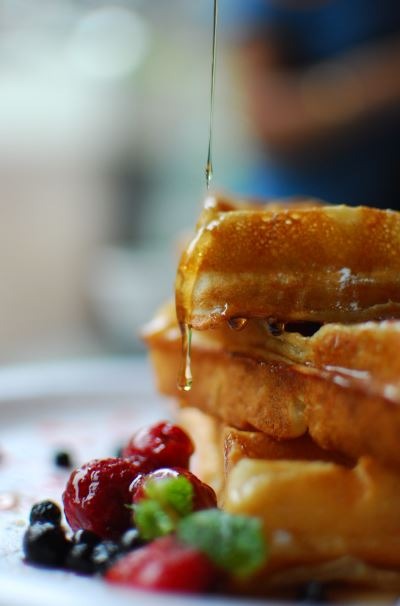
Remember that your sap yield will vary based on factors like weather conditions, soil quality, and the tree's overall health. The sweet syrup produced can be used on various traditional breakfast items, including hot griddle cakes that have been enjoyed since ancient times.
Modern Sap Collection Systems
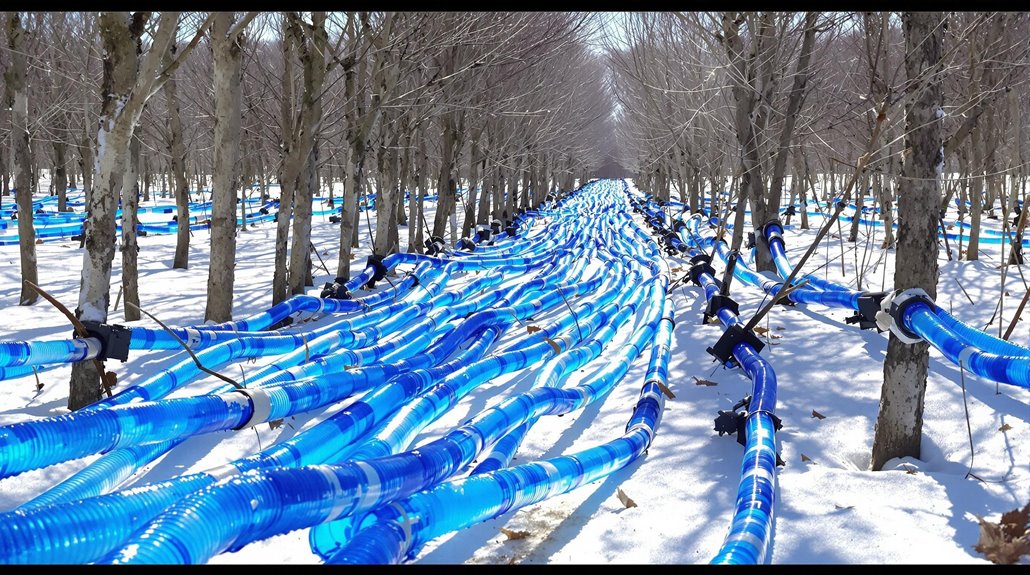
Today's maple syrup production relies heavily on advanced sap collection systems that have revolutionized the industry. Instead of traditional buckets hanging from trees, you'll now find extensive networks of plastic tubing that transport sap directly to the sugar house. These modern tubing systems can stretch for several kilometers throughout the sugarbush, connecting large numbers of maple trees to a central collection point.
To maximize efficiency, producers use vacuum pumps that can double sap yields compared to older collection methods. The tubing system guarantees rapid delivery of fresh sap to the processing facility, maintaining ideal quality during collection. This streamlined approach allows you to collect sap from more trees while reducing labor costs and time. It's a demonstration of how technology has transformed the age-old tradition of maple syrup production into a more efficient operation.
The Science Behind Sap Flow
The fascinating science of maple sap flow depends on a precise balance of natural forces during the move from winter to spring. As temperatures shift between freezing nights and warm days, you'll find the tree's tissues expanding and contracting, creating the pressure needed for sap flow from roots to branches.
During summer, maple trees produce and store sugar as starch in their roots through photosynthesis. When spring arrives, this starch converts into sap with a modest 2% sugar content. The clear, watery sap moves through the tree's vessels as the temperature fluctuates. While the sugar content might seem low, it's this natural concentration that makes maple syrup production possible, especially when combined with modern techniques like reverse osmosis to remove excess water.
From Sap to Syrup: The Evaporation Process
Converting pure maple sap into rich syrup requires a precise evaporation process where 40 gallons of raw sap yield just one gallon of finished syrup. When you start this metamorphosis, you'll notice the sap begins as a clear, watery liquid that's collected from sugar maple trees.
The process centers around heating the sap in an evaporator pan at 219°F, which is higher than the boiling point of water. As the water evaporates, the sugar content concentrates until it reaches 66% Brix. During this careful heating process, the Maillard reaction creates maple syrup's signature color, aroma, and flavor profile.
You'll know the syrup's ready when it achieves the proper density and sugar concentration. Before packaging, you'll need to filter the syrup and grade it based on its color and taste characteristics.
Grading and Quality Control
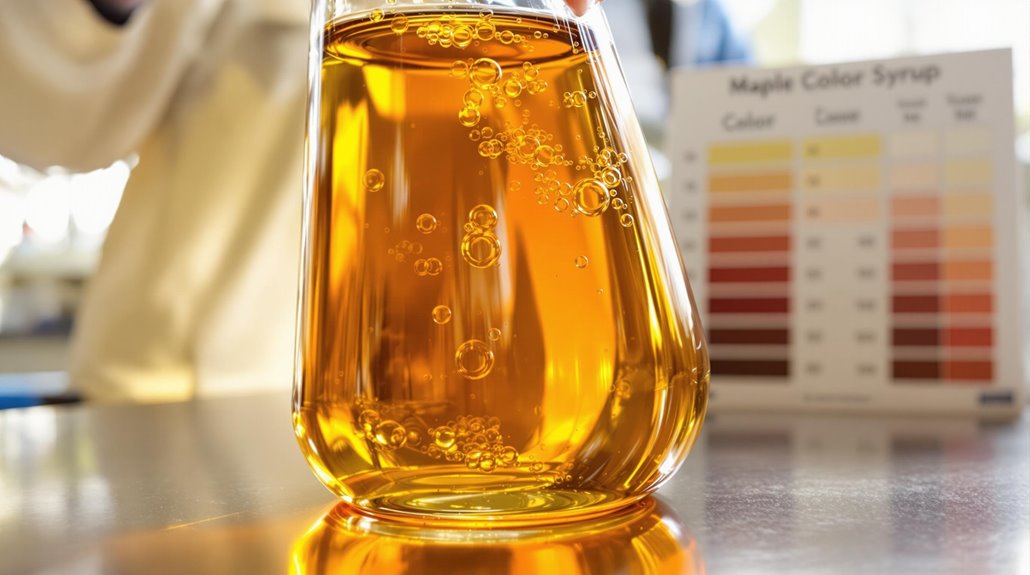
Modern maple syrup grading follows a standardized system that helps you identify distinct flavor profiles and quality levels. You'll find four classifications ranging from Grade A Golden to Grade A Very Dark, each offering unique characteristics for different uses.
Quality control in maple syrup production is exceptionally strict. In Canada, you'll need a sugar content of at least 66%, while U.S. regulations demand pure maple sap as the primary ingredient. States like Vermont and New York have implemented additional standards to confirm superior quality.
During manufacturing, producers must filter the syrup and pack it at high temperatures to maintain purity and prevent contamination. There's no room for mistake in this process - the final product must be 100% pure to meet regulatory requirements and preserve the authentic maple flavor you expect.
Storage and Preservation Methods
Proper storage techniques can dramatically extend your maple syrup's shelf life and preserve its distinctive flavor. You'll want to keep unopened containers of maple syrup in a cool, dark place to maintain their quality.
Once you've opened your syrup, transfer it to the refrigerator or freezer to guarantee freshness. If you've purchased large quantities, consider repacking the syrup into smaller mason jars. These clear containers make it easy to monitor your remaining supply and help prevent waste.
You'll also be able to spot any unwanted mold growth quickly - if you notice any, don't take chances with your health; discard the affected syrup immediately. With proper storage methods, you can enjoy your maple syrup's rich taste for an extended period while maintaining its safety and quality.
Climate Change Impacts on Production
While proper storage helps preserve maple syrup year after year, climate change now threatens the future of syrup production itself. You'll find that maple trees require specific weather conditions to produce sap - particularly freezing nights and warm days in early spring. Climate change disrupts this delicate balance, making sap collection increasingly unpredictable.
As temperatures rise, you're seeing shorter sugaring seasons and earlier spring thaw periods. These changes affect both the quantity and quality of sap that maple trees produce. In some regions, you'll notice the sugaring season starting up to a month earlier than it did just decades ago. If this trend continues, you might experience reduced syrup production in traditional maple-producing regions, potentially forcing producers to adapt their harvesting schedules or move operations further north.