How Does Egg Production Vary by Age?
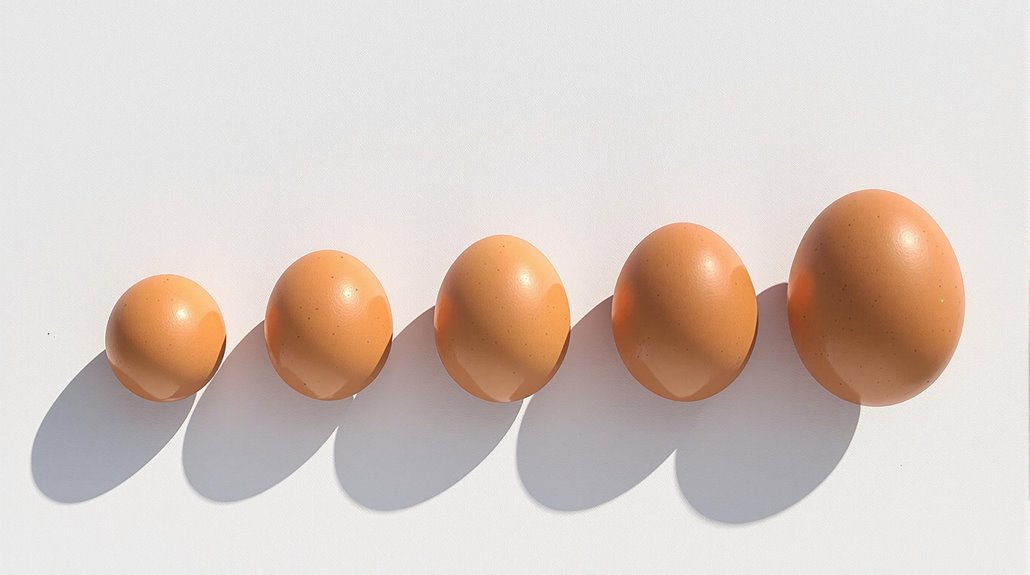
Your hen's egg production follows a predictable pattern as she ages. She'll reach peak laying around 30 weeks old, producing up to one egg daily in her first year at 80-90% capacity. You'll notice production drop to about 200 eggs annually in year two, with further 20% decreases each subsequent year. During yearly molts lasting 8-12 weeks, she'll pause laying completely. Understanding these age-related changes helps you better manage your flock's productivity.
Peak Production Years: What to Expect
A hen's most productive period begins around 30 weeks of age, when she'll reach her peak laying capacity. During her first year, you can expect your hen to achieve 80-90% of her maximum egg production potential, making this the golden period for collecting fresh eggs.
As your hen enters her second year of laying, you'll notice changes in both quantity and quality. While egg production will decrease to approximately 200 eggs annually, the eggs tend to become more consistent in size. The decline continues gradually, and by the time your hen reaches her fourth year, she'll only lay about 60% of what she produced in her first year.
Understanding these age-related patterns in egg production can help you better plan your flock's composition and manage your expectations for egg yields. A healthy hen's lifetime production of 200-250 eggs annually can provide significant value, with potential earnings of $256 over 2.5 years.
The Natural Decline in Laying Capacity
Following the peak production years, you'll observe a natural and steady decline in your hen's egg-laying capacity. Even with ideal nutrition and complete layer feed, you can expect fewer eggs each year as your hens age.
While first-year hens produce at 80-90% capacity, second-year production drops to around 200 eggs annually. This natural decline led farmers to develop mass production methods starting in 1878 to maintain consistent egg supplies.
Understanding the Molt Cycle
Molting represents a natural process where your hens lose and replace their feathers, typically occurring once per year. During this time, you'll notice a significant decline in egg production as your laying hens redirect their energy toward growing new feathers. This process usually happens during fall and winter months.
Your backyard chickens will stop laying eggs completely during the molt, which can last 8-12 weeks. Once they've regrown their feathers, they'll resume laying eggs, though often at a lower rate than before.
As your hens age, the molting period tends to start earlier each year and last longer. By three to four years of age, you'll observe that the rate of lay following each molt becomes progressively lower, impacting your overall egg production for the following year. Modern robotic processing systems can handle up to 100,000 eggs daily from productive laying hens.
Supporting Older Hens Through Diet
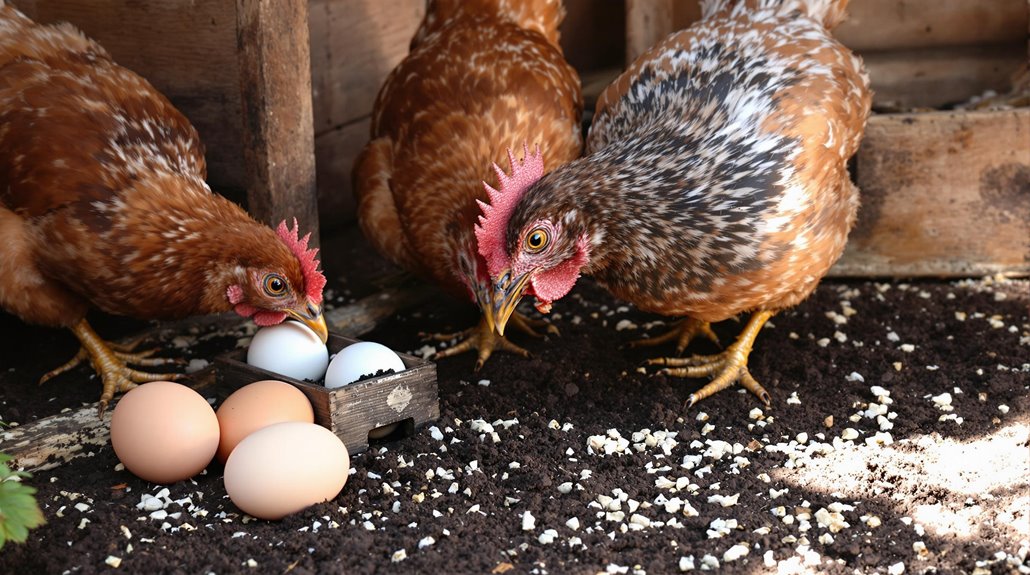
Your older hens need specialized nutrition to maintain their health and egg-laying capabilities. As age affects their egg production, nutrition experts recommend amplifying protein levels in their feed to support continued laying. While younger hens might thrive on standard feed, older backyard chickens require dietary adjustments to maintain farm-fresh egg quality.
During the annual molt, you'll need to elevate protein intake to support feather regrowth. Purina Animal Nutrition LLC and other animal nutrition specialists suggest offering whole corn as an evening supplement during cold weather, helping your flock maintain body heat and energy reserves. Monitor each hen's eating habits and adjust portions accordingly.
You can extend your older hens' productive years by providing a varied diet with proper nutrients, even though they'll lay fewer eggs than their younger counterparts.
Maintaining a Balanced Flock Age
A well-balanced flock requires strategic planning to maintain consistent egg production throughout the year. To achieve ideal results, you'll want to introduce new layers every 1-2 years, as hens experience their peak egg production during their first year. While young hens from quality breeds like Purina-recommended varieties can lay nearly an egg per day, older birds will gradually decrease their output by about 20% annually after year two.
Consider staggering your flock's age groups to maintain steady production. When older hens enter their molt, supplement their diet with Animal Nutrition Fortiva products for enhanced protein intake, which supports faster feather regrowth and quicker return to laying. By maintaining a mix of younger and older hens, you'll avoid the dramatic production swings that occur with single-age flocks, ensuring more reliable egg collection throughout the seasons.
Seasonal Changes and Age Impact
While egg production naturally fluctuates throughout the year, both seasonal changes and age significantly affect your flock's laying patterns. You'll notice your hens will lay more eggs per day during spring when daylight hours increase, while production drops as days shorten in fall. This seasonal pattern affects both young and mature birds.
Age plays a vital role in how many eggs your hens produce. First-year layers are your most productive, but you'll see about a 20% decrease in egg production each following year. Your older hens need longer breaks between egg laying cycles and experience extended molts, reducing their annual egg output. To maximize production year-round, maintain a mixed-age flock and consider offering supplementary feed like whole corn to support older hens during winter months.
Retirement and Beyond: The Golden Years

Many chicken keepers wonder what happens when their productive layers reach retirement age. While commercial poultry operations may retire hens after peak production, your backyard flock members can continue contributing well beyond their prime laying years. Though they'll lay fewer eggs per day, these experienced hens often become the worlds oldest and wisest members of your flock.
Experts may be able to confirm that retired hens serve as mentors, helping guide younger birds and maintaining flock harmony. Even as age begins to affect the rate of laying, these senior citizens still need quality nutrition and care. Unlike intensive production systems that focus solely on eggs per hen, backyard flocks benefit from keeping older birds. Your retired layers will reward you with years of companionship and meaningful social contributions to your flock's dynamics.
Related posts