
Exploring Early Methods of Syrup Production
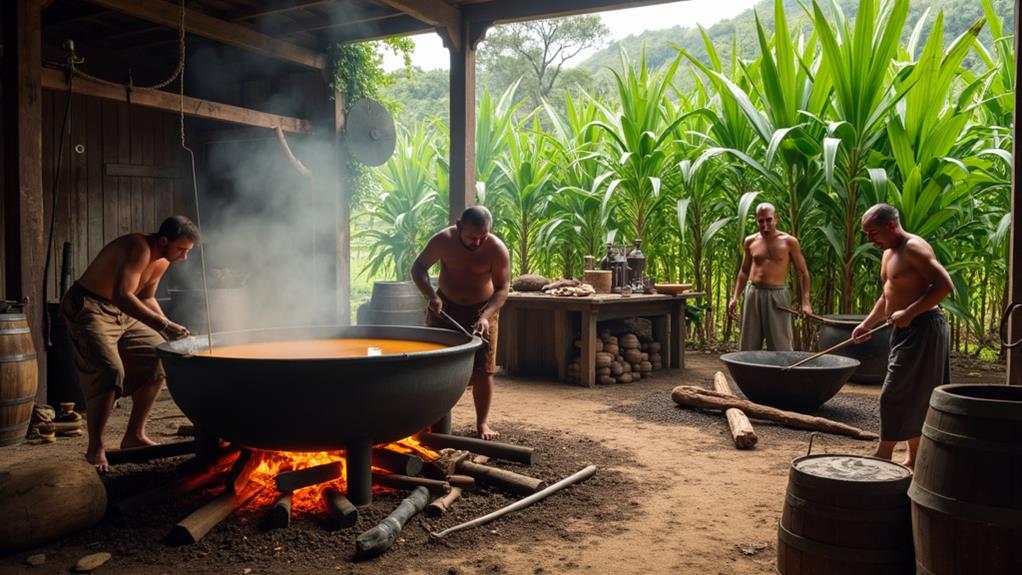
You'll uncover that syrup production started with Indigenous peoples, who cleverly tapped maple trees using diagonal slashes and birch bark containers. They boiled the sap with hot stones in hollowed-out logs. European settlers later introduced iron kettles and metal tapping spouts, improving the efficiency of syrup collection and boiling. Modern methods use tubing systems and advanced machinery like reverse osmosis and vacuum systems. The process has always welcomed sustainability, and it's deeply rooted in cultural traditions, forming an essential part of community identity. If you want to reveal more fascinating details about this shift, there's much to investigate.
Key Takeaways
- Indigenous people extracted sap using diagonal slashes on maple trees and collected it in birch bark containers.
- Early boiling methods involved heating sap with hot stones in hollowed-out logs.
- European settlers introduced iron kettles, allowing for larger volumes and higher temperatures in syrup production.
- Transition from wooden pails to metal buckets improved sap quality and reduced spoilage.
- Purpose-built evaporators developed in the late 1800s significantly increased production efficiency.
Indigenous Techniques
Before modern methods, Indigenous peoples of Northeastern North America uncovered the sweet sap of maple trees and turned it into a crucial food source. They developed intricate techniques for syrup production that have stood the test of time. By creating diagonal slashes on tree trunks, they allowed the sap to flow into carefully crafted birch bark containers. This initial step showcased their deep understanding of maple trees and their environment.
To transform the collected sweet sap into syrup, they employed a method of boiling sap using hot stones. These stones were heated in fires and then placed into hollowed-out logs filled with sap. This ingenious technique facilitated the gradual evaporation of water, effectively concentrating the sap into syrup. These methods not only made syrup production possible but also highlighted their sustainability practices, ensuring the maple trees remained healthy and productive.
The knowledge passed down through generations reflected a profound connection to nature. When European settlers arrived, they were greatly influenced by these Indigenous techniques. Adapting these practices for their own use, they laid the foundation for the modern maple syrup industry. The legacy of these early techniques continues to be celebrated and respected today.
Sap Collection Methods
Sap collection methods have evolved considerably over time, reflecting advancements in technology and efficiency. Initially, Indigenous peoples collected maple sap by making diagonal slashes on tree trunks and using birch bark containers. This method was simple but effective in gathering the sweet liquid. Early European settlers adopted these techniques and introduced wooden spouts to direct the sap flow more efficiently into hollowed-out logs that served as holding containers.
As you venture into a sugar bush during early spring, you'll notice the sap flows best when temperatures fluctuate between freezing nights and warm days. This is when sap collection is in full swing. Traditional methods involved hanging buckets on trees, each individually collecting the sap. However, this was labor-intensive and required frequent emptying.
Modern operations have shifted to using extensive tubing systems. These systems connect multiple trees within a sugar bush to a central collection point, streamlining the process and reducing labor. This innovation has made collecting the sap much more efficient, allowing for larger quantities to be gathered quickly. Shifting from wooden spouts to metal tapping spouts further increased the efficiency, maximizing the sap to flow from each tree.
Early Boiling Practices
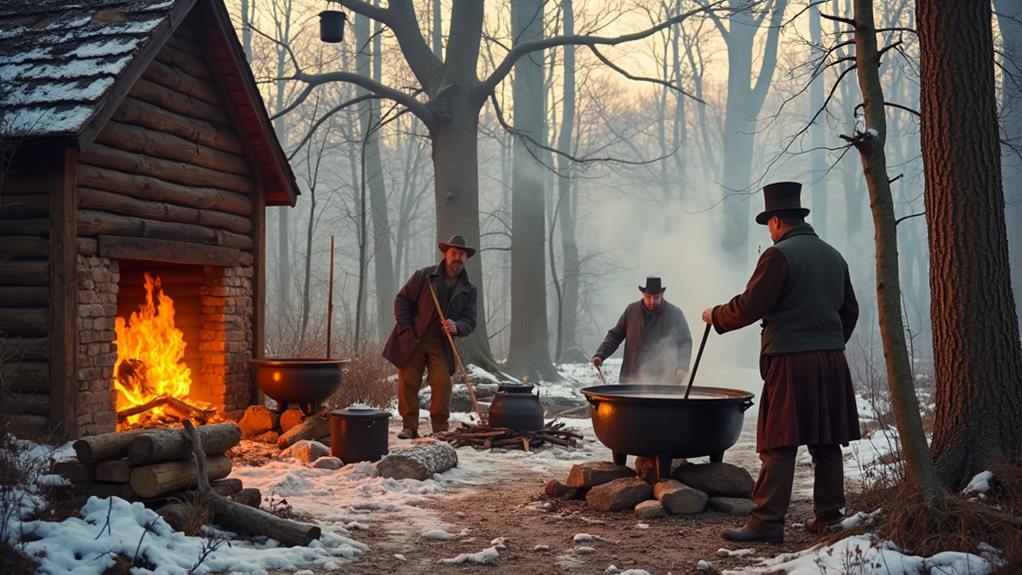
Early boiling practices for syrup production were ingenious and resourceful, reflecting the deep understanding Indigenous peoples had of their environment. Native Americans pioneered the process by boiling the sap using hot stones placed in hollowed-out logs. They collected the sap in birch bark containers and poured it over the hot stones, gradually evaporating the water content and concentrating the sugars into maple syrup. This method, while labor-intensive, effectively converted the sap into syrup, laying the groundwork for future techniques.
When European settlers arrived, they adopted these early boiling practices and introduced iron kettles. This innovation allowed for more efficient boiling of the sap compared to the traditional hot stones method. The iron kettles could hold larger volumes and maintain higher temperatures, increasing the production rates and facilitating the shift to more commercial syrup production.
Colonial Innovations
Colonial innovations in syrup production frequently marked significant advancements over earlier methods. You'll find that European colonists, learning from Indigenous practices, transformed the production of maple syrup by introducing iron pots. These pots made the boiling process more efficient compared to using hollowed-out logs and hot stones. This shift in technology was essential in the history of syrup production.
Another key development was the introduction of metal tapping spouts. These spouts improved the sap collection process, reducing spoilage and making the extraction from sugar maples more effective. Furthermore, colonists shifted from wooden pails to metal buckets for sap collection. This change not only protected the sap from pests but also maintained its quality.
Towards the late 1800s, the creation of the initial purpose-built evaporator in Vermont transformed the syrup production process even further. The evaporator allowed for more controlled and consistent boiling, increasing the efficiency of turning sap into maple syrup. Innovations didn't stop there; new sap storage containers, like storage tanks, facilitated larger-scale production and eased the distribution process. These colonial innovations laid a strong foundation for the advancements that would follow in the production of maple syrup.
Transition to Modern Methods
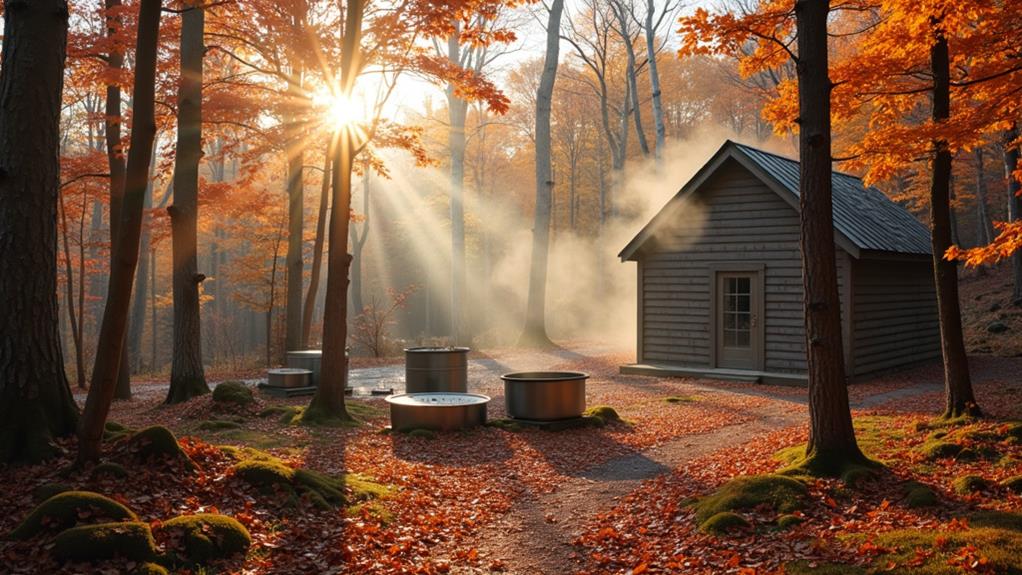
As syrup production moved into the modern period, notable technological advancements began to transform the industry. The shift from traditional sap collection methods started with the introduction of metal tapping spouts, which improved efficiency and minimized damage to trees. In the late 1800s, Vermont changed the boiling process with the creation of the initial maple sugar evaporator, streamlining syrup production.
Modern producers now rely on extensive tubing systems that connect multiple trees to a centralized collection point, making sap gathering more efficient. This innovation allows for quicker and more effective collection, especially during the vital maple season. The adoption of reverse osmosis machines in the 1970s further advanced the industry by filtering out excess water from the sap, concentrating it from around 2% sugar to 8-9%. This development greatly reduces the time and fuel needed during the evaporation process.
Today, airtight vacuum systems improve both the efficiency and hygiene of sap collection, ensuring higher yields and preserving the traditional flavors of maple syrup. These advancements allow modern producers to maintain the essence of the craft while making syrup production more sustainable and efficient. The sugar house, once a simple structure, now embodies the fusion of tradition and technology.
Cultural Impact
Embracing the rich tradition of maple syrup production, many cultures have woven this natural sweetener into their very fabric. For Indigenous peoples of Northeastern North America, maple syrup was more than just food; it played a crucial role in their cultural practices and rituals, showcasing a deep connection to the land and its resources. The sap extraction techniques they developed were passed down through generations, becoming a cornerstone of community identity and sustenance.
When European settlers arrived, they adopted and adapted these Indigenous methods. This blending of practices not only cemented maple syrup as a staple in early American and Canadian diets but also contributed to the broader cultural landscape. Today, maple syrup is celebrated as a cultural symbol, particularly in places like Quebec, where maple sugaring festivals highlight its significance.
Key Cultural Impacts of Maple Syrup Production
- Community Identity: Traditional practices reinforce a shared cultural heritage.
- Local Economies: Craftsmanship in syrup production supports local businesses.
- Cultural Practices: Rituals and traditions rooted in maple syrup foster community bonds.
- Sugaring Season: Families and neighbors come together, sharing labor and knowledge.
Frequently Asked Questions
What Are the Three Methods of Syrup Preparation?
When considering syrup preparation, you'll find three main methods: sugar cane syrup, fruit extract syrup, and maple syrup. Sugar cane involves boiling cane juice to desired syrup thickness, considering boiling points and preservation techniques. Fruit extracts focus on boiling down fruit juices, highlighting unique flavor profiles. Maple syrup, a product of sap harvesting methods, combines modern innovations and regional differences, ensuring health benefits and exceptional taste.
What Is the History of Syrup Making?
When you investigate the history of syrup making, you'll find fascinating syrup origins. Ancient sweeteners like honey production and fruit extraction were common before sugar cane dominated. Indigenous peoples used early evaporation techniques, evolving syrup recipes and culinary uses. European settlers refined these methods. Fermentation processes and medicinal properties also played roles. Over time, these practices evolved, leading to the diverse syrups we enjoy today.
How Did the Native Americans Make Maple Syrup?
You'd start by understanding Native techniques for maple tapping. They made diagonal cuts in tree trunks for sap collection, using birch bark containers as traditional tools. Their sweetening process involved boiling sap with hot stones, creating syrup with distinct flavor variations. Maple syrup had cultural significance, centered around community gatherings and harvest rituals. These seasonal practices not only provided syrup but also strengthened community bonds.
What Two Methods Were Used to Concentrate the Maple Sap Before the Introduction of Iron Kettles?
Before iron kettles, you concentrated maple sap using sap boiling techniques and natural evaporation methods. Early sap collection involved boiling sap in wooden troughs using hot stones and traditional fire pits. Seasonal harvesting practices required creative solutions, considering sap concentration challenges. Indigenous harvesting tools and container materials evolution, like birch bark containers, played a role. These methods influenced historical flavor variations, setting the stage for future advancements in syrup production.