Evolution of Popular Pancake Syrup Brands
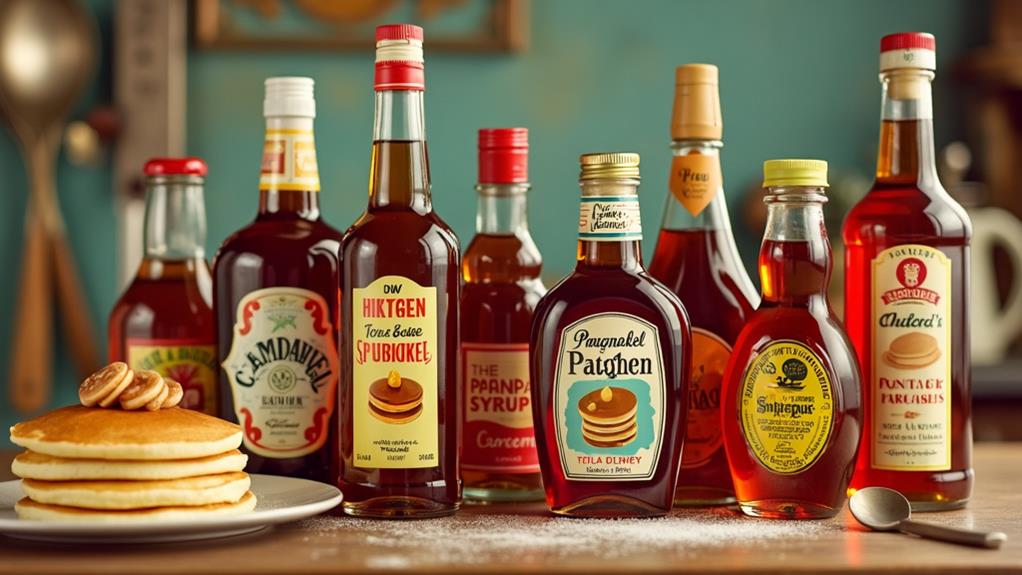
You've likely seen how popular pancake syrup brands like Log Cabin and Mrs. Butterworth's began in the late 1800s and early 1900s. Brands adapted with unique packaging, such as Log Cabin's cabin-shaped tins, and iconic bottles like Mrs. Butterworth's matronly design. Originally using maple wood decoctions and brown sugar, they later shifted to corn syrup and high-fructose corn syrup. Reaching today's market involved maneuvering regulatory impacts and shifting consumer tastes toward health and sustainability. Each brand's expedition is fascinating, and exploring further will reveal more about these sweet transformations.
Key Takeaways
- Brand Origins: Major syrup brands like Log Cabin (1888) and Pearl Milling Company (1889) have roots dating back over a century.
- Packaging Evolution: Innovative packaging, such as Log Cabin's cabin-shaped tins and Mrs. Butterworth's bottle design, boosted consumer appeal and brand recognition.
- Ingredient Shifts: Transition from traditional maple wood decoctions to corn syrup and high-fructose corn syrup in table syrups.
- Regulatory Influence: The Pure Food and Drug Act and CFR Title 21 standards ensured accurate labeling and transparency in syrup ingredients.
- Consumer Trends: A preference for affordable artificial syrups persists, though there's increasing demand for natural, organic, and sustainable options.
Origins of Pancake Syrup Brands
Several iconic pancake syrup brands have rich histories that date back over a century. The origins of Old Colony Syrup trace back to the early 1900s, introduced by the Scudder Syrup Company around 1896. With roots in both Chicago and Boston, this brand quickly became a staple in many households.
Log Cabin Syrup, another well-known name, was founded in 1888 by Patrick J. Towle in St. Paul, Minnesota. It gained popularity thanks to its distinctive cabin-shaped metal can, setting it apart from other syrup brands. Towle Maple Products, which started as Towle & McCormicks in 1888, also played a significant role in the syrup industry. After a devastating factory fire in 1909, the company relocated to Vermont and expanded its operations.
Vermont Maid Syrup was established in 1919 by the Vermont Maple Syrup Company. The brand's trademark was officially registered in April of that year, cementing its place in the market. Ultimately, the Pearl Milling Company, originally known as Aunt Jemima, stems from a pancake mix created in 1889 by the R.T. Davis Milling Company. Rebranded in 2020, it remains a beloved name in pancake syrup.
Growth of Major Syrup Brands
The growth of major syrup brands over the years has been nothing short of remarkable. It all started with Log Cabin in 1888, whose cabin-shaped packaging and national marketing set a high bar for the syrup market. You've likely seen how they've maintained a strong presence by evolving their branding strategies to stay relevant.
Pearl Milling Company, originally Aunt Jemima, has also made significant strides. Their rebranding in 2020 was a notable move towards social responsibility, yet they still hold a beloved spot on your breakfast table. Mrs. Butterworth's, introduced in 1961, caught your eye with its matronly bottle design, creating a lasting brand identity that's hard to forget.
The syrup market's evolution includes the rise of artificial table syrups, making maple syrup flavors more affordable and accessible. Brands like Hungry Jack and Vermont Maid have had to adapt their packaging and marketing to stay competitive. You can see how these changes have helped them retain customer loyalty despite the crowded market.
Production Techniques and Ingredients
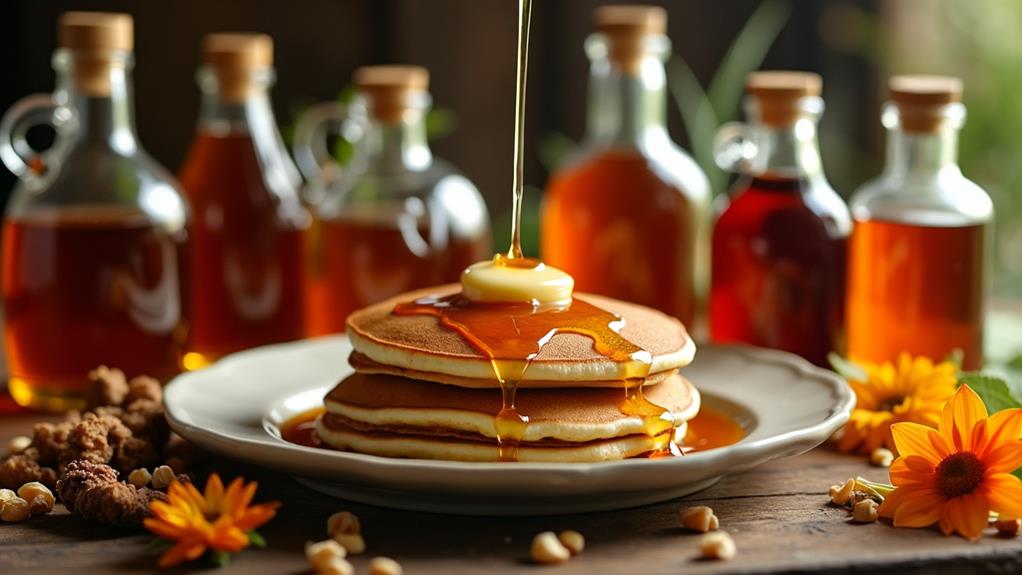
While the growth of major syrup brands has been impressive, understanding what goes into these syrups is likewise intriguing. Major table syrups are primarily made from corn syrup, high-fructose corn syrup, water, colorings, flavorings, and preservatives. Unlike real maple syrup, which is derived from the sap of maple trees, most table syrups contain little to no actual maple syrup.
Early production techniques involved using decoctions from maple wood and brown sugar to mimic the taste of real maple syrup. This was done to provide a cheaper alternative to real maple syrup, which was often priced considerably higher. Brands like Log Cabin even utilize rice syrup in their production. Over time, blending companies have refined these methods to better replicate the flavor and consistency of maple syrup.
Modern production practices, however, often lack transparency about the ingredients used. As consumer awareness grows, more people are scrutinizing the ingredients in their table syrup. They're realizing that what they're pouring on their pancakes is a mix of sugar, flavorings, and corn syrup rather than real maple syrup. Understanding these ingredients and production techniques is key to making informed choices about what you consume.
Evolution of Syrup Packaging
Over the years, syrup packaging has evolved considerably to capture consumer interest and improve brand recognition. If you look at the Old Colony Syrup, its colorful label design with a yellow background, blue bands, and red maple leaves directly reflects the changing consumer preferences and effective branding strategies. These visual elements are crafted to stand out on the shelves.
Towle Maple Products Company, known for its maple syrup, shifted from rectangular metal cans to charming cabin-shaped tins between 1915 and 1931. This change not only improved brand recognition but also added collector appeal. Their unique 22-ounce jars, with diverse color variations and embossing details, became a favorite for collectors.
The Vermont Maid brand, established in 1919, originally featured a logo of a maiden. Over time, it underwent notable updates in packaging design to align with contemporary marketing trends, ensuring it stayed relevant in the syrup industry.
Distinct bottle shapes also played an essential role. Brands like Log Cabin and Mrs. Butterworth's opted for designs that conveyed a cozy, warm aesthetic, making the product more appealing to consumers. These thoughtful packaging choices have notably influenced the syrup industry and consumer buying habits.
Key Historical Milestones
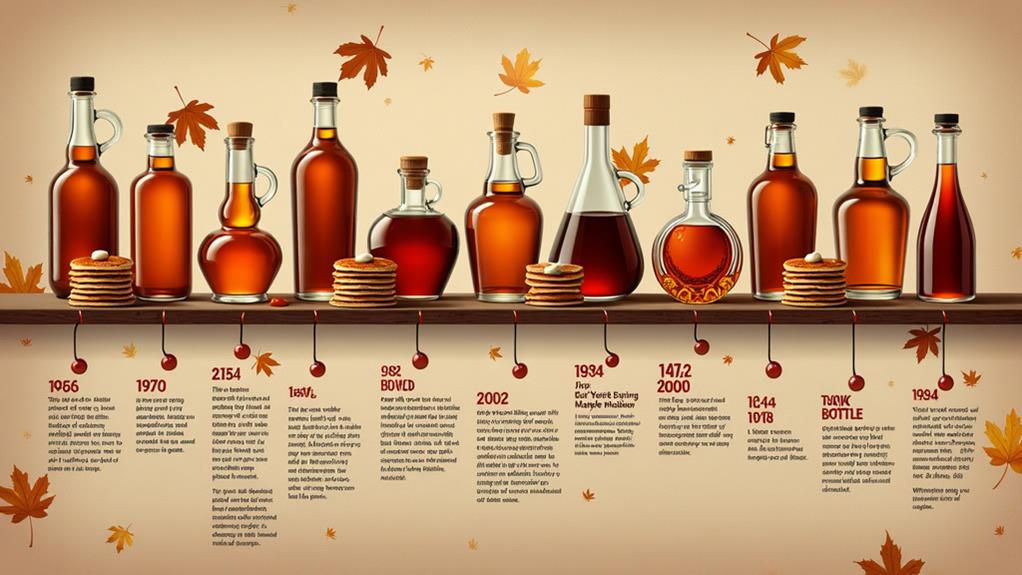
Recognize the vital moments that shaped the syrup industry by diving into its key historical milestones. You can trace the roots back to 1888 when Patrick J. Towle founded Log Cabin Syrup. Its groundbreaking cabin-shaped packaging made it the top-selling blended syrup by the early 1900s. Around the same time, the Old Colony Syrup brand emerged from two unrelated syrup blending companies, gaining prominence in Canada by 1920.
In 1919, Vermont Maid Syrup made its mark when Fletcher N. Johnson and his partners trademarked it, quickly earning a spot among the recognized syrup brands. A notable milestone occurred in 1929 when the Old Colony Syrup brand was acquired by Cary Maple Sugar Company. This acquisition allowed Old Colony to expand into the U.S. market, marking a new phase of growth.
The late 1960s brought a technological breakthrough with the introduction of reverse osmosis technology. This advancement transformed maple syrup production by greatly improving efficiency, impacting brands across the industry. These milestones not only defined the evolution of brands like Old Colony Syrup, Log Cabin Syrup, and Vermont Maid Syrup but also shaped the broader landscape of syrup production and marketing.
Regulatory Impacts on Syrup
Understanding the regulatory impacts on syrup is crucial for any consumer. The Pure Food and Drug Act, enacted in the early 20th century, was a response to widespread consumer frustration over misleading product labeling. Before this Act, syrup products often misrepresented their contents, blurring the lines between table syrup and pure maple syrup. With the Act's implementation, regulations mandated accurate labeling, guaranteeing you're aware of what you're pouring onto your pancakes.
The Code of Federal Regulations Title 21 sets specific standards for food product labeling, including syrup. These regulations are designed to prevent deceptive practices, maintaining product integrity. Thanks to ongoing scrutiny from regulatory bodies, there's increased consumer awareness about the differences in syrup content. This push for transparency has prompted brands to provide clearer ingredient lists, assuring you can easily distinguish between syrups made from high-fructose corn syrup and those containing pure maple sugar.
As consumer knowledge about syrup production and content grows, regulatory changes continually evolve to improve transparent labeling and protect your rights in the syrup market. This guarantees that when you choose a syrup, you're making an informed decision based on accurate, honest information.
Consumer Preferences and Trends
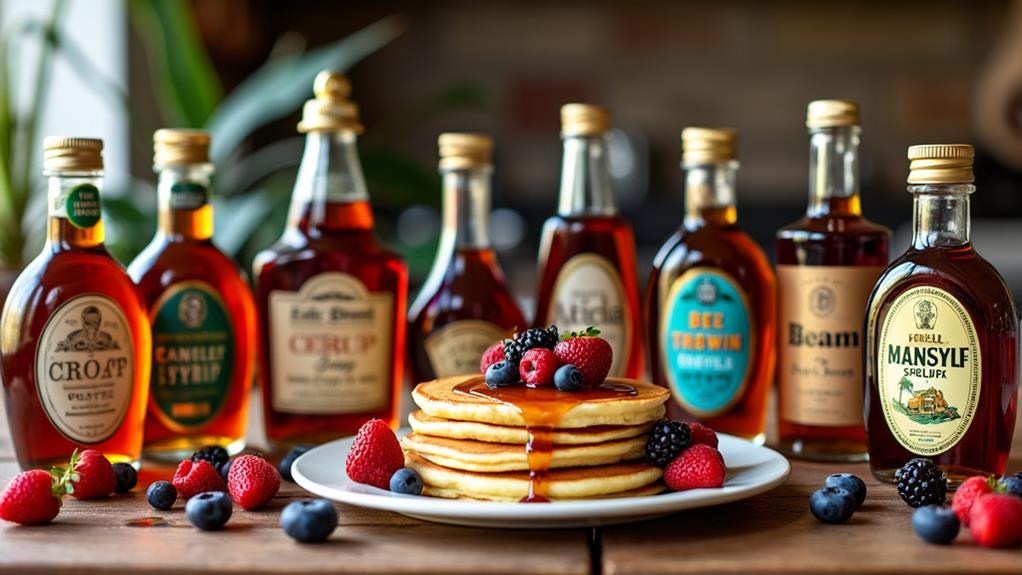
While regulatory impacts guarantee transparency in syrup labeling, understanding what drives consumer preferences and trends offers valuable insight into the syrup market. You might find that most Americans lean towards artificial table syrups instead of natural maple syrup for their pancakes. This preference stems from several factors, including cost and availability. For instance, in 2015, table syrup cost around $2 per liter, markedly cheaper than the $11-$16 per liter price tag on real maple syrup. This price comparison plays a big role in shaping consumer choices.
Marketing strategies also heavily influence consumer preferences. Brands like Log Cabin and Mrs. Butterworth's have successfully cultivated brand loyalty, even without real maple syrup content. Taste tests usually show a preference for the singular sweetness of artificial table syrups over the complex flavors of maple syrup. This could be why many consumers find table syrups more appealing.
Moreover, the limited regional production of maple syrup, mainly in the Northeastern U.S., restricts access for many people. As a result, artificial alternatives become the go-to option for pancake syrups. Understanding these factors helps explain why artificial table syrups dominate the market.
Future of Pancake Syrups
The future of pancake syrups is poised for transformation as brands respond to evolving consumer demands. You're likely to see more syrups made with natural sweeteners and organic ingredients, reflecting the rise of health-conscious consumerism. Your preference for healthier options is driving this shift.
Eco-friendly packaging is another major trend. Brands are investing in sustainable materials to reduce environmental impact, which aligns with your growing concern for the planet. You'll also notice a surge in plant-based and vegan products, catering to diverse dietary needs and preferences.
Advances in technology are set to revolutionize production efficiency and quality control. This means you can expect more consistent flavor profiles, giving you a reliable taste experience with every purchase.
As global markets expand, syrup brands are exploring international flavors and fusion products. This not only attracts a wider audience but also offers you unique and exciting taste journeys.
Frequently Asked Questions
What Are the Oldest Syrup Brands?
When exploring the history of syrups, you'll find some of the oldest brands include Aunt Jemima (now Pearl Milling Company, 1889), Log Cabin Syrup (1888), and Vermont Maid Syrup (1919). These brands innovated with vintage syrup packaging and marketing strategies. Regional syrup preferences and syrup flavor innovations also played a role. Today, trends focus on syrup health benefits, organic syrup options, and sustainable syrup production methods.
Is IHOP Old Fashioned Syrup Maple Syrup?
No, IHOP Old Fashioned Syrup isn't maple syrup. The IHop ingredients include primarily corn syrup, making it a maple substitute rather than the real deal. The syrup flavor is singularly sweet, lacking the complexity of authentic maple syrup. Its syrup marketing positions it as a traditional choice, but it's a budget-friendly alternative. Consumer preferences for this syrup often revolve around its cost, syrup pairings, and convenience at IHOP locations.
Is Aunt Jemima Real Maple Syrup?
No, Aunt Jemima isn't real maple syrup. Aunt Jemima history shows it primarily contains corn syrup and artificial ingredients, not real maple syrup. Comparing syrup ingredients, Aunt Jemima lacks genuine maple content. Consumer preferences often choose it for pancakes due to marketing strategies and taste. Brand name changes and syrup production methods reflect shifts in consumer perception. Flavor profile differences and health considerations also play roles in choosing pancake toppings.
Which Syrup Is Better, Log Cabin or Mrs. Butterworth?
When comparing Log Cabin and Mrs. Butterworth's, you'll find that taste comparison favors Log Cabin for its buttery-smooth flavor. Health benefits and ingredient differences aren't significant, but consumer preferences show strong brand loyalty toward Log Cabin. Environmental impact and marketing strategies also lean in Log Cabin's favor. Price analysis reveals Log Cabin is cost-effective. For recipe pairings and cultural significance, Log Cabin wins, making it the better choice in general.