Egg Yolks in Paints: The Ancient Art of Egg Tempera and Modern Applications
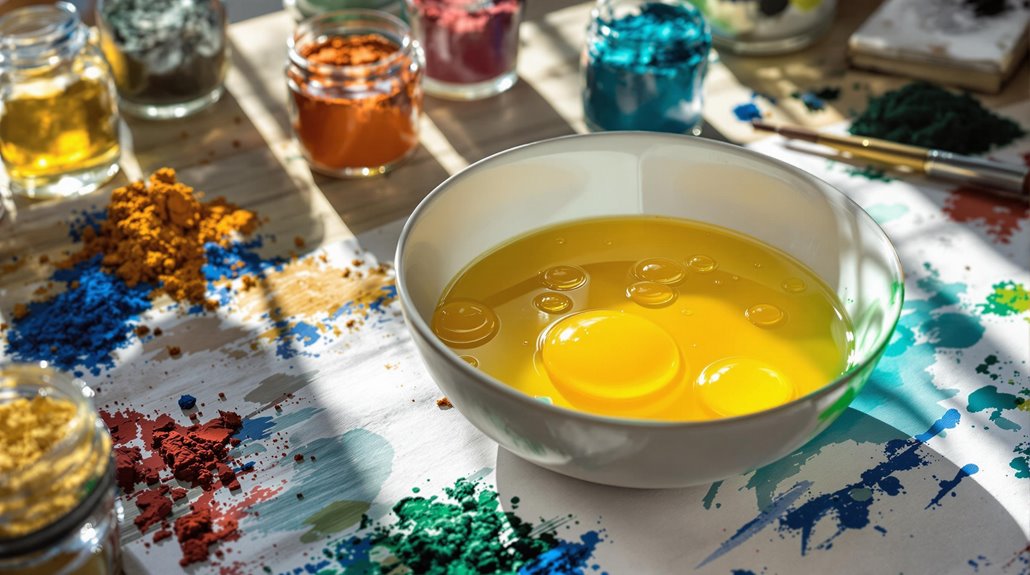
Egg tempera isn't just any paint - it's been around since ancient Egypt and still enthralls artists today. You'll find this exceptional medium, made by mixing egg yolks with pigments and water, in everything from Byzantine icons to Renaissance masterpieces. Its unique chemical properties create lively colors that last for centuries, and its protein-rich composition delivers unmatched luminosity. Explore why contemporary artists are bringing this time-tested technique back to life.
The Historical Journey of Egg Tempera Through Civilizations
Tracing the roots of egg tempera reveals an extraordinary artistic legacy spanning over three millennia. You'll find its earliest applications in ancient Egyptian mummy portraits, Greek panel paintings, and Roman artworks, where artists mixed egg yolk with pigments to create durable masterpieces.
During the Byzantine era, egg tempera became the preferred medium for religious art, with craftsmen using it to create stunning icons and altarpieces throughout Europe. The Renaissance brought this technique to new heights, as experts like Giotto and Botticelli embraced its capacity for vibrant colors and intricate details.
While oil painting eventually overshadowed tempera in southern Europe, you'll discover its influence continued through various artistic movements, from the Pre-Raphaelites to American Regionalists. Today's artists still harness egg tempera's unique properties, bridging ancient traditions with contemporary expression. The ancient Egyptians' deep understanding of eggs' nutritional value likely contributed to their early adoption of egg-based paint techniques.
Scientific Properties and Composition of Egg-Based Paints
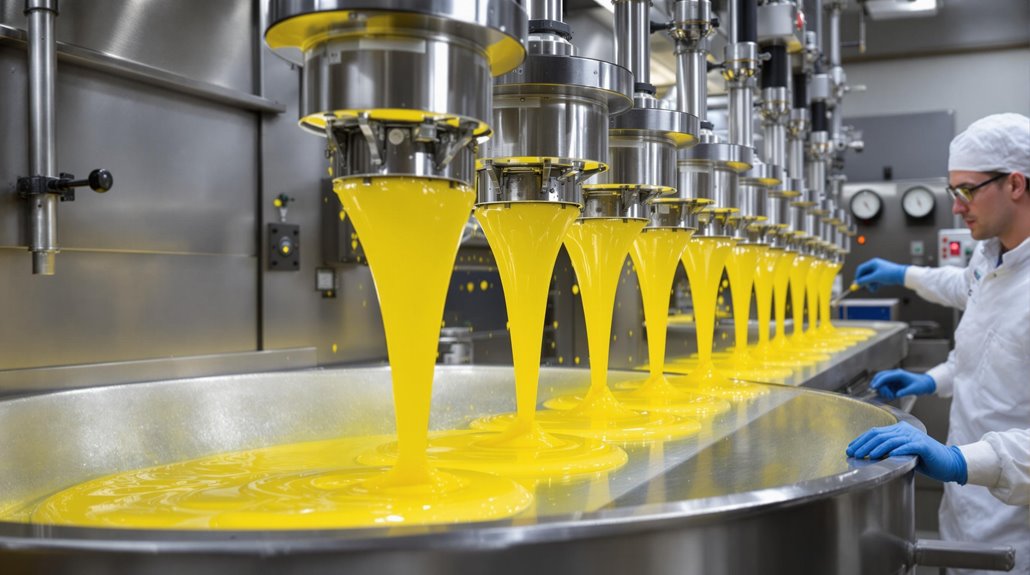
When you examine egg tempera at a molecular level, you'll find that egg yolks create an intricate network of bonds between water molecules and clay pigment particles. This physical and chemical interaction results in a viscous paint mixture that's denser than water-based alternatives.
You'll notice how the unique composition of egg tempera paints provides superior coverage and elasticity when you're working with them. As the paint dries, the protein layer formed by egg yolks acts as a protective shield against environmental changes, while antioxidant properties help regulate drying time and resist humidity damage. The molecular structure creates a distinctive luminous quality in your finished artwork that's characteristic of tempera paints.
These scientific properties explain why egg-based paints have remained a reliable medium for artists throughout history. Much like the protective eggshell membrane layers that defend against bacterial penetration in natural eggs, the protein structure in egg tempera creates a resilient barrier for your artwork.
Mastering Traditional Egg Tempera Techniques
Having understood the scientific properties of egg tempera, artists must command specific techniques to exploit its unique characteristics. When creating tempera on wood, you'll need to carefully mix the yolk-based paint with the right amount of water and powdered pigments to achieve ideal consistency.
Success with tempera techniques requires methodical application through deliberate brush strokes. You'll find that panel paintings demand thin, parallel strokes rather than broad sweeps, as the tempera medium dries quickly and doesn't allow for extensive blending. This approach is particularly effective for capturing intricate details on wood panels, much like the Byzantine experts and Renaissance artists did.
Remember that tempera's unforgiving nature means you can't easily correct mistakes, so precise application is essential for achieving the luminous, lasting qualities characteristic of this ancient medium. Similar to how honeycomb patterns were first introduced on flatbreads in medieval Europe, artists developed precise geometric techniques for applying tempera paints.
From Ancient Practice to Renaissance Masterpieces
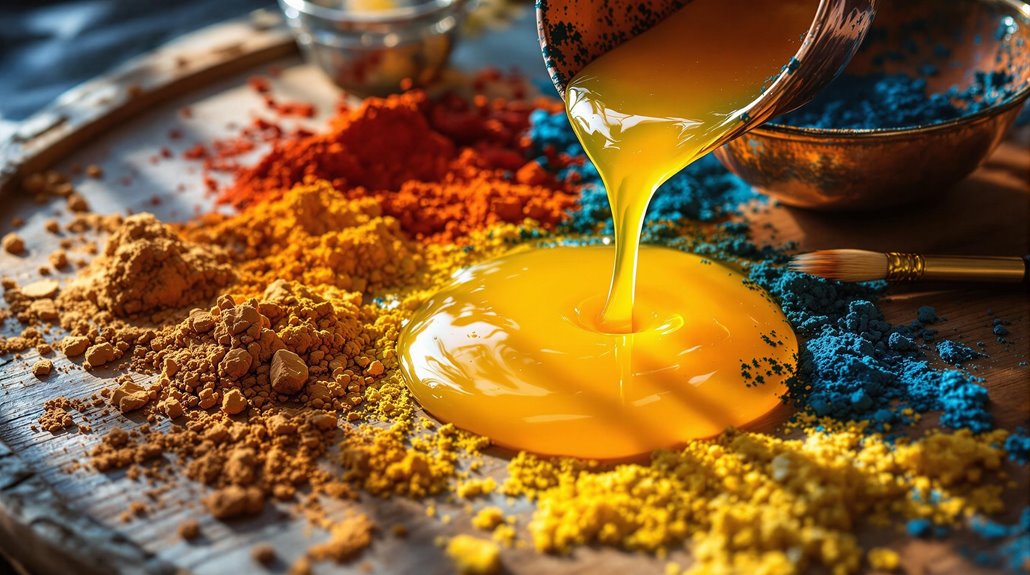
Although egg tempera's origins trace back to ancient Greece, the medium reached its artistic pinnacle during the early Italian Renaissance. You'll find masterpieces by early Renaissance painters like Giotto, Duccio, and Fra Angelico showcasing the medium's exceptional qualities.
Later, artists such as Botticelli, Michelangelo, and Leonardo da Vinci pushed the boundaries of what egg tempera could achieve, creating lively and precisely detailed works that have endured for centuries.
While oil paint eventually became the dominant medium in southern Europe, egg tempera's legacy didn't end with the Renaissance. In the 20th century, American artists Andrew Wyeth, Thomas Hart Benton, and George Tooker adopted this ancient technique, proving its enduring relevance. The 1901 founding of the Society of Tempera Painters sparked renewed interest in this time-honored medium.
Conservation and Preservation Methods
The extraordinary longevity of egg tempera paintings stems from the medium's unique chemical properties. When you examine historical pieces using green earth or lead white pigments, you'll notice how well they've endured compared to oil paintings from similar periods. This durability comes from the egg yolk's protein-rich composition, which forms a protective shield around pigment particles.
Today's art restoration experts study the chemistry and physics behind the egg tempera technique to develop advanced conservation methods. They've uncovered that the medium's antioxidant properties and moisture-capturing abilities help prevent common preservation issues like cracking and wrinkling. This knowledge has revolutionized how conservators approach the preservation of centuries-old artworks, allowing them to better safeguard these treasures for future generations.
Modern Revival and Contemporary Applications
Since its revival in the late 19th century, egg tempera has captured the imagination of artists seeking to bridge ancient techniques with modern expression. You'll find that contemporary artists have welcomed the Practice of Tempera Painting, combining Traditional tempera methods with innovative approaches and synthetic pigments.
Notable American artists like Paul Cadmus demonstrated how Painting With Egg could achieve astonishing detail and luminosity through careful Brush Painting techniques. Today's artists mixed these time-honored methods with modern experimentation, creating works that showcase egg tempera's unique qualities - from its matte finish to its incredible durability. The medium's revival hasn't just influenced art creation; it's also sparked scientific research into the chemistry behind its longevity, helping conservators better preserve historical works while inspiring new applications in contemporary art.
Related posts