Can You Turn Maple Syrup Into Candy?
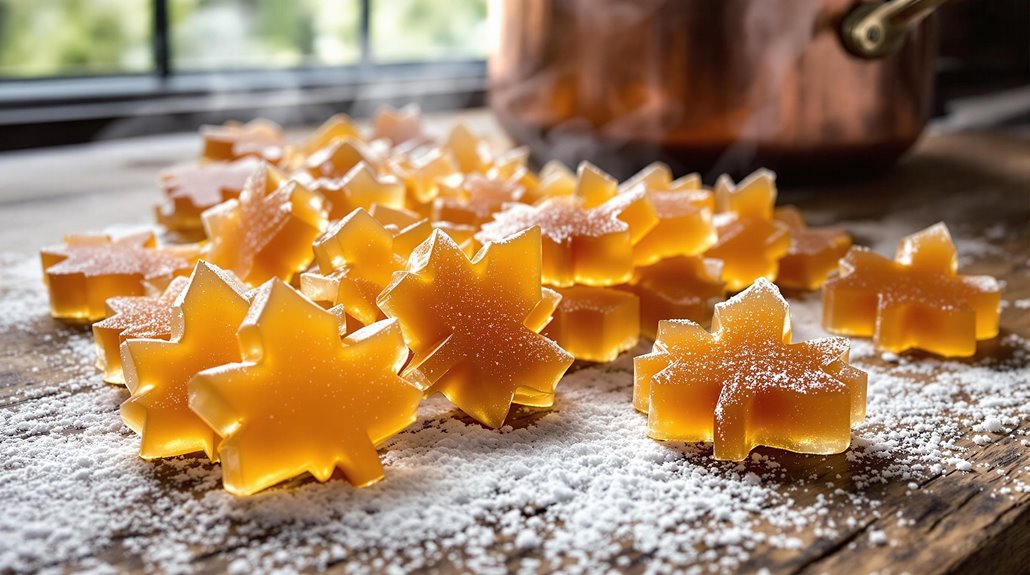
You can uncover pure maple syrup into delicious candy by heating it to precisely 246°F before cooling and beating it. This process creates smooth, melt-in-your-mouth treats that retain maple syrup's natural minerals and antioxidants without artificial additives. You'll want to calibrate your candy thermometer and experiment with optional touches of vanilla or butter for enhanced flavor. With proper temperature control and timing, you'll reveal how nature's sweetener becomes an irresistible homemade confection.
The Science Behind Maple Candy
When maple syrup changes into candy, it undergoes a fascinating crystallization process that determines its final texture. You'll need to calibrate your thermometer using the boiling point of water to guarantee precise temperature control during candy-making.
The key to achieving that perfect maple candy texture lies in timing your stirring. When the syrup cools to 110°F, crystallization begins. If you start stirring at this precise moment, you'll create tiny crystals that give the candy its signature smooth texture. Start too early, and you'll end up with larger crystals that affect the final result.
These small crystals, separated by grain boundaries, create the polycrystalline structure that makes maple candy firm yet creamy. The result is a confection that's both structurally stable and pleasantly melty in your mouth. Like the sugar maple's natural antibiotics that help heal tap wounds, the crystallization process is a remarkable transformation of maple's natural properties.
Essential Tools and Equipment
To convert maple syrup into candy with the same precision as the crystallization process, you'll need the right tools at your workstation. A properly calibrated maple syrup thermometer is indispensable, as it must be attached to a heavy-bottomed saucepan to monitor temperature accurately while you make maple candy.
You'll want to prepare your candy molds using a shallow pan lined with parchment paper and lightly coated with vegetable oil. If you're planning to make maple sugar as well, have a standing mixer ready or enlist a helper's assistance. Don't forget basic but vital items like a wooden spoon and bread tin.
Before beginning, gather all equipment in one place, ensuring your process runs smoothly from syrup to candy without interruption. Using Grade A amber maple syrup will provide the most versatile and reliable results for candy-making due to its rich flavor profile.
Temperature Control Guidelines
Controlling temperature is the most pivotal factor in converting maple syrup into delectable candy. You'll need a candy thermometer attached to your heavy-bottomed saucepan to monitor the process with precision.
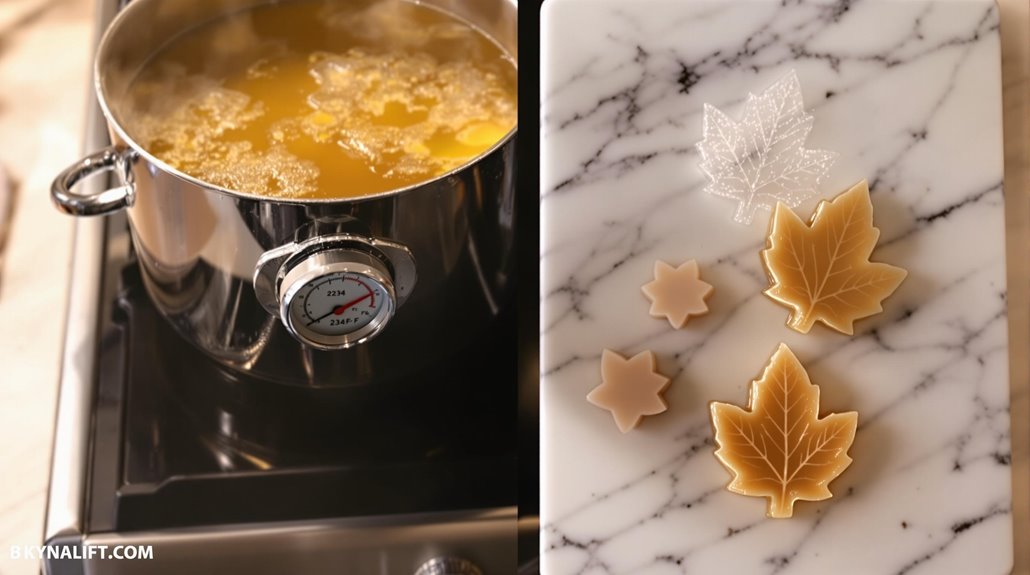
Start by heating your maple syrup over medium-high heat until it reaches exactly 235 degrees F. Once it hits this temperature, remove your pan from the heat source and let it cool without stirring. Wait until the temperature drops to 175 degrees F, which typically takes about 10 minutes. This right temperature range is essential for achieving the perfect candy consistency.
Once cooled to 175 degrees F, stir the mixture vigorously with a wooden spoon until it becomes thick and creamy, altering to a lighter color. You'll know you're done when the mixture is ready to pour into your molds. This modern candy-making process is far more precise than the traditional hot stones method used by indigenous peoples to boil maple sap.
Step-by-Step Candy Making Process
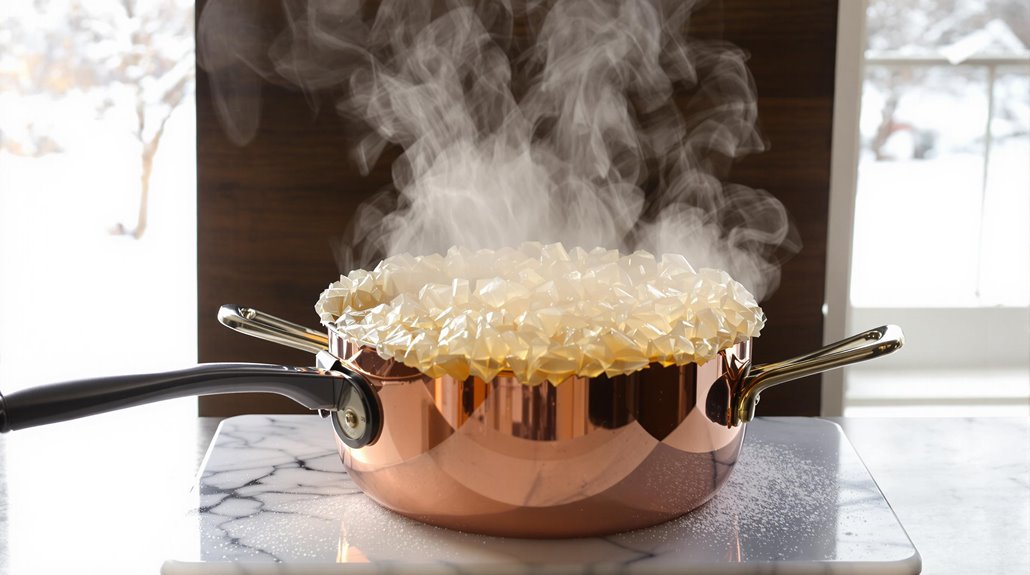
Now that you understand the temperature requirements, let's break down the maple candy-making process into clear steps. Making maple candy requires precise timing and careful attention to temperature control during the heating and cooling phases.
Begin by calibrating your candy thermometer in boiling water to guarantee accurate readings when working with the maple syrup.
Heat your syrup in a large saucepan until it reaches 235°F, watching carefully as it approaches 246°F to prevent boiling over.
Remove from heat and let the syrup cool undisturbed until it reaches 175°F - don't be tempted to stir during this phase.
Stir the mixture vigorously for 5 minutes until it becomes thick and creamy, then quickly pour into your prepared molds and let cool at room temperature until set.
Molding and Shaping Techniques
Successful maple candy making relies heavily on proper molding and shaping techniques to achieve professional-looking results. When you make maple candy, you'll need to act quickly once the mixture reaches the right consistency. After stirring the cooled syrup until it becomes creamy and light in color, you'll want to immediately transfer it into your prepared molds.
You can use traditional maple leaf molds or get creative with different shapes and sizes. The key is to pour the mixture while it's still pourable but thick enough to hold its shape. Don't disturb the candy while you let it cool at room temperature.
If you're planning to make maple cream instead, you'll follow the same process but continue stirring until the mixture reaches a spreadable consistency.
Storage and Preservation Methods
Proper storage plays an essential role in maintaining your maple candy's texture and flavor. You'll want to store your homemade treats in an airtight container at room temperature, where they'll stay fresh for up to two weeks. Don't make the mistake of refrigerating your maple candy, as cold temperatures will make it hard and crumbly.
- Place your candy in a clean, airtight container that seals completely
- Layer parchment paper between each row of candy pieces to prevent them from sticking together
- Keep the container at room temperature, away from direct sunlight and heat sources
- Check occasionally for any signs of moisture or condensation, which can affect the candy's texture
Safeguarding your maple candy's quality and enjoyment.
Common Troubleshooting Tips
While storing your maple candy correctly helps maintain its quality, knowing how to handle common issues during the making process assures success from the start. Before you begin, test your candy thermometer in boiling water to verify accurate readings.
When your mixture approaches 246°F, you can prevent boilover by using a wooden spoon coated with vegetable oil to press down the bubbles. Once you've reached the target temperature, transfer the mixture to a small bowl and wait 5 minutes before stirring to start the thickening process.
You'll need to allow the candy to cool completely for at least an hour before cutting it into cubes. Remember to use parchment paper between layers when storing to keep pieces from sticking together.
Safety Precautions and Best Practices
Making maple candy safely requires careful attention to protect yourself from potential burns and other hazards. When the syrup reaches 235 degrees and beyond, you'll need proper safety gear to avoid accidents while making the candy. Before you start, guarantee your candy thermometer is properly calibrated by testing it in boiling water for accurate readings.
Wear heat-resistant gloves and long sleeves to protect your hands and arms from hot syrup splashes. Keep a first aid kit nearby and know basic burn treatment procedures. Use deep, heavy-bottomed pots to prevent boiling over and provide stable heating. Let the candy cool completely in a safe area away from children and pets.
Store your finished candy in an airtight container at room temperature, and it'll stay fresh for up to two weeks.
Expert Recipe Variations
Professional candy makers frequently experiment with innovative twists on traditional maple candy recipes to create unique textures and flavors. You'll find that while pure maple syrup heated to 243-244°F creates classic crystalline candy, adjusting the temperature even slightly can yield different results.
For a softer, creamier texture, try heating cups of maple syrup to the soft ball stage at 235°F over medium heat. You can also create smooth maple cream by pushing the temperature to 246°F before cooling and beating. Want to experiment further? Add a touch of vanilla or butter to your recipe - these additions create wonderfully smooth, maple-flavored cream candies. Just remember to calibrate your candy thermometer accurately by testing it in boiling water first, as precise temperature control is essential for achieving your desired texture.
Nutritional Information and Serving Suggestions
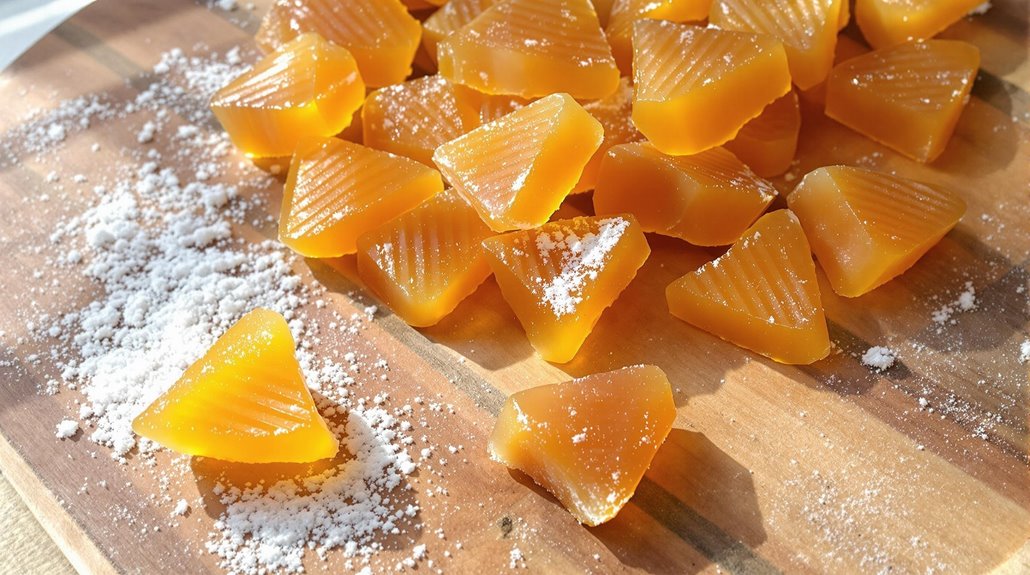
Because maple candy is made from pure syrup, it carries many of the same nutritional properties as its source ingredient. While exact values may vary based on the syrup and turn process, you'll find that this sweet treat offers a melt in your mouth experience with natural minerals and antioxidants.
A single serving (1 oz) provides a quick energy jolt, though specific caloric content depends on the creamy texture and final density. The candy contains trace minerals like calcium, potassium, and zinc without stirring in additional ingredients.
It's generally free from artificial additives and preservatives, making it a more natural alternative to processed candies. Consider portioning into small pieces, as the concentrated sweetness means a little goes a long way in satisfying your sugar cravings.