
Bacon and Nutrition: Myths and Facts
You've likely heard mixed messages about bacon's nutritional value. Is it really as bad as some claim, or can it fit into a balanced diet? Bacon is high in fat and sodium, but recent studies suggest that eating it in moderation might not be as harmful as once thought. Let's look at bacon's fat composition, the debate around nitrates, and the changing views on dietary cholesterol.
First, understand that bacon contains both saturated and unsaturated fats. While saturated fats have been linked to heart disease, unsaturated fats can be beneficial. The key is balance. Consuming bacon occasionally, rather than daily, can help manage fat intake.
Next, consider nitrates. Nitrates are added to bacon to preserve it and enhance flavor. Some studies link nitrates to cancer, but the evidence is not conclusive. If you're concerned, look for nitrate-free options or limit your intake.
Finally, there's dietary cholesterol. Once thought to significantly impact blood cholesterol levels, recent research shows that for most people, dietary cholesterol has a smaller effect than previously believed. This doesn't mean it's safe to eat large amounts of bacon, but moderate consumption is less risky than once thought.
In summary, bacon can be part of a balanced diet if eaten in moderation. Pay attention to portion sizes, choose nitrate-free options when possible, and balance your fat intake. With these steps, you can enjoy bacon without overdoing it.
Historical Perspective
Bacon has been a valued food for thousands of years. Ancient civilizations developed techniques to preserve pork, mainly through salt curing. These methods have endured, reflecting bacon's cultural importance in many societies.
There are common misunderstandings about bacon's health effects, often due to fearmongering. While excessive consumption of processed meats can lead to health issues, bacon can be part of a balanced diet when eaten in moderation. It's important to view bacon in its historical context rather than dismiss it based on modern nutritional science alone.
Despite ongoing debates about its health impacts, bacon remains popular. About 80% of American households include it in their weekly grocery lists. This lasting popularity highlights its cultural and culinary importance. By understanding bacon's preservation techniques and nutritional profile, you can make better dietary choices. Remember, enjoying bacon in moderation allows you to benefit from its taste without risking your health.
Fat Composition
When considering bacon's fat composition, it's important to note that it contains a significant amount of monounsaturated fat, particularly oleic acid, which is also found in olive oil. Although bacon does have saturated fat, recent studies suggest it may not be as harmful as once believed. By understanding these aspects, you can better appreciate bacon's nutrient profile beyond just its fat content.
Monounsaturated Fat Benefits
Monounsaturated fats are known for their health benefits. Surprisingly, bacon contains a significant amount of these fats. About 50% of the fat in bacon is monounsaturated, similar to the healthy fats in olive oil. The primary monounsaturated fat in bacon is oleic acid, which can improve heart health by enhancing cholesterol levels and reducing the risk of heart disease.
Including foods rich in monounsaturated fats, like bacon, can be part of a balanced diet if eaten in moderation. These fats help you feel full, which can regulate appetite and prevent overeating. Additionally, monounsaturated fats support the absorption of essential fat-soluble vitamins, such as A, D, E, and K.
Here are three key reasons to add monounsaturated fats to your diet:
- Improved Heart Health: Monounsaturated fats can help lower bad cholesterol levels.
- Enhanced Satiety: They keep you feeling fuller longer, helping control your appetite.
- Better Nutrient Absorption: They aid in the absorption of important vitamins.
Incorporating these fats into your diet can support overall nutrition and health.
Saturated Fat Myths
Saturated fat has been misunderstood for a long time, with many myths affecting how we view its impact on health. You've probably heard that eating foods high in saturated fat, like bacon, directly leads to heart disease. However, recent studies show a different picture. The American Heart Association now suggests that the link between saturated fat and heart disease is not as strong as once thought.
To better understand bacon's fat content, note that it contains a significant amount of monounsaturated fat—around 50%—and only about 40% saturated fat. This fact challenges the old belief that bacon is mostly saturated fat.
| Fat Type | Percentage in Bacon |
|---|---|
| Monounsaturated Fat | 50% |
| Saturated Fat | 40% |
| Other Fats | 10% |
The body also processes saturated fat differently than we used to think. This means that moderate consumption might not significantly increase heart disease risk. When planning your diet, focus on overall eating patterns rather than singling out specific nutrients. Bacon, when eaten in moderation, can be part of a balanced diet without necessarily harming your heart health. It's time to rethink the myths about saturated fat and look at your nutritional choices in a broader context.
Oleic Acid Similarities
Bacon's fat composition might surprise you: it shares a key component with olive oil—oleic acid. This monounsaturated fat makes up about 50% of the fat in bacon and contributes to its nutritional profile. Oleic acid is known for its heart health benefits, similar to those found in olive oil and the Mediterranean diet. Despite bacon being a processed meat, its oleic acid content offers a healthier option when eaten in moderation.
The American Heart Association now recognizes that moderate intake of monounsaturated fats, like those in bacon, can be good for your heart. You might not expect bacon to fit in a heart-healthy diet, but oleic acid helps to:
- Lower bad cholesterol levels. Reducing LDL cholesterol can decrease your risk of heart disease.
- Boost good cholesterol. Increasing HDL cholesterol supports cardiovascular health.
- Reduce inflammation. Chronic inflammation is linked to many diseases, and oleic acid has anti-inflammatory properties.
Given these points, bacon, with its oleic acid content, isn't just another processed meat. When consumed in moderation, it can be a surprisingly heart-healthy choice.
Nitrates and Health
Have you ever wondered why nitrates in bacon get so much attention? Nitrates and nitrites are commonly used in curing bacon, and they have raised concerns because they can form nitrosamines when bacon is cooked at high temperatures. Nitrosamines are linked to cancer, which is why nitrates have been labeled as harmful. However, there's more to consider.
Your body naturally produces more nitrates than you would consume from bacon. Also, the risk of harmful nitrosamines can be reduced. Vitamins C and E, often found in bacon, help lower the conversion of nitrates and nitrites into nitrosamines. This provides some health benefits. Green leafy vegetables, which are high in nitrates, are known for their health benefits, showing that not all dietary nitrates are harmful.
The World Health Organization advises being cautious with processed meats but points out that excessive consumption is the real issue. Eating bacon in moderation, where nitrates play a minor role, isn't as concerning. Ongoing research shows that the health effects of dietary nitrates are more complex than previously thought.
For practical advice, keep your bacon consumption moderate. Ensure a balanced diet that includes plenty of fruits and vegetables, which can help mitigate potential risks. Stay informed with the latest research to make well-informed dietary choices.
Cholesterol and Sodium
When considering bacon's cholesterol and sodium content, it's important to note that the American Heart Association no longer considers dietary cholesterol a major concern. However, bacon has high sodium levels, so it's essential to balance your intake to avoid potential hypertension. Recent studies suggest moderate sodium consumption isn't as harmful as once believed, urging a more nuanced approach to dietary guidelines.
Dietary Cholesterol Reconsidered
Recent research has shifted the understanding of dietary cholesterol. The American Heart Association now states that dietary cholesterol has a minimal impact on heart disease risk for most people. The focus is now on overall dietary patterns, especially the roles of saturated fats and refined carbohydrates. This means you can enjoy foods like bacon in moderation as part of a balanced diet.
Your body regulates cholesterol levels effectively, so dietary sources like bacon are less impactful than previously thought. A typical serving of bacon contains about 30 mg of cholesterol, which is now seen as manageable. This doesn't mean you can ignore the overall healthiness of your diet, but it does allow for more flexibility.
Key points to consider:
- Heart Disease Concerns: It's not just dietary cholesterol but your overall dietary pattern that affects heart disease risk.
- Balanced Diet: Including bacon occasionally can fit within a balanced diet without greatly impacting cholesterol levels.
- Modern Guidelines: Current guidelines emphasize reducing saturated fats and refined carbs rather than dietary cholesterol.
Sodium Intake Myths
When reconsidering dietary cholesterol's role in heart health, it's also important to clear up myths about sodium intake. Many people worry about the sodium in processed foods like bacon. With around 1,500 mg of sodium per 100 grams, bacon does have a lot of sodium. However, moderate sodium consumption isn't a health risk for most people.
| Misconception | Reality |
|---|---|
| All sodium is harmful | Moderate sodium intake can be safe |
| High sodium always leads to heart disease | Link is not definitive for everyone |
| Low sodium is always better | Very low sodium can worsen certain conditions |
Excessive sodium can be linked to health issues like high blood pressure, but the relationship isn't simple. How people respond to sodium varies based on their overall diet and health. Studies show that very low sodium intake can cause problems, like worsening conditions such as hyponatremia.
The key is moderation. Enjoy bacon in reasonable portions to reduce potential risks. Instead of cutting out processed foods completely, aim for a balanced diet that weighs both the benefits and drawbacks of sodium. This approach helps you manage your health without unnecessary restrictions.
Health Guidelines Update
Health guidelines are changing as new insights about cholesterol and sodium emerge. The American Heart Association now states that dietary cholesterol isn't a major factor in heart disease. This update shifts the focus to other dietary elements, like sodium intake and saturated fat.
- Revised Sodium Intake: Current guidelines suggest that moderate sodium intake from foods like bacon may not be as harmful as once thought. Bacon has about 1,500 mg of sodium per 100 grams, so be mindful of your intake. Unless you are particularly sensitive to sodium, you don't need to be overly restrictive.
- Saturated Fat Reconsideration: The link between saturated fat in bacon and heart disease is being reassessed. Older beliefs still affect public opinion, but new research shows that moderate consumption might not be as harmful as previously believed.
- Balanced Processed Meat Consumption: Health professionals now stress moderation when it comes to processed meat. A balanced, varied diet can help reduce the health risks associated with foods like bacon.
These updated guidelines encourage a balanced approach to your diet. Focus on moderation and variety rather than strict avoidance. Stay informed and consider these updates in your dietary choices.
Nutritional Profile
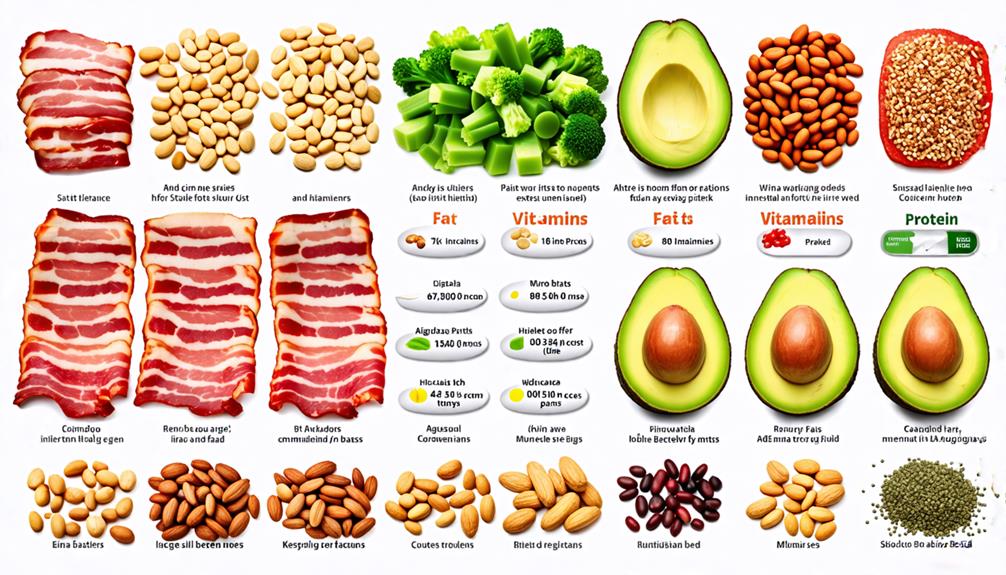
When examining bacon's nutritional profile, you'll find it contains several important nutrients. Bacon is a good source of B vitamins, including B1, B2, B3, B5, B6, and B12. These vitamins are crucial for energy production and brain health. A typical serving of bacon, around 2-3 slices, provides a decent amount of these vitamins, along with minerals like zinc, phosphorus, selenium, iron, magnesium, and potassium.
Regarding fat content, a 100-gram portion of cooked bacon has about 42 grams of fat. About half of this fat is monounsaturated, which is considered healthier. One slice of bacon contains roughly 3 grams of fat and about 40 calories, making it easier to manage your intake.
Bacon also offers a significant protein boost, with around 37 grams of protein per 100 grams. This makes it a valuable protein source in your diet. Additionally, bacon contains no added sugars, which improves its nutritional profile when eaten in moderation. So, next time you enjoy bacon, remember you're getting more than just flavor.
Popularity of Bacon
Bacon is incredibly popular in America. About 80% of households include it in their weekly grocery lists. Each year, over 1 billion servings of bacon are consumed in the United States. This shows its high demand across various meals and occasions. From breakfast dishes to creative recipes, bacon is a cherished part of American cuisine.
Why do people love bacon so much? Here are three main reasons:
- Versatility: Bacon is not just for breakfast. It can be used in salads, sandwiches, and even desserts.
- Flavor: Bacon's savory taste can enhance any dish, adding a unique and satisfying crunch.
- Cultural Significance: Bacon is often associated with comfort and tradition.
Despite changing views on health and nutrition, bacon remains popular. This suggests an emotional connection that goes beyond dietary concerns. While bacon is not a source of essential vitamins, its appeal lies in its rich flavor and versatility. The trend of bacon-infused products, such as bacon-flavored snacks and gourmet dishes, highlights its cultural relevance and appeal. Whether you are enjoying a classic BLT or a bacon-topped dessert, it's clear that bacon holds a special place in many kitchens.
Common Misconceptions
Contrary to popular belief, not all bacon is loaded with harmful chemicals like sodium nitrate or nitrite. You can find uncured options that use natural preservatives like celery powder and sea salt. When choosing bacon, check the labels to make healthier decisions.
Another common misconception is that turkey bacon is always a healthier alternative. In reality, turkey bacon can be higher in sodium and still contain considerable fat, depending on the cut. It's crucial to compare nutritional information rather than assuming one type of bacon is better than another.
Cooking methods also make a big difference. Microwaving or baking bacon on a rack can greatly reduce the fat content compared to cooking it in a skillet. This way, you can enjoy bacon with less grease and fewer calories.
Health Risks and Recommendations
Eating bacon has certain health risks you should know about. The World Health Organization classifies bacon as a Group 1 carcinogen. This means that eating more than 2 ounces daily can increase your risk of colorectal cancer. Additionally, bacon's high sodium content—around 1,500 mg per 100 grams—can raise blood pressure and contribute to hypertension, especially in sensitive individuals.
Here are some recommendations to enjoy bacon without compromising your health:
- Choose Nitrate-Free Options: Select high-quality, nitrate-free bacon to reduce the risk of harmful chemicals.
- Control Portions: Stick to a serving size of 2-3 slices. Pair bacon with vegetables and whole grains to balance your diet.
- Practice Moderation: Limit your bacon intake to avoid excess sodium and reduce cancer risk.
Cooking Techniques

When cooking bacon, the method you choose can greatly impact its nutritional profile and flavor. Cooking bacon in the microwave on paper towels is a quick way to reduce fat. The paper towels absorb excess grease, resulting in lower fat content compared to skillet frying. If you prefer a crispier texture, baking bacon on a rack is another excellent option. This method allows the fat to drip away, reducing total grease and making it a healthier choice.
Skillet cooking retains more grease, leading to higher fat content. For a healthier approach, consider grilling or air frying. These methods can yield delicious results while keeping fat levels in check. Using small amounts of bacon as a flavor booster in dishes like soups and salads can add taste without overwhelming the meal with fat.
Experimenting with different types of bacon and cooking techniques helps you find the best balance of flavor and nutrition. Whether you choose the microwave, oven, or grill, each method offers unique benefits. By being mindful of how you cook bacon, you can enjoy its savory taste with a healthier twist.