
Bacon and Health: Debunking Common Misconceptions
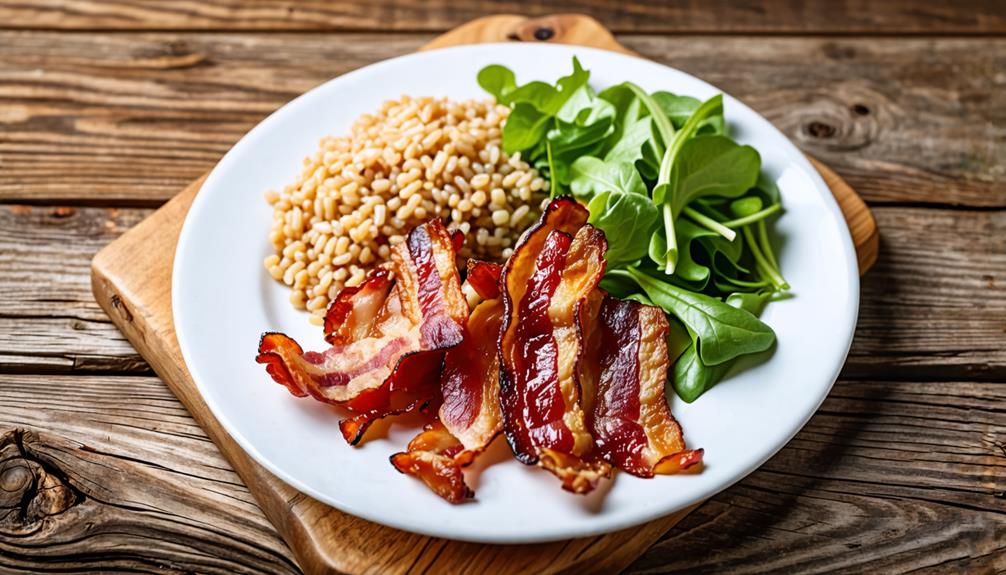
Bacon has a reputation for being unhealthy, but let's examine the facts. While bacon does contain fat and sodium, it is also a good source of proteins, vitamins, and minerals. Surprisingly, it includes heart-healthy monounsaturated fats like oleic acid. By understanding its nutritional profile and using mindful cooking techniques, you can enjoy bacon in moderation without guilt. Ready to challenge some common misconceptions about bacon? There's more to this food than meets the eye.
Historical Perspective
Bacon has been more than just a breakfast food throughout history; it has been a key part of culinary traditions worldwide. People have relied on bacon for its taste and preservation qualities for thousands of years. Bacon contains salt, essential for curing techniques developed by ancient civilizations to extend meat's shelf life. This method allowed communities to store food for long periods, especially before refrigeration.
Today, bacon's cultural significance remains strong. About 80% of American households include it in their weekly grocery lists, contributing to over 1 billion servings consumed annually. Its enduring popularity comes from its taste and its role in preserving culinary heritage.
Unlike many modern processed foods, bacon's historical preservation methods and nutritional profile set it apart. Misconceptions about bacon's health impacts often stem from misinformation, overshadowing its long-standing role in culinary traditions. As nutritional views evolve, understanding bacon's historical context is important. This perspective helps clarify its value as a flavorful and culturally significant food, rather than dismissing it as just another processed item.
Fat Composition
When considering bacon, you might worry about its fat content. However, there's more to it than you may realize. Bacon mainly contains oleic acid, the same heart-healthy monounsaturated fat found in olive oil. Although it does have some saturated fat, it's not the primary type. Recent research indicates that saturated fat is not as harmful as once thought.
Oleic Acid Benefits
Bacon often gets a bad reputation, but did you know it's rich in oleic acid, a type of monounsaturated fat also found in olive oil? This fatty acid is known for its heart health benefits and plays a key role in bacon's nutritional value. Oleic acid is linked to reducing inflammation, lowering bad cholesterol levels, and raising good cholesterol levels. So, when you include moderate amounts of bacon in your diet, you're not just enjoying something tasty, but also incorporating a nutrient that supports metabolic health.
Research suggests that oleic acid can improve overall cardiovascular health, making bacon a surprising addition to a balanced diet. While bacon also contains other fats, the presence of oleic acid makes it worth reconsidering in heart-healthy eating patterns.
Here are some benefits of oleic acid in bacon:
- Reduces inflammation
- Lowers bad cholesterol (LDL)
- Raises good cholesterol (HDL)
- Improves metabolic health
- Supports cardiovascular health
To make the most of these benefits, include bacon in moderation as part of a varied diet.
Saturated Fat Misconceptions
Misconceptions about saturated fat often confuse our understanding of its role in a balanced diet. You might think bacon is loaded with saturated fat, but that's not entirely true. Bacon mainly contains monounsaturated fat, especially oleic acid, which is the same heart-healthy fat found in olive oil. While bacon does have some saturated fat, it's not the main type of fat in this popular food.
The American Heart Association has updated its stance on saturated fat. They now acknowledge that moderate consumption might not be as harmful as once believed. Recent studies suggest that overly restrictive diets can actually harm your health. Your body needs some dietary fat for vital functions, and the fat in bacon can help you feel full and maintain energy balance when eaten in moderation.
Understanding the different types of fats, including those in bacon, is important for making informed dietary choices. Rather than avoiding bacon due to outdated ideas, recognize that its fat composition is more complex. It's not just about saturated fat; it's about the balance and type of fats you consume. Enjoy bacon as part of a balanced diet without succumbing to old misconceptions.
Nitrates and Health

Understanding Nitrates and Health
Many people think nitrates in bacon are harmful, but recent studies suggest otherwise. Your body naturally produces more nitrates than you get from your diet. The main concern is the conversion of nitrates into nitrosamines, which can be harmful. However, antioxidants like vitamins C and E, found in bacon, can prevent this conversion.
Healthy foods like green leafy vegetables also contain nitrates. These vegetables are recommended for their health benefits, indicating that nitrates are not as bad as they seem. Research shows that the cancer risk linked to processed meats is often exaggerated. The real danger comes from eating large amounts, not from nitrates themselves.
Researchers are also looking into the benefits of nitrates for blood pressure management. This challenges the negative views about dietary nitrates.
Key points to remember:
- Your body makes more nitrates naturally than you eat.
- Antioxidants in bacon help stop harmful nitrosamine formation.
- Green leafy vegetables are healthy and contain nitrates.
- The cancer risk from processed meats is often overstated.
- Nitrates may have benefits for blood pressure.
Cholesterol and Sodium
Bacon's cholesterol and sodium content may seem worrisome, but recent research offers new insights. The American Heart Association now emphasizes overall eating habits over dietary cholesterol alone. Moderate salt intake is also no longer seen as a major health threat. To enjoy bacon without significant risks, monitor portion sizes and read food labels carefully.
Dietary Cholesterol Reassessment
Reevaluating dietary cholesterol reveals a shift in understanding that challenges long-held beliefs. The American Heart Association now indicates that dietary cholesterol doesn't significantly impact blood cholesterol levels. This means foods like bacon are not as harmful as once thought.
Recent studies show that whole grains and processed carbohydrates are more strongly linked to increased cholesterol than bacon. So, if you've been avoiding bacon because of cholesterol fears, it might be time to rethink that stance.
Key points to know:
- Dietary Cholesterol: It doesn't significantly affect blood cholesterol levels.
- Processed Carbohydrates: These have a stronger link to high cholesterol than bacon.
- Misconceptions: Bacon isn't the main cause of cholesterol problems.
- Balanced Perspective: Understanding these facts can help dispel myths about bacon.
- Medical Conditions: Extremely low sodium can worsen certain health issues.
Understanding these nuances can help you make better dietary choices. Dispelling myths about bacon's health impacts allows for a balanced view on its consumption. So, enjoy your bacon in moderation without the unnecessary guilt tied to outdated cholesterol fears.
Sodium Intake Reevaluation
Let's address the misconceptions around sodium intake, especially concerning foods like bacon. The American Heart Association has revised its stance on dietary cholesterol, no longer viewing it as a major concern for heart disease. Similarly, previous guidelines linking sodium intake from foods like bacon to heart disease are being reconsidered. Moderate salt consumption, such as that found in bacon, may not pose the health risks once thought.
New evidence suggests that excessively low sodium intake can worsen certain medical conditions. This highlights the need for a balanced approach. Bacon, which contains roughly 30-40 calories per slice, can fit into a balanced diet when eaten in moderation. It is essential to be aware of portion sizes and ingredient sourcing since not all bacon products are the same. Some contain higher levels of sodium or preservatives like sodium nitrite.
Choosing bacon with lower sodium content and fewer preservatives can help manage your total sodium intake. By understanding these nuances, you can enjoy bacon without undue concern. Make informed choices that support a healthy lifestyle. Moderation and mindful selection are key.
Nutritional Profile

Bacon's nutritional profile is often misunderstood, but it has several benefits worth noting. Let's take a closer look.
Three slices of bacon provide 12 grams of high-quality protein, which is essential for muscle repair and overall health. Bacon is also rich in minerals like calcium, iron, magnesium, potassium, zinc, and selenium. These minerals help maintain various bodily functions.
In addition to minerals, bacon contains important vitamins such as choline, vitamins A, D, and several B vitamins. These vitamins support brain health and immune function. Surprisingly, a regular slice of bacon has about 40 calories and 3 grams of fat, making it a relatively low-calorie option to enhance your meals. Bacon also has no added sugar, making it a healthier choice when eaten in moderation.
Here's a quick summary of bacon's nutritional benefits:
- 12 grams of high-quality protein in three slices
- Rich in essential minerals
- Includes choline, vitamins A, D, and B vitamins
- Around 40 calories per slice
- No added sugar
When consumed in moderation, bacon can be a nutritious addition to your diet.
Cooking Techniques
Choosing the right technique for cooking bacon can impact its nutritional value and flavor. Using a skillet often retains more grease in the bacon, increasing its fat content. While this method produces a crispy texture, it is not the healthiest option.
For a lower-fat alternative, try microwaving bacon. Place the bacon on paper towels to absorb excess grease. This method is quick, convenient, and results in a leaner dish, perfect for busy mornings. Baking bacon on a rack is another effective technique. This allows the fat to drip away, making it a healthier choice. The even cooking ensures consistent crispiness, enhancing your meal.