10 Tips to Prevent Syrup Crystallization

To prevent syrup crystallization, start with clean equipment and filtered water to eliminate impurities. Add corn syrup and mild acids like lemon juice to stabilize the sugar. Maintain a steady heating temperature and avoid excess stirring once the sugar dissolves. Always monitor sugar-to-water ratios, and use airtight containers for storage to keep moisture out. If crystals form, reheat the syrup gently with a bit of added water. Experimenting with different ingredients like agave or brown sugar can also help. For a deeper exploration into these techniques and more advanced tips, there's plenty left to uncover.
Key Takeaways
- Use filtered water to eliminate minerals and impurities that can promote crystallization.
- Add corn syrup or glucose to the mixture to act as an anti-crystallization agent.
- Incorporate mild acids, like lemon juice, to invert sugar and reduce crystallization risk.
- Maintain a steady cooking temperature and avoid rapid fluctuations to prevent crystal formation.
- Store syrup in airtight containers at a cool, stable temperature environment to minimize crystallization.
Use Clean Equipment
Maintaining cleanliness is vital regarding preventing syrup crystallization. You should always use clean equipment to guarantee no impurities are introduced into your syrup. Start by rinsing your pots, pans, and utensils with hot water before use. This step helps eliminate any residual moisture or dirt that could contribute to crystallization.
It's important to avoid using utensils previously used for other ingredients. Cross-contamination can introduce unwanted impurities into your syrup, which can act as nucleation sites for sugar crystals. This means those tiny spots where crystals can start forming, leading to an undesirable texture in your final product.
Along with using clean equipment, make sure to use filtered water. Hard water contains minerals that can promote crystallization, so opting for filtered or distilled water will help you prevent this issue. After each use, inspect and thoroughly clean your equipment to guarantee no sugar build-up remains. Even small amounts of residue can lead to crystallization in future batches.
Filter Your Water
In conjunction with using clean equipment, filtering your water is another effective method to prevent syrup crystallization. Hard water, which contains high levels of calcium and magnesium, often leads to unwanted clumping and crystallization. By using filtered water, you eliminate these troublesome minerals and impurities, drastically reducing the risk of your syrup crystallizing.
Impurities in unfiltered water can interfere with the sugar dissolution process, making it harder to achieve a smooth and stable syrup. These impurities act as nucleation sites where crystals can start to form, which is the last thing you want when aiming for a clear, consistent product. Using filtered water guarantees a more reliable and stable sugar solution, improving the general quality of your syrup.
A simple water filter can greatly improve the clarity and quality of your final product. It's a small investment that pays off with a smoother, more enjoyable syrup. By eliminating impurities and using filtered water, you're taking an essential step toward mastering the art of syrup making. So, make certain to use filtered water for the best results every time you're preparing your syrup.
Add Corn Syrup
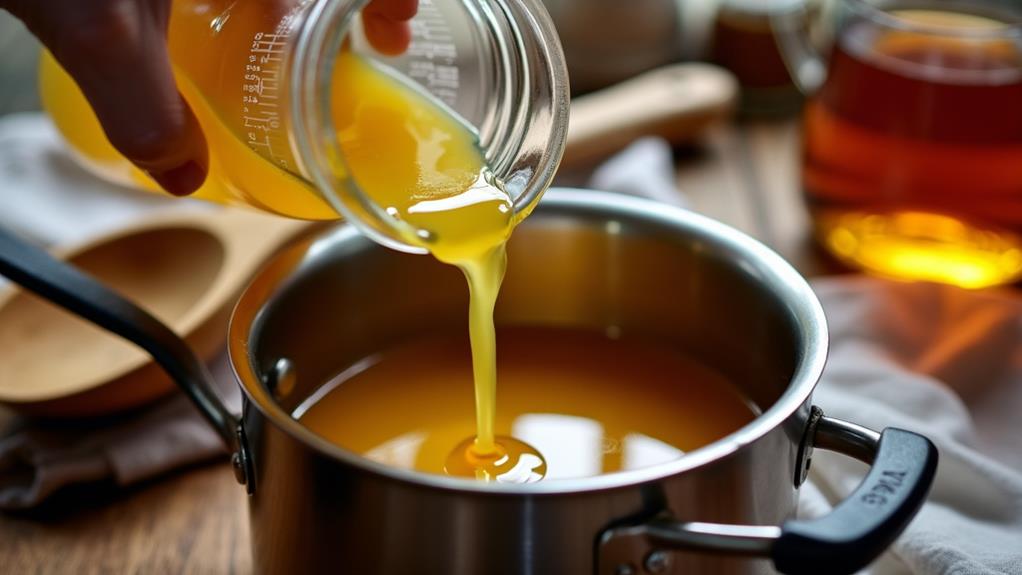
Adding corn syrup to your sugar-water mixture serves as a powerful anti-crystallization agent. Its glucose content interferes with the crystallization process, helping to prevent sugar crystals from forming. By lowering the sugar concentration in your solution, corn syrup makes it less likely to reach the supersaturation point that leads to crystallizing.
To achieve this, add approximately ¼ teaspoon of corn syrup for every cup of sugar you use. This small amount can greatly reduce the chances of your syrup crystallizing, guaranteeing a smoother texture and better overall quality. For ideal results, incorporate the corn syrup before you start heating your sugar-water mixture. Doing so guarantees even distribution, making the anti-crystallization properties more effective.
Using corn syrup not only stabilizes your mixture but also improves the consistency of your homemade syrups and candies. You'll find that the end product is much smoother and more enjoyable. Remember, the key is to add the corn syrup early in the process to reap its full benefits. This simple step can make a world of difference in preventing unwanted crystallization in your sweet creations.
Avoid Excess Stirring
To keep your syrup smooth and free from unwanted crystals, minimize stirring once the sugar has dissolved. Excess stirring can disturb the sugar-water mixture and create seed crystals, which initiate crystallization. After the sugar has fully dissolved, agitating the mixture too much, especially as it reaches a boil, increases the likelihood of sugar particles colliding and clumping together. This leads to the formation of sugar crystals, which you want to avoid.
Instead of stirring, try gently swirling the pot to maintain an even temperature. This method helps prevent sugar from crystallizing on the sides of the pan without causing the disruptions that excess stirring would. Allow the sugar to dissolve completely in the heated water before you adjust the heat and avoid further agitation. This guarantees even dissolution and helps avert sugar from crystallizing prematurely.
Minimizing stirring during the cooking process will give you better control over the syrup's viscosity and stability. By following these steps, you can effectively avert sugar crystals from forming, keeping your syrup smooth and perfect for your needs. Remember, a gentle approach is key to avoiding crystallization and achieving the ideal syrup consistency.
Control Heating Temperature
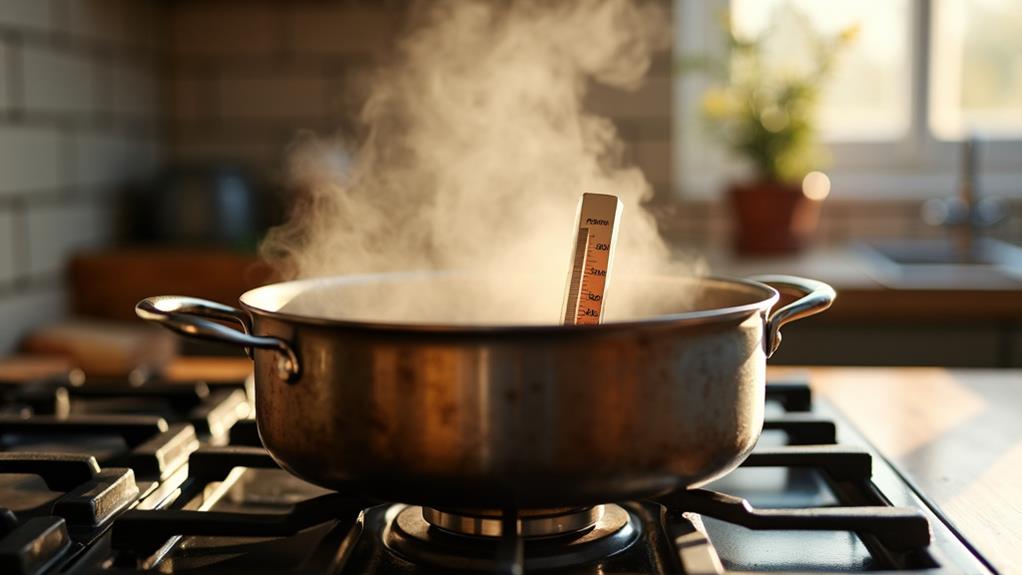
Maintaining a steady temperature is just as essential as minimizing stirring with regard to preventing syrup crystallization. When you boil the syrup, rapid temperature fluctuations can occur, which promotes crystallization. Instead, gently simmer the syrup to maintain a consistent heating temperature. This method keeps the sugar dissolved more effectively and reduces the risk of unwanted crystals forming.
Here are some tips to help you manage the heating temperature:
- Use a candy thermometer: Monitor the syrup's temperature closely with a candy thermometer to guarantee it stays just below the boiling point.
- Preheat your water: Before adding sugar, preheat your water. This step aids in dissolving the sugar more evenly and minimizes crystallization during cooling.
- Adjust heat gradually: If you're using a stove, make small adjustments to the heat. Sudden changes in temperature can destabilize the syrup, encouraging crystallization.
Incorporate Mild Acids
Incorporating mild acids such as lemon juice or cream of tartar into your syrup can greatly reduce the risk of crystallization. These acids help invert the sugar, breaking down sucrose into glucose and fructose. This process makes the syrup less prone to crystallization. To achieve this, add about 1/8 teaspoon of acid for every cup of sugar used. This small amount can considerably improve the stability of your syrup.
The presence of acid modifies the pH of the solution, making it less favorable for crystal formation, especially in high-sugar concentrations. By altering the pH, you create an environment where sugar crystals are less likely to form and grow. Furthermore, using acidic ingredients not only inhibits crystallization but can also improve the flavor profile of the syrup, adding a subtle tanginess that can complement many dishes.
However, be careful not to overdo it. Using too much acid can result in an off-taste and alter the intended sweetness balance of your syrup. By incorporating the right amount of acid, you'll maintain the desired flavor while effectively preventing crystallization.
Monitor Sugar Ratios
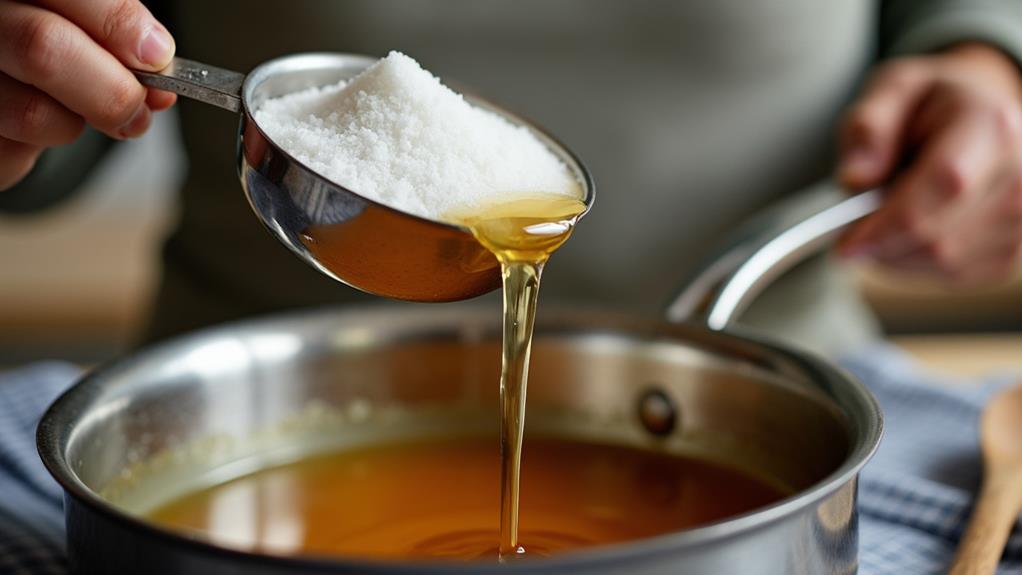
Achieving the perfect sugar-to-water ratio is crucial for preventing syrup crystallization. Maintaining a 2:1 ratio of sugar to water guarantees enough water is present to keep the sugar molecules dissolved, thereby avoiding the formation of unwanted crystals. Precise measurements are key; a higher concentration of sugar can lead to supersaturation, which increases the likelihood of crystal formation.
To keep your sugar syrup smooth and crystal-free, consider the following tips:
- Add corn syrup or glucose: These ingredients have different sugar structures that inhibit crystallization.
- Avoid sugar leftovers: Verify all sugar is completely dissolved before cooling to prevent nucleation sites.
- Regular monitoring: Adjust the sugar-to-water ratio as needed during preparation to maintain the desired consistency.
Incorporating these practices will help you manage the sugar-to-water balance effectively. When preparing simple syrup, adding a small amount of corn syrup or glucose can make a big difference. Also, be vigilant about not leaving excessive sugar on the sides of your pot. This attention to detail helps to keep crystals from forming and guarantees a stable, smooth sugar syrup every time. Keep an eye on your ratios, and you'll achieve great results!
Store Properly
While getting the sugar-to-water ratio right is essential, how you store your syrup also plays a significant role in preventing crystallization. To store syrup effectively, always use airtight containers. These containers minimize exposure to air and humidity, which are major culprits in promoting crystallized sugar. A tight seal guarantees that the syrup remains stable and less prone to forming unwanted crystals.
Next, keep your syrup in a cool, stable temperature environment. Fluctuations in temperature can trigger the formation of solid sugar crystals. Avoid refrigeration unless your syrup is mixed with beverages, as cold temperatures can encourage crystallization. Instead, store it in a pantry or cupboard where the temperature remains consistent.
Using clear, labeled containers is another helpful tip. This practice allows you to track the duration of your syrup and guarantees it is used within a few days for best freshness. Older syrup is more likely to crystallize, so monitoring its duration is essential.
Reheat to Fix Crystals
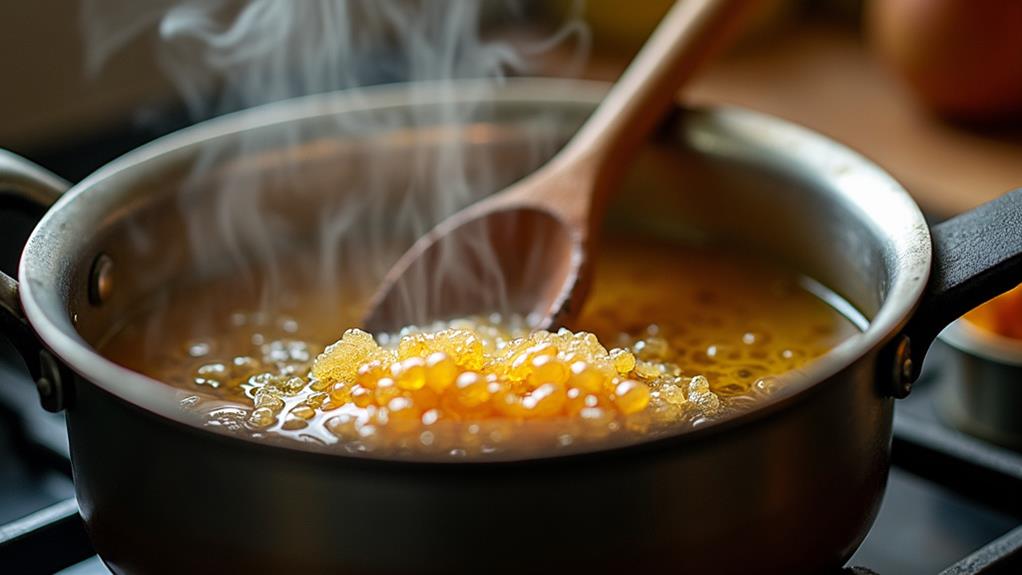
Dealing with crystallized syrup can be frustrating, but reheating is a reliable solution. When your syrup turns grainy with sugar crystals, don't worry—there's an easy fix. Start by gently reheating the mixture over low heat. Stir occasionally to help the sugar crystals dissolve completely back into the syrup.
Here are some helpful tips to guarantee success:
- Add a bit of water: Before you reheat, add a small amount of water to the crystallized syrup. This will help facilitate the dissolution of the crystals.
- Monitor temperature: Keep a close eye on the temperature. Aim for just below boiling to prevent scorching the sugar, which could ruin the flavor.
- Strain the syrup: After reheating, strain the syrup through a fine mesh to remove any stubborn, undissolved sugar particles. This guarantees a smooth final product.
If the syrup remains crystallized after the initial reheating, don't be discouraged. Simply continue to heat and stir gently until all the crystals are dissolved. By following these steps, you'll restore your syrup to its intended liquid form, making it perfect for your recipes once again.
Experiment With Ingredients
After successfully reheating and dissolving crystallized syrup, there's another approach to prevent it from happening again. Experimenting with ingredients can markedly reduce the chances of syrup crystallization. One effective method is incorporating corn syrup into your recipe. Its glucose content helps stabilize the sugar mixture, preventing crystals from forming.
You might also consider including a small amount of lemon juice or cream of tartar. These acidic ingredients can invert some of the sugar, breaking down sucrose into glucose and fructose. This process reduces the likelihood of crystallization by making the boiling sugar mixture more stable.
Another option is to experiment with different sweeteners like agave syrup. Agave contains primarily fructose and glucose, making it less prone to crystallization compared to traditional sucrose-based syrups. Using brown sugar instead of white sugar can also improve the flavor and color of your syrup while providing extra acidity to combat crystallization.
Frequently Asked Questions
How Do You Prevent Crystallization in Syrup?
To prevent crystallization in syrup, you should maintain precise temperature control and use proper storage methods. Stick to a 2:1 sugar-to-water ratio and consider adding corn syrup or lemon juice. Guarantee all sugar types are dissolved by gently simmering the mixture and avoid stirring at high temperatures. Use clean, filtered water and store the syrup in a consistent, cool environment to keep crystals at bay.
How Do You Make Syrup That Doesn't Crystallize?
To make syrup that doesn't crystallize, use a proper sugar-to-water ratio and choose fine sugar types. Maintain consistent temperature control by gently simmering the mixture and ensuring all sugar is dissolved. Syrup storage is essential; keep it in an airtight container at room temperature. Avoid impurities by using filtered water and clean utensils. Adding a bit of corn syrup or lemon juice can also help prevent crystallization.
How Can You Avoid Unwanted Crystallization When Cooking Sugar Syrups?
To avoid unwanted crystallization when cooking sugar syrups, use the right sugar types and control moisture. Opt for a 2:1 sugar-to-water ratio and add a bit of corn syrup or lemon juice. Use clean, filtered water and avoid stirring once it heats. Simmer gently to dissolve all sugar, then increase the heat. Store your syrup in an airtight container to keep out air and humidity.
Why Does My Syrup Have Crystals in It?
Your syrup has crystals in it because of its composition and the way sugar types interact during cooking. High sugar concentrations can lead to crystal formation, especially if there are impurities or undissolved sugar. Sudden temperature changes or rapid cooling can also destabilize the solution, causing crystallization. Make sure to dissolve all sugar completely and maintain a consistent temperature to prevent this issue.