10 Tips for Storing Homemade Syrup Properly
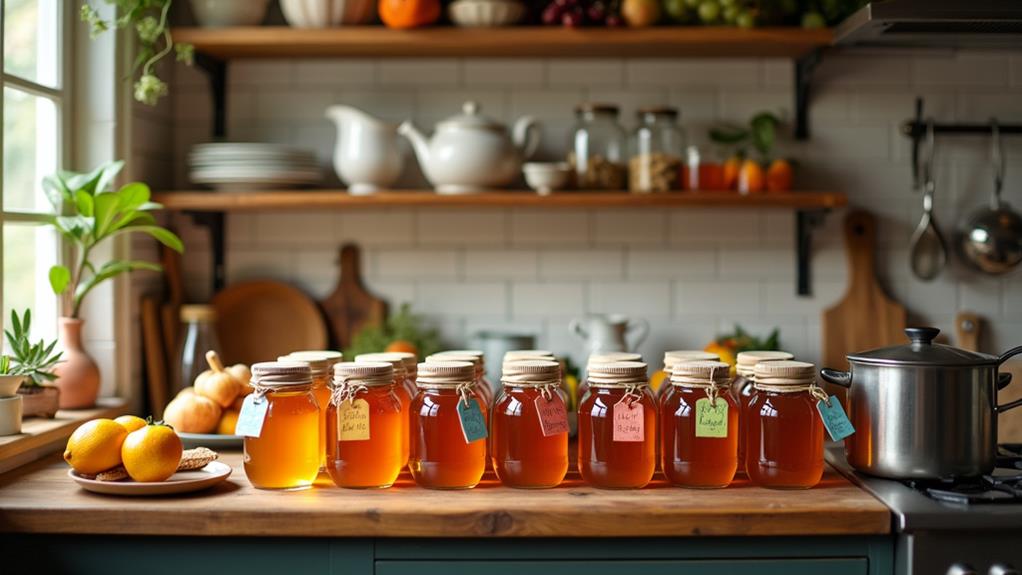
To store homemade syrup properly, use sterilized glass containers for purity and prevent contamination by making sure they're airtight. Always refrigerate the syrup and check the seals regularly. For long-term storage, freezing in portioned sizes works best, but leave space in glass containers for expansion. Keep it in a cool, dark place to avoid sunlight degradation. Label containers with preparation dates to track freshness and check for mold routinely. Use clean utensils to avoid contamination, and thaw frozen syrup in the fridge. For flavored syrups, monitor shelf life closely. Investigate further to master these techniques and guarantee your syrup stays perfect.
Key Takeaways
- Use airtight glass containers to preserve syrup flavor and prevent contamination.
- Refrigerate syrup immediately after opening to prevent spoilage and mold growth.
- Label containers with preparation dates to track freshness and identify older syrups.
- Store syrup in a cool, dark place away from sunlight to maintain quality.
- Inspect syrup regularly for mold, especially after two years, and discard if any is found.
Choose the Right Container
When storing homemade syrup, it's vital to choose the right container to maintain its quality and flavor. Using a glass container is highly recommended for homemade syrups, as glass doesn't absorb odors or flavors, guaranteeing your syrup stays pure. Sterile containers are fundamental to prevent bacteria and mold growth, keeping your syrup safe to consume over time.
Opt for airtight glass jars or bottles, as they effectively prevent contamination and preserve the syrup's flavor. Swing-top glass bottles are an excellent choice; not only are they stylish, but their design also makes pouring and sealing easy. This type of container guarantees your flavored syrups remain fresh and flavorful.
Avoid plastic containers when storing homemade syrups, as they tend to absorb odors and can alter the taste over time. Confirming your glass containers are airtight will help maintain the syrup's quality and extend its shelf life.
For those looking to freeze syrup, silicone ice cube trays offer a practical solution. They allow for portion control and make it simple to transfer syrup cubes into zip-top bags, preventing freezer burn. To summarize, choosing the right container is the initial step in preserving your delicious homemade syrups.
Keep It Airtight
After selecting the perfect container, the next step is confirming it's airtight. Airtight containers are essential for storing homemade syrup because they prevent contamination and help maintain freshness by minimizing exposure to air. Glass jars or bottles are highly recommended for this purpose. Unlike plastic, glass jars are less permeable and don't retain odors, which preserves the syrup's taste and quality.
To enhance the storage duration of your homemade syrup, make sure the container is filled to the top. This limits the amount of air inside, reducing the risk of spoilage. Excess air can promote the growth of bacteria and mold, leading to a shorter shelf life. As a result, always aim to minimize air space.
Regularly check the seal of your storage container to verify it remains airtight. A compromised seal can let air in, affecting the syrup's quality and freshness. If you notice any signs of wear or damage on the seal, replace the container immediately.
Lastly, label your syrup containers with the date of preparation. This simple step helps you track how long the syrup has been stored, confirming you always use it within its ideal storage duration.
Refrigerate After Opening
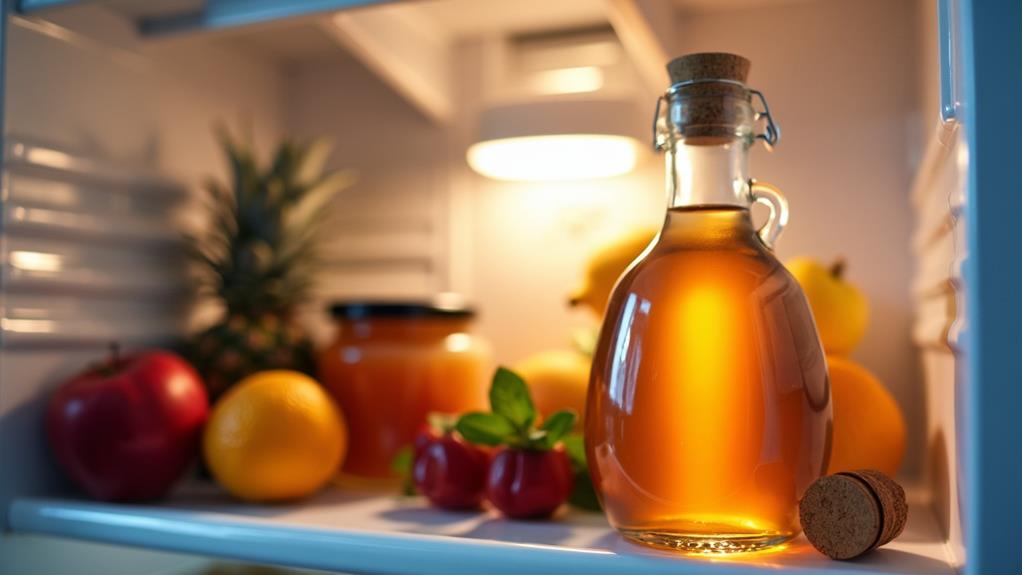
Once you crack open that bottle of homemade syrup, make sure to refrigerate it immediately. This essential step prevents spoilage and mold growth, ensuring your syrup stays fresh and tasty. When you keep your syrup refrigerated, you're inhibiting bacterial growth, which can otherwise lead to off flavors and unpleasant odors.
Your homemade syrup can last up to 2 years in the fridge, but don't forget to check it regularly for any signs of mold, especially after that period. Even with refrigeration, mold can still develop, so staying vigilant is key to maintaining the syrup's quality.
One thing you might notice when storing syrup in the refrigerator is crystallized sugar forming on the bottle cap. This is completely normal and can be easily remedied. Just pour some hot water over the cap to dissolve the crystals and make it easier to open.
Most people finish their syrup long before it spoils, making proper refrigeration a straightforward and effective storage method. By keeping your syrup refrigerated, you're ensuring it remains delicious and safe to enjoy each time you reach for it.
Freeze for Long-Term Storage
While refrigerating your homemade syrup is a great short-term solution, freezing offers an excellent way to preserve it for the long haul. When you freeze for long-term storage, you can enjoy your syrup indefinitely without worrying about spoilage. The key to success lies in how you store it.
First, consider portioning your syrup into smaller quantities before freezing. This makes it easier to thaw just what you need later. Silicone ice cube trays are perfect for this; they allow you to create convenient, single-serving portions that are easy to pop out. Avoid using glass containers unless you leave enough head space for the syrup to expand as it freezes, which helps prevent breakage.
Once frozen, your syrup will have a slushy consistency, making it a delightful treat or topping for desserts like ice cream. When it's time to use your syrup, thaw frozen syrup in the refrigerator. This method guarantees that its flavor and quality remain intact for future use.
Avoid Sunlight Exposure
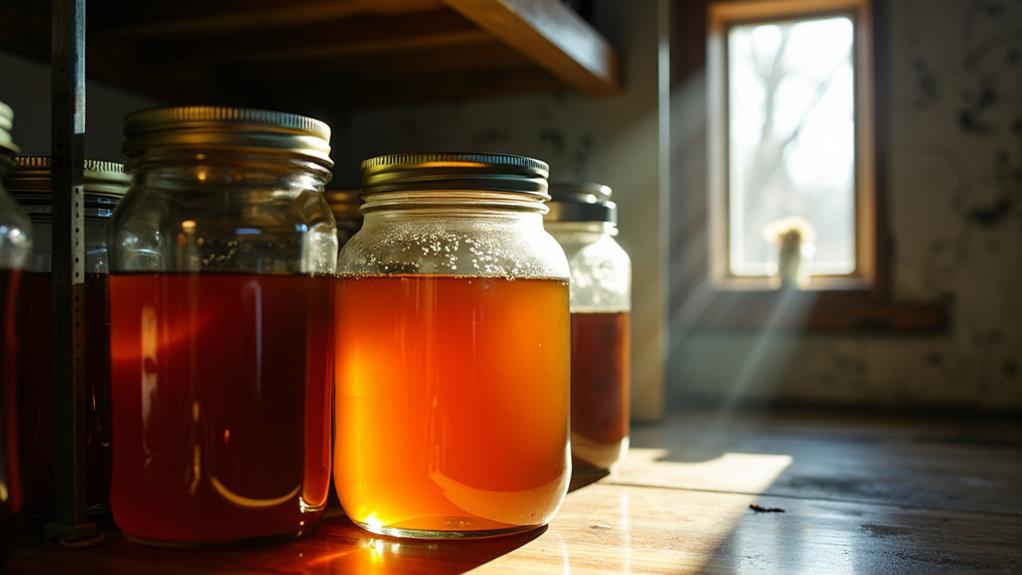
Protecting your homemade syrup from sunlight is essential for maintaining its quality and flavor. Sunlight can cause your syrup to degrade over time, leading to a loss of taste and an increase in spoilage risk. To avoid this, you should store your syrup in a cool, dark pantry or cupboard. Here are some practical tips to help you minimize light exposure:
- Choose the right storage containers: Opt for opaque or dark-colored containers, such as amber glass bottles. These help shield your syrup from light while still allowing you to see the contents.
- Avoid sunny spots: Don't place your syrup containers near windows or anywhere direct sunlight might reach them. Even a few hours of sunlight can negatively impact the quality of your syrup.
- Extra protection for clear glass bottles: If you're using clear glass bottles, consider wrapping them in aluminum foil or placing them in a dark box. This extra layer of protection will further reduce light exposure.
Regularly check your pantry or cupboard for any signs of light exposure. Adjust the placement of your syrup containers as necessary to guarantee they remain in ideal storage conditions. By following these steps, you'll keep your homemade syrup tasting fresh and delicious.
Label With Dates
Labeling your syrup containers with the date of preparation is vital for maintaining freshness and guaranteeing you use older syrup before newer batches. When you store your syrup, always label with dates using a permanent marker or a label maker. This simple step helps you keep track of when each batch was made, which is significant for monitoring freshness.
Basic syrup typically has a shelf life of about 1-3 months in the refrigerator. By clearly marking the preparation date, you can easily see which syrups need to be used initially, reducing waste and avoiding spoiled syrup. If you decide to freeze your syrup, labeling with dates becomes even more critical, as frozen syrup can be stored for up to a year. This way, you'll know exactly how long each batch has been stored and can use it within the recommended duration.
Regularly checking the labeled dates prevents accidental consumption of syrup that's past its prime, promoting food safety in your kitchen. By taking these small but vital steps, you guarantee that your homemade syrup remains fresh and delicious for as long as possible.
Check for Mold Regularly
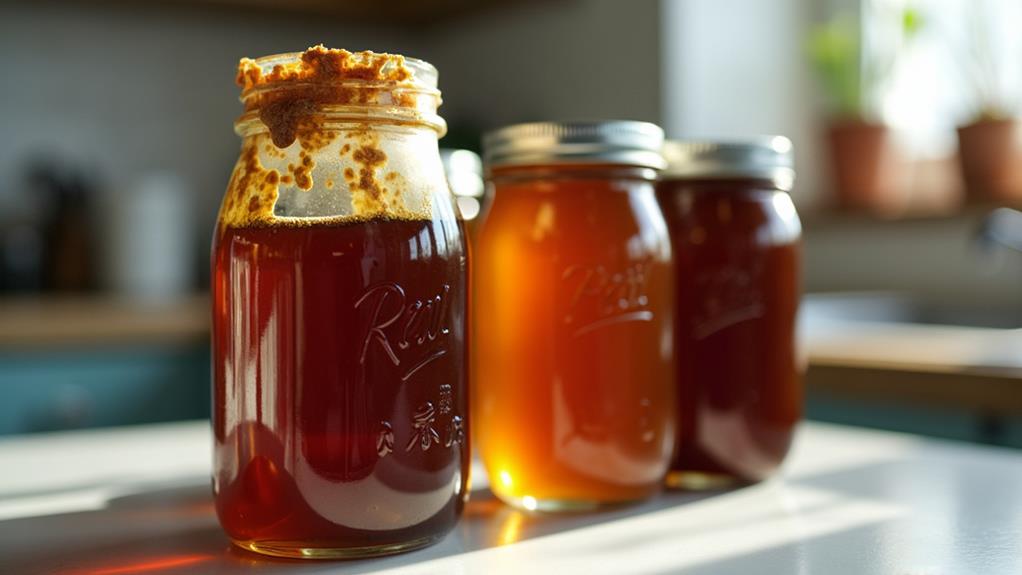
It's vital to regularly inspect your opened syrup containers for signs of mold, especially if they've been stored for a significant period. Mold can develop on the surface, particularly if the syrup has been in the refrigerator for over two years. To make sure your syrup remains safe to consume, follow these steps:
- Check the Cap and Surface: Mold often starts where crystallized sugar forms around the syrup cap. If you see any mold growth, discard the syrup immediately.
- Examine the Bottom: Before pouring, inspect the bottom of the container. Mold can settle undisturbed there, so a quick look can prevent unpleasant surprises.
- Assess Smell and Taste: If you detect an off smell or taste in addition to visible mold, it's best to discard the syrup to avoid potential health risks.
Regularly checking for mold is vital, especially for syrup that's been frequently opened. Mold growth isn't always obvious at first glance, so thorough inspection is key. Remember, if in doubt, it's safer to throw it out. Following these practices guarantees you enjoy your homemade syrup without any health concerns.
Use Clean Utensils
While checking for mold is vital, you also need to use clean utensils to keep your homemade syrup safe and delicious. Using clean utensils is fundamental to prevent contamination, which can spoil your syrup and make it unsafe to eat. To extend the shelf life of your homemade syrup, make certain to sterilize utensils before using them. You can do this by boiling them in water for a few minutes or running them through a dishwasher cycle to eliminate harmful bacteria.
Avoid double-dipping utensils back into the syrup container, as this can introduce germs and impurities. Instead, opt for dedicated serving utensils that are only used for your syrup. This helps maintain cleanliness and prevents cross-contamination with other foods.
Regularly inspect and clean any utensils used for your syrup to guarantee they remain free from residues that could spoil your homemade syrup. By taking these simple steps, you can enjoy your delicious creation for a longer period. Keeping everything clean not only preserves the taste but also guarantees that your syrup remains a safe treat for everyone to enjoy. So, always prioritize using clean utensils to keep your syrup at its best.
Thaw Properly
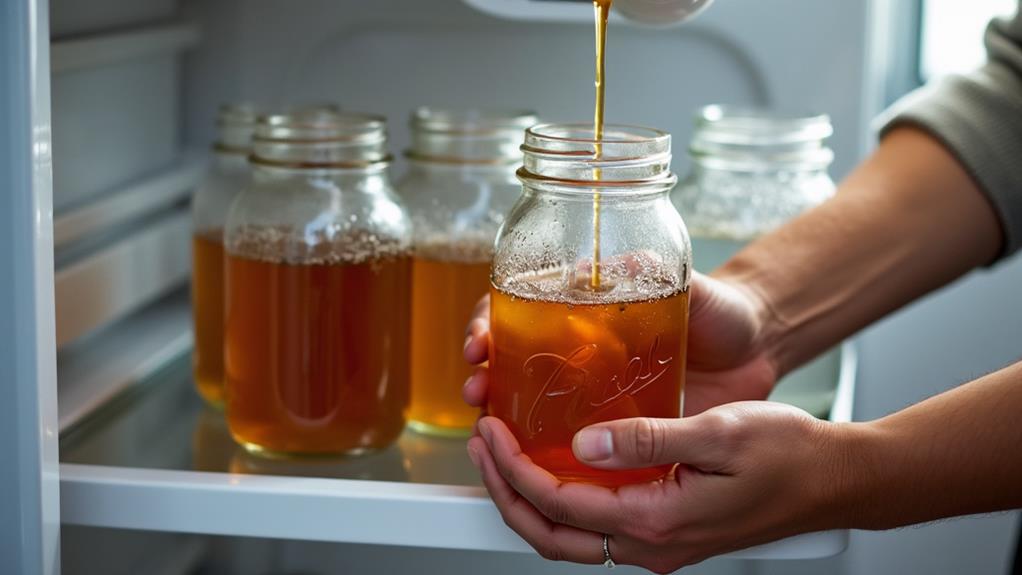
Regarding thawing your homemade syrup, doing it properly guarantees you maintain its quality and safety. When you thaw frozen syrup, the best practice is to place it in the refrigerator. This gradual thawing process helps retain the syrup's texture and flavor. Avoid thawing syrup at room temperature as it can lead to bacterial growth and spoilage.
If you're in a rush, here's a quicker method: place the sealed container of syrup in warm water. This helps speed up the process without compromising too much on quality. However, keep in mind that this should only be done occasionally and not as a regular practice.
Once thawed, make sure you use the syrup within a few weeks if stored in the refrigerator. This period guarantees the syrup remains fresh and safe for consumption. Repeatedly thawing and refreezing syrup is not recommended because it can degrade its texture and flavor over time.
To recap, keep these key points:
- Thaw frozen syrup in the refrigerator to maintain quality and prevent bacterial growth.
- Use a warm water bath for a quicker thaw, but sparingly.
- Consume thawed syrup within a few weeks to maintain freshness.
Flavor Variations Storage
In the domain of storing flavored syrups, the key is maintaining their unique taste and freshness. Since flavored syrups generally have a shorter shelf life than plain versions, you need to be extra diligent. Fresh fruit syrups last about two weeks, while citrus-flavored syrups can stretch up to a month in the refrigerator.
To store your simple syrup with added flavors, use airtight glass containers. These containers help lock in the flavor and prevent contamination. The incorporation of herbs or spices can change the syrup's pH, affecting its color and taste, so you'll need to monitor for spoilage carefully. Lemon juice is a great enhancement, not just for its zesty flavor but also for its preservation qualities—it can extend the shelf life by a couple of weeks.
Always label your flavored syrups with the preparation date and specific flavor. This practice helps you track their freshness and guarantees they're used before they spoil. By following these steps, you'll prolong the shelf life of your delicious homemade syrups and keep them tasting their best.
Frequently Asked Questions
How Do You Store Homemade Syrup?
To store homemade syrup, use clean, sterilized syrup storage containers, preferably glass jars. Keep them in your refrigerator to maintain quality and extend shelf life. Implement syrup labeling techniques by marking preparation dates. Different homemade syrup flavors require the same care, ensuring syrup consistency maintenance. For longer storage, freeze portions in silicone ice cube trays. Regularly check your refrigerator organization to spot any spoilage early and keep your syrup fresh.
How Do You Increase the Shelf Life of Homemade Syrups?
To increase the shelf life of homemade syrups, use preserving techniques like adding vodka or lemon juice. Store your syrup in airtight glass containers to avoid contamination. Adjust sugar ratios; a 2:1 ratio lasts longer. Refrigeration benefits include slowing bacterial growth. For flavor infusions, make sure to sterilize all utensils and containers. Freeze syrups in silicone ice cube trays for indefinite storage without worrying about solidification.
How Long Can You Keep Homemade Simple Syrup?
You can keep homemade simple syrup for about 1 month in the fridge if stored properly. Rich syrup recipes, with a 2:1 sugar to water ratio, last up to 6 months. Flavored variations, particularly those with fresh fruit, usually last around 2 weeks, while citrus flavors can go up to a month. Always check syrup consistency and smell before using it in your favorite syrup applications to confirm it's still good.
How Do You Keep Homemade Syrup From Molding?
To keep homemade syrup from molding, focus on mold prevention by using clean, airtight storage containers. Refrigerate the syrup to maintain ideal syrup viscosity and reduce bacterial growth. Different sugar types can affect shelf life, so choose wisely. For flavor improvement and longer storage, consider adding preservatives like citric acid. Regularly check for spoilage and freeze small portions for indefinite storage, avoiding mold and keeping the syrup fresh.