10 Fascinating Facts About the History of Pancakes
Pancakes may seem like a simple breakfast food, but their history is rich and varied. They date back to ancient Greece around 600 BC, made with flour, honey, and olive oil. The Romans had a version called "alita dolcia," often served during festivals. Pancakes also play a role in cultural traditions like Shrove Tuesday and appear in Shakespeare's works. Curious about how this dish became a global phenomenon? There's much to learn about its development through time and across cultures.
Ancient Greek Origins
Pancakes have a history that dates back to ancient Greece around 600 BC. The first recorded mention of pancakes comes from the ancient Greek poet Cratinus, who described a "flat cake" made with flour, honey, and olive oil. This simple recipe shows how pancakes have been enjoyed for thousands of years.
Even the famous Greek physician Galen included a pancake recipe in his writings during the late second century C.E. His inclusion of pancakes in medical texts suggests they were valued for their nutritional benefits. In ancient Greek kitchens, pancakes were prepared with ingredients like honey and olive oil, filling homes with a delightful aroma.
The term "pancake" originated in Middle English in the 15th century, indicating how the dish has evolved. However, the basic concept—a flat, round cake cooked on a griddle—remains largely unchanged since ancient times. Understanding the ancient Greek origins of pancakes can deepen your appreciation for this timeless dish. It connects you to a culinary tradition that spans both continents and centuries.
Roman Pancake Recipes
Roman pancake recipes, known as "alita dolcia," use ingredients like wheat flour, olive oil, honey, and curdled milk. These pancakes are simple yet nutritious. They were enjoyed daily and served during religious ceremonies. Ancient cookbooks like "Apicius" mention these dishes, highlighting their popularity and variety, from sweet to savory.
To make Roman pancakes, start with wheat flour and mix it with olive oil. Add honey for sweetness and curdled milk for texture. Stir the mixture until smooth. Heat a pan and pour in some olive oil. Cook the batter in small amounts until golden brown on both sides. Serve warm, either plain or with additional honey. These pancakes are a quick and easy way to enjoy a taste of ancient Rome.
Alita Dolcia Origin
The origins of pancakes date back to the 1st Century AD with the Roman recipe known as Alita Dolcia. The ancient Romans were pioneers in culinary creativity. Their version of pancakes, Alita Dolcia, which means "another sweet" in Latin, was a simple dish made from flour, water, and eggs. These pancakes were often enhanced with honey or spices, showcasing the Romans' love for flavor.
Roman pancakes were prepared on a hot surface, similar to how pancakes are made today. This method shows the continuity of pancake preparation techniques over centuries. Alita Dolcia was popular in ancient Rome, enjoyed by both the wealthy elite and the working class.
Consider these points about Roman pancakes:
- They used straightforward ingredients.
- Cooking methods have remained largely unchanged.
- Pancakes were a beloved food across different social classes.
Ingredients and Preparation
When exploring ancient Roman cuisine, you'll discover that pancakes, known as "Alita Dolcia," were a staple made from simple ingredients. The basic batter included wheat flour, water, and sometimes eggs. These pancakes served as a versatile base for various flavors and textures.
To prepare Roman pancakes, start by mixing wheat flour and water into a smooth batter. Adding eggs can enhance richness. For extra flavor, you can use honey, olive oil, and curdled milk. Herbs and spices were also commonly used, offering both sweet and savory options. The cooking process is straightforward. Pour the batter onto a hot surface, similar to a griddle, and wait until bubbles form before flipping. This method is much like making modern pancakes.
Ancient poets and playwrights often mentioned these pancakes, showing their popularity in Roman cuisine. Whether served sweet with honey or savory with herbs, Roman pancakes were a versatile dish that highlighted the ingenuity of their preparation.
Cultural Significance Highlights
Pancakes in ancient Rome were more than just food; they were a key part of Roman culture. Made from wheat flour, olive oil, honey, and curdled milk, these pancakes used basic ingredients that were central to Roman diets. They weren't just everyday food but were also special items during celebrations and festivals, showing their cultural importance.
The Roman poet Cratinus wrote about pancakes, proving their place in ancient literature. This wasn't just a Roman trend. In ancient Greece, the physician Galen included a pancake recipe in his writings in the late second century C.E. This shows that pancakes were appreciated across cultures and were popular due to their simplicity and nutritional value.
The importance of Roman pancakes can be summarized as follows:
- Festive Food: They were often enjoyed during festivals, symbolizing joy and community.
- Literary Presence: Mentioned by poets like Cratinus, indicating their established societal role.
- Nutritional Value: Highlighted by figures like Galen, confirming their place in a balanced diet.
These ancient culinary practices have influenced the pancake recipes we enjoy globally today, connecting old traditions with modern breakfasts.
Shrove Tuesday Tradition
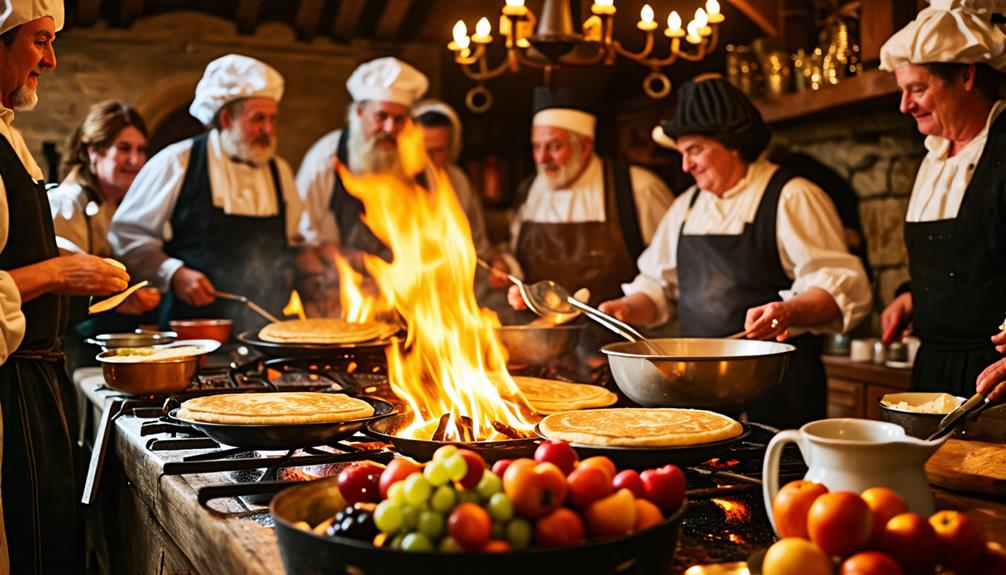
Shrove Tuesday, also known as Pancake Day, is a tradition celebrated the day before Ash Wednesday. This day marks the beginning of Lent in many Christian communities. On Shrove Tuesday, people often make pancakes to use up ingredients like eggs, milk, and butter before the fasting period of Lent begins. This practice ensures that no rich foods go to waste.
In the UK and Ireland, Pancake Day is also known for pancake races. Participants race down the street, flipping pancakes in frying pans as they go. This tradition started in 1445 in Olney, England, and continues to bring communities together. Pancake Day includes large gatherings and feasting. Families and friends come together to eat pancakes, symbolizing the end of indulgence before Lent.
Different cultures have their own customs for Shrove Tuesday, reflecting local traditions and culinary practices. Whether in Europe, the Americas, or elsewhere, you will find various pancake recipes and festivities, all linked by the shared joy of this pre-Lenten celebration.
Middle Ages Pancakes
In the Middle Ages, cooks made pancakes using simple ingredients like flour, eggs, and milk. They often cooked them on hot stones or in frying pans over open flames. Pancakes were common in the diets of many Europeans, especially among the working class. Because the ingredients were cheap and easy to get, pancakes became a go-to meal for those looking to save money.
By the 15th century, the term "pancake" started to appear, evolving from various names used in different cultures for similar flatbreads. The simplicity and versatility of pancakes made them a staple food. In England, they were popular on Shrove Tuesday, allowing people to use up rich ingredients like eggs and dairy before Lent.
Reasons for Pancake Popularity
- Affordability: Flour, eggs, and milk were inexpensive and widely available.
- Ease of Preparation: Pancakes could be quickly made on hot stones or in frying pans.
- Cultural Significance: Pancakes were tied to traditions, such as Shrove Tuesday.
The first recorded pancake race in 1445 in Olney, England, shows the cultural significance of pancakes during this period. This tradition involved participants flipping pancakes while running, highlighting the communal and festive aspects of pancake-making in the Middle Ages.
Pancakes in Shakespeare
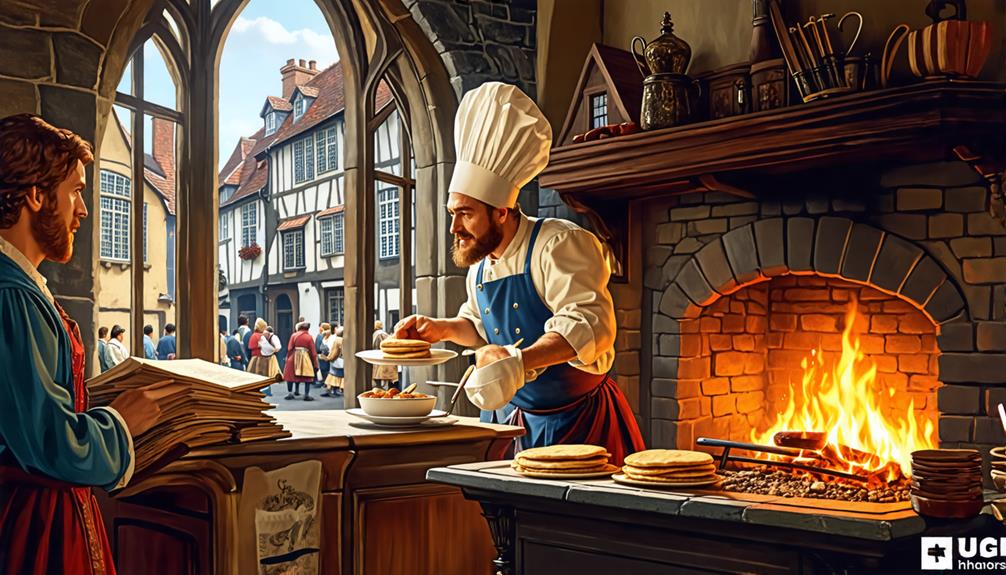
When you study Shakespeare's plays, you'll see that pancakes symbolize indulgence and merriment. In "Henry IV, Part 1," Falstaff humorously compares his belly to a pancake, highlighting themes of excess. These references show the pancake's cultural importance during the Elizabethan period and link to festive gatherings common in Shakespeare's time.
Pancakes in Plays
Many of William Shakespeare's plays mention pancakes, highlighting their importance in daily life during the Elizabethan period. Pancakes were not just a breakfast food; they symbolized comfort, indulgence, and social gatherings. Shakespeare's characters and situations often reflect these themes.
In "Henry IV, Part 1," Falstaff humorously mentions pancakes while indulging in gluttony, showing their link to indulgence. This highlights how pancakes were seen as a treat, enjoyed during feasts and special occasions. Similarly, in "The Merry Wives of Windsor," pancakes appear in the context of feasting, showcasing their role in social gatherings and celebrations.
Shakespeare also used pancakes metaphorically in his dialogue. The phrase "flat as a pancake," noted since 1611, illustrates their use in describing flatness in everyday language. These references show how integral pancakes were to the culture of the time.
Key points to consider:
- Pancakes symbolized indulgence and comfort.
- They were common in social gatherings and feasts.
- They were used metaphorically in Shakespeare's dialogue.
Understanding these references provides a richer appreciation of Shakespeare's world and the role of pancakes in it.
Historical References
Shakespeare's frequent references to pancakes in his plays highlight their cultural significance during the Elizabethan age. You can find several mentions of pancakes in his works. For instance, in "Henry IV, Part 2," the character Falstaff humorously says he is "flat as a pancake." This phrase underscores both the simplicity and flatness of pancakes and shows how common this food was in everyday conversation.
In Shakespeare's time, pancakes were a staple food. They were accessible to the working class and often featured in social gatherings. His references to pancakes reflect the dietary customs of the time, making it clear that they were a beloved comfort food. The word "pancake" in Shakespeare's plays symbolizes indulgence and communal feasting, illustrating their role in bringing people together.
The phrase "flat as a pancake," attributed to Shakespeare, has endured over centuries as a common expression. This lasting word choice links the playwright to the enduring popularity of pancakes. When you read Shakespeare, you're not just enjoying his literary genius; you're also getting a glimpse of Elizabethan culture, where pancakes were more than just food—they were a part of life.
American Pancake Evolution
Pancakes have been a key part of American breakfast for many years. In the 1870s, the term "pancake" became widely used, replacing "flapjack." This change influenced both language and how people enjoyed this dish.
In the 1880s, maple syrup became the popular topping for pancakes. This sweet addition made pancakes even more appealing and solidified their place in American breakfast routines. The introduction of Bisquick in 1931 made it easier for families to make pancakes at home quickly, increasing their popularity.
By the mid-20th century, pancakes were a breakfast favorite. Variations like buttermilk pancakes became common. Bisquick also highlighted the importance of pancakes by sponsoring National Pancake Week in 1985.
Key milestones in the history of American pancakes include:
- The term "pancake" replacing "flapjack" in the 1870s
- Maple syrup becoming the preferred topping in the 1880s
- The introduction of Bisquick in 1931
These changes have shaped how you enjoy pancakes today.
Record-Breaking Pancakes
People have set some remarkable records with pancakes. In 1995, in Rochdale, UK, a pancake measuring 16.4 yards in diameter and weighing 3 tons was flipped. This holds the world record for the largest pancake ever flipped. In 2009, chef Aldo Zilli set a record by flipping a single pancake 117 times in 60 seconds. The New York Times covered this feat. In 2010, the highest pancake toss reached 9.47 meters (31 feet 1 inch) in New York. Mass participation in pancake flipping is also notable. In 2012, 890 people gathered to toss pancakes simultaneously. Although 40 were disqualified for dropping theirs, it set an official world record.
Global Pancake Varieties
Exploring global pancake varieties reveals how different cultures adapt this popular dish. From French crêpes to Ethiopian injera, each type uses unique ingredients and methods. Let's examine these recipes and understand their cultural importance.
French crêpes are thin and versatile. For a basic recipe, you need flour, eggs, milk, and butter. Mix the ingredients into a smooth batter, then cook in a hot, lightly greased pan. Crêpes can be filled with sweet or savory toppings.
Ethiopian injera is a sourdough flatbread, often used as a base for stews. Its key ingredient is teff flour. To make injera, mix teff flour with water and let it ferment for a few days. Cook the batter on a hot skillet until bubbles form and the edges lift. Each variation of pancakes reflects its culture's traditions and ingredients. By trying these recipes, you can experience a piece of different cultures in your kitchen.
Unique Global Recipes
Pancakes from around the world come in many forms, each reflecting the culinary traditions of their cultures. When you explore global recipes, you'll find that a flat cake made with local ingredients can vary widely in taste and appearance. For example, French crêpes are known for their thin, delicate texture and can be filled with sweet or savory ingredients.
Here are three distinct examples:
- Ethiopian Injera: This sourdough flatbread, made from teff flour, serves as a staple food and a communal dish for stews and salads. Its tangy flavor is key to Ethiopian cuisine.
- Dutch Pannenkoek: Thicker than a crêpe, this pancake can be enjoyed with sweet toppings like syrup or savory ingredients such as bacon and cheese. It's suitable for any meal.
- Korean Buchimgae: This savory pancake, made with vegetables and sometimes seafood, is commonly enjoyed as a snack or side dish in Korea.
These global recipes show how a simple flat cake can be transformed into various delicious pancakes, each with its own cultural twist.
Cultural Significance Explained
Pancakes are an important part of many cultures worldwide, each type reflecting local traditions and flavors. For thousands of years, different cultures have created their own pancake variations using local ingredients, highlighting their culinary heritage.
| Country | Pancake Variety |
|---|---|
| France | Crêpes |
| Ethiopia | Injera |
| India | Chilla |
In France, crêpes are thin pancakes that can be filled with sweet or savory ingredients. They are a versatile food item. Crêpes are culturally significant, especially during festivals like La Chandeleur. Flipping a crêpe with a coin in hand during this festival is believed to bring good luck.
In Ethiopia, injera is a sourdough flatbread made from teff flour. It serves as both food and utensil, emphasizing the communal nature of Ethiopian meals. Sharing injera is an important cultural practice.
| Country | Pancake Variety |
|---|---|
| Russia | Blini |
| Venezuela | Cachapas |
In North India, chilla is a pancake made from chickpea flour. It is often part of weddings and festivals, symbolizing celebration. Russian blini, made from buckwheat flour, are traditionally served with caviar or jam. They are a festive delicacy and reflect regional tastes. In Venezuela, cachapas are thick cornmeal pancakes usually filled with cheese. They showcase the use of local ingredients, adding unique flavors to the global variety of pancakes.
Modern Pancake Trends
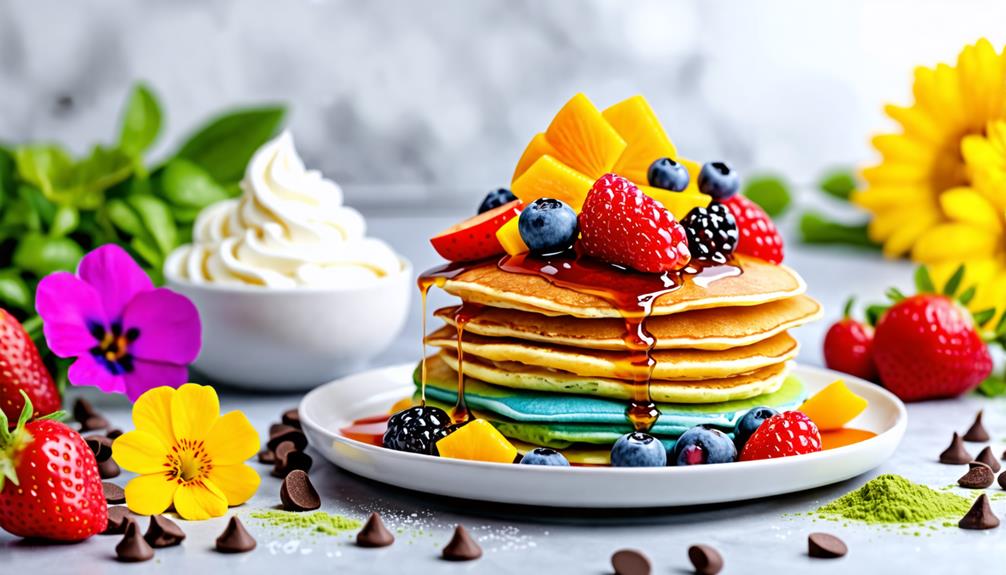
In today's culinary world, pancakes have expanded beyond their traditional form to meet a range of dietary needs and creative tastes. Health-conscious eating has led to the rise of gluten-free, vegan, and protein-packed pancake options. These choices ensure that everyone can enjoy pancakes, regardless of dietary restrictions.
Creative toppings have also elevated pancake dishes. Gourmet syrups, fresh fruits, crunchy nuts, and even savory ingredients like avocado and smoked salmon can turn simple pancakes into impressive meals. These toppings not only add flavor but also make your dish visually appealing.
Pre-packaged pancake mixes have become very popular. They provide convenience and consistency, making it easy to prepare pancakes with little effort. These mixes are available in various formulations to meet different dietary needs, ensuring there's a suitable option for everyone.
- Gluten-free pancake mixes: Ideal for those with gluten sensitivities.
- Protein-packed options: Great for fitness enthusiasts seeking a nutritious breakfast.
- Vegan mixes: Perfect for plant-based diets.
Social media has helped popularize these modern pancake trends, encouraging creativity and innovation in kitchens around the world.
Cultural Celebrations
Celebrations often bring people together, and pancakes are a key part of many cultural festivities worldwide. On Pancake Day, or Shrove Tuesday, many cultures enjoy large pancake feasts to use up dairy and eggs before Lent. In the UK, pancake races have been a tradition since 1445. Participants race while flipping pancakes, and the winner receives a kiss from the church bell ringer.
In Ethiopia, injera, a type of pancake made from teff flour, is essential for communal celebrations. It symbolizes hospitality and togetherness and is a staple in Ethiopian cuisine.
In North India, weddings often feature chilla, a chickpea flour pancake. This underscores its cultural importance in festive occasions.
Here's a quick look at different cultural celebrations involving pancakes:
| Country | Pancake Type | Occasion |
|---|---|---|
| UK | Pancakes | Pancake Day, Pancake Races |
| Ethiopia | Injera | Communal Celebrations |
| North India | Chilla | Weddings |
| Numerous | Pancakes | Literary Celebrations |
Pancakes also appear in literature, symbolizing comfort and joy, as seen in works by John Steinbeck. In various forms and flavors, pancakes continue to unite people in cultural celebrations worldwide.